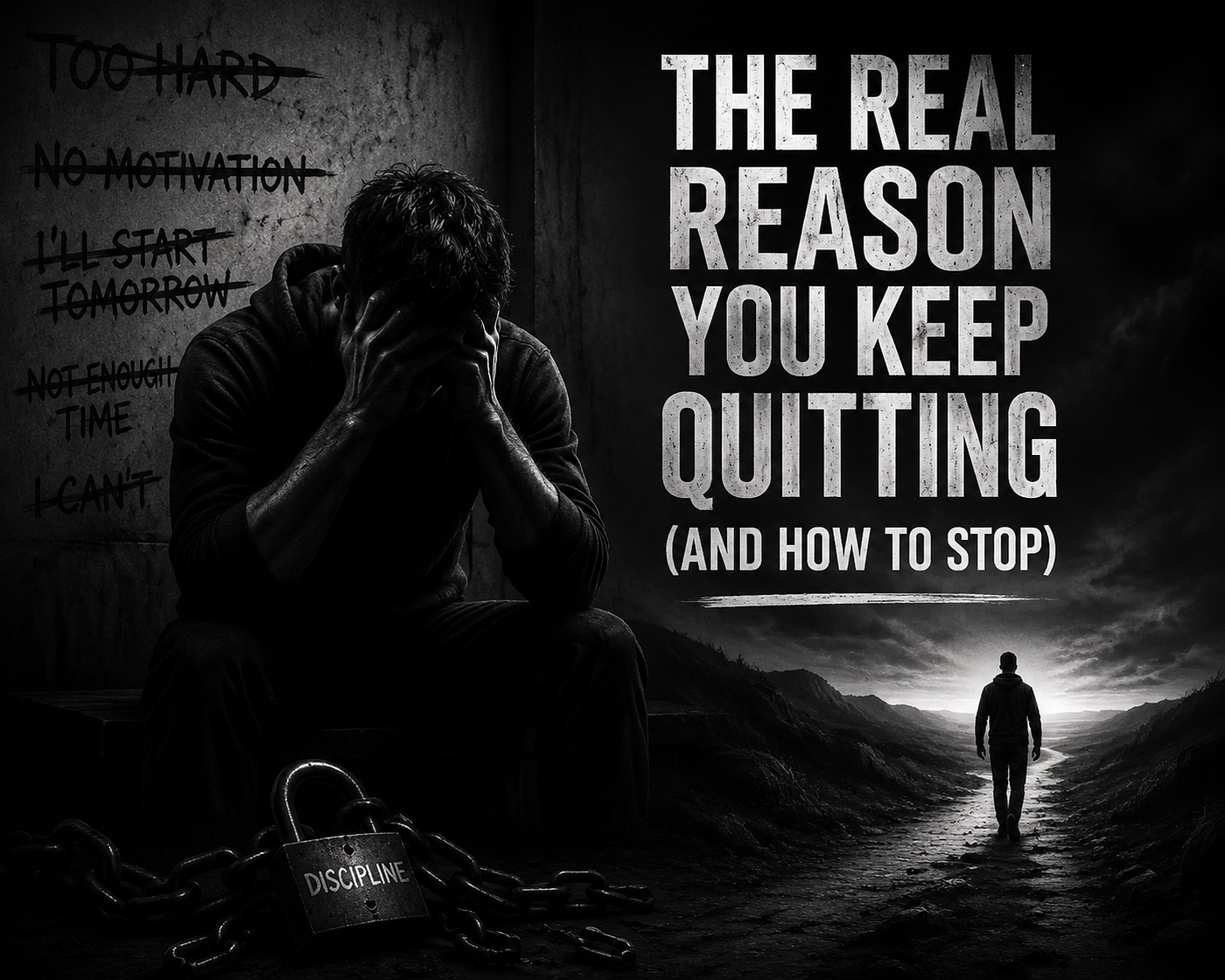
The Real Reason You Keep Quitting (And How to Stop)
Introduction: The Pattern Nobody Wants to Admit
The Real Reason You Keep Quitting (And How to Stop)
Introduction: The Pattern Nobody Wants to Admit
Most people do not fail because they are incapable. They fail because they repeatedly stop. The gap between intention and outcome is not usually a lack of intelligence, resources, or opportunity. It is the repeated moment where effort is started, momentum begins to form, and then something breaks the chain.
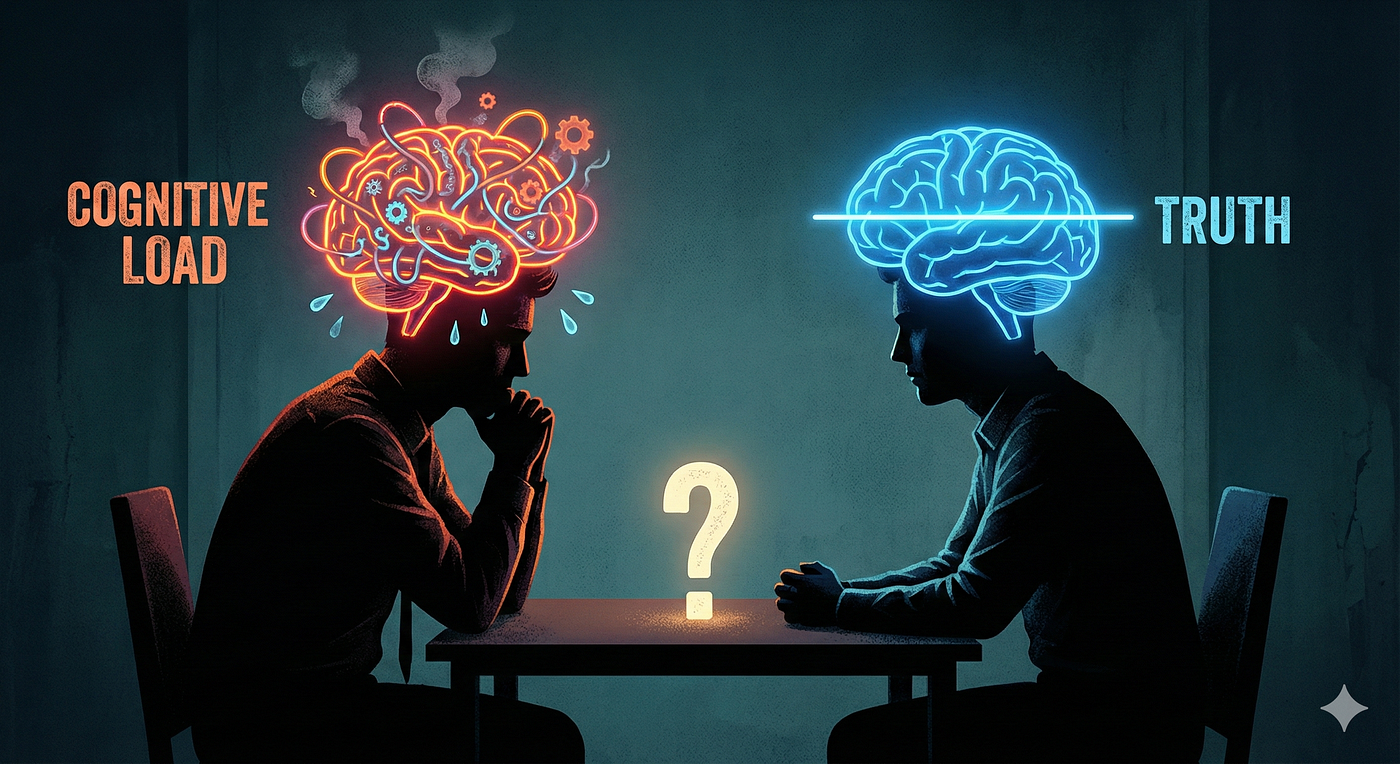
Most people do not fail because they are incapable. They fail because they repeatedly stop.
Quitting is not a single event. It is a pattern. It shows up in workouts abandoned after two weeks, projects left half-finished, routines that collapse after initial excitement, and goals that slowly fade into “someday” territory.
What makes this pattern difficult to recognize is that quitting rarely feels like quitting in the moment. It often feels like a reasonable decision. A pause. A break. A reset. But over time, those pauses accumulate into a lifestyle of unfinished progress.
To understand why this happens, you have to go deeper than motivation. The real cause is not a lack of desire. It is a mismatch between expectation, identity, emotional tolerance, and systems.
The Motivation Myth and Why It Keeps You Stuck
Most people assume quitting happens because motivation disappears. This is only partially true. Motivation is not a stable fuel source. It behaves more like weather than infrastructure. It changes daily, sometimes hourly.
When someone starts a new goal, motivation is usually high. There is excitement, vision, and emotional energy attached to the idea of change. This initial phase feels powerful, but it is deceptive. It creates the illusion that progress will feel this way consistently.
When motivation naturally declines, as it always does, people misinterpret the drop as failure. They believe something has gone wrong, when in reality nothing has gone wrong at all. The emotional curve of motivation is predictable.
The problem is not the decline itself. The problem is the dependency on it.
People who rely on motivation to continue inevitably stop when motivation stops. Not because they cannot continue, but because they were never structurally prepared to continue without emotional reinforcement.
The Identity Gap That Quietly Sabotages Progress
One of the deepest reasons people quit is an identity mismatch.
When someone says they want to become fit, successful, disciplined, or consistent, they are describing a future identity. But their current identity has not yet caught up with that expectation.
This gap creates internal resistance. Every action that aligns with the new identity feels slightly unnatural at first. It requires effort not just physically, but psychologically.
For example, a person who sees themselves as “not disciplined” will struggle to maintain disciplined behavior even if they strongly want the outcome. Each attempt creates friction because it contradicts their self-concept.
Eventually, the brain defaults back to identity consistency. It chooses behavior that matches who it believes you are rather than who you want to become.
This is why people can deeply want change and still repeatedly abandon it. The identity has not been rewritten yet, so behavior cannot stabilize.
Until identity shifts, effort feels like acting. And acting is exhausting.
The Emotional Tolerance Problem Nobody Trains For
Another major reason people quit is emotional discomfort.
Most goals require sustained discomfort in some form. Whether it is physical strain, mental focus, uncertainty, delayed reward, or repetitive effort, discomfort is part of the process.
The issue is not that people experience discomfort. The issue is that they have not trained the ability to stay present inside it.
Modern life is structured around minimizing discomfort. Instant entertainment, constant stimulation, and easy avoidance create a low tolerance for boredom, frustration, and delayed gratification.
When real progress demands sustained effort without immediate reward, the nervous system interprets it as unnecessary stress.
So the moment discomfort rises above a personal threshold, quitting becomes a relief mechanism. It is not always a conscious decision. It is often emotional self-regulation.
People do not quit because the task is impossible. They quit because the feeling of continuing becomes harder than the feeling of stopping.
The False Start Trap and Early Expectation Collapse
One of the most predictable quitting cycles begins with an intense start.
A person becomes inspired, commits fully, and pushes hard in the beginning. They expect rapid transformation because effort feels strong and immediate.
But early effort often produces delayed visible results. This delay creates confusion. The mind expects reward proportional to effort, and when that reward does not appear quickly, doubt begins to grow.
This is where the collapse happens.
The person misinterprets the lack of immediate results as evidence that the system is not working. In reality, the system is still in its accumulation phase.
This misunderstanding causes many people to abandon methods that were actually working beneath the surface. The progress was real, but not yet visible.
The early stage is not designed to feel rewarding. It is designed to build foundation.
Why Discipline Alone Is Not Enough
Discipline is often presented as the solution to quitting, but discipline alone is incomplete.
Discipline is the ability to act despite resistance. But if every action requires maximum resistance management, burnout becomes inevitable.
Sustainable progress requires systems that reduce resistance rather than constantly fighting it.
When people rely only on discipline, they eventually reach a threshold where effort feels heavier than available willpower. At that point, quitting becomes the only relief option.
Systems, however, change the equation. They automate behavior, reduce decision fatigue, and remove the need for constant internal negotiation.
Without systems, discipline is a short-term solution. With systems, discipline becomes a backup, not a requirement.
The Role of Environment in Quietly Shaping Behavior
Most quitting behavior is not purely psychological. It is environmental.
Environment includes everything that surrounds decision-making: physical space, digital input, social influence, and routine structure.
If the environment constantly triggers distraction, convenience, or avoidance, the probability of quitting increases dramatically.
For example, a person trying to focus while constantly exposed to social media notifications is operating in a high-friction environment. Every moment of effort is interrupted by competing stimuli.
Eventually, attention fragments. Frustration increases. And quitting becomes a natural response to overload.
When the environment is misaligned with the goal, willpower alone cannot compensate indefinitely.
People often blame themselves for lack of consistency, but the structure around them is often the hidden cause.
The Momentum Break That Ends Most Progress Cycles
Momentum is one of the most powerful forces in human behavior. When progress is continuous, effort feels lighter. When progress is interrupted, restarting feels heavier than starting once.
This is why small breaks often turn into long gaps.
A person misses one day, then feels slightly off rhythm. That discomfort leads to another missed day. Soon, the identity of “someone who is doing this” begins to fade.
Once identity weakens, restarting requires rebuilding not just behavior, but belief.
The longer the pause, the more psychological weight accumulates on restarting. This is why many people say they will “start again next week” or “start fresh next month.” The delay reduces immediate discomfort, but increases long-term friction.
Momentum is fragile at the beginning but powerful when sustained.
The Hidden Comfort of Quitting
Quitting is not always experienced as failure. In the moment, it often feels like relief.
Relief from pressure. Relief from uncertainty. Relief from discomfort. Relief from the expectation of progress.
This is why quitting can become habitual. The brain learns that stopping produces immediate emotional comfort, while continuing produces delayed reward with immediate discomfort.
If the brain repeatedly chooses relief, it begins to reinforce quitting as a default coping mechanism.
Over time, this creates a pattern where anything difficult is approached with subconscious expectation of eventual abandonment.
The issue is not lack of ambition. It is the reinforcement of escape as a solution.
Why Most People Never Rebuild After Quitting
After quitting once, many people do not return to the same goal with full intensity. This is not because they no longer care, but because quitting changes self-perception.
Each abandonment slightly weakens belief in personal consistency. Eventually, the mind begins to expect repetition of the same cycle.
This expectation becomes self-fulfilling. If someone believes they will quit again, they are more likely to tolerate early disengagement signals.
Breaking this cycle requires rebuilding trust with action, not intention.
Trust is not restored through promises. It is restored through sustained follow-through, even at a small scale.
The Importance of Small Wins and Continuity
One of the most effective ways to prevent quitting is reducing the size of the commitment while maintaining consistency.
Large goals create pressure. Pressure increases emotional resistance. Resistance increases the likelihood of stopping.
Small wins, on the other hand, reinforce identity without triggering overwhelm.
When actions are small enough to be sustainable even on low-motivation days, continuity becomes possible. And continuity is what prevents identity collapse.
Progress is less about intensity and more about non-interruption.
The Internal Conflict Between Who You Are and Who You Want to Be
Quitting often happens when there is sustained internal conflict between current identity and desired identity.
Every time someone tries to act differently from their established patterns, a subtle psychological tension emerges. This tension can persist for days or weeks.
If this tension is not resolved through adaptation, the mind seeks resolution through return to familiarity.
Familiarity always feels easier than change, even if familiarity is not desirable.
This is why transformation requires repetition until the new behavior becomes familiar enough to no longer feel foreign.
Without this phase of normalization, quitting becomes the default escape from discomfort.
Why Restarting Feels Harder Than Starting
One of the most discouraging experiences is noticing that restarting something feels harder than starting it the first time.
This happens because restarting carries memory of previous failure or inconsistency. That memory adds emotional weight.
The brain also anticipates repetition of past outcomes. If something was previously abandoned, it expects similar difficulty again.
This expectation increases resistance before action even begins.
To overcome this, restarting must be treated as a new system rather than a continuation of an old failure.
The Real Solution: Systems That Remove Decision Fatigue
The core solution to quitting is not increased motivation or extreme discipline. It is reduction of unnecessary decision points.
Every decision requires mental energy. When too many decisions accumulate, fatigue leads to shortcuts. Quitting is one of those shortcuts.
Systems reduce decision load by automating behavior patterns. When actions are predetermined, there is less internal negotiation.
This allows consistency to continue even when motivation is low or emotions are unstable.
The less you rely on daily decisions, the less likely you are to quit during emotional fluctuations.
Building an Identity That Does Not Quit
The final stage of breaking the quitting cycle is identity reinforcement.
A person who sees themselves as someone who follows through behaves differently under pressure than someone who sees themselves as inconsistent.
Identity becomes the filter through which decisions are made.
When identity is stable, quitting feels unnatural. Not because it is impossible, but because it conflicts with self-perception.
This is why long-term change always circles back to identity, not just behavior.
Conclusion: The Moment Everything Changes
The real reason you keep quitting is not a lack of ability. It is a combination of emotional resistance, unstable systems, identity mismatch, environmental friction, and expectation collapse.
Stopping the cycle is not about becoming a different person overnight. It is about removing the conditions that make quitting the easiest option.
When systems are simplified, identity is reinforced, and expectations are adjusted to reality rather than fantasy, consistency becomes the natural outcome.
At that point, you stop relying on willpower to continue and start relying on structure to carry you forward.
And that is where quitting stops being your pattern and consistency becomes your default.
메타데이터
- post_id
- 9b9b477ed0f1
- slug
- the-real-reason-you-keep-quitting-and-how-to-stop-9b9b477ed0f1
- url
- https://medium.com/@webbercookn/the-real-reason-you-keep-quitting-and-how-to-stop-9b9b477ed0f1
- canonical_url
- https://medium.com/@webbercookn/the-real-reason-you-keep-quitting-and-how-to-stop-9b9b477ed0f1
- author_url
- https://medium.com/@webbercookn
- status
- ok
- fetched_at
- 2026-07-29 04:51:17