An Allegory of Democracy Without Republicanism — Venezuela’s Version of Democracy: What Went Wrong?
What is often described as “Venezuelan-style democracy” has, in recent years, drifted so far from internationally recognized democratic…
An Allegory of Democracy Without Republicanism — Venezuela’s Version of Democracy: What Went Wrong?
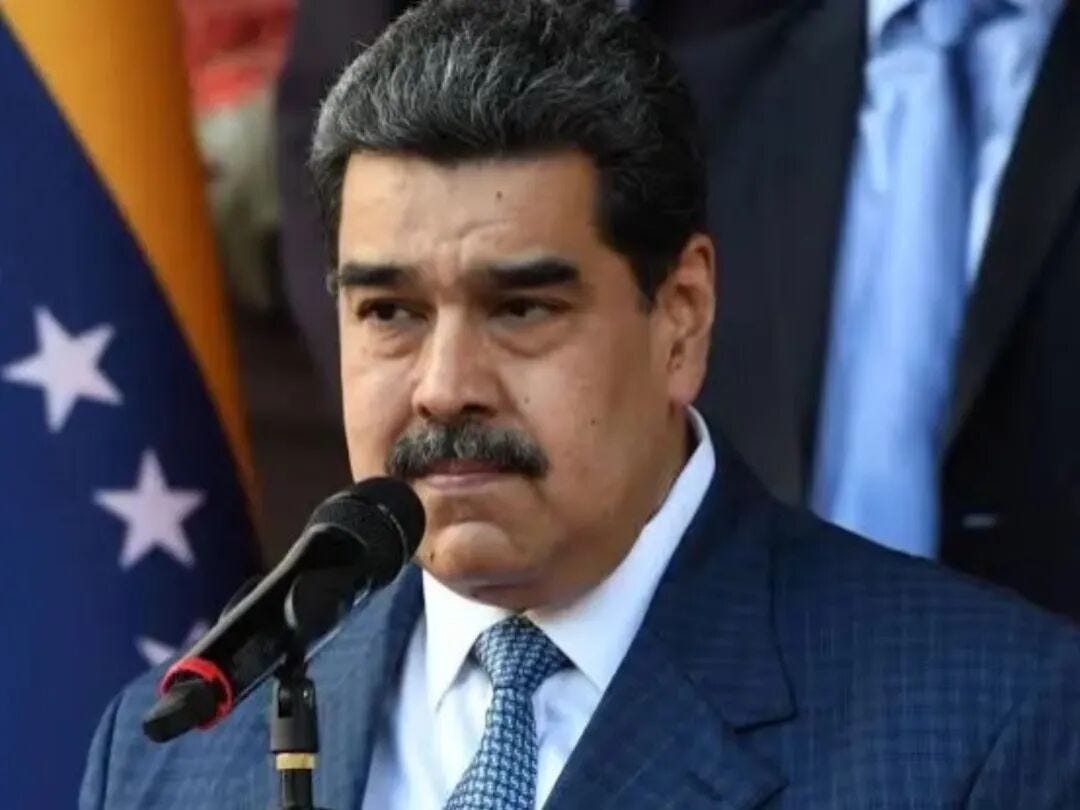
What is often described as “Venezuelan-style democracy” has, in recent years, drifted so far from internationally recognized democratic standards that the term itself now requires qualification. The current president, Nicolás Maduro — recently seized from his bed by Delta Force and transferred to a prison in New York — can no longer be credibly described as Venezuela’s legitimately elected leader in the eyes of much of the international community.
In July 2024, Venezuela held its constitutionally mandated six-year presidential election. By that point, the political playing field had already been profoundly distorted. The most popular opposition figure, María Corina Machado, was disqualified through criminal charges widely regarded as politically motivated. Meanwhile, President Maduro enjoyed unrestricted control over the state apparatus, which was deployed aggressively to promote his reelection campaign.
Despite these advantages, substantial evidence presented by the opposition indicated that Maduro suffered a decisive defeat at the polls, losing by a wide margin to Edmundo González Urrutia, an independent candidate and former diplomat. Polling data, voting records, and parallel vote counts suggested that the election outcome was not merely contested but overwhelmingly one-sided.
Faced with mounting criticism and evidence, the Maduro government did not attempt meaningful legal or institutional review. Instead, it responded with coercion. Under a security crackdown known as Operation Knock-Knock, opposition supporters were detained, harassed, or forced into exile. González Urrutia himself ultimately fled to Spain, underscoring the extent to which electoral competition had given way to political repression.
The severity of the episode drew unusually direct international condemnation. United Nations Secretary-General António Guterres publicly called on Venezuelan authorities to uphold basic standards of electoral fairness and transparency — language typically reserved for extreme cases. Political scientist Steven Levitsky went further, characterizing the 2024 Venezuelan election as “the most serious and most blatant case of electoral fraud in modern Latin American history.”
This assessment is particularly striking given Latin America’s long and troubled history with authoritarianism and manipulated elections. To surpass regimes such as those of Pinochet or Galtieri in notoriety is no small distinction. Yet Venezuela’s 2024 election appears to have crossed precisely that threshold.
What remains in Venezuela today is not democracy in any substantive sense, but a hollowed-out electoral ritual — one that preserves the outward forms of voting while abandoning the republican foundations of competition, accountability, and the peaceful transfer of power. It is, in effect, a system with elections but without a republic.
Of course, even if the election unfolded exactly as the Venezuelan authorities claim — namely, that President Maduro did in fact win — the victory itself would still be deeply illegitimate. As discussed in yesterday’s piece, Maduro’s predecessor Hugo Chávez launched what he called the Bolivarian Missions during his more than a decade in power. The core function of this system, along with its more than thirty subsidiary “missions,” was to empower the executive branch to bypass both the legislature and the judiciary, allowing it to intervene without restraint in virtually every aspect of social life.
Under the oversight of this “mission” system, Venezuela had long ceased to possess any mainstream media that did not openly endorse the Chávez–Maduro regime. Toward the lower strata of society, Chávez introduced an especially revealing innovation: the so-called Florentino Mission. This program deserves particular attention for its sheer audacity. “Community advisors” were assigned to every neighborhood across the country. Officially, their task was to “guide” residents and shield them from the “corrupting influence of capital.” In reality, their primary function was to identify, document, and report citizens who opposed Chávez’s policies or openly declared that they would not vote for him in the next election.
Once a citizen appeared on such a list, all government-promised benefits were effectively cut off. In a Venezuela that Chávez had already transformed into what was marketed as a “welfare state” and even a “paradise on earth,” where independent social and economic vitality had been largely extinguished, losing access to state benefits amounted to a virtual death sentence.
Faced with this reality, young Venezuelans who refused to support Chávez and Maduro — but were also unwilling to quietly accept such a fate — had little choice but to flee. This is why, in the span of little more than a decade, Venezuela produced over seven million refugees, roughly one quarter of its total population.
Seen in this light, the landslide victories Chávez routinely claimed at the ballot box are hardly mysterious. What is truly astonishing is that Maduro, operating under the same set of rules, managed to engineer the farcical spectacle of the 2024 election. It is rather like a president sleeping inside a palace wrapped in layers of security, only to be hauled off by Delta Force. An election fought under such conditions — where victory should have been all but guaranteed — somehow still managed to be lost. For that, one can only acknowledge Maduro as a political talent of a very peculiar kind.
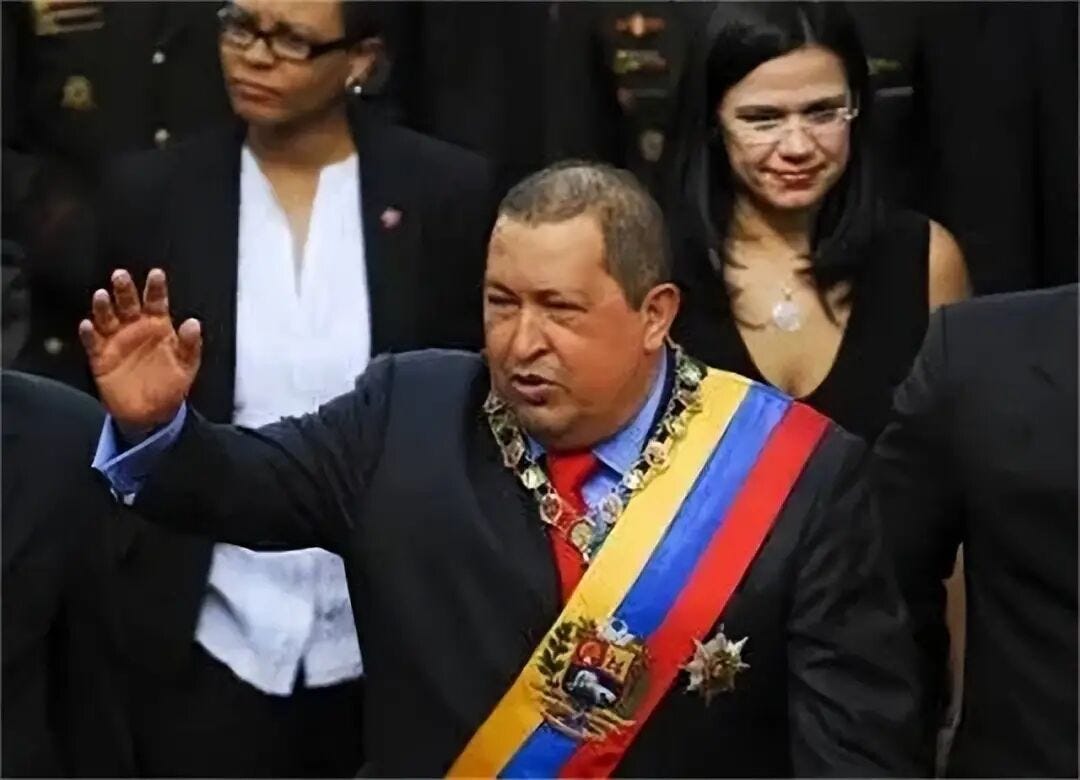
That said, from another perspective, I cannot entirely dismiss the reader’s argument; there is some merit to it. Regardless of how Chávez’s later elections — or those under Maduro — ultimately unfolded, the election that brought Chávez to power in 1998 was, by any reasonable standard, a genuine modern democratic election. And in that contest, Chávez won by an overwhelming margin.
If the Venezuelan people at the time were prepared to determine their country’s trajectory for the next three decades with that single vote, then it can be argued that Maduro, as Chávez’s chosen successor, remains — at least in a historical sense — a product of the Venezuelan people’s own electoral choice.
There is an ironic aspect to Chávez’s rise that invites comparison with a familiar European cautionary tale. His personal trajectory bears an uncanny resemblance to the comeback narrative of a certain rejected art student from Vienna. In 1992, Chávez, then a military officer, conspired to overthrow Venezuela’s legitimate government through a coup d’état. The plot failed, and he was arrested. Yet in court, Chávez turned the tables, denouncing Venezuela’s entrenched political corruption, widening inequality, and the collusion between domestic and foreign capital that, he argued, had reduced ordinary citizens to misery. Had the coup succeeded, he declared, he would have set the country on an entirely different course.
The Venezuelan public, however, appears not to have taken many lessons from German or Japanese history. Remarkably, they were moved by Chávez’s performance. Although the court initially sentenced him to thirty years in prison, he served barely two before receiving a pardon. Upon his release, Chávez resumed organizing his Fifth Republic Movement. Empowered by the moral authority he had acquired through his courtroom speech, he quickly transformed into a national hero — an anti-capitalist champion of redistribution and social justice. That is how he was ultimately carried into power, which brings us back to such a question: how did Venezuela, a country with the world’s largest proven oil reserves, end up in its current state — and who, ultimately, is responsible?
The contemporary left tends to blame U.S. sanctions, or the Trump administration’s allegedly ruthless tactics. The right, meanwhile, lays the fault squarely at the feet of Chávez and Maduro, portraying the pair as political wreckers who destroyed the country. However, neither explanation is sufficient.
If one insists on an honest assessment, the responsibility lies, paradoxically, with Venezuela’s democracy itself. Chávez truly was elected — fairly, openly, and transparently. He did not conceal his intentions. He campaigned openly on a radical platform. His rise was not a deception, but a deliberate choice by the electorate.
It is akin to a person who enjoys complete freedom in choosing a partner, bypasses kind and responsible candidates, and instead insists on marrying someone who has already displayed clear tendencies toward violence — mistaking aggression for strength and dominance for masculinity. When such a choice leads to suffering later on, it is difficult to assign blame elsewhere.
Democracy, after all, guarantees the right to choose — but it does not guarantee that the choice will be wise.
It is often said that people who consistently choose partners with obvious violent tendencies tend to come from deeply troubled family backgrounds. By the same logic, I find many recent historical retrospectives on Venezuela somewhat misleading. Some portray Venezuela prior to 1998 as an almost idyllic society — economically vibrant, broadly prosperous, and institutionally well designed. In my view, this is largely a myth.
Venezuela’s institutional derailment did not begin with Chávez. It can be traced back at least to the late 1960s, when the Christian Democratic Social Party came to power. One of its central campaign slogans was the “expropriation of imperialist capital.” Foreign companies operating in Venezuela’s oil sector were forcibly bought out at artificially low prices, and the resulting revenues were redistributed to the public in the form of welfare benefits.
The underlying logic of this approach was a fundamental disregard for private property rights and for the role of wealth creators. By attaching ideological labels — whether “imperialist,” “capitalist,” or otherwise — the state legitimized the seizure of private assets and redistributed the proceeds as social benefits. This model produced two long-term consequences.
First, once private property rights cease to be respected, incentives to create wealth inevitably erode. Unlike Saudi Arabia, whose oil reserves consist largely of light crude, a substantial portion of Venezuela’s reserves are heavy crude, which requires significantly higher levels of technology for extraction and refining. Beginning in the 1970s, as foreign capital withdrew and state-owned oil enterprises became inefficient and complacent, Venezuela’s oil extraction and refining technologies began to lag behind global standards. By the Chávez–Maduro era, the country had effectively become a technological beggar in the oil industry.
The logic here is straightforward. If an individual or firm invests heavily in technology, equipment, and expertise — only to face the risk that the government can, at any moment, invoke some ideological justification and confiscate everything — then there is little incentive to “invest in technology and productivity” in the first place.
The second consequence was cultural and political. Once Venezuelans experienced the immediate gratification of “sharing oil revenues and enjoying welfare” in the 1970s, the system became addictive. The Christian Democrats’ welfare policies effectively set a permanent electoral floor for all future political contenders: any party seeking to win elections could not offer fewer benefits than those already provided, or it would lose at the ballot box.
As a result, when Democratic Action later competed with the Christian Democrats for votes, it too had little choice but to embrace welfare populism. The message was simple: vote us into office and benefits will not only be preserved, but expanded. If the “imperialist capital” in the oil sector had already been liquidated, that was no obstacle — there were always other targets to be found.
After all, as long as voters granted electoral authorization, and as long as the rule of law remained weak and private property poorly protected, confiscation and asset seizures were easy tools for public power to wield.
From 1968 to 1998, over the course of three decades, international oil prices rose and fell, Venezuela’s economy oscillated between boom and bust, and political parties rotated in and out of power like figures on a carousel. Yet the underlying logic of electoral politics in the country never truly changed. Chávez’s courtroom rhetoric — his grand promises to eradicate corruption, punish capital, and enforce redistribution — resonated so powerfully precisely because, for those thirty years, Venezuela’s two dominant parties had courted voters along the same ideological path.
The judiciary’s conceptual toolkit contained no ideas capable of intellectually disarming Chávez’s worldview. After three decades of “sharing oil revenues and enjoying welfare,” life had not improved; in fact, it had grown increasingly difficult. Public frustration mounted. If cautious, half-measures no longer worked, then perhaps a more radical approach was required. And so the electorate chose a man bold enough to act — and reckless enough to defy convention — even if that meant elevating a convicted coup plotter to the presidency.
This pattern is not unique to Venezuela. A broader examination of Latin America’s so-called democratic trajectories reveals similar dynamics. Figures such as Salvador Allende in Chile or Juan and Eva Perón in Argentina — leaders who continue to command deep admiration in their respective societies — share a defining trait: they promised expanded welfare to the masses, financed by the expropriation of property and rights from social groups deemed legitimate targets. This appears to reflect a recurring political aesthetic in much of Latin America, one that repeatedly calls forth leaders like Chávez and Maduro.
A Japanese writer once observed that “the most frightening thing in the world is that people become parents without any training, yet immediately take on the most important job there is.” I would argue that there is something even more unsettling: under modern systems of universal suffrage, voters themselves assume their role without any preparation. And compared with parenthood, is the role of the voter not, in some sense, even more consequential?
I have never believed that democracy is, by definition, a good system. Its quality depends fundamentally on the character, discipline, and judgment of the people who exercise power within it. As a student of history, I am acutely aware that from Plato onward, democracy has often been treated as a term of criticism rather than praise.
In The Republic, Plato famously describes democracy as “a cloak of many colors” — diverse and attractive on the surface, but internally disordered. He compares the state to a ship: democracy, in his view, allows all passengers — regardless of their knowledge of navigation — to decide the ship’s course by vote or lottery, rather than entrusting it to a skilled captain. Under such conditions, shipwreck is not a possibility but an expectation.
Plato argued that democracy grants equal political rights to all, irrespective of whether they possess the wisdom or moral character required to govern. He warned that this inevitably leads societies to be driven by “base desires,” prioritizing immediate gratification over long-term good. One need only examine Venezuela’s collapse to see that his concerns were not unfounded.
If not democracy, then who should rule? Plato’s answer was the philosopher-king. Europe spent more than a thousand years attempting, in one form or another, to approximate this ideal — only to discover that what appeared elegant in theory proved even less reliable in practice. It was only then that democracy, for all its flaws, was reluctantly taken up once again.
Yet when democracy was taken back up, modern Enlightenment thought added a crucial bridle to this powerful but unruly horse: republicanism.
The republican system did not exist in ancient Greece; it originated in ancient Rome. As articulated by Roman thinkers such as Cicero, and later by Machiavelli, republicanism has three core objectives: first, the protection of individual rights, especially private property; second, the promotion of the public good; and third, the prevention of the abuse of power.
Republicanism therefore differs fundamentally from democracy. It relies on a mixed constitution designed to guard against all forms of tyranny. This is what Tocqueville famously described as a system in which the majority can defend itself against the encroachments of the minority, while the minority can also defend itself against the tyranny of the majority; where the poor may resist the rich, and the rich may likewise resist the poor.
Put simply, “democracy” refers only to a social condition and a principle of political legitimacy — namely, equality of status and rule by the majority. “Republicanism,” by contrast, is a concrete institutional system, whose central purpose is to safeguard liberty and private rights by restraining power — especially, and most urgently, the power of the majority when democratic passions run high.
Viewed from this perspective, Venezuela — and indeed many Latin American countries — can fairly be described as societies with democracy but without a republic. They employ voting mechanisms similar to those found in the United States, yet they lack a deep, principled commitment to the inviolability of private rights. Venezuela’s story, in fact, is a parable of how the absence of republican constraints ultimately leads not only to the collapse of liberty, but to the loss of democracy itself.
One might even argue that a significant number of European countries today are at risk of retracing Latin America’s path. When politicians compete for votes by proposing outright expropriation — or subtler forms of it — in order to finance welfare benefits and effectively bribe the electorate; when societies descend into the condition warned against by both Plato of Greece and Cicero of Rome, in which public life is driven by “base desires” and the pursuit of immediate gratification rather than long-term good — then it becomes plausible that these societies are laying the groundwork for economic exhaustion following the erosion of private rights, and for the emergence of a Chávez-like figure who can seize the political stage through rhetoric alone.
At that point, the republican system that once guided Europe out of the Middle Ages would be dead, leaving behind only the hollow shell of democracy — like a rudder that still exists in form, but no longer has the power to keep the ship of state from being drawn into catastrophe.
At the end of the article, it is worth asking whether the entire Western world, after enjoying the post–Cold War golden age, now finds itself standing at a crossroads eerily reminiscent of Venezuela’s position after its own “golden decade” of the late 1960s.
메타데이터
- post_id
- 9bb8b2aa62e3
- slug
- an-allegory-of-democracy-without-republicanism-venezuelas-version-of-democracy-what-went-wrong-9bb8b2aa62e3
- url
- https://medium.com/@ashoftime/an-allegory-of-democracy-without-republicanism-venezuelas-version-of-democracy-what-went-wrong-9bb8b2aa62e3
- canonical_url
- https://medium.com/@ashoftime/an-allegory-of-democracy-without-republicanism-venezuelas-version-of-democracy-what-went-wrong-9bb8b2aa62e3
- author_url
- https://medium.com/@ashoftime
- status
- ok
- fetched_at
- 2026-07-13 16:16:37