Everyone Saw a Cancer Patient. I Saw Something Else.
“The horse told me twenty feet earlier.”

Everyone Saw a Cancer Patient. I Saw Something Else.
“The horse told me twenty feet earlier.”
She said it so casually that I assumed I had misunderstood her.
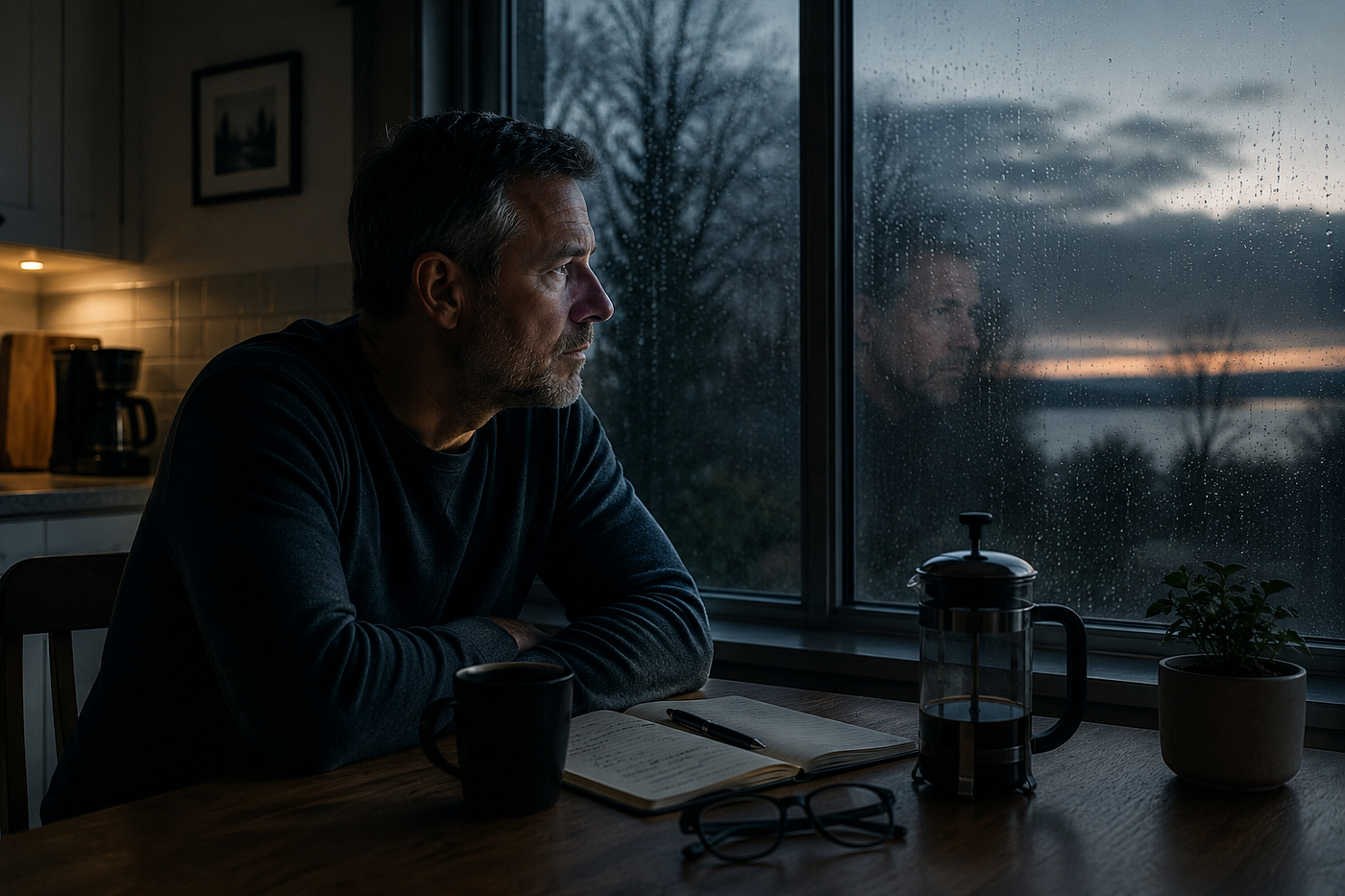
We were sitting in a waiting room before treatment. Rain tapped against the windows. Patients drifted in and out carrying coffee cups, magazines, and appointment schedules. She was describing a competition from years earlier, a jump that had gone badly, and I was trying to understand how a horse could communicate information twenty feet before doing anything.
The horse had refused an obstacle during a competition. Spectators were surprised. She wasn’t.
When I asked why, she explained that the refusal had not begun at the jump itself. It had begun during the approach. The rhythm changed. The focus changed. Something about the horse’s movement felt different. By the time the animal reached the obstacle, the decision had already been made. The spectators were watching the jump because that was where the drama occurred. She was watching the horse because that was where the story was.
At the time, I knew almost nothing about competitive show jumping. Had you asked me to identify a talented horse, a nervous horse, or a horse preparing to refuse an obstacle, I would have had no idea where to begin. Yet over the next several weeks, I found myself listening with growing fascination as she described a world that had previously been invisible to me.
She had captained her university’s equestrian team. Horses occupied a surprising amount of conversational territory. Stories about competitions led to stories about training. Discussions about the weather became discussions about riding conditions. Certain horses were remembered with the affection people usually reserve for teachers, mentors, or old friends. Each conversation added another detail to a landscape I had never seen before.
Horses themselves were almost incidental. What fascinated me was the realization that she was perceiving a completely different layer of reality than I was. We were discussing the same animal, imagining the same course, and replaying the same event. Yet she was noticing signals, relationships, and distinctions that remained invisible to me. Years of experience had taught her where to look.
Continue the conversation in **The Capacity Report**.
As a thank-you for joining, I’ll also send you a complimentary copy of Before Burnout: A Short Field Guide.
The longer I listened, the more I began to suspect that expertise has less to do with accumulating knowledge than with acquiring perception. Years of attention had taught her to recognize patterns that meant nothing to me. The horse had not become more expressive over time. She had become more fluent in a language that most people never learn to read.
That observation stayed with me because medicine is filled with similar moments. Patients sometimes imagine that physicians possess a mysterious intuition, a sixth sense that allows them to recognize problems before they become obvious. In reality, much of what appears intuitive is usually the product of prolonged observation. Patterns that look invisible to one person stand out immediately to another because that person has spent years learning where to direct their attention.
A physician notices that a patient’s fatigue sounds different from how it did six months earlier. A physical therapist sees instability before a fall occurs. An experienced nurse recognizes deterioration while vital signs still appear reassuring. None of these observations is magical. They emerge from thousands of previous encounters that gradually teach someone what matters and what does not.
The horsewoman understood this instinctively because she had spent years doing the same thing.

Some waits are measured in minutes. Others are measured in thoughts.
The longer I practice medicine, the more fascinated I become by the hidden worlds people carry with them. A medical chart creates the illusion that a person can be summarized. Diagnoses occupy one section. Medications occupy another. Imaging reports, laboratory values, and physician notes accumulate until an entire life appears compressed into a few pages.
Then a conversation begins.
The retired accountant turns out to be an expert on nineteenth-century naval history. The engineer has spent decades photographing birds of prey. A patient casually mentions climbing mountains, restoring antique clocks, or studying medieval architecture. Entire worlds emerge from places where nobody would think to look.
Medicine introduces us to people through illness, but illness is rarely the most interesting thing about them.
The horsewoman kept reminding me of this. One morning, she described the difference between a horse that lacked ability and a horse that lacked confidence. Another day, she explained why riders walk a course before a competition. On a different occasion, she spent several minutes describing the challenge of persuading an animal weighing more than a thousand pounds that a rider’s idea is worth following. The details themselves mattered less than the cumulative effect. With each conversation, the waiting room became slightly less medical and considerably more interesting.
Years have passed, and most of the medical details have disappeared. I no longer remember the treatment schedule, and many of the clinical particulars have faded into the blur that inevitably accompanies time. What remains surprisingly vivid is that conversation about a horse and a jump, and the notion that the animal had communicated its intentions long before those intentions became visible to everyone else.
I think there is something deeply appealing about that idea because it appears in so many different corners of life. The first signs of change are often present long before the change itself becomes obvious. The experienced observer notices them. Everyone else notices the outcome.
That pattern appears in medicine, music, athletics, investing, gardening, and almost every field where mastery requires years of close attention. Experts are not simply better informed than the rest of us. They often inhabit richer versions of the same reality. They notice details that seem insignificant until experience teaches otherwise. What appears sudden to an outsider often looks gradual to someone who has learned where to look.
If this way of thinking resonates with you, I’d love to continue the conversation in **The Capacity Report**.
As a thank-you for joining, I’ll also send you a complimentary copy of Before Burnout: A Short Field Guide.
I still think about that rainy morning from time to time. Not because I developed a lasting interest in competitive show jumping, and not because I suddenly became an expert on horses. I think about it because a woman sitting in a cancer waiting room offered a glimpse into a way of seeing that I had never encountered before.
“The horse told me twenty feet earlier.”
The statement sounds mysterious until you realize that every craft, every profession, and every lifelong passion eventually develops its own version of that sentence. People who spend enough years paying close attention begin to notice things that remain invisible to everyone else. The rest of us see the jump. They see the approach, and sometimes the approach contains the entire story.
메타데이터
- post_id
- 9bc91ea61bd6
- slug
- everyone-saw-a-cancer-patient-i-saw-something-else-9bc91ea61bd6
- url
- https://medium.com/dr-michael-hunters-wellness/everyone-saw-a-cancer-patient-i-saw-something-else-9bc91ea61bd6
- canonical_url
- https://medium.com/dr-michael-hunters-wellness/everyone-saw-a-cancer-patient-i-saw-something-else-9bc91ea61bd6
- author_url
- https://medium.com/@drmichaelhunter
- status
- ok
- fetched_at
- 2026-07-08 23:08:13