Biogas in Thrissur: Can Wedding Hall Food Waste Become the District’s Next Green Energy Source?
When people discuss Biogas in Thrissur, the conversation usually revolves around kitchen waste, cattle manure, or household biogas plants…
Biogas in Thrissur: Can Wedding Hall Food Waste Become the District’s Next Green Energy Source?

When people discuss **Biogas in Thrissur, the conversation usually revolves around kitchen waste, cattle manure, or household biogas plants. However, there is a lesser-known opportunity hiding in plain sight — food waste generated by wedding halls, convention centers, and large events.**
Thrissur is known as Kerala’s cultural capital and hosts hundreds of weddings, festivals, exhibitions, and community gatherings every year. These events generate significant quantities of biodegradable waste that often end up in collection systems or disposal facilities.
What if this waste could be transformed into renewable energy instead of becoming an environmental burden?
The Hidden Waste Stream in Thrissur
Every large event generates organic waste such as:
- Leftover cooked food
- Vegetable peels
- Fruit waste
- Rice and curry residues
- Catering kitchen waste
- Floral decorations after events
Most of these materials are highly biodegradable and suitable for biogas production.
During peak wedding seasons, convention centers and auditoriums can generate several tons of organic waste within a short period. Properly collected and processed, this waste can become a valuable renewable energy resource.
Why Thrissur is Ideal for Event-Waste Biogas
Thrissur has a unique advantage compared to many other districts.
The district hosts:
- Wedding auditoriums
- Convention centers
- Temple festivals
- Church feasts
- Cultural events
- Trade exhibitions
All of these activities create a steady supply of biodegradable waste throughout the year.
Unlike seasonal agricultural waste, event-related food waste is generated continuously, making it a reliable feedstock source for biogas systems.
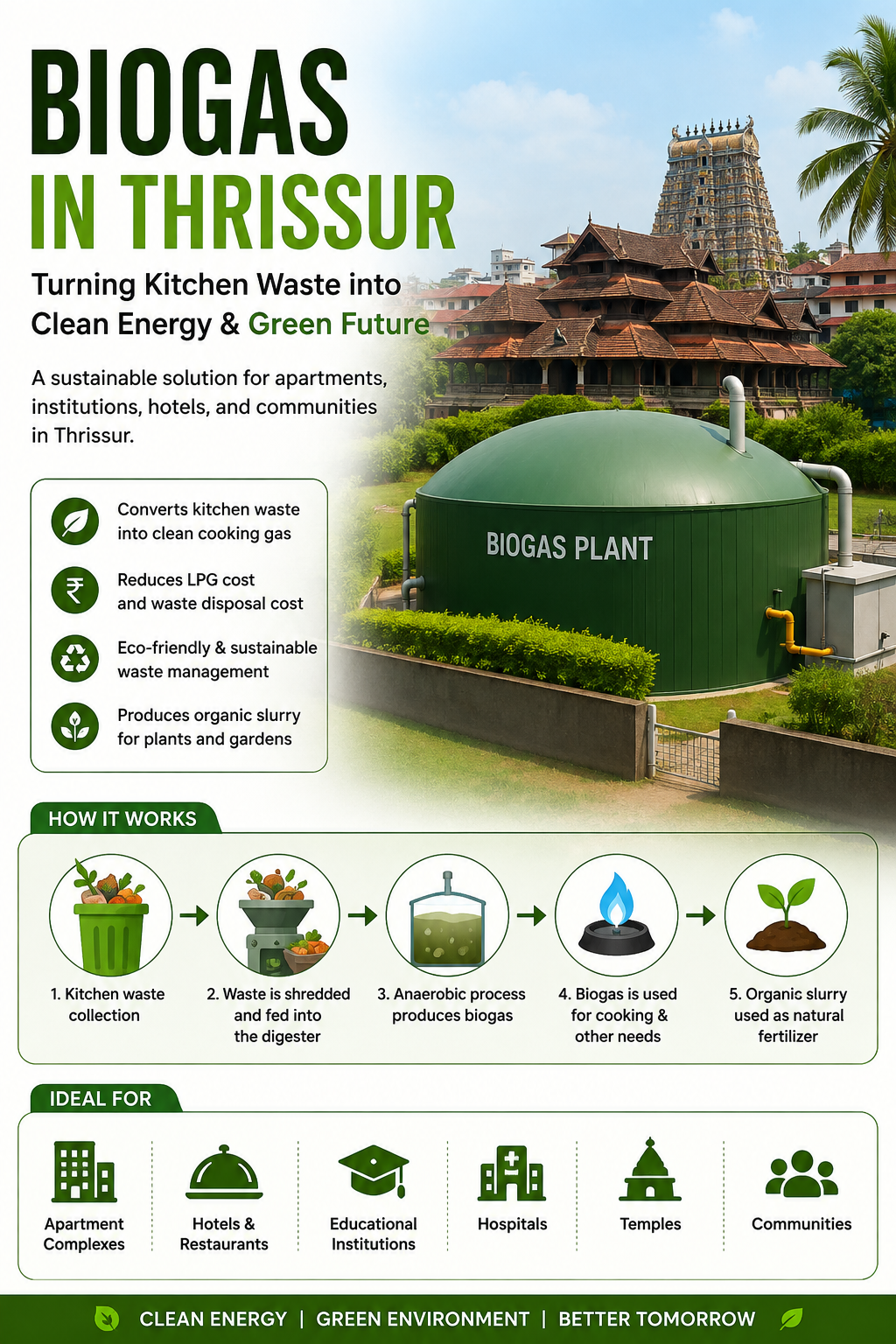
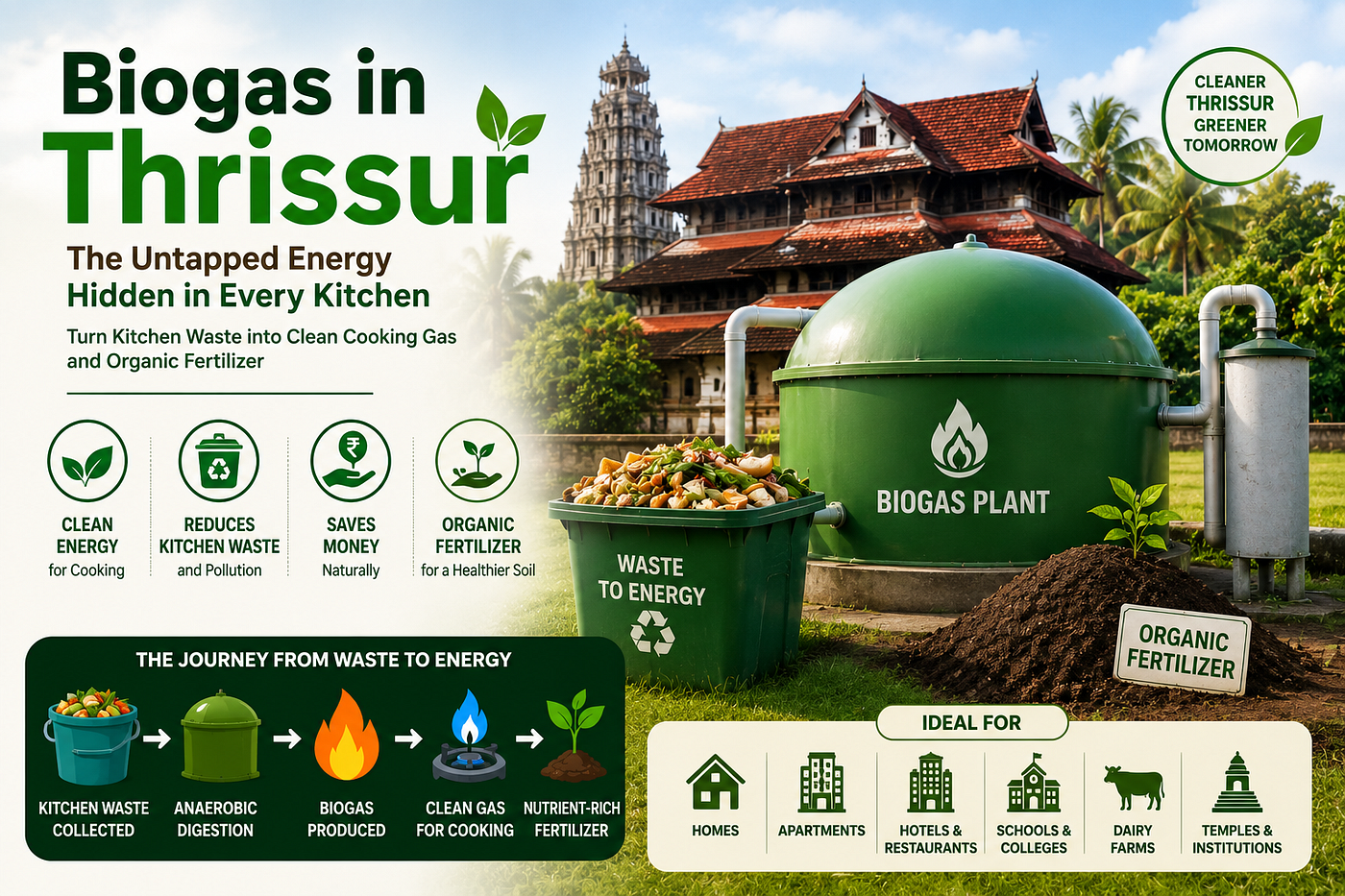
How the Process Works
The concept is simple:
- Organic waste is collected from event venues.
- The waste is segregated to remove plastics and non-biodegradable materials.
- Biodegradable material is fed into a biogas digester.
- Microorganisms break down the waste in an oxygen-free environment.
- Methane-rich biogas is produced.
- The remaining slurry becomes organic fertilizer.
The gas can be used for cooking, electricity generation, or heating applications.
Environmental Benefits
Implementing event-waste biogas systems in Thrissur can provide several environmental benefits:
Reduced Landfill Burden
Large quantities of food waste are diverted away from disposal sites.
Lower Methane Emissions
Instead of decomposing openly and releasing greenhouse gases, waste is processed in a controlled environment.
Renewable Energy Generation
Biogas can replace conventional fuels such as LPG for certain applications.
Organic Fertilizer Production
The nutrient-rich slurry supports sustainable farming and gardening activities.
Economic Opportunities
Biogas systems also create economic value.
Potential beneficiaries include:
- Wedding halls
- Catering companies
- Hotels
- Local self-government institutions
- Waste management companies
Instead of paying for waste disposal, organizations can participate in waste-to-energy initiatives that generate useful by-products.
A Model for Sustainable Celebrations
As sustainability becomes increasingly important, Thrissur has the opportunity to become a leader in green event management.
Future wedding venues may not only host celebrations but also contribute to renewable energy production through integrated biogas systems.
Such an approach would align with Kerala’s growing focus on decentralized waste management and resource recovery. Kerala has expanded household and community-level organic waste processing initiatives in recent years, including biogas-based solutions.
Conclusion
The future of **Biogas in Thrissur** may not be limited to homes and farms. Wedding halls, convention centers, and large event venues could become important contributors to renewable energy generation.
By converting food waste into biogas, Thrissur can reduce waste disposal challenges, lower environmental impacts, and create a cleaner, more sustainable future. As the district continues to grow, innovative waste-to-energy ideas like this could play a significant role in shaping the next generation of green infrastructure.
메타데이터
- post_id
- 9bef6acb96f7
- slug
- biogas-in-thrissur-can-wedding-hall-food-waste-become-the-districts-next-green-energy-source-9bef6acb96f7
- url
- https://medium.com/@akhilkr205/biogas-in-thrissur-can-wedding-hall-food-waste-become-the-districts-next-green-energy-source-9bef6acb96f7
- canonical_url
- https://medium.com/@akhilkr205/biogas-in-thrissur-can-wedding-hall-food-waste-become-the-districts-next-green-energy-source-9bef6acb96f7
- author_url
- https://medium.com/@akhilkr205
- status
- ok
- fetched_at
- 2026-06-17 10:49:34