Why Trees Around Central Park Town Homes in York, PA Need More Attention Than Homeowners Think
There’s a certain balance to neighborhoods around Central Park Town Homes in York, PA.
Why Trees Around Central Park Town Homes in York, PA Need More Attention Than Homeowners Think
There’s a certain balance to neighborhoods around Central Park Town Homes in York, PA.
The streets are quieter than the busier commercial areas nearby. Mature trees line sidewalks and parking areas. In the warmer months, large maples and oaks throw shade across driveways and front lawns by late afternoon.
It gives the neighborhood a settled feeling.
But mature trees in residential communities like this also come with long-term maintenance issues that many homeowners do not notice until damage starts showing up.
A branch begins hanging lower after a storm. Roots slowly lift sections of sidewalk. Dead limbs appear high in the canopy where nobody looks regularly.
By the time these problems become obvious, the tree may already be under stress.
Why tree care around Central Park Town Homes is different
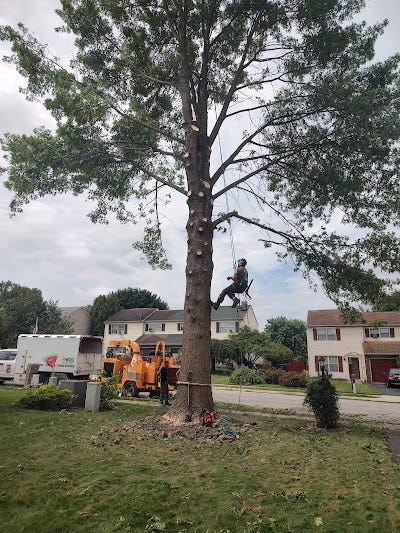
Tree maintenance in compact residential neighborhoods is different from work done on large rural properties.
Space matters.
Many homes around Central Park Town Homes have trees planted relatively close to:
- roofs
- sidewalks
- fences
- parked vehicles
- shared property lines
That changes how trimming and removals need to be handled.
Large canopy trees like red maple, pin oak, and sycamore continue expanding year after year. Their root systems spread farther than many homeowners realize, especially in neighborhoods with older landscaping.
After years of growth, branches can begin extending over gutters, garages, and neighboring lots without attracting much attention at first.
York County weather puts constant stress on mature trees
South Central Pennsylvania weather shifts quickly throughout the year.
Wet spring conditions soften the ground around root systems. Summer heat creates drought stress during dry stretches. Then winter ice and heavy snow place extra weight on aging limbs.
That cycle repeats every year.
Trees that appear healthy in April may struggle by late August after weeks of heat and inconsistent rainfall.
Storm damage also tends to build gradually.
A branch weakened during one storm may not fully fail until the next season. Cracks inside large limbs often stay hidden for months before becoming visible from the ground.
This is especially common with older oak and maple trees throughout York County neighborhoods.
The problems homeowners often miss first
Some tree issues develop slowly enough that they blend into the background.
Homeowners may notice:
- thinning leaves near the top canopy
- bark splitting along the trunk
- mushrooms near exposed roots
- dead limbs after summer storms
- branches rubbing against roofing or siding
These signs matter more than many people think.
In Pennsylvania, fungal decay and insect stress have become more common in mature residential trees over the past several years.
Spotted lanternfly activity continues affecting many parts of the region. While not every tree becomes severely damaged, stressed trees often become more vulnerable to disease, decay, and storm breakage afterward.
Compacted soil also creates hidden problems in residential communities.
Repeated foot traffic, parked vehicles near root zones, and poor drainage can slowly weaken root systems over time. Trees may continue looking healthy while stability underneath declines.
Why preventative trimming matters more in neighborhoods like this
In tighter residential areas, one failed limb can affect multiple properties at once.
That’s why preventative maintenance usually matters more than emergency response.
Routine pruning helps reduce:
- heavy overextended limbs
- storm-related breakage
- roof interference
- excess canopy weight
- weak branch structure
It also improves airflow through dense canopies during humid Pennsylvania summers.
The goal is not making trees look heavily cut back.
The goal is helping mature trees remain stable and manageable as they continue aging.
Equipment and access become part of the challenge
One thing homeowners often underestimate is how difficult tree work becomes in compact neighborhoods.
Crews may need to work around:
- narrow driveways
- parked vehicles
- utility lines
- fences
- limited aerial lift access
Heavy equipment used carelessly can damage lawns quickly during wet weather.
That’s why experienced crews usually adjust equipment placement based on soil moisture, slope conditions, and nearby structures rather than taking the fastest route through a yard.
Small details matter in neighborhoods where homes sit closer together.
The best inspections happen before something fails
Most emergency tree calls happen after visible damage appears.
A large limb falls during a storm. A tree begins leaning after saturated ground conditions. A cracked branch hangs over a driveway after high winds.
By then, homeowners are reacting instead of preventing.
The mature trees around Central Park Town Homes are part of what gives the neighborhood its character and shade. But trees that have been growing for decades need periodic attention to remain healthy and structurally sound.
For More Information, you can contact us and get a free estimate now.
Oathkeepers tree care
1180 Conewago Ave, Manchester, PA 17345, United States
717–378–1776
[embed]
메타데이터
- post_id
- 9bf19ff68c86
- slug
- why-trees-around-central-park-town-homes-in-york-pa-need-more-attention-than-homeowners-think-9bf19ff68c86
- url
- https://medium.com/@oathkeeperstreecare001/why-trees-around-central-park-town-homes-in-york-pa-need-more-attention-than-homeowners-think-9bf19ff68c86
- canonical_url
- https://medium.com/@oathkeeperstreecare001/why-trees-around-central-park-town-homes-in-york-pa-need-more-attention-than-homeowners-think-9bf19ff68c86
- author_url
- https://medium.com/@oathkeeperstreecare001
- status
- ok
- fetched_at
- 2026-06-22 05:41:33