Creamy Lobster, Scallop and Shrimp Chowder
Why Seafood Chowder Turns Tough When Everything Simmers Together
Creamy Lobster, Scallop and Shrimp Chowder
Why Seafood Chowder Turns Tough When Everything Simmers Together
By Mary Everly
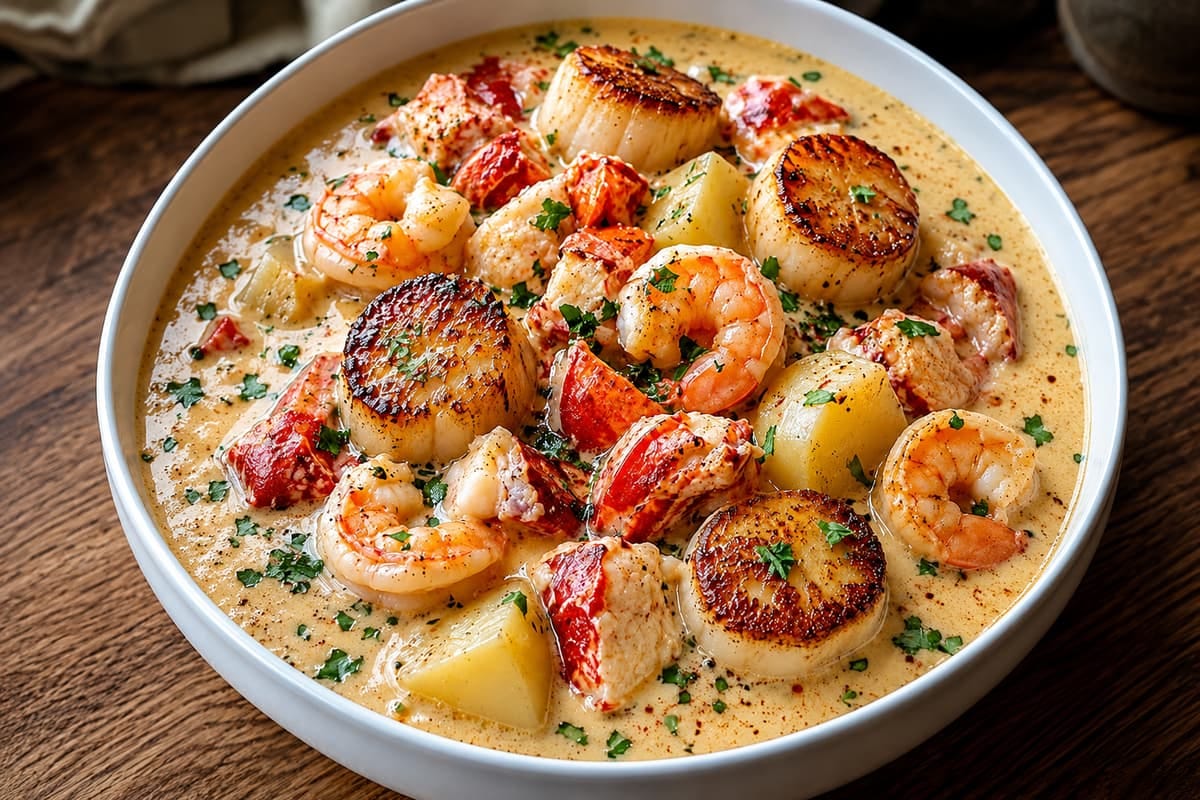
Photo: Updated Recipes
A creamy seafood chowder can look calm in the pot while the seafood inside is quietly overcooking.
That is the risk with lobster, scallops, and shrimp in one creamy base. They all belong in the same bowl, but they do not need the same amount of heat. If they simmer together while the potatoes soften and the broth thickens, the chowder may become rich and creamy while the seafood turns firm.
The problem is not the cream.
The problem is treating delicate seafood like potatoes.
The chowder works when the base does the long cooking and the seafood only gets the heat it needs.
The Base Should Be Ready Before the Seafood Goes In
A good chowder needs body before it needs seafood.
Potatoes, stock, milk, cream, and gentle thickening create the structure of the bowl. That base should be creamy, balanced, and ready before the seafood is added, because once shrimp, lobster, and scallops enter the pot, there is very little time to fix the texture without risking overcooking.
Yukon Gold potatoes help because they soften while still holding their shape. Mashing a few tender pieces back into the broth gives the chowder body without making it feel heavy or pasty.
The base should lightly coat a spoon but still ladle easily. Too thin, and the seafood feels like it is floating in cream. Too thick, and the chowder can become heavy before the seafood is even warmed through.
Scallops Need Browning, Not Simmering
Scallops are the seafood most likely to lose their best texture in a chowder pot.
They need dry heat to develop golden edges. If they go straight into the broth, they cook, but they do not brown. If they stay in the hot chowder too long, they can lose the tender contrast that makes them feel special.
That is why searing them separately matters.
A dry surface helps the scallops brown instead of steam. Once they have color, they can wait outside the pot while the chowder base is built. They only need to return at the end, when the broth is hot and ready to serve.
The goal is to keep the scallops tasting like seared scallops, not simply pieces of seafood that happened to sit in cream.
Shrimp Need Brief Heat
Shrimp are raw in this chowder, so they need enough heat to cook through. But they do not need a long simmer.
Their texture changes quickly. A few minutes in the hot creamy base can take them from translucent to opaque. After that point, more time does not make them better. It only makes them firmer.
Adding shrimp near the end gives them the heat they need without making them carry the whole cooking time of the chowder.
This is also why the base should already taste balanced before the shrimp are added. The cook should not be trying to correct seasoning, thickness, or potato texture while the shrimp continue to tighten in the pot.
Lobster Only Needs Gentle Warming
Cooked lobster is different from shrimp because it is not there to cook. It is there to warm through.
That makes it the most delicate timing decision in the chowder. If cooked lobster is boiled or held too long in the hot base, it can lose the soft, sweet quality that makes it worth using.
The heat should be low after the dairy goes in, and the chowder should not boil. Gentle warmth is enough to bring the lobster into the creamy broth without pushing it past tenderness.
In a three-seafood chowder, lobster should feel like a highlight, not an ingredient that has been asked to survive a long simmer.
The Best Chowder Is Finished in Stages
Seafood chowder works best when the pot is built in the right order.
The potatoes and broth need time. The dairy needs gentle heat. The shrimp need a short finish. The lobster needs warming. The scallops need their seared edges protected until the end.
That staging is what keeps the chowder generous without making it tough.
It also makes reheating easier to understand. Creamy seafood chowder should be warmed gently, not boiled back to life. The goal is to bring the bowl back to a smooth, hot, spoonable texture without forcing the seafood through another harsh round of heat.
A great chowder is not just creamy. It is controlled.
For the complete ingredient amounts, seafood timing, make-ahead guidance, reheating details, and printable Recipe Card, visit Creamy Lobster, Scallop and Shrimp Chowder.
메타데이터
- post_id
- 9bf4e8592d04
- slug
- creamy-lobster-scallop-and-shrimp-chowder-9bf4e8592d04
- url
- https://medium.com/@UpdatedRecipes/creamy-lobster-scallop-and-shrimp-chowder-9bf4e8592d04
- canonical_url
- https://medium.com/@UpdatedRecipes/creamy-lobster-scallop-and-shrimp-chowder-9bf4e8592d04
- author_url
- https://medium.com/@UpdatedRecipes
- status
- ok
- fetched_at
- 2026-06-21 12:17:11