Rethinking Enterprise Computing for a Hybrid Workforce
The way organizations deliver computing resources has changed significantly over the past decade. Employees no longer work exclusively from…
Rethinking Enterprise Computing for a Hybrid Workforce

The way organizations deliver computing resources has changed significantly over the past decade. Employees no longer work exclusively from a single office or rely on one physical desktop. Instead, business operations now extend across corporate offices, remote locations, home workspaces, and mobile environments.
This evolution has encouraged organizations to adopt technologies that provide secure, reliable, and consistent access to business applications without increasing administrative complexity. Desktop virtualization has become one of the key technologies supporting this transformation.
The Evolution of Enterprise Desktops
Traditional desktop environments require applications, operating systems, and business data to reside on individual computers. While this approach has been widely used for years, managing numerous physical devices can become increasingly complex as organizations expand.
Desktop virtualization offers an alternative by hosting desktop environments within centralized infrastructure, allowing users to securely access the same workspace from multiple authorized devices.
This centralized approach simplifies management while providing users with a familiar computing experience.
Why Centralized Infrastructure Matters
Modern organizations require infrastructure that is reliable, scalable, and easy to maintain.
Virtual desktop environments provide several operational benefits:
- Centralized desktop administration
- Faster software deployment
- Consistent user experience
- Simplified maintenance
- Reduced endpoint dependency
- Improved business continuity
- Efficient resource utilization
Rather than managing each desktop individually, IT teams can maintain standardized environments through a unified management platform.
Security in Virtual Workspaces
Enterprise security extends beyond protecting individual devices. Modern organizations focus on securing identities, applications, and business information regardless of where employees work.
Virtual desktop environments commonly include:
- Multi-factor authentication
- Identity and access management
- Encrypted user sessions
- Centralized security policies
- Continuous infrastructure monitoring
- Secure backup and recovery strategies
These capabilities help reduce operational risks while allowing employees to remain productive across different working environments.
Planning for Long-Term Scalability
Infrastructure decisions should support both current operational needs and future growth.
Organizations evaluating a Desktop Virtualization Partner in UAE often assess several important areas before implementing virtualization technologies, including infrastructure scalability, cloud readiness, security architecture, performance optimization, and operational management.
A scalable virtual desktop strategy allows organizations to expand users, applications, and services without significant disruption to existing infrastructure.
Technology Trends Shaping Enterprise Virtualization
Enterprise virtualization continues evolving alongside broader digital transformation initiatives.
Hybrid Cloud Platforms
Organizations combine private infrastructure with cloud services to improve flexibility and resilience.
Artificial Intelligence
Predictive monitoring helps identify infrastructure issues before they affect business operations.
Zero Trust Architecture
Continuous verification of users and devices strengthens enterprise security.
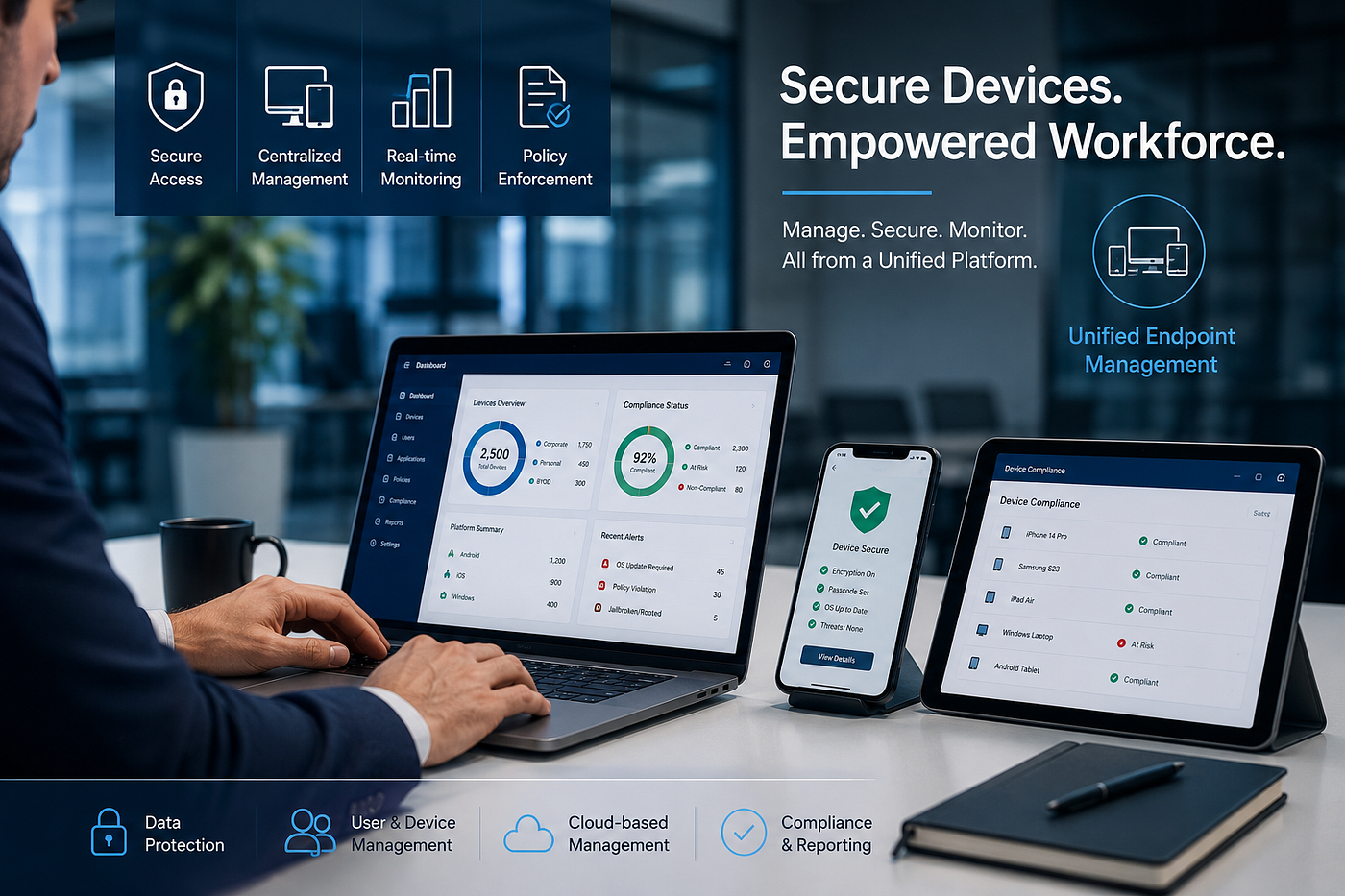
Unified Endpoint Management
Managing desktops, laptops, mobile devices, and virtual environments from a centralized interface improves operational efficiency.
These developments continue making enterprise infrastructure more adaptive and secure.
Looking Ahead
As businesses continue supporting flexible work environments, virtual desktop technologies will remain an important part of enterprise IT strategies.
Organizations that invest in centralized digital workspaces are better positioned to improve operational efficiency, strengthen information security, and support changing workforce requirements while simplifying long-term infrastructure management.
Rather than replacing traditional desktops, virtualization enables organizations to create resilient digital work environments that adapt to future business needs.
Further Reading
Readers interested in enterprise virtualization technologies and digital workspace solutions can explore the following resources.
Official Website
https://www.bouncebacktech.com/
Technical Resource
메타데이터
- post_id
- 9c5d6e735fcb
- slug
- rethinking-enterprise-computing-for-a-hybrid-workforce-9c5d6e735fcb
- url
- https://medium.com/@bouncebacktech123/rethinking-enterprise-computing-for-a-hybrid-workforce-9c5d6e735fcb
- canonical_url
- https://medium.com/@bouncebacktech123/rethinking-enterprise-computing-for-a-hybrid-workforce-9c5d6e735fcb
- author_url
- https://medium.com/@bouncebacktech123
- status
- ok
- fetched_at
- 2026-08-23 05:13:53