The Day a Simple IBAN Changed a Small Business Forever
Three years ago, Daniel almost shut down his company.
The Day a Simple IBAN Changed a Small Business Forever
Three years ago, Daniel almost shut down his company.

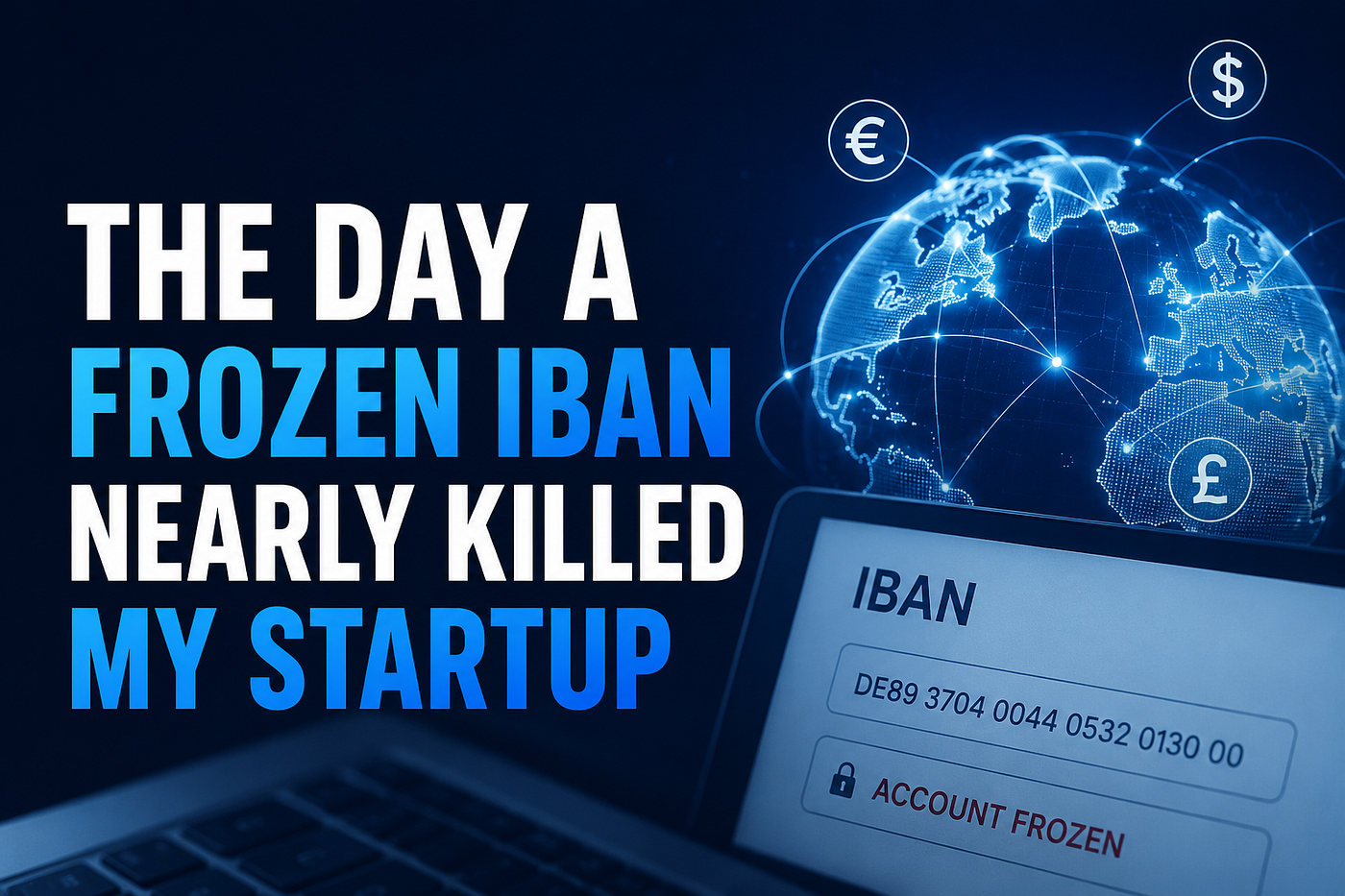
Image generated by using ChatGPT
Not because his product was bad. Not because customers stopped buying. Not because investors walked away.
It was because of a bank transfer.
Daniel ran a small software outsourcing company in Lagos. Nothing flashy. A team of 14 developers, two project managers, and clients mostly based in Europe. Every month, invoices were sent on time. Every month, payments were delayed.
At first, clients blamed their banks.
“International transfer issue.” “Compliance checks.” “Wrong routing details.” “Funds are still processing.”
Daniel believed them because, honestly, he didn’t fully understand how cross-border banking worked either.
All he knew was this:
• Salaries had to be paid. • Rent was due. • Clients expected delivery regardless of payment delays. • And every international transaction felt like rolling dice.
One month, a €18,000 payment from Germany disappeared for 11 days.
Eleven.
For a large corporation, that’s a minor accounting inconvenience. For a growing startup in Africa, that can become a survival crisis.
Daniel spent hours emailing support teams that replied with robotic templates: “We are currently investigating your transfer.”
Nobody could explain where the money actually was.
Not the sender. Not the receiving bank. Not the intermediary bank.
The funds simply existed in some invisible financial tunnel.
That month, Daniel borrowed money from friends just to cover payroll.
And that was the moment he realized something uncomfortable:
The world talks about global business as if borders no longer matter. But in banking, borders still control everything.
A few weeks later, one of his clients asked a simple question:
“Why don’t you have a European IBAN?”
Daniel had heard the term before, but it sounded like technical banking jargon that only finance teams cared about.
IBAN. International Bank Account Number.
At the time, he thought it was just a longer account number.
It wasn’t.
It was infrastructure.
And infrastructure changes everything.
After weeks of research, Daniel partnered with a fintech platform that provided him with a dedicated EUR IBAN connected to European payment rails.
The setup took less than a week.
No expensive overseas office. No complicated paperwork. No traditional bank meetings with managers in suits asking for impossible documentation.
Just a compliant onboarding process and a functioning European banking identity.
The difference was immediate.
Clients who previously needed 5–10 business days to send money could now transfer funds within SEPA rails much faster.
Some payments arrived the same day.
The excuses disappeared almost overnight.
No more: “International wire is pending.”
No more: “SWIFT delay.”
No more: “Correspondent bank issue.”
For the first time, Daniel’s company looked operationally local to European clients.
And psychologically, that mattered more than he expected.
Because trust in business is rarely built only through products.
It’s built through familiarity.
When clients saw a European IBAN instead of complicated overseas wire instructions, transactions suddenly felt easier and safer.
The irony? Nothing about Daniel’s company changed.
Same developers. Same office. Same services.
But banking infrastructure changed how the business was perceived.
That realization opened his eyes to something much larger happening globally.
IBANs are no longer just banking tools.
They’ve quietly become digital passports for businesses.
And most people still underestimate their importance.
Today, thousands of startups across Africa, Asia, Latin America, and the Middle East face the same invisible barrier Daniel once faced.
The internet made selling globally easy.
Receiving money globally? That’s still complicated.
A designer in Pakistan may work with clients in France. A SaaS founder in India may serve customers in Germany. A crypto startup in Dubai may invoice partners across Europe.
But traditional banking systems were never designed for borderless internet businesses.
They were built for a slower world.
A world where businesses operated locally. Where opening a foreign bank account required physical presence. Where cross-border commerce was reserved for large corporations.
But the economy changed faster than the banks did.
That gap created an entirely new fintech revolution.
Infrastructure companies started solving problems traditional banks ignored.
Virtual IBANs. Multi-currency accounts. Embedded finance. Cross-border payment APIs. SEPA access. Digital onboarding.
Suddenly, small businesses could access financial tools that were once available only to multinational corporations.
And quietly, a major shift began.
Banking stopped being about branches.
It became about access.
Daniel noticed this transformation firsthand.
Within a year of implementing proper IBAN infrastructure:
• Client payment delays dropped significantly. • Cash flow stabilized. • He hired more developers. • European partnerships became easier to negotiate. • And operational stress reduced dramatically.
But the biggest change wasn’t financial.
It was emotional.
For the first time, he felt his company belonged in the global economy.
That feeling is difficult to explain unless you’ve experienced international banking friction yourself.
Most people in developed markets never think about payment infrastructure.
They assume sending money is simple because, for them, it usually is.
But for millions of entrepreneurs worldwide, banking friction silently limits growth every single day.
Deals collapse because transfers fail. Freelancers lose clients due to payment delays. Startups appear “high-risk” simply because of geography.
Not because the businesses are weak.
Because the infrastructure around them is weak.
And infrastructure shapes opportunity.
That’s why IBAN access matters more than many people realize.
Not just technically. Economically. Socially. Psychologically.
A reliable banking identity can change how the world interacts with your business.
Today, Daniel mentors early-stage founders whenever he can.
And surprisingly, he rarely starts conversations with fundraising advice.
He talks about financial infrastructure.
Because he learned something the hard way:
You can build an incredible company and still struggle if money cannot move efficiently around it.
Investors often discuss scaling strategies. Founders discuss product-market fit. Marketers discuss growth funnels.
But very few people discuss the hidden engine underneath modern business:
Payment infrastructure.
Yet it determines how smoothly companies operate internationally.
The most fascinating part?
Most consumers never notice any of it.
When someone buys software online, books a flight, pays for a subscription, or sends money internationally, they rarely think about the systems operating underneath.
But behind every successful digital business is an invisible financial architecture making transactions possible.
IBANs are part of that architecture.
And as global commerce becomes increasingly digital, their importance will continue growing.
Especially for startups operating internationally from day one.
The future of business is borderless. But borderless business still requires trusted financial rails.
That’s where modern IBAN infrastructure enters the story.
Not as a luxury.
As necessity.
Daniel’s company now serves clients across seven countries.
Ironically, the crisis that almost destroyed his business became the lesson that strengthened it.
Recently, during a startup event, a founder asked him:
“What’s the biggest mistake early-stage companies make?”
Daniel smiled before answering.
“Most founders think scaling starts with marketing.”
He paused.
“But scaling actually starts when money can move smoothly.”
And honestly?
He was right.
Because no matter how innovative a business becomes, growth eventually collides with infrastructure.
And in the modern global economy, IBANs are no longer just bank account numbers.
They’re bridges.
Between countries. Between currencies. Between businesses and opportunity.
Sometimes, the difference between surviving and scaling is not the product.
It’s whether the financial system allows you to participate globally in the first place.
메타데이터
- post_id
- 9cb33d6c90e4
- slug
- the-day-a-simple-iban-changed-a-small-business-forever-9cb33d6c90e4
- url
- https://medium.com/activated-thinker/the-day-a-simple-iban-changed-a-small-business-forever-9cb33d6c90e4
- canonical_url
- https://medium.com/activated-thinker/the-day-a-simple-iban-changed-a-small-business-forever-9cb33d6c90e4
- author_url
- https://medium.com/@antriksh005
- status
- ok
- fetched_at
- 2026-06-17 08:21:27