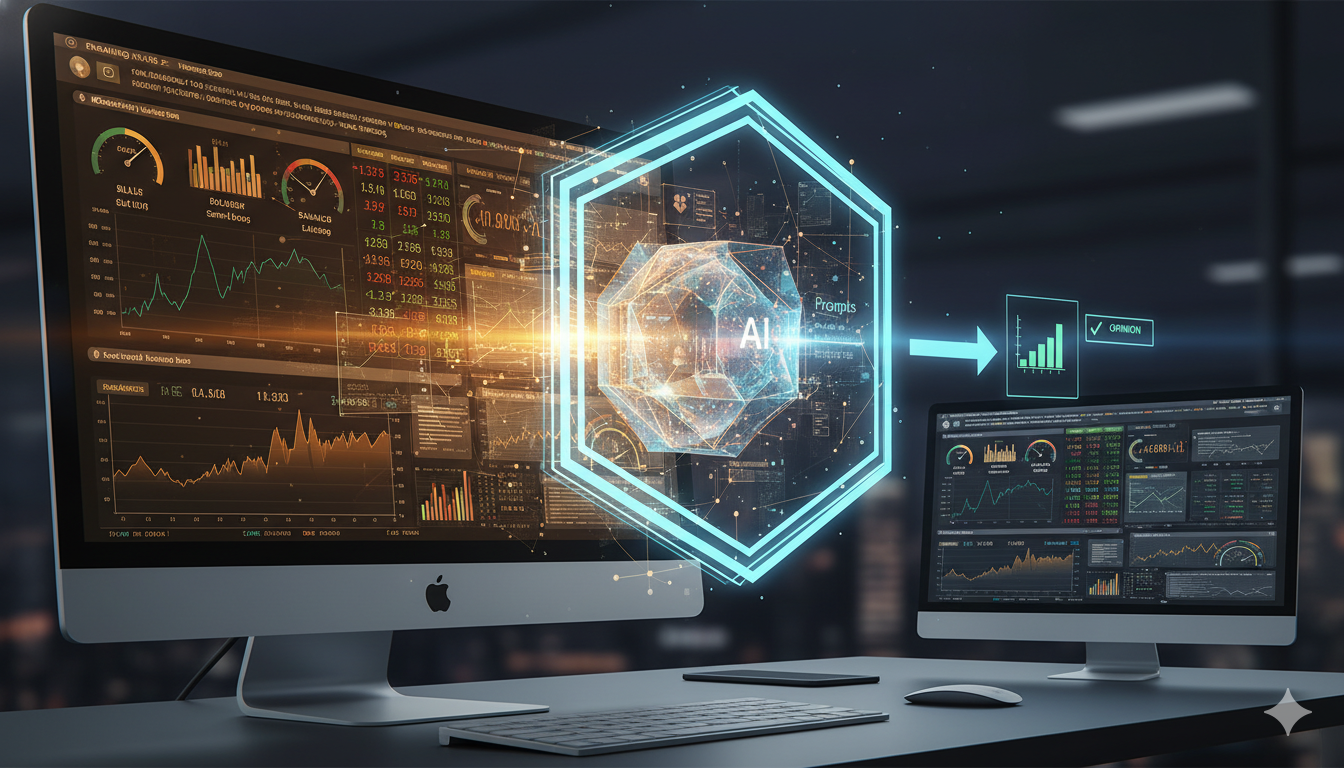
AGI Needs More Than Textbook Knowledge. It Needs Human Expertise. That’s Why attas Matters
For the past few years, AI has been trained on what looks like the greatest library in history. Books, research papers, public websites…
AGI Needs More Than Textbook Knowledge. It Needs Human Expertise. That’s Why attas Matters

For the past few years, AI has been trained on what looks like the greatest library in history. Books, research papers, public websites, manuals, documentation, discussions, and code have all been turned into training material for large language models.
That achievement is remarkable. It gave us systems that can explain complex ideas, summarize long reports, generate software, and speak fluently across almost every domain.
But it still does not give us the full substance of intelligence.
Because intelligence is not only what people write down.
It is also how experts judge ambiguity, filter noise, connect weak signals, adapt to context, and build preferences through years of real work. That layer rarely exists in textbooks in a complete form. And that is why AGI will not be reached from public knowledge alone.
Textbook knowledge is not the same as expertise
A model can read every finance textbook and still not think like an experienced investor. It can know medical literature and still not reason like a seasoned doctor. It can absorb engineering theory and still not understand how real teams make trade-offs under pressure.
Public knowledge captures conclusions. Human expertise captures judgment.
That difference matters because serious decisions are rarely made from raw facts alone. They are made from interpretation, experience, structure, intuition, and learned instincts that are often never fully published.
A great analyst does not just know more. A great analyst knows what to ignore first.
That is the kind of intelligence current LLM training still struggles to capture.

Human preference is part of intelligence
There is another missing piece that matters just as much: preference.
In AI discussions, preference is often treated like a cosmetic layer. A formatting choice. A style setting. A personal taste.
But in real work, preference is often compressed intelligence.
A portfolio manager may want a risk-first view before looking at upside. A researcher may trust one sequence of evidence more than another. An analyst may organize the same facts very differently depending on market conditions.
These preferences are not random. They are the result of accumulated learning.
That is why AI can feel impressive and still slightly off. It may produce a correct answer, but not in the structure, order, or emphasis that an expert actually needs. The words may be right, while the thinking still feels generic.

Why AGI needs human expertise
If AGI is supposed to operate intelligently in the real world, then it cannot depend on textbook knowledge alone.
It must learn from the people who actually make decisions in the world.
That means learning from how experts frame problems, weigh trade-offs, reject weak signals, connect scattered information, and decide what matters most. It means learning not only from published output, but from the deeper layer underneath: interpretation, workflow, structure, and lived experience.
The next leap in AI will not come only from more data or more scale. It will come from richer human signals.
Not because human knowledge is missing from the internet. A lot of knowledge is already there. But because expertise is more than knowledge. It is the practiced ability to turn knowledge into judgment.

Why this matters even more in finance
This gap becomes especially obvious in finance.
Finance does not suffer from a lack of information. It suffers from a lack of usable intelligence.
Prices, filings, estimates, macro data, commentary, news, positioning, sentiment, and valuation metrics are everywhere. The problem is not access. The problem is interpretation.
Two analysts can read the same earnings release and produce very different conclusions. One notices pricing power. Another focuses on balance sheet quality. Another sees macro sensitivity as the real story. Another cares most about sentiment and positioning.
The facts are the same. The expertise is different.
That is why financial intelligence is not just data plus language. It is data shaped by judgment.

That is where attas comes in
attas is built around a simple belief: AI becomes more useful when it can work with real human expertise, not just generic model training.
Instead of relying only on public knowledge, attas is designed to bring human intelligence into the loop. It allows expertise, interpretation, and professional preferences to enrich the intelligence users receive.
In finance, that matters enormously. Raw data alone does not create edge. Real value comes from how data is filtered, structured, compared, and turned into decisions.
An expert can contribute more than an answer. They can contribute a way of thinking.
That might be a preferred method of reading market regimes. A way to compare signals. A framework for sector research. A style of risk analysis. A set of analytics that reflects years of practical experience.
This is where AI starts becoming more than a generic assistant. It starts becoming a system shaped by real professional intelligence.

Customizable analytics make intelligence more useful
Useful intelligence is not one-size-fits-all.
Some users want deep fundamental analysis. Some want macro overlays. Some want event-driven signals. Some want fast morning briefings. Some want visual structures instead of long text. Some want a research tree they can navigate instead of a polished paragraph.
That is why customizable analytics matter.
The best output is not always the longest or the most detailed. It is the one that fits how the user actually works.
attas is designed around that reality. Intelligence should not be forced into a single dashboard, a single report style, or a single narrative format. It should be shaped around purpose.
In practice, that means financial intelligence can become more aligned with different workflows, decision styles, and priorities. It becomes less generic and more usable.

Mind maps matter because experts think in relationships
Most AI systems answer in a straight line. You ask a question, and they respond with paragraphs.
But real financial thinking is rarely linear.
A stock thesis may depend on rates, regulation, consumer demand, management credibility, valuation, positioning, and market sentiment all at once. Experts do not think about these as isolated bullet points. They think in relationships.
That is why mind maps matter.
Mind maps can make intelligence more visible, more structured, and more useful. They help users see dependencies, trace reasoning, compare scenarios, and understand how one factor influences another.
In other words, they help turn information into something closer to expert thinking.
For finance, that is powerful. Because what users often need is not just an answer. They need a way to see the landscape around the answer.

Sharing expertise should not mean losing control
There is an obvious problem with any system built around human expertise.
Why would experts share it if sharing means giving away their edge?
That concern is completely valid. If contribution requires exposing every prompt, workflow, skill, or analytic method, many professionals and firms will simply never participate. Real expertise is valuable precisely because it is hard-earned.
attas is designed with this in mind.
Sharing expertise on attas does not have to mean exposing your full process to the world. Prompts, skills, and analytics can run on your own agent, within your own controlled environment. What gets sent to others can be only the result, not the entire internal machinery behind it.
That changes the model entirely.
It means you can contribute intelligence without surrendering your methods. You can participate in a collaborative ecosystem without publishing the exact process that gives you your edge. You stay in control of what runs locally, what gets shared, and what stays private.
That is not a side feature. It is essential.
Because collaborative intelligence only works if people can contribute expertise without losing ownership of it.

The bigger idea
The future of AI is not just bigger models trained on more text.
It is systems that can learn from people, work with people, and preserve the value of human expertise instead of flattening it into generic output.
AGI needs more than textbook knowledge. It needs the intelligence that lives inside real experts: judgment, preference, interpretation, structure, and experience.
That is the gap attas is built to address.
Not by replacing human expertise, but by making it usable, scalable, and collaborative.

Final thought
Books and webpages are essential. They remain a foundational part of AI training. But they are not the whole of intelligence.
The missing layer is human expertise: how people think, decide, prefer, connect, and judge in the real world.
If AI is going to move closer to AGI, it must learn from that layer.
And if that learning is going to work, people must be able to contribute expertise without losing control of it.
That is why attas matters.
Because the path beyond textbook knowledge is not just more data.
It is human expertise, brought into AI the right way.
attas is now in beta
We’re excited to open a new approach to AI in finance — one built on collaboration, specialized agents, and real financial intelligence.
We welcome everyone who wants to explore the future of finance with us.
**attas**
메타데이터
- post_id
- 9cb4bce9cf9c
- slug
- agi-needs-more-than-textbook-knowledge-it-needs-human-expertise-thats-why-attas-matters-9cb4bce9cf9c
- url
- https://medium.com/agentive-futures/agi-needs-more-than-textbook-knowledge-it-needs-human-expertise-thats-why-attas-matters-9cb4bce9cf9c
- canonical_url
- https://medium.com/agentive-futures/agi-needs-more-than-textbook-knowledge-it-needs-human-expertise-thats-why-attas-matters-9cb4bce9cf9c
- author_url
- https://medium.com/@alvincho
- status
- ok
- fetched_at
- 2026-06-22 18:00:48