ZiiGaat Lush & Kiwi Ears Allegro BAL: Part 2 — The Final Chapter
Studio-grade sound, deep frequency breakdown, and the final verdict in our portable audio journey.
ZiiGaat Lush & Kiwi Ears Allegro BAL: Part 2 — The Final Chapter
Studio-grade sound, deep frequency breakdown, and the final verdict in our portable audio journey.
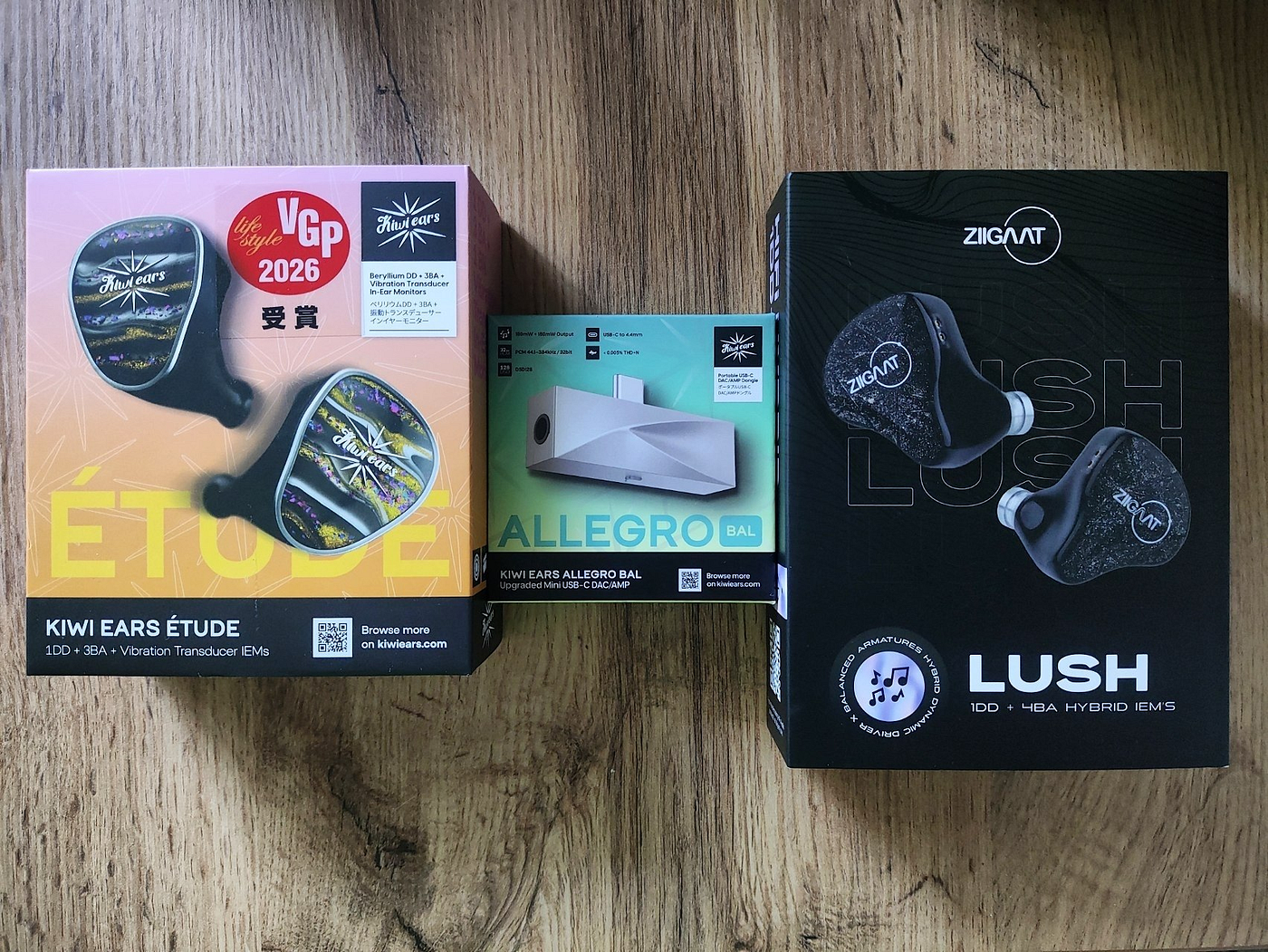
Photo by Detail Matters | llgudjey
Before we start, I want to express my gratitude to my partners at Linsoul for providing the Kiwi Ears Allegro BAL, ZiiGaat Lush, and the 4.4 Tripowin Zonie balanced cable for review. As always, this review is completely honest, objective, and reflects solely my personal practical experience.

Photo by Detail Matters | llgudjey
Introduction
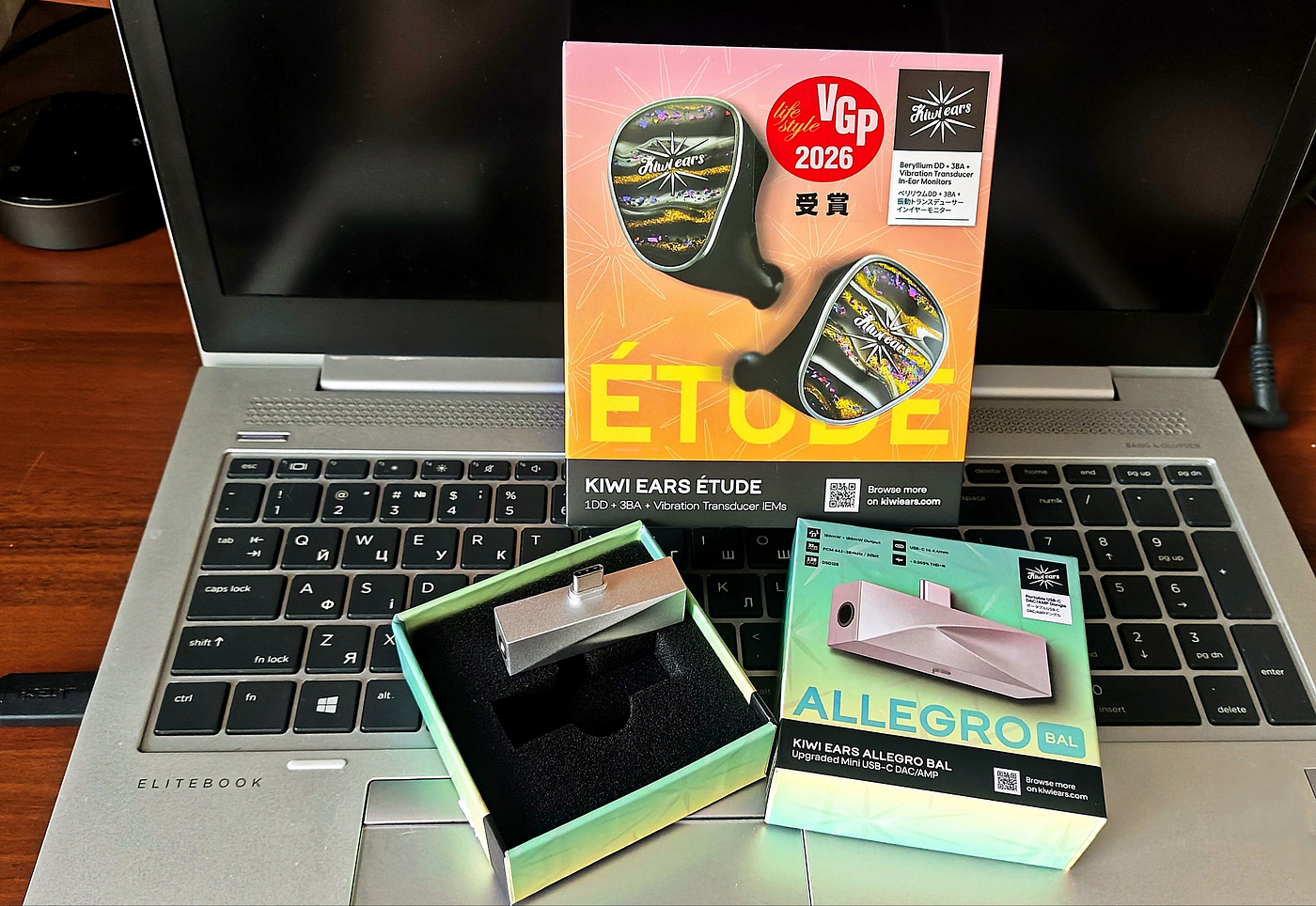
In part one, we connected the new Kiwi Ears Allegro BAL to the Kiwi Ears Etude ***you can read it here*, tested the sound, and figured out the philosophy of 4.4mm balanced connection. And you know, if I only had that setup, everything would be obvious. But having the ZiiGaat Lush** on hand as well, I simply had to write a second part.
It might seem simple — just put on the earphones and immediately understand which ones sound better. In reality, it is much more complex. I spent almost a week of continuous listening, and at the end, my nerves gave out: to finally figure it out, I plugged the right earpiece of the ZiiGaat Lush and the left earpiece of the Kiwi Ears Etude into the 4.4 balanced cable at the same time!
No spoilers. Just read on, and we will determine how the Lush perform and how the Kiwi Ears Allegro BAL affects them. For testing, I used my standard setup — an HP laptop and a POCO F5 smartphone — to accurately reflect what an average user actually listens to.

Photo by Detail Matters | llgudjey
Review Hero: ZiiGaat Lash
Just a tiny bit of technical background for general context. These are hybrid studio-class earphones featuring a 1DD + 4BA configuration. The 10mm dynamic driver with a PET diaphragm provides a subwoofer effect, while four balanced armature drivers ensure naturalness and detail. The impedance is 17 Ohms, sensitivity is 103 dB, frequency response is 20 Hz — 25 kHz, and distortion is just 0.52%.

Photo by Detail Matters | llgudjey
This model feels very mature in its tuning and sound presentation. Let’s break down the frequencies.

Frequency response and channel matching measured on B&K Type 5128. Source: The Hangout Audio.
Sound without the Kiwi Ears Allegro BAL:
- Low Frequencies: I enjoyed this from the very first track — zero uncomfortable buzzing or humming. The bass has a solid foundation and depth without excessive dominance. The sub-bass adds necessary volume and structure, while the mid-bass punch is fast and tight. Kick drums are well-controlled with no bleeding into other ranges.
- Mid Frequencies: In my humble opinion, the midrange is the strongest suit of this model. Vocals (both female and male) are delivered with body and high detail, without harshness or unpleasant decay. Instrument separation is top-tier: I could hear every single string and even vocal breathing or micro-clicks that studios usually try to hide. Zero listening fatigue — pure joy.
- High Frequencies: At first, I thought the focus was shifted towards the highs, but the treble range turned out to be both comfortable and detailed. They are not tuned for obnoxious brightness that gets annoying over time. The highs are extended and solid, providing a sense of spaciousness and air around instruments while retaining micro-contrast.

Photo by Detail Matters | llgudjey
Changes after adding the Kiwi Ears Allegro BAL and Tripowin Zonie 4.4mm cable:
- Low Frequencies: Even more control, tightness, and springiness are added. Without the DAC, the bass sometimes felt a bit softer than it should; with the amp, every bass hit gets a stronger framework, eliminating any blurriness. Speed increases, and the return to zero point is faster.
- Mid Frequencies: Vocals and instruments expand, becoming more voluminous. The DAC adds texture and life to voices, while instruments become distinctly separated. Even in dense, heavy tracks, there is zero sonic mud.
- High Frequencies: More refinement and micro-detail emerge, air between instruments becomes more pronounced, and cymbal decays go deeper. The DAC essentially sharpens the highs without crossing the line of comfort, making the sound more technical and upscale. Honestly, I didn’t fully believe in DAC upgrades since the mids and highs were already great, but the difference is there.

Photo by Detail Matters | llgudjey
Packaging and Unboxing
We are greeted by a pleasant-to-the-touch cardboard sleeve featuring cool artwork. Beneath it lies a watch-like box (comparing boxes to watches is becoming my signature style). Inside, there is a soft insert holding the earphones, and underneath sits a neat faux-leather case with the ZiiGaat logo. Inside the case, you’ll find a thick, high-quality 4-wire balanced cable (standard 1.2m length) and a pleasant surprise: three pairs of grey eartips with orange cores, one pair of foam tips, and four replacement acoustic meshes just in case the originals detach. Special attention deserves the exterior: the faceplates of the ZiiGaat Lush feature an incredible design and stunning color tones that instantly catch the eye. By the way, the model is available in two color options — Silver and Silver Blue. Ergonomics are great — no ear canal irritation during long sessions, and the sturdy cable comes with strain reliefs to prevent wear and tear.

Photo by Detail Matters | llgudjey
Conclusion
Since this is the second part, I am combining both articles and conclusions into one. The Kiwi Ears Allegro BAL is a genuinely interesting DAC/amp, and the 4.4 format definitely makes sense (though the 3 modes like movies or games remain a bit of a mystery to me, let’s assume they have their perks).

Photo by Detail Matters | llgudjey
Regarding the earphones:
- Kiwi Ears Etude is a fascinating model that I truly came to understand only after writing both parts. The tactile/vibration element adds a unique flavor, making cymbals feel extra alive. Paired with the Allegro BAL, they shine brilliantly, though they sound great on their own too.
- ZiiGaat Lush is a different beast entirely. By the way, I previously reviewed the Kiwi Ears Canta **link here, but the ZiiGaat Lush are on a completely different level. The sound is fantastic, and the Allegro BAL** only enhances the overall impression.
Who they are for:
- Lovers of natural, balanced sound without aggressive artificial distortion.
- Fans of long listening sessions who value daily comfort without fatigue.
- Those who adore detail, body, vocals, and instruments.
Who they are NOT for:
- Seekers of massive, heavy, bloated bass that bleeds into all other frequencies.
- Fans of overly dark or overly soft sound.

Photo by Detail Matters | llgudjey
Which model to choose for synergy with the Kiwi Ears Allegro BAL? I cannot give a definitive answer. I literally experimented by putting one earpiece from one brand and one from the other into the 4.4 cable. On one track, one is better; on another, the other takes the lead. I plan to actively use both pairs. Perhaps the ZiiGaat Lush will prove to be slightly more versatile.
All the devices discussed in this review — the Kiwi Ears Allegro BAL balanced DAC, the Kiwi Ears Etude and ZiiGaat Lush IEMs, as well as the Tripowin Zonie cable — are available for purchase at my partners’ website Linsoul.

메타데이터
- post_id
- 9cb66fea2eaf
- slug
- ziigaat-lush-kiwi-ears-allegro-bal-part-2-the-final-chapter-9cb66fea2eaf
- url
- https://medium.com/@llgudjey/ziigaat-lush-kiwi-ears-allegro-bal-part-2-the-final-chapter-9cb66fea2eaf
- canonical_url
- https://medium.com/@llgudjey/ziigaat-lush-kiwi-ears-allegro-bal-part-2-the-final-chapter-9cb66fea2eaf
- author_url
- https://medium.com/@llgudjey
- status
- ok
- fetched_at
- 2026-08-20 22:48:08