Your MRI & PET Scans Knows More Than Your Doctor Can See — If You Know How to Ask It
AI-powered imaging and tumor genomics are joining forces to personalize prostate cancer treatment. Here’s what that means for you.
Your MRI & PET Scans Knows More Than Your Doctor Can See — If You Know How to Ask It
AI-powered imaging and tumor genomics are joining forces to personalize prostate cancer treatment. Here’s what that means for you.
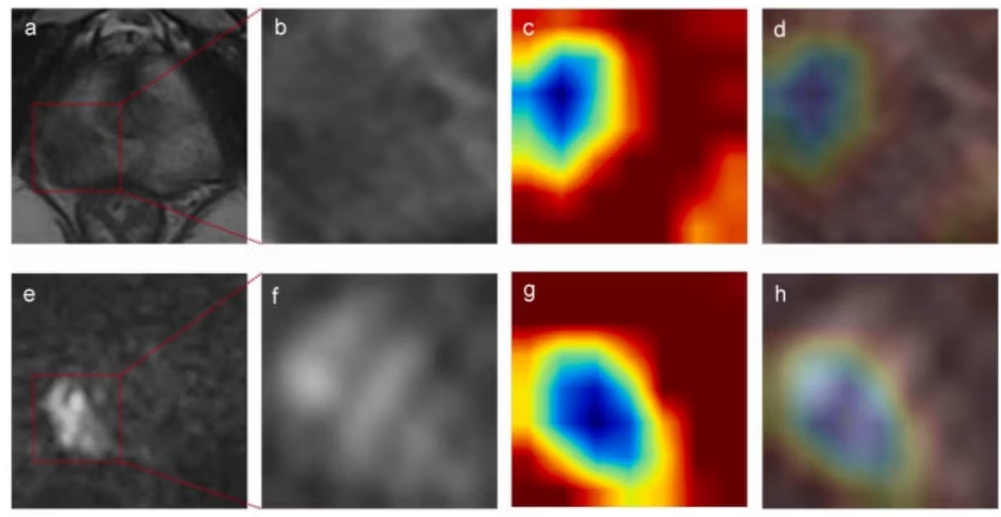
(Images courtesy of Academic Radiology)
Most men with prostate cancer have had an MRI. You lie still in a loud machine, and a radiologist studies the pictures afterward, looking for suspicious areas, grading them on a scale, and writing a report that helps determine your next step.
That radiologist is good at their job. But they are doing something fundamentally human — looking at an image and forming a judgment based on training and experience. What they cannot do is measure 500 mathematical features of a tumor’s texture, shape, and internal signal patterns simultaneously. No human eye can.
That is exactly what radiomics does.
What Is Radiomics?
Radiomics is the science of extracting large amounts of precise, quantitative data from medical images — MRI, CT, PET scans — using computer algorithms. Where a radiologist sees a lesion and says “this looks suspicious,” a radiomics algorithm sees the same image and measures things like:
- How irregular are the borders?
- How uniform is the internal texture?
- How does signal intensity vary across the lesion compared to surrounding tissue?
- What is the precise three-dimensional shape?
These measurements — sometimes hundreds of them from a single scan — become a kind of mathematical fingerprint for that tumor. And that fingerprint, it turns out, can tell us things the eye alone cannot.
Think of it like the difference between a mechanic who listens to your engine and says “sounds rough” versus a diagnostic computer that reads every sensor simultaneously and flags exactly which cylinder is misfiring at what RPM. Both are useful. The computer just measures things no ear can catch.
What Is Radiogenomics — and Why Should You Care?
Radiomics gives you a detailed picture of what a tumor looks like on imaging. Radiogenomics takes the next step: it tries to understand what those imaging patterns mean biologically — specifically, what is happening at the genetic and molecular level inside the tumor cells.
This matters because two men can have prostate cancers that look similar on a scan and have the same Gleason score, and yet one may be far more likely to spread than the other. The difference is often in the tumor’s genetics — which genes are switched on or off, which DNA repair pathways are working, how aggressively the cells are dividing.
Genomic tests like Decipher and PORTOS already analyze tissue from biopsy or surgery to assess those risks. Radiogenomics asks a different but related question: can the imaging pattern on an MRI predict what those genomic tests would show — without needing additional tissue?
Early research suggests the answer may be yes. Studies have found meaningful correlations between MRI radiomic features and Decipher score (which predicts metastasis risk after prostatectomy) and PORTOS score (which predicts benefit from post-operative radiation). One research group achieved an area under the curve of 0.84 — quite strong for a predictive model — in linking MRI features to high-risk Decipher scores.
If that kind of connection can be validated across larger populations, it would mean your imaging scan isn’t just showing where the cancer is. It’s showing you something about how the cancer behaves.
How This Changes Radiation Therapy Planning
This is where radiomics and radiogenomics have some of their most practical near-term implications.
Modern prostate radiation — whether SBRT (stereotactic body radiation therapy), brachytherapy, or treatment on an MRI-guided linear accelerator — is already highly precise. Radiation oncologists can shape beams with remarkable accuracy. But the question of how much radiation to give, which target to focus on, and how tightly to draw the treatment margins still depends largely on PSA levels, Gleason grade, and clinical staging.
Radiomics-informed planning may eventually help answer those questions more precisely:
Identifying the most dangerous lesion. Prostate cancer is often multifocal — multiple tumors can exist in the gland at the same time. Not all of them are equally dangerous. Radiogenomics research has shown strong correspondence between the lesion that looks most aggressive on imaging and the lesion carrying the most genomic instability. Focusing additional radiation dose on that target, while sparing surrounding tissue, could improve disease control and reduce toxicity.
Predicting radiation sensitivity. PORTOS, the genomic test that evaluates DNA repair gene activity, predicts which patients are most likely to benefit from radiation. If radiomic features can predict PORTOS scores, physicians may one day be able to use the MRI scan itself to make that determination — useful when tissue isn’t available or when results are needed quickly.
Adaptive treatment. On MRI-guided linear accelerators, radiation plans can already be adjusted daily based on how the anatomy looks that morning — accounting for a fuller bladder, a different rectal shape. Radiomics could eventually add a layer of biological monitoring to that process, tracking whether the tumor’s imaging signature is changing in ways that suggest response or resistance.
Reducing unnecessary treatment. If an imaging-based model can reliably identify men whose cancer is genomically low-risk, some men currently receiving adjuvant (post-surgery) radiation based on clinical criteria alone might safely be spared that treatment. Others who appear low-risk clinically but have high-risk imaging features could be identified for earlier intervention.
What About Side Effects?
One of the most consistent hopes driving this research is that better targeting could reduce collateral damage — the urinary, bowel, and sexual side effects that significantly affect quality of life after prostate radiation.
The logic is straightforward: if you know precisely where the most aggressive part of the tumor is, you can focus your dose there and use lower doses elsewhere in the gland. This is called a “simultaneous integrated boost” approach. You’re escalating dose to the target that matters most while protecting the urethra, rectum, and nerves nearby.
Whether radiomics-guided planning measurably reduces side effects in clinical practice — rather than just in theory — is still being established. The evidence is promising but not yet definitive. The strongest data right now supports the diagnostic and staging applications of this technology. Treatment optimization is next.
The AI Piece of the Puzzle
Radiomics does not exist in a vacuum. The field is increasingly intertwined with artificial intelligence.
AI models trained on large imaging datasets are now approaching — and in some settings surpassing — radiologist performance in detecting clinically significant prostate cancer on MRI. In one large international study (the PI-CAI Consortium), AI assistance improved detection accuracy by 3.3% across the board, with the largest gains among less experienced readers. That may sound modest, but across thousands of biopsies, it translates to meaningful clinical impact — fewer missed cancers, fewer unnecessary procedures.
AI also powers the computational side of radiomics. Extracting and analyzing hundreds of imaging features from a single scan requires algorithms, not just software. And as those models are trained on increasingly large and diverse datasets, their predictive performance improves.
The promise of combining AI-driven radiomics with genomic testing data — essentially teaching a model to read both the imaging and the biology simultaneously — is the frontier these researchers are working toward.
Where Does This Stand Right Now?
Honest answer: radiomics and radiogenomics are powerful tools in development, not standard clinical practice.
Most of the studies linking MRI features to genomic risk scores have been conducted in relatively small, single-institution cohorts. Before these approaches become part of routine care, they need validation across diverse populations, standardization of the methods used to extract radiomic features, and, ideally, prospective trials showing that acting on these findings improves outcomes.
That is not a criticism of the science — it is the normal progression of any significant diagnostic advance. PSMA PET, which is now standard of care for staging and restaging prostate cancer, went through exactly this kind of validation pipeline over the past decade.
What this means for you today is that radiomics and radiogenomics are unlikely to change your treatment plan unless you are enrolled in a clinical trial or being treated at a major academic center doing this kind of work. But they are shaping how the next generation of prostate cancer imaging and treatment will be designed — and understanding them makes you a more informed participant in conversations with your clinical team.
Questions Worth Asking Your Doctor
- Is my prostate MRI being read with any AI assistance or radiomics tools?
- My cancer appears on imaging as [X] — is there any genomic testing (Decipher, PORTOS) that could tell us more about how it behaves?
- If I’m planning radiation, is there a way to identify which part of my tumor is highest risk for a focal dose escalation approach?
- Are there clinical trials at your center involving advanced imaging, AI, or integrated imaging-genomic approaches for prostate cancer?
- Given my imaging findings and genomic results, what does the evidence say about the best radiation approach for my situation?
The Bottom Line
Your MRI scan is already one of the most valuable tools in prostate cancer care. Radiomics and radiogenomics are working to make it more valuable still — not just showing where cancer is, but revealing something about how it behaves, how it is likely to respond to treatment, and where to focus the most intensive care.
The science is real. The results are early but promising. The path from research to routine clinical use is still being paved.
But the direction is clear: the image on the screen contains more information than we currently use. The goal is to use all of it.
Further Reading
- Redefining Prostate Cancer Precision: Radiogenomics, Theragnostics, and AI-Driven Biomarkers — Quicios Dorado et al. (2025, Cancers). The comprehensive review article on which much of this post is based. Covers PSMA PET, radioligand therapy, radiogenomics, liquid biopsy, and AI across all disease stages. 🔗 https://pmc.ncbi.nlm.nih.gov/articles/PMC12691006/
- Radiomics in Prostate Cancer: An Up-to-Date Review — Ferro et al. (2022, Therapeutic Advances in Urology). A thorough survey of how radiomics is being applied across diagnosis, grading, and treatment monitoring. Freely available via PubMed Central. 🔗 https://pmc.ncbi.nlm.nih.gov/articles/PMC9260602/
- Advancements in MRI-Based Radiomics and Artificial Intelligence for Prostate Cancer — Chaddad et al. (2023, Cancers). A comprehensive review of AI tools supporting PI-RADS interpretation, biopsy targeting, and treatment planning — more technical, but freely available. 🔗 https://pmc.ncbi.nlm.nih.gov/articles/PMC10416937/
This article is based on peer-reviewed research and is intended to help you ask better questions — not to replace a conversation with your clinical team. Radiomics and radiogenomics are evolving rapidly; what is research today may be standard care within the decade. Stay curious, and bring these questions to your next appointment.
Mark Perloe, MD, is a retired reproductive endocrinologist and prostate cancer patient advocate. He writes at medium.com/@mperloe
메타데이터
- post_id
- 9cc1e8064fb6
- slug
- your-mri-scan-knows-more-than-your-doctor-can-see-if-you-know-how-to-ask-it-9cc1e8064fb6
- url
- https://medium.com/@mperloe/your-mri-scan-knows-more-than-your-doctor-can-see-if-you-know-how-to-ask-it-9cc1e8064fb6
- canonical_url
- https://medium.com/@mperloe/your-mri-scan-knows-more-than-your-doctor-can-see-if-you-know-how-to-ask-it-9cc1e8064fb6
- author_url
- https://medium.com/@mperloe
- status
- ok
- fetched_at
- 2026-06-15 20:49:13