PBIS and Trauma Informed Education Don’t Mix
Why combining these two approaches is potentially dangerous
PBIS and Trauma Informed Education
Why combining these two approaches is potentially dangerous
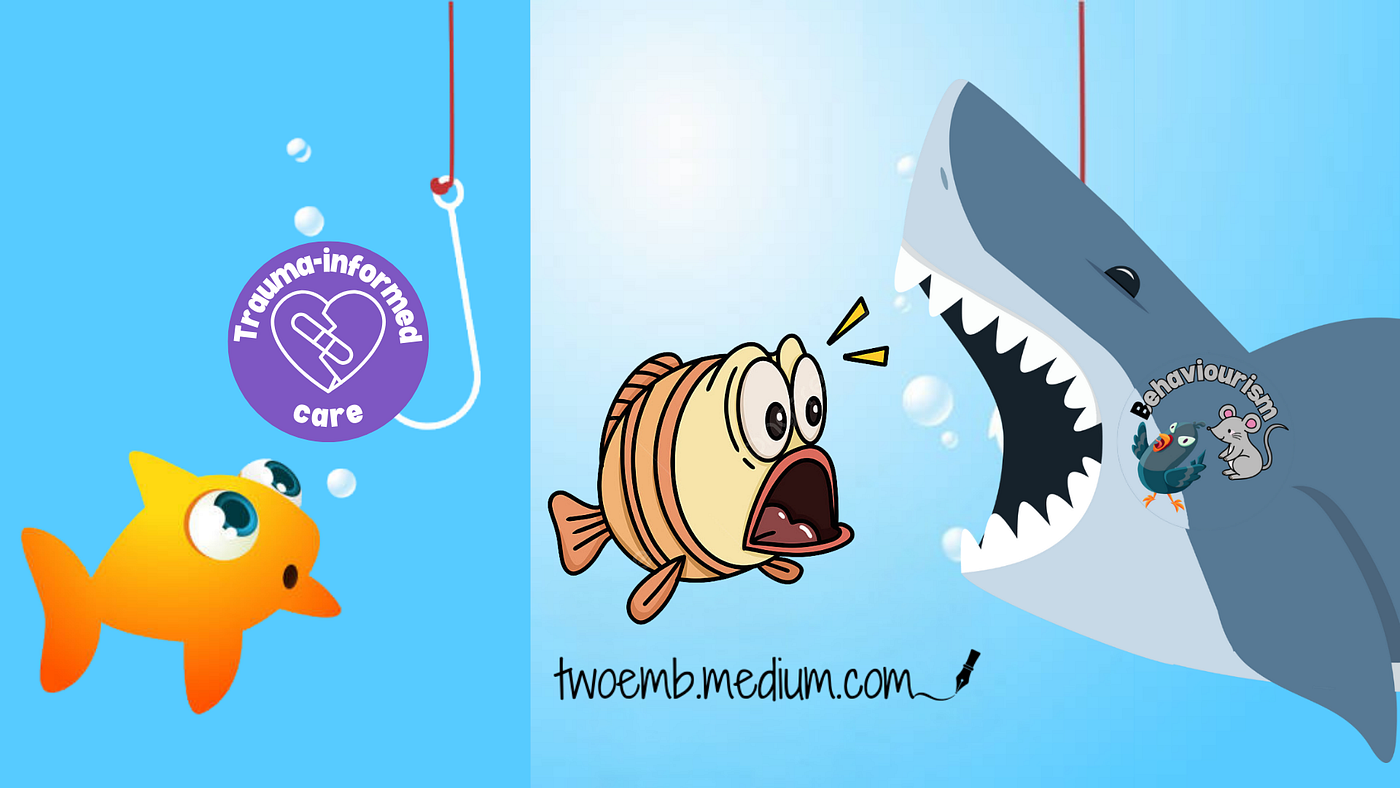
Image created by author
PBIS and TIE are mutually exclusive
Yesterday I wrote *PBIS is Just ABA with a Nicer Name*, in which I debunked PBIS’ claim their programs improve student mental health. At the end of that piece, I began exploring the six principles of trauma-informed care. As a refresher, the Substance Abuse and Mental Health Services Administration’s six principles of trauma-informed care are:
- safety
- trustworthiness and transparency;
- peer support;
- collaboration and mutuality;
- empowerment, voice, and choice; and
- cultural*, historic, and gender issues.
*(Under cultural considerations, it’s imperative to ensure race, neurodivergence, and disability are included).
PBIS and TIE are fundamentally incompatible
In a very important article on PBIS and trauma-informed education, Kim & Venet concluded PBIS and trauma-informed practices are fundamentally incompatible. Mixing trauma-informed education with PBIS is ultimately harmful for students, especially students of colour and disabled students. In practice PBIS upholds or creates harm, and both reproduces and produces trauma.
I would (and *did*) argue that trying to mix trauma-informed care with behaviourism has the potential to be even more harmful than behaviourism alone. Incorporating select elements of trauma-informed care can obscure the problems inherent in behaviourism-based practices. By including terms like “trauma-informed” in their marketing, PBIS offers a false sense of security, potentially convincing administrators, staff, and parents the program is helpful rather than harmful.
It’s like a bait-and-switch where they promise you trauma-informed care, but instead you get behaviourism.
Breaking down more PBIS claims
In their flyer promoting trauma-informed PBIS, the authors recommend “direct instruction on how and when to use acceptable coping mechanisms” and ensuring staff are not “inadvertently reinforcing inappropriate behaviors”. The document offers no guidance as to what should be considered “appropriate” or “acceptable” coping mechanisms, leaving it entirely up to the staff member.
This can lead to “inconvenient” or unexpected behaviours being labelled as “inappropriate”, even if they are not harmful, which can then lead to effective coping mechanisms being targeted for behavioural modification. With trauma and survival, there’s no such thing as “acceptable” or “appropriate”, there is only safe or unsafe.
Neuroception refers to our sense of felt safety and is entirely subjective. It is impacted by our environment, relationships, inner processes, and our experiential history. The possibility of punishment, or not receiving a reward which has been dangled in front of us, is often interpreted by the nervous system as a threat. This does not help our nervous system detect safety and, as such, does not make children feel safe.
In their booklet on trauma-informed practices, PBIS once again encourages school staff to “strengthen relationships” with youth experiencing trauma by increasing their “use of active supervision”, a “PBIS strategy that prompts staff to scan, move” and supervise.
Hyper-surveillance is excessive scrutiny in the anticipation of problem behaviours, attitudes, or presence. The research on surveillance and trauma demonstrates that hyper-surveillance disproportionately negatively impacts disabled youth of colour.
Hyper-surveillance creates a cycle of labeling, surveillance, and punishment that occurs in schools, in which a disability label might lead to increased surveillance, making potential disciplinary infractions more likely to be seen and punished.
These practices shape how students understand themselves and their own behaviour. Being identified, labelled, and/or treated as a “troublemaker” can lead to children internalizing these messages and believing they are “bad kids”.
Bottom line
The evidence on PBIS and trauma demonstrates that PBIS serves as a way to label, punish, and surveil students. Rather than a collaboration with students to determine what they need, the “function of behavior” is often used as a euphemism for increased surveillance to collect data which is then interpreted by the adults, without input from the youth.
Kim & Venet’s research on PBIS and trauma concludes that not only is PBIS not trauma-informed, it is trauma-inducing because it upholds white supremacist and ableist notions of “normal”. PBIS erases multidimensional identities, and applies deficit labels to students whose identities have been marginalized especially in regard to race and disability.
Most importantly, PBIS is not in alignment with fundamental trauma-informed principles or practices.
“Statistics in social-scientific work focus attention on variables that can be measured at the expense of those that really matter”. — Susan Haack
PBIS and scientism
PBIS markets its products using data collection and scient*ism* (as opposed to actual science).
In their book *Fix Injustice, Not Kids*, co-authors Gorski & Swalwell write: We must exercise caution about how we collect and interpret more conventional quantitative data that are focused on inputs and outputs such as discipline referrals and graduation rates, and we should consider other kinds of data that can help us learn more about how students experience schools.
The scientific method (very briefly) is the construction and testing of a scientific hypothesis. Whereas scientism claims that science alone can render truth about the world and reality. It is a single-minded adherence to only that which is empirical or testable.
The purported objectivity of data can be weaponized and used to gaslight students or families who feel they are being treated unfairly. “But the data cant be ____” (racist, ableist, biased, etc.).
One of Susan Haack’s Signs of Scientism is using the words “science,” “scientific,” “scientifically,” “scientist,” etc., honorifically, as generic terms of epistemic praise.
Haack writes, “practitioners uneasy about the standing of their discipline or approach” tend to use these honorifics “emphatically and often, and their use encourages uncritical credulity”. In other words, people see the terms “evidence-based”, “data”, “scientific”, etc. and are more likely to believe the claims without further investigating the quality of the research used. I argue that PBIS uses scientism as a marketing tactic.
For example, the 14-page booklet on PBIS and trauma uses the word “evidence” seven times, and the word “data” 33 times. In contrast, it only uses the words “safe” or “safety” twice, and does not mention anything about the students’ experiences or feelings.
As Haack points out, “statistics in social-scientific work focus attention on variables that can be measured at the expense of those that really matter”.
So what does really matter?
- Interpersonal connections & community;
- Safe, caring relationships & environments;
- Empathy;
- Support & co-regulation;
- Autonomy;
- Dignity; and
- Choice
And if you’re not already thoroughly convinced…
In 2023, a Joint Committee on Disability Matters concluded PBIS violates the Convention on the Rights of Persons with Disabilities’ principles of autonomy and dignity. The report developed by this joint committee explored how well our United Nations’ disability services aligns with the UNCRPD.
Two paragraphs of the report address issues with PBIS. The committee determined PBIS risks harm due to its impact on individuals’ rights to freedom and autonomy. The first is:
“PBIS is considered by people with disabilities, activists, and advocates, to be founded on the same underlying approach as Applied Behaviour Analysis. There is significant opposition to the use of any of these related behaviourism-based therapies by the autistic community and representative organizations.”
The committee concluded:
“Behavioural interventionist therapies are ultimately founded on modifying disabled people’s behaviour to meet goals decided by others; often to conform more closely with neurotypical communication, behaviour and norms. Therefore the Committee believes they cannot uphold the UNCRPD principles of autonomy, dignity, right to identity, and freedom from non-consensual or degrading treatment.”
The UNCRC
The UN Convention on the Rights of the Child says children have the right to give their opinions freely on issues that affect them; to share freely with others what they learn, think, and feel; and adults should listen and take children seriously.
It also says education should teach children to understand their own rights; discipline in schools should respect children’s rights; and children’s education should help them fully develop their personalities, talents and abilities.
I argue PBIS also fails to meet these basic tenets of the UN Convention on the Rights of the Child. Students are often disciplined or corrected for sharing their opinion if the adults do not like that opinion. If the adults disagree, or do not like how it was expressed, they may label the child’s behaviour as “disrespectful” or “defiant”, even if they were merely sharing their thoughts.
As demonstrated through decades of solid research, PBIS and other behaviourism-based approaches do not respect the rights of children and youth.
Perhaps most egregiously, the normative, ableist, and racist ideals of “appropriate” behaviour prevents disabled and neurodivergent students, as well as students of colour, from fully developing and freely expressing their own identities, personalities, cultures, and abilities.
Priorities
Even if we were to take PBIS’ claims at face value, and assume their programs do reduce “problem” behaviour, out of school suspensions, and office discipline referrals… So. What? The issue isn’t only that their research is highly flawed, and their claims not well-supported by the evidence, that’s not even the most significant problem.
What does “success” look like? As I see it, the primary concern is they’re measuring the wrong thing. Their focus remains on “appropriate” (aka convenient) behaviour, rather than creating safe, connected school communities which embrace rather than pathologize difference.
They’re worried too much about this triangle, and not enough about this one. Their entire program seems to be based on the premise that if you reward compliance and conformity, then safety and belonging will follow after. That’s not how it works. Decades of research has shown that children need a solid foundation upon which to build. Students need to feel welcome, connected, and safe FIRST, before anything else.
Inclusion benefits everyone
An inclusive, truly trauma-informed community (definitely absent the behaviourism) would not only benefit marginalized and vulnerable children & youth. An empowering and collaborative school culture would benefit everyone, staff and students alike.
© Jillian Enright, Neurodiversity MB
Related articles
[embed]If We “Trained” Kids Like Pets If your child’s school uses PBIS, you don’t have to imaginemedium.com
Ways to support my work
You can leave a “tip” on Ko-Fi at https://Ko-Fi.com/NeurodiversityMB
Become a paid subscriber to my Substack publication
Check out my online store at https://NeurodiversityMB.ca/shop
Read and share my articles from twoemb.medium.com
You can also follow me on facebook & Blue Sky, and find all my links on LinkTree
Learn more
[embed]ABA is Backed by Scientism, Not Science Scientism, ABA, and the pathologization of autismmedium.com
[embed]Behaviourism Is Not Inclusion PBIS is just ABA with different lettersmedium.com
References
Annamma, S. A. (2018). The pedagogy of pathologization: Dis/abled girls of color in the school-prison nexus. Routledge.
Bartlett, N.A. (2023). Intensive Social, Emotional, and Behavioural Interventions. In R. Freeze (Ed.). Transformative Inclusive Education (pp. 377–410). Canadian Scholars.
Barrett, S., Eber, L., Pearles, K., Pohlman, K. (2019, August 8). Fact Sheet — Interconnected Systems Framework 101: An Introduction. OSEP Technical Assistance Center on PBIS. PBIS.org
Bradshaw, C. P., Waasdorp, T. E., & Leaf, P. J. (2012). Effects of school-wide positive behavioral interventions and supports on child behavior problems. Pediatrics, 130(5), e1136–1145. https://doi.org/10.1542/peds.2012-0243
CSAT (2014). Trauma-Informed Care in Behavioral Health Services. Substance Abuse and Mental Health Services Administration; (Treatment Improvement Protocol (TIP) Series, №57.) Appendix C, Historical Account of Trauma. Center for Substance Abuse Treatment (CSAT). https://www.ncbi.nlm.nih.gov/books/NBK207202
Eber, L., Barrett, S., Scheel, N., Flammini, A., & Pohlman, K. (2020, November 17). Integrating a Trauma-Informed Approach within a PBIS Framework. PBIS.org
Gabriel, J. (2022). Disrupting Discipline: A DisCrit Critique of Behavior “Management” in the Art Room. Research in Arts and Education, 2022(3), 36–47. https://doi.org/10.54916/rae.125084
Gobbel, R. (2023). *Raising Kids with Big Baffling Behaviours: Brain-body-sensory strategies that really work*. Jessica Kingsley Publishers.
Gorski, P. & Swalwell, K. (2023). Fix Injustice, Not Kids : and other principles for transformative equity leadership. ASCD Books.
Haack, S. (2012.). Six Signs of Scientism. Logos & Episteme, 3(1), 75–95. https://doi.org/10.5840/logos-episteme20123151
Joint Committee on Disability Matters. (2023, February). Aligning Disability Services with the United Nations Convention on the Rights of Persons with Disabilities. Houses of the Oireachtas.
Kim, R. M., & Venet, A. S. (2023). Unsnarling PBIS and Trauma-Informed Education. Urban Education, 60(3), 700–728. https://doi.org/10.1177/00420859231175670
Koslouski, J.B., Stark, K., Chafouleas, S.M., & Riley-Tillman, T.C. (2023). Considering Equity of Evidence: Examining Teachers’ Justifications for Direct Behavior Rating Scale Scores. School Mental Health 15, 552–565. https://doi.org/10.1007/s12310-023-09570-5
PBIS. (2024, January 12). PBIS Improves Student & Adult Mental Health and Wellbeing. Positive Behavioural Interventions and Supports. PBIS.org.
Schultz, K., Cattaneo, L. B., Sabina, C., Brunner, L., Jackson, S., & Serrata, J. V. (2016). Key roles of community connectedness in healing from trauma. Psychology of Violence, 6(1), 42–48. https://doi.org/10.1037/vio0000025
Splett, J. W., Smith-Millman, M., Raborn, A., Brann, K. L., Flaspohler, P. D., & Maras, M. A. (2018). Student, teacher, and classroom predictors of between-teacher variance of students’ teacher-rated behavior. School Psychology Quarterly, 33(3), 460–468. https://doi.org/10.1037/spq0000241
UNCRC. (1990, September 2). *The United Nations Convention on the Rights of the Child*. United Nations Human Rights Office of the High Commissioner.
Weist, M. D., Splett, J. W., Halliday, C. A., Gage, N. A., Seaman, M. A., Perkins, K. A., Perales, K., Miller, E., Collins, D., & DiStefano, C. (2022). A randomized controlled trial on the interconnected systems framework for school mental health and PBIS: Focus on proximal variables and school discipline. Journal of school psychology, 94, 49–65. https://doi.org/10.1016/j.jsp.2022.08.002
메타데이터
- post_id
- 9ced9102bc55
- slug
- pbis-and-trauma-informed-education-dont-mix-9ced9102bc55
- url
- https://medium.com/neurodiversified/pbis-and-trauma-informed-education-dont-mix-9ced9102bc55
- canonical_url
- https://medium.com/neurodiversified/pbis-and-trauma-informed-education-dont-mix-9ced9102bc55
- author_url
- https://medium.com/@twoemb
- status
- ok
- fetched_at
- 2026-06-20 20:29:01






