Imprisoned For Baby Blues
Prompt #94
FIRSTLINE FiCTION
Imprisoned For Baby Blues
Prompt #94
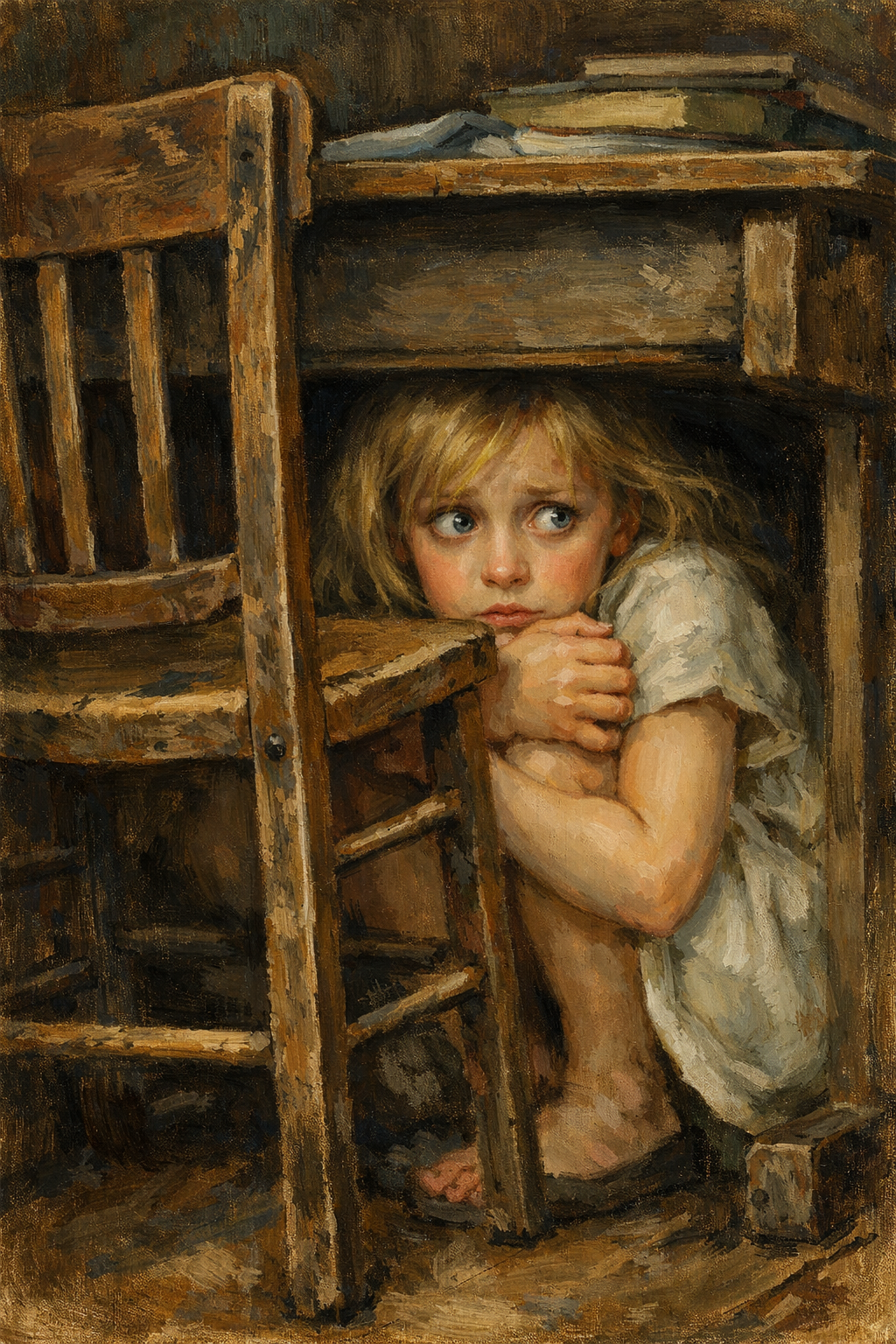
Photo by Helena Lopes on Unsplash
Her eyes popped; “I’m not sure people do that anymore,” she replied. Annie’s fingers were busy shelling peas while sitting between Mary and Millicent.
“In 1927 through 1966, in Ontario, if a woman had postpartum psychosis, it was often called the Baby Blues.” Millicent paused to sip her tea, then resumed, “But the psychosis was often more black than blue, just like many women discover after childbirth today. Depression can hit hard after so many hormonal changes due to pregnancy.”
“That’s not the worst of it, though. People didn’t really speak of such things except in whispers,” Mary added.
Annie’s mouth was shut now, but her ears were wide open as her two great-aunts got to reminiscing. She always learned more about what was really happening in her family. But Annie sensed a dark mystery here.
“That’s always been part of the problem. It was when Eleanor was sent away to The Mercer Women’s Prison by her first husband. It was intended to be a “Female refuge” where women with addictions or problems living as housewives were sent for six months. They would get a chance to properly instill feminine virtues such as obedience and a docile temperament.” Millicent snapped and shook her head in disgust.
Mary guffawed, “Conditions inside Mercer changed for the worse before Eleanor got there in 1950. Women who were violent criminals or suffering from psychiatric conditions, and those deemed ‘incorrigible’, all got lumped under the Female Refuge Act. It sure as hell didn’t help a woman who got depression after having a baby to be sent there.”
Annie asked in a small voice, “Women who were sad got sent to prison?”
Millicent shrugged, “It happened if someone in her family or the community decided she was not acting the way women or girls should. In your teens, if you repeatedly broke your curfew or were found to have VD, or were mentally ill when most people thought you should be happily caring for your newborn… You could find that a complaint was filed with a judge, and if he ruled against you, you would be committed. Parents, husbands, or anyone who believed you were a risk to the community petitioned the judge. If the judge ruled you were incorrigible, you were taken to prison right from the courtroom.”
“But you said Eleanor was sent there by her first husband. He petitioned to have his own wife sent to prison?” Annie asked.
“Eleanor was speaking of not wanting to live anymore and thinking of ending her life daily. She didn’t want Ted to know at first, when she feared that he might send her away to stay with her family. But eventually, Annie was so desperate that she admitted what she was thinking about and how scared she was that she might do it.” Mary’s voice trailed away as she swallowed a lump in her throat.
Miilicent finished for her, “Ted was certain she was an unfit mother, who wasn’t worthy of their baby boy. So, he did worse than what she’d feared and had her committed to the prison because she was insane or hysterical. The doctor he listened to told him that sending Eleanor away would solve her problems. It didn’t take much to convince the judge when he had a doctor stating that she needed to have time away for treatment because she was a danger to herself and her child. The truth is that every woman is in danger when the laws are so poorly written that one doctor can incarcerate a woman for what she fears, or the thoughts she has.”
“That’s horrifying. How did she get out?” Annie asked.
Mary continued the story.
“They closed the prison down in 1966 after there was an inquiry into the conditions inside the Mercer in late 1964. The abuse and negligence came out in the investigation. The commission set up a committee to reassess all the incarcerated women at that time. Eleanor was released and left Ontario after changing her name. She remarried because her first husband had divorced her and taken their son to Italy. We got letters when she had two more children. One of them is your Uncle Bryan. He came and looked us up after Eleanor had died. She never came back to Ontario while she was alive.”
Millicent got up to replace the bowl of peas with an empty one, since the three of them had filled it to the brim.
“We all went to court when Eleanor gave testimony that proved the prison doctor had refused to let her be released, even though she had felt recovered for a long time before she was freed. The prison doctor had been testing drugs on the women and refusing to let them leave.”
Annie wiped a tear away with a tissue.
“It’s such a dangerous type of law, and people are always talking about going back to those simpler times. Yet it was so easy for someone to start whisper campaigns against girls and women. Not all parents love their daughters. Sometimes they just want to punish them for being willful or having the wrong attitude.”
Millicent nodded, her agreement, “Girls are never valued as highly as boys. Not by some parents. Not by all husbands. It’s an ugly truth. I thought things had been changing for the better. Then I read about Incels, the manosphere, and the Rape Academy online. We need to speak more openly about things like having psychosis after giving birth and vote to make sure no girls or women end up being starved, abused, or exploited. Every single woman under the age of 35 — married or single, rich or poor- was subject to The Female Refuge Act, and most had no idea that a vindictive family member with the help of a lazy judge could have them incarcerated. We need to remember that those good old days were dangerous for us.”
Annie clapped her hands in agreement, then declared, “I’m going to write a paper about The Female Refuge Act in school. 1964 was only 62 years ago — I wonder if I could speak with some women who were incarcerated under that Act. I didn’t think women could be sent to prison for reasons like being ‘unmanageable’ or leading an ‘idle or dissolute life.’ But Section 28 of the Canadian Charter of Rights and Freedoms states that men and women are equal before and under the law. It’s the most basic of equality guarantees. But it means laws directed at women under thirty-five can’t be designed to be misogynistic and used by men to keep women under lock and key.
Mary grabbed Annie’s hand, “You know, the whole time she was at the Mercer Women’s Prison, Eleanor had to wear a baby blue cotton dress, because she was an inmate in the psychiatric wing. I hated that she had to wear a blue dress in prison because she got the Baby Blues after her son was born.”
메타데이터
- post_id
- 9d289d0d995e
- slug
- imprisoned-for-baby-blues-9d289d0d995e
- url
- https://medium.com/first-line-fiction/imprisoned-for-baby-blues-9d289d0d995e
- canonical_url
- https://medium.com/first-line-fiction/imprisoned-for-baby-blues-9d289d0d995e
- author_url
- https://medium.com/@jl_millis
- status
- ok
- fetched_at
- 2026-06-14 11:28:49