Not All Vulnerabilities Are Equal: Understanding CVSS the Right Way
Introduction
Not All Vulnerabilities Are Equal: Understanding CVSS the Right Way
Introduction
Imagine logging into your vulnerability scanner and seeing this:
“127 vulnerabilities detected.”
At first glance, it feels overwhelming. Do you panic and fix everything immediately? Or ignore some of them?
This is where many beginners get stuck.
The truth is simple: Not all vulnerabilities are equally dangerous.
Some can completely compromise your system in seconds. Others might barely pose any real risk.
So how do security teams decide what to fix first?
That’s where CVSS comes in.
What is CVSS?
CVSS stands for Common Vulnerability Scoring System.
It is a standardized way of measuring how severe a vulnerability is, using a score from:
0.0 to 10.0
Think of it like a risk thermometer:
- The higher the score, the more dangerous the vulnerability
- The lower the score, the less urgent it is
Instead of guessing, security professionals rely on CVSS to make data-driven decisions.
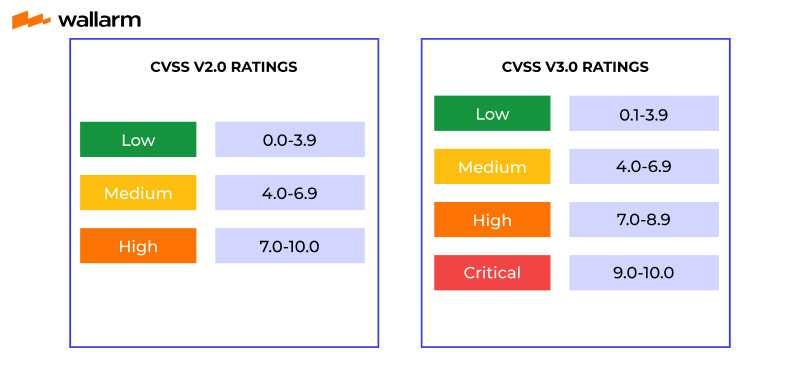
Understanding CVSS Scores (In Simple Terms)

How CVSS Actually Works (Without Overcomplicating It)
Behind that single score lies multiple factors. CVSS doesn’t just assign numbers randomly — it evaluates how a vulnerability behaves in the real world.
Let’s break it down simply:
1. Base Metrics (The Core of the Score)
These answer the question:
“How bad is this vulnerability by design?”
Key factors include:
- Attack Vector → Can it be exploited remotely or only locally?
- Attack Complexity → Is it easy or difficult to exploit?
- Privileges Required → Does the attacker need login access?
- User Interaction → Does it require someone to click something?
Example:
- A vulnerability exploitable over the internet
- No login required
- No user interaction
This will score very high.
2. Temporal Metrics (What’s Happening Right Now?)
These consider the current situation:
- Is exploit code publicly available?
- Has a patch been released?
- Is it actively being used by attackers?
Even a medium vulnerability can become dangerous if: Exploits are already circulating online
3. Environmental Metrics (Your Organization Matters)
This is where things get interesting.
CVSS adapts based on YOUR environment.
For example:
- A vulnerability in a test system → Low impact
- The same vulnerability in a production banking system → Critical
This is why: Context matters more than the number alone
Real-World Example (Easy to Understand)
Let’s say there’s a vulnerability that:
- Can be exploited remotely
- Requires no authentication
- Gives full admin access
CVSS Score: 9.8 (Critical)
Now compare that with:
- A vulnerability that needs physical access
- Requires admin login
CVSS Score: 3.5 (Low)
Even if both are “real,” only one is an urgent threat.
Why CVSS is Important in Real Jobs
If you’re aiming for roles like:
- SOC Analyst
- Vulnerability Analyst
- Security Engineer
You will use CVSS daily.
It helps you:
- Prioritize alerts
- Focus on high-risk vulnerabilities
- Avoid wasting time on low-impact issues
Tools like:
- Nessus
- Qualys
- OpenVAS
Conclusion
CVSS is more than just a number it’s a powerful decision-making tool that brings clarity to what can otherwise feel like chaos. In real-world environments, security teams are constantly flooded with alerts, scan results, and vulnerability reports. Without a structured way to evaluate them, it becomes nearly impossible to decide where to begin. CVSS simplifies this by helping teams quickly understand the severity and potential impact of each vulnerability, allowing them to focus their efforts where it matters most.
At its core, CVSS helps answer one of the most critical questions in cybersecurity: “What should I fix first?” Instead of treating every vulnerability with equal urgency, it enables professionals to prioritize based on risk. This ensures that the most dangerous threats those that could be easily exploited or cause significant damage are addressed immediately, reducing the chances of a successful attack.
However, the real strength of CVSS lies beyond the score itself. A number like 7.5 or 9.8 only tells part of the story. To truly use CVSS effectively, you need to understand why a vulnerability received that score. Is it remotely exploitable? Does it require authentication? Is there a known exploit already available? These underlying factors provide context, and that context is what transforms a simple score into actionable insight.
In cybersecurity, this deeper understanding makes all the difference. Because managing vulnerabilities isn’t just about fixing issues it’s about fixing the right issues at the right time. Resources are always limited, and threats are constantly evolving, so the ability to prioritize intelligently becomes a critical skill.
That’s why prioritization isn’t just important it’s essential. It’s what separates reactive security from proactive defense, and it’s what allows organizations to stay one step ahead of attackers instead of constantly playing catch-up.
메타데이터
- post_id
- 9d3d47b36072
- slug
- not-all-vulnerabilities-are-equal-understanding-cvss-the-right-way-9d3d47b36072
- url
- https://medium.com/@manjubharati2002/not-all-vulnerabilities-are-equal-understanding-cvss-the-right-way-9d3d47b36072
- canonical_url
- https://medium.com/@manjubharati2002/not-all-vulnerabilities-are-equal-understanding-cvss-the-right-way-9d3d47b36072
- author_url
- https://medium.com/@manjubharati2002
- status
- ok
- fetched_at
- 2026-06-15 20:49:13


