Why Leather Shoes Crease — And Why It Matters More Than You Think
At Blucher, we study how leather behaves under daily use — because the true quality of a formal shoe reveals itself over time, not at first…
Why Leather Shoes Crease — And Why It Matters More Than You Think
At Blucher, we study how leather behaves under daily use — because the true quality of a formal shoe reveals itself over time, not at first glance.

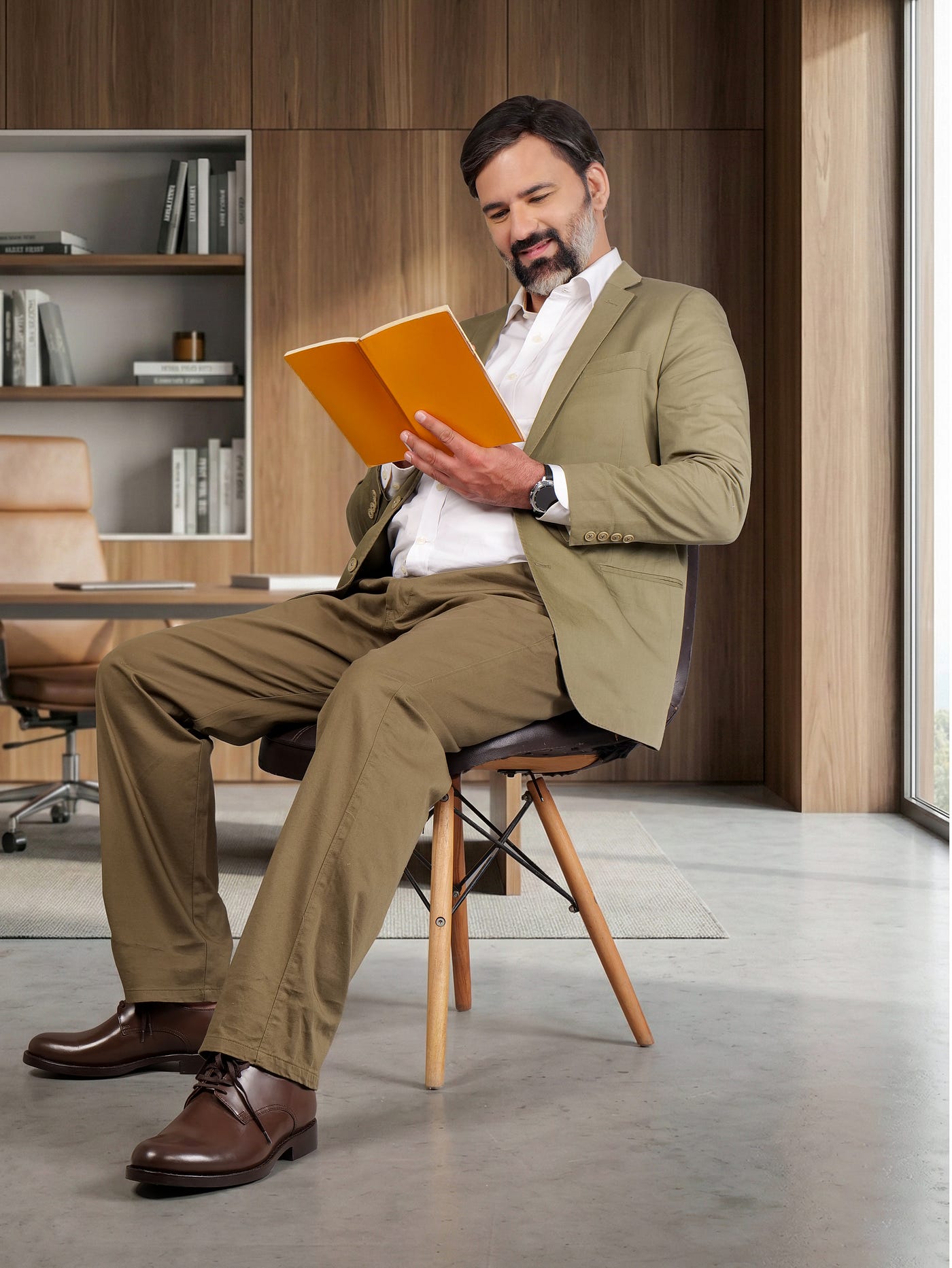
Natural creasing in full-grain leather reflects how a shoe adapts to movement over time, not a defect but a sign of material behaviour
Creasing is often misunderstood.
For many, it signals wear. For some, it suggests poor quality. But in reality, creasing is neither a flaw nor a failure.
It is a structural response.
What Causes Creasing in Leather Shoes
Every step bends the shoe at a natural flex point — just behind the toe box.
Leather, being a natural material, responds to this movement. It compresses, folds, and gradually forms lines.
This is not damage.
It is behaviour.
And more importantly — it is expected.
Not All Creases Are the Same
The nature of creasing depends on the material.
Full-grain leather behaves differently from corrected or synthetic alternatives.
- Full-grain leather develops broader, softer creases
- Processed leather often shows sharp, shallow lines
- Synthetic materials tend to wrinkle without depth
These differences are not cosmetic.
They reflect how the material has been formed, treated, and finished.
Structure Influences the Pattern
Creasing is not only about leather. It is also about construction.
A well-structured shoe controls where the leather bends.
In a Blucher (Derby) shoe, the open lacing system allows a more adaptive fit. This often results in a more natural flex pattern across the vamp.
Poor structure leads to uncontrolled creasing — irregular folds, early stress points, and discomfort over time.
The Role of Fit
Fit is one of the most overlooked factors in creasing.
If a shoe is too tight, the leather stretches excessively. If too loose, it collapses unnaturally.
Both situations distort how the leather folds.
A well-fitted shoe creases in rhythm with movement — not against it.
Creasing and Longevity
Creasing itself does not reduce the life of a shoe.
But the type of crease can.
Controlled, gradual creasing often indicates:
- balanced structure
- appropriate material
- correct fit
Aggressive, uneven creasing often signals:
- lower-grade leather
- weak structural support
- sizing mismatch
Over time, this difference becomes visible — and structural.
Understanding Creasing Changes How You Evaluate Shoes
A new pair may appear flawless.
But the real evaluation begins after use.
How the leather responds — how it folds, adapts, and settles — reveals more than its initial finish ever could.
Surface perfection is temporary. Behavior over time is not.
A Different Way to Look at Wear
Leather does not remain unchanged.
It records movement.
Each crease reflects use — not deterioration, but interaction between material and motion.
A well-made shoe does not resist this process. It guides it.
Closing Thought
Creasing is not something to avoid.
It is something to understand.
Because in leather, what appears as a line on the surface often reflects what lies beneath — material, structure, and intent. —
Blucher is a study in structure, material, and how shoes perform over long office hours.
~Blucher
메타데이터
- post_id
- 9d4b769605ea
- slug
- why-leather-shoes-crease-and-why-it-matters-more-than-you-think-9d4b769605ea
- url
- https://medium.com/@Bluchers/why-leather-shoes-crease-and-why-it-matters-more-than-you-think-9d4b769605ea
- canonical_url
- https://medium.com/@Bluchers/why-leather-shoes-crease-and-why-it-matters-more-than-you-think-9d4b769605ea
- author_url
- https://medium.com/@Bluchers
- status
- ok
- fetched_at
- 2026-06-09 15:37:30