Astrological Analysis of the 2026 Atlantic Hurricane Season
The Atlantic hurricane season runs from June 1st to November 30th, when tropical and subtropical systems develop across the North Atlantic…
Astrological Analysis of the 2026 Atlantic Hurricane Season
The Atlantic hurricane season runs from June 1st to November 30th, when tropical and subtropical systems develop across the North Atlantic Ocean, reaching peak activity between late August and September.
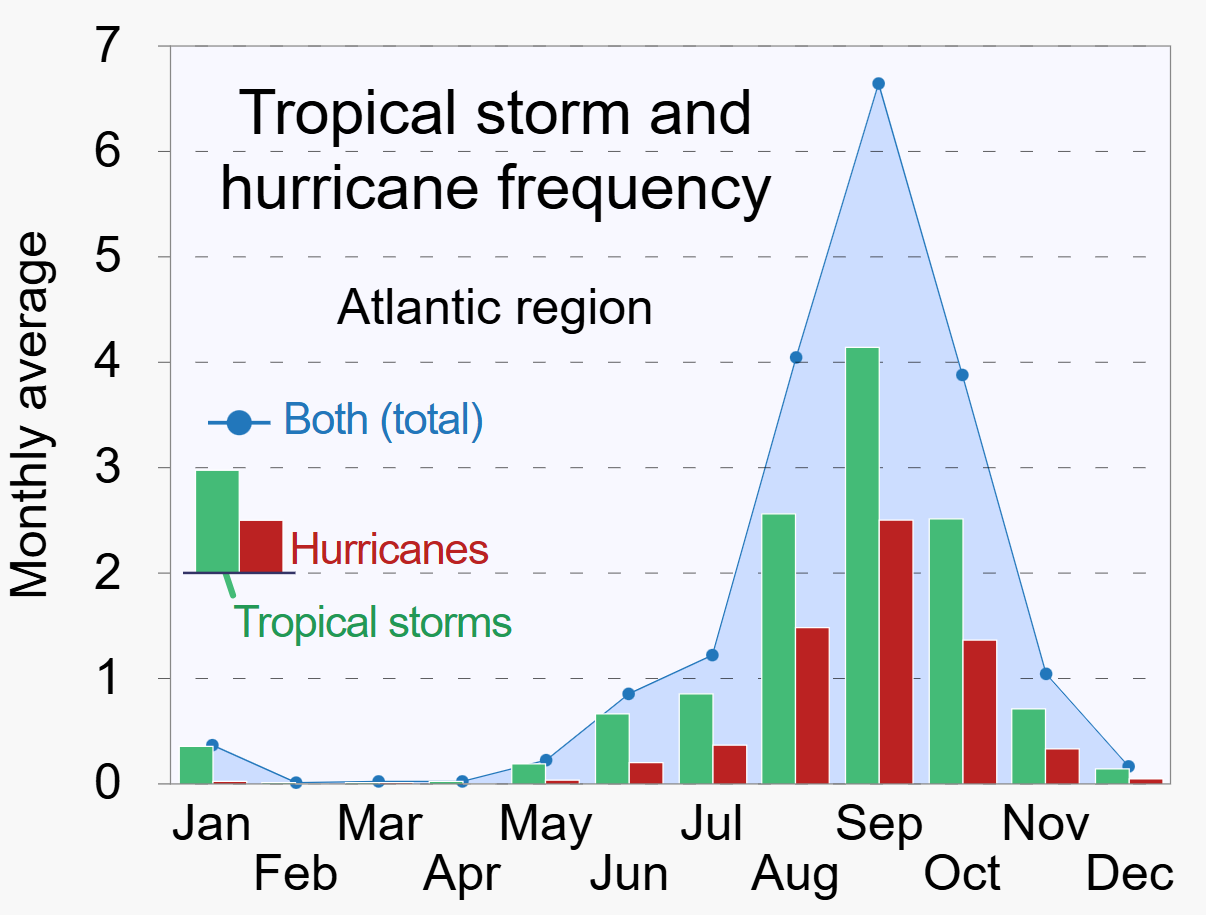
For the 2026 Atlantic hurricane season, NOAA predicts a below-normal overall pattern, breaking down the probabilities to a 55% chance of below-normal conditions, a 35% chance of being near-normal, and a 10% chance of an above-normal season.
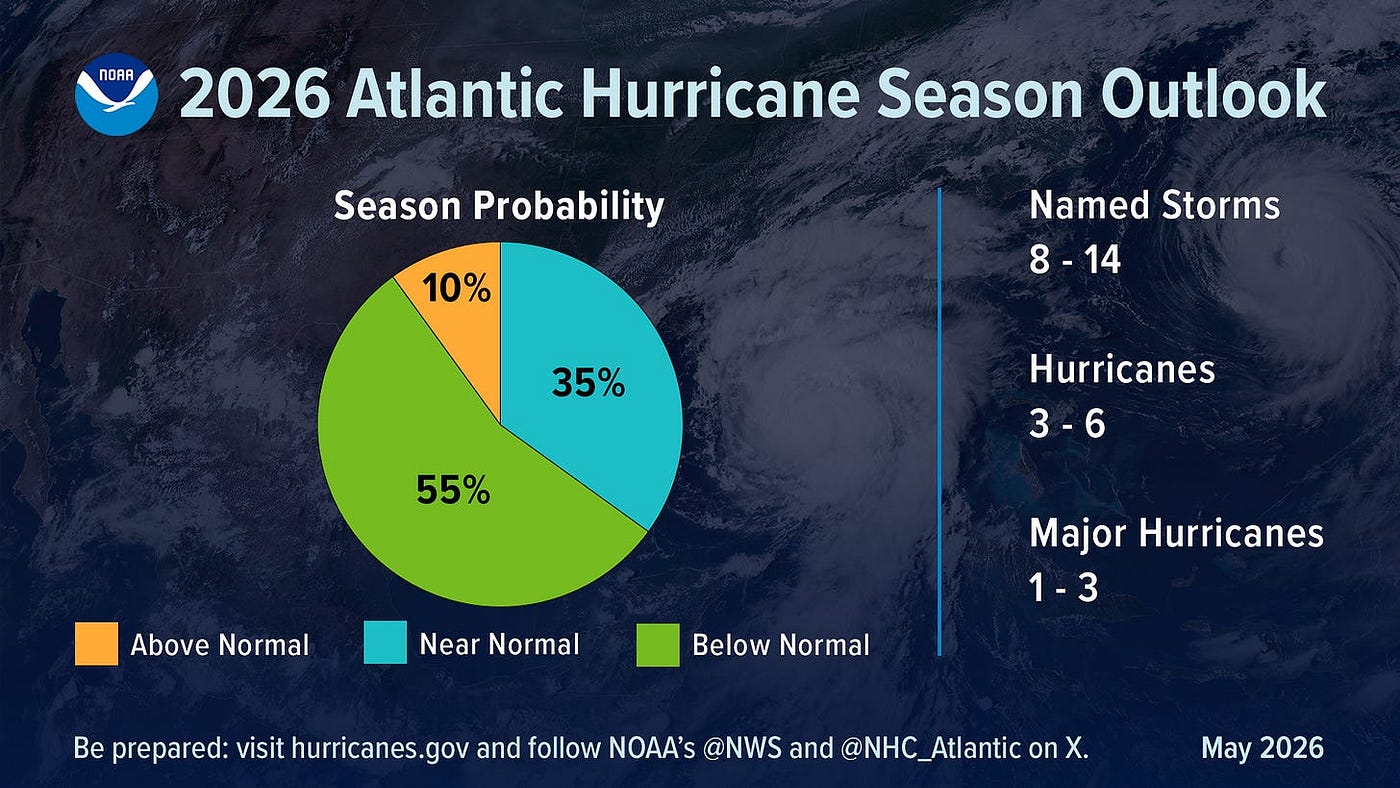
A summary infographic showing hurricane season probability and numbers of named storms predicted from NOAA’s 2026 Atlantic Hurricane Season Outlook. (Image credit: NOAA)
In astrometeorology, the Summer Ingress Chart (Sun at 0 degree Cancer) establishes the meteorological baseline for the summer season.
To evaluate the hurricane potential for the 2026 season, let’s begin by examining the planetary wheel for the Summer Ingress.
Summer Ingress chart for June 21, 2026 8:25 UTC

Summer Ingress chart for June 21, 2026 8:25 UTC
Planets by Element
Water: Sun , Mercury, Jupiter
- These planets acts as a multiplier, bringing heavy moisture, overflowing currents, and a surge of overwhelming tides.
Air: Uranus, Pluto
- Uranus in air introduces erratic shifts and sudden disruptions, while Pluto brings profound, deep-seated intensity and radical transformations.
Fire: Neptune, Saturn, Venus
- The presence of these planets in Fire creates a dynamic tension between intense warmth and fluid energy, fueling rapid, unpredictable momentum.
Earth: Mars, Moon
- The focus driven by these planets shifts to how dynamic energy interacts with with physical terrain.
Planet Aspects
The Mars–Moon–Mercury/Jupiter Sextile
- Mars in Taurus forms a supportive sextile to Mercury and Jupiter. This Earth-Water interaction injects intense heat into the atmosphere, gathering scattered forces and shaping them into powerful, concentrated storms.
The Neptune–Uranus–Pluto Trine/Sextile
- This planetary alignment drives broad, sweeping currents across the region. The Uranus–Pluto air connection sparks sudden, erratic shifts in the upper realms, while Neptune in Aries infuses fierce, pioneering heat at the surface. Leading to sharp clashes between opposing temperatures, unexpected volatile activity.
Sun Ingress Square Saturn & Neptune
- Square aspects between cardinal signs produce sudden, turbulent weather transitions. This Fire-Water friction generates heavy mists, clinging moisture, and oppressive, lingering heat that shatters abruptly into violent, sweeping outbursts.
AstroCartoGraphy (ACG) Map
While the ingress chart features numerous planetary factors, only a select have an influence over the Atlantic area. The ACG map helps us focus strictly on those relevant planetary influences.
Summer ingress ACG map for June 21, 2026 8:25 UTC
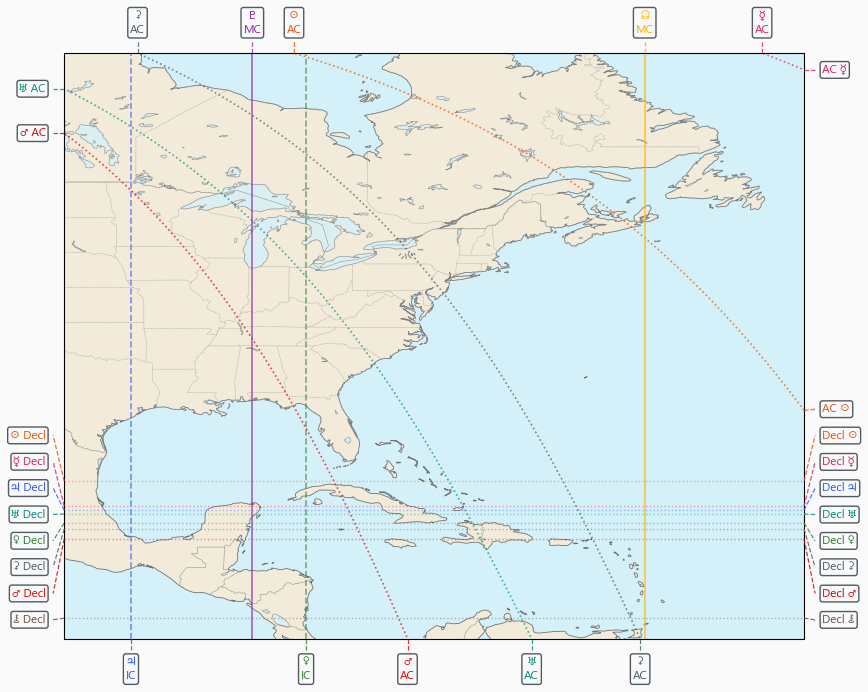
Summer ingress ACG map for June 21, 2026 8:25 UTC
The horizontal declination lines highlight where tropical cyclones can organize and develop. Key areas like the Caribbean Sea, the Florida Straits, and the central Gulf of Mexico lie beneath the upper Sun declination line, with the heaviest concentrations spanning Central Mexico, Southern Cuba, Haiti, the Dominican Republic, and surrounding islands. Any system entering this zone is primed for rapid intensification into a stronger storm.
Once a storm forms in the declination lines, the vertical and diagonal lines could guide its path, intensity shifts, and landfall impacts.
- Pluto MC: The areas near the solid purple line running vertically through the Yucatan Peninsula, the central Gulf of Mexico, and entering US near the Mississippi/Louisiana border could experience the most intensity if a storm makes landfall in that area.
- Uranus AC: The areas near the curved green line enters the US from Western Atlantic near Northern Carolina. In these areas, Storms moving up the Eastern coast may experience sudden track deviations, unexpected wind gusts, or rapid acceleration.
- Venus IC & Mars AC: The areas near the green (Venus) and red (Mars) curved lines crisscross the Southeast coast, Florida, and the western Atlantic. Storms moving through this specific zone can produce a lot of rain and significant wind.
- Jupiter IC: The areas near the blue dotted line running down through East Texas and the western Gulf could experience massive storms if a storm makes its way through the western Gulf. The main threat here is storm surge and extreme rainfall rates, leading to flooding.
- Sun AC: The areas near the orange curved lines passing over eastern Canada could experience impacts from storms that track up the coast or over the Atlantic. These storms may intensify from warmer sea surface waters driven by the Sun’s warming influence, with the biggest landfall impact expected on Nova Scotia.
It is worth noting the absence of angular Moon and Mercury lines (MC, IC, AC, DC) across this region in the summer ingress chart. Both bodies typically play a major astrometeorological role by increasing the potential for severe flooding (Moon) or accelerating the speed of storms (Mercury).
Originally published at https://theastrospectator.substack.com on July 30, 2026.
메타데이터
- post_id
- 9d54ca641e85
- slug
- astrological-analysis-of-the-2026-atlantic-hurricane-season-9d54ca641e85
- url
- https://medium.com/@the.astro.spectator/astrological-analysis-of-the-2026-atlantic-hurricane-season-9d54ca641e85
- canonical_url
- https://medium.com/@the.astro.spectator/astrological-analysis-of-the-2026-atlantic-hurricane-season-9d54ca641e85
- author_url
- https://medium.com/@the.astro.spectator
- status
- ok
- fetched_at
- 2026-08-15 14:23:34