Using THEATRE in the language classroom
If you’ve ever said “my students don’t want to speak” at least once, this article is for you.
Using THEATRE in the language classroom
If you’ve ever said “my students don’t want to speak” at least once, this article is for you.
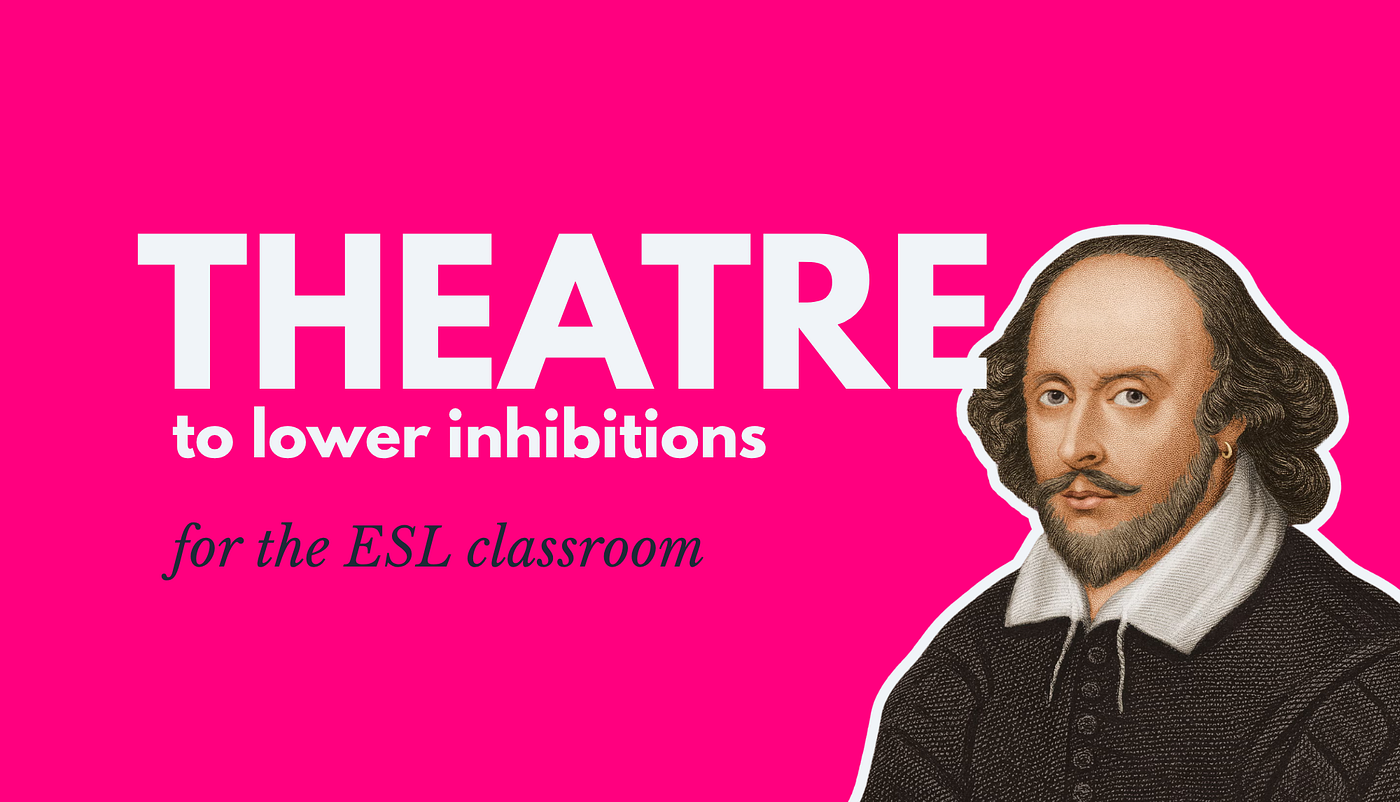
This will have your students speak more
Sometimes switching things up can be beneficial, both for us teachers, as well as for our learners, so here’s a new fun thing you can introduce in your classroom from time to time (and yes, you can do this both with kids and with adults).
Every language learner has felt embarrassed and awkard when speaking in the foreign language at least once — it’s a universal experience. This happens because making mistakes seems like the worst thing in the world, I get that. So one way of getting rid of this huge problem is simply by having learners impersonate someone else. By playing a character, learners’ inhibitions will decrease, as it’s not them, but a character, so the mistakes would be the characters’ as well. And the great news is that you can do this with virtually anything, and with a focus on so many different things: intonation and pronunciation, grammar, functional language, vocabulary, as a follow-up to a writing activity…
Here’s two examples that you can use in your classroom straight away:
- For lower levels, to work on functional language for introductions and meeting new people, have them think about their favourite actor, or singer, or athlete. Give them some time to prepare, and then, working with a partner, have them introduce each other as that character.
- For intermediate and higher levels, if you want to polish intonation, have them pick a short monologue, or if they work together a dialogue, from a film they love. Give them some time to listen to it a few times on their own, writing it down and underlining stressed bits, and then have them recite it. To have the class more under control, you can pick one for everyone and give them the script, and then have them decide the mood they want to recite it in (angry, anxious, happy…) and notice the differences based on the words they stress and how their voice changes — this works really well if you want to work on nuances and inference.
P.S. to set the mood, you should start. By seeing you being “silly”, learners will in turn feel more comfortable doing the activity.
Let me know if you’ve ever used something similar in your classroom, I’m curious to know how it went!
메타데이터
- post_id
- 9da7ecdd5ab6
- slug
- using-theatre-in-the-language-classroom-9da7ecdd5ab6
- url
- https://medium.com/@aliceintheclassroom/using-theatre-in-the-language-classroom-9da7ecdd5ab6
- canonical_url
- https://medium.com/@aliceintheclassroom/using-theatre-in-the-language-classroom-9da7ecdd5ab6
- author_url
- https://medium.com/@aliceintheclassroom
- status
- ok
- fetched_at
- 2026-07-30 12:16:26






