Cultural Archetypes, Part 1: Plan, Listen, and Start
[Week 34, 2019] Understanding cultural archetypes aids in fostering diversity and effective communication in self-directed organizations.
Week 34, 2019
Cultural Archetypes, Part 1: Plan, Listen, and Start
Photo by José Martín Ramírez C on Unsplash
Each week I share three ideas for how to make work better. And this week, those ideas are all about culture, diversity, and self-directed organizations.
Why am I writing about this? People like us do things like this. That’s how Seth Godin defines culture. And as far as definitions go, it’s a good one. But I’ve been thinking: how do you build organizational cultures that are both cohesive and accommodating to different nationalities and cultural norms? And especially, how do you do this in a self-directed setting?
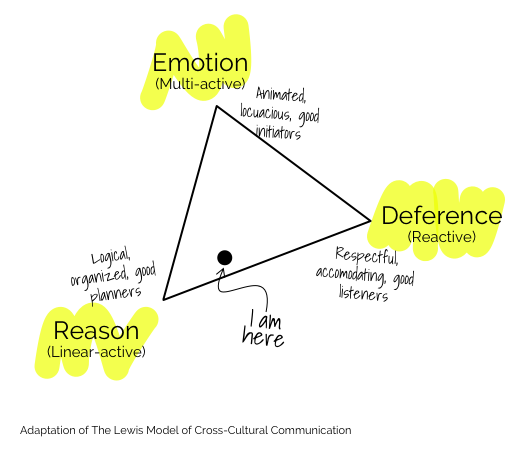
Richard D. Lewis is the creator of the Lewis Model of Cross-Cultural Communication and he thinks he can help answer the above questions. His model identifies three cultural archetypes (stereotypes) that he thinks can help us cut through prejudice, communicate effectively, and pave the way for cultural diversity.
Let’s dig in.
1. Reason
Broadly speaking, people from North America, Northern Europe, and related countries prefer to plan, schedule, organize, pursue action chains, and do one thing at a time. In Lewis’ terminology, they are Linear-active: they are logical and communicative, albeit in a somewhat subdued manner. They tend to be more job than people-oriented, to prefer facts to feelings, and to be polite yet direct in their communication.
2. Deference
People from Asian countries tend to be respectful and courteous, and to be careful in how they act and communicate. They’re good listeners and holistic in their worldview. And they’re patient — a fact that helps explain Lewis’ Reactive label: rather than initiate actions, this archetype prefers to listen first and act later in accordance to plans and principles vetted and agreed upon by the group.
3. Emotion
South America, Southern Europe, sub-Saharan Africa, and the Arab World comprise archetype number three — what Lewis calls Multi-active. These peoples wear their hearts on their sleeves; they’re warm, friendly, and loquacious. They’re people rather than job-oriented, and they prefer to act on intuition as opposed to carefully laid plans. They roam back and forth, all the while building and nurturing close relationships.
Malcolm Forbes, the founder of Forbes Magazine, has defined diversity as “the art of thinking independently together” — a laudable goal that seems especially challenging in a self-directed workplace. And while Lewis’ model doesn’t address self-direction per se, it’s still interesting to think about it in that context. But more on that next week, in part 2.
That’s all for this week. Stay calm.

메타데이터
- post_id
- 9dbf11647688
- slug
- cultural-archetypes-part-1-plan-listen-and-start-9dbf11647688
- url
- https://medium.com/workmatters/cultural-archetypes-part-1-plan-listen-and-start-9dbf11647688
- canonical_url
- https://medium.com/workmatters/cultural-archetypes-part-1-plan-listen-and-start-9dbf11647688
- author_url
- https://medium.com/@andreasholmer
- status
- ok
- fetched_at
- 2026-06-25 16:53:31