The Cincinnati Tablet: A Biblical Resonance Study (Cross Symbolism, Philippians 2:6–8 & Psalm 23…
In the fall of 1841 — specifically November — workers grading land for road construction in downtown Cincinnati uncovered something…
The Cincinnati Tablet: A Biblical Resonance Study (Cross Symbolism, Philippians 2:6–8 & Psalm 23 Numerology)
In the fall of 1841 — specifically November — workers grading land for road construction in downtown Cincinnati uncovered something extraordinary. While dismantling a complex of ancient burial mounds at the intersection of Fifth and Mound Streets (today the site of a large UPS facility west of Interstate 75), they leveled a prominent mound that had originally stood 35 feet high (later truncated to 27 feet by General Anthony Wayne in 1794). From its depths emerged the Cincinnati Tablet, the first and most famous of the so-called Adena Tablets — rare engraved artifacts linked to the Adena culture of the Early Woodland Period (roughly 1000–200 B.C.), a society known for elaborate mound-building across the Ohio Valley. Alongside it lay copper ornaments, mica sheets, large marine shells, and other exotic grave goods.
The date 1841 carries its own quiet resonance. It points directly to Luke 18:41 (NIV), where Jesus encounters a blind man and asks, “What do you want me to do for you?” The man replies, “Lord, I want to see.” In the Cerne Abbas method of biblical resonance — named for its pattern-seeking approach of “perceiving through the Father” — this verse becomes a living key. By allowing Scripture, archaeology, numerology, and location to speak together, the method opens spiritual sight. What was once hidden in plain sight becomes visible. The very act of discovery in 1841 echoes the blind man’s plea and Jesus’ healing: through resonance, we too are enabled “to see.”
Measuring approximately 5 inches long, 3 inches wide, and 0.5 inches thick, the tablet is carved in deep bas-relief from a very fine-grained sandstone. Its hourglass-like shape features symmetrical, flowing motifs — curved lines, circles, and hooked forms that some interpret as stylized birds or abstract symbols. The material choice is notable: fine-grained sandstone is durable yet carvable, typical of Adena tablets. Geologically, this stone likely originated from regional sedimentary deposits, enduring for over 2,000 years much like the biblical “tablets of stone” that carried divine messages across millennia.
A Hidden Christ on the Cross
What makes the Cincinnati Tablet resonate so powerfully is its central design. When viewed through the lens of biblical resonance, the intricate carvings reveal a striking figure: a vertical form with outstretched “arms” and a head-like element, evoking a crucified person. Overlaid analysis traces this form in yellow, clearly outlining a cross-like silhouette amid the abstract patterns.
This hidden imagery aligns with the Christian concept of acheiropoieta — images “not made by hands,” often associated with miraculous depictions of Christ. The tablet’s central motif echoes the ultimate act of divine humility described in the New Testament.
Numerology and Philippians 2:6–8
A detailed numerological examination reveals even deeper alignment. Colored dots placed on specific carved elements (2 red and 6 green in the upper and central sections, 7 purple along the top edge, 8 blue in the lower motifs, and 8 yellow along the bottom) correspond precisely to the structure of Philippians 2:6–8 (NIV). With two groupings of 8, the emphasis is on verse 8, which matches the design of the tablet:.
Phillippians 2:6–8
“Who, being in very nature God, did not consider equality with God something to be used to his own advantage; rather, he made himself nothing by taking the very nature of a servant, being made in human likeness. And being found in appearance as a man, he humbled himself by becoming obedient to death — even death on a cross!”
The numerology isolates the numbers 2, 6, and 8 — the exact chapter and verses — through counts or placements of these highlighted features. The verse itself frames the tablet’s message: Christ’s incarnation, humility, and obedience unto death on a cross. The hidden cruciform figure in the center visually embodies the final words of the passage. Additional markings in the body area (5 dots) reference the Five Holy Wounds of Christ, reinforcing themes of sacrificial love and redemption.
The 23 Notches and Psalm 23
One particularly striking detail: the tablet’s top and bottom edges feature precisely 23 notches (incised diagonal lines touching the borders). This number directly evokes Psalm 23, the beloved shepherd psalm that begins:
“The Lord is my shepherd; I shall not want… Even though I walk through the darkest valley, I will fear no evil, for you are with me…”
Psalm 23 speaks of comfort through the “shadow of death” — mirroring the Philippians passage’s focus on obedient death on the cross. Together, they create a profound frame: from divine humility (Philippians) to fearless passage through death’s valley (Psalm 23), with the tablet’s central cross as the visual pivot.
Marine Shells: Symbols of Baptism and a Divine Hint
The large marine shells recovered alongside the tablet add yet another layer. These shells — exotic to inland Cincinnati — originated from the Gulf of Mexico or the Atlantic Ocean and were transported hundreds or even thousands of miles through the Adena people’s extensive trade networks. In biblical terms, marine shells carry powerful Christian symbolism of baptism — the cleansing waters of renewal, rebirth, and pilgrimage. Buried with the tablet in a mound dedicated to the honored dead, these ocean-sourced shells speak of grace arriving from afar: waters from the distant sea sanctifying the soil of Ohio.
If the Cincinnati Tablet is truly acheiropoieta — an image “not made by hands” — then the marine shells serve as a deliberate hint from the same unseen hand. Just as the shells were carried across vast distances to converge at this sacred site, they whisper of a greater journey: the message of the cross traveling from heaven to earth.
Dimensions, Location, and the 3-and-5 Resonance
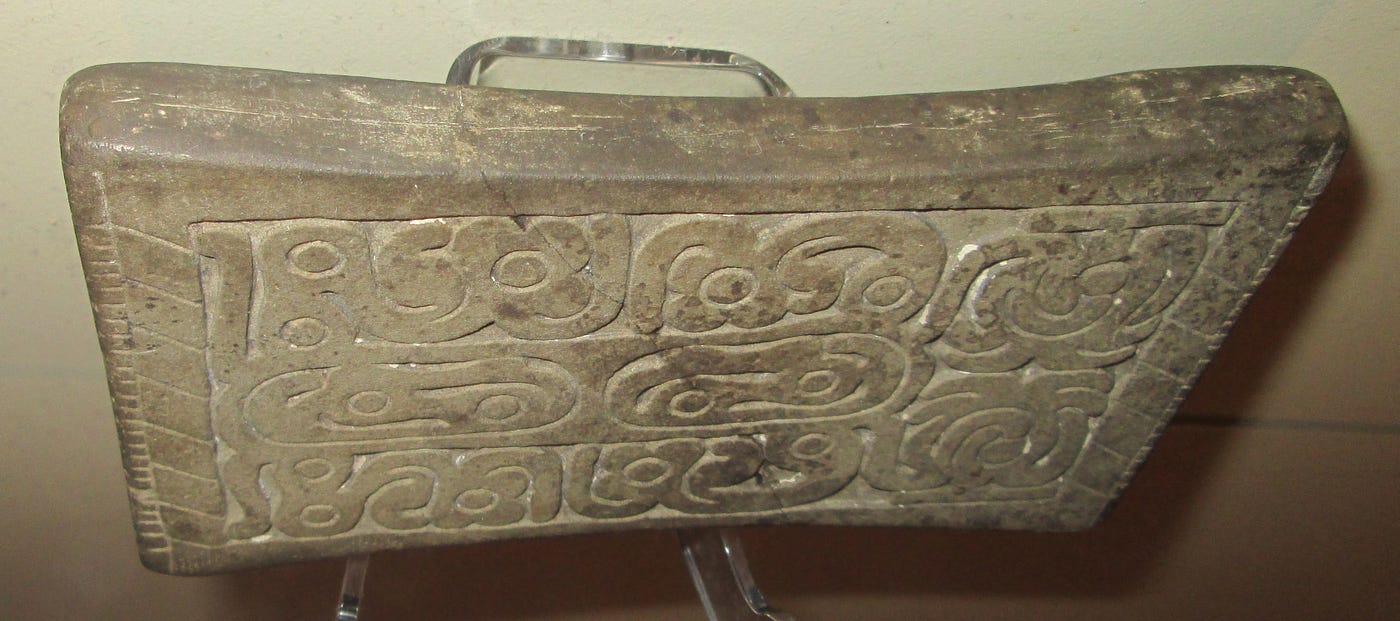
The tablet’s physical proportions and discovery site create a harmonious numerical echo. The artifact measures 5 inches in length by 3 inches in width. The mound itself stood 35 feet high at its original scale, and it was located at the corner of Fifth and Mound Streets.
- 5 → Fifth Street + the tablet’s 5-inch length → biblical symbol of grace (five books of the Torah, five loaves feeding thousands, the five wounds of Christ).
- 3 → the tablet’s 3-inch width + the 35-foot mound (explicitly 3 and 5) → symbol of divine completeness and the Trinity.
The 5 × 3 ratio and modest scale suggest a portable “tablet” meant for intimate reflection, much like the stone tablets of the Law or the personal psalms carried in the heart. Its fine sandstone, formed by ancient sedimentary processes, mirrors how God writes His story across time — layer upon layer. The very address and mound height replay the tablet’s dimensions, as though the discovery site itself was “stamped” with the same signature.
A Resonance Across Time

Archaeologically, the Cincinnati Tablet is a remarkable Adena artifact whose original cultural meaning remains open to interpretation. Yet when examined through the Cerne Abbas method of biblical resonance — “perceiving through the Father” — it becomes something more: a silent witness to themes of incarnation, humility, sacrifice, shepherding care, baptismal renewal, and the longing to see.
From a 2,000-year-old 35-foot mound at Fifth and Mound Streets, unearthed in 1841 (Luke 18:41), this small sandstone slab — its cross hidden in plain sight, its edges notched with Psalm 23, its motifs numbered to Philippians 2:6–8, its accompanying marine shells hinting at baptismal waters from afar, and its 5 × 3 dimensions echoing the very location — whispers a timeless truth. In the words of the apostle Paul, the One who was “found in appearance as a man… humbled himself by becoming obedient to death — even death on a cross.”
Through this resonance, the blind man’s prayer is answered anew: “Lord, I want to see.” And by the grace of the Father, we do. The Cincinnati Tablet invites us to see the sacred in the soil, the eternal in the engraved stone, and the Shepherd’s presence — even in the valley of prehistoric Ohio.
메타데이터
- post_id
- 9dccb3134bf1
- slug
- the-cincinnati-tablet-a-biblical-resonance-study-cross-symbolism-philippians-2-6-8-psalm-23-9dccb3134bf1
- url
- https://medium.com/@zzzyzzyva/the-cincinnati-tablet-a-biblical-resonance-study-cross-symbolism-philippians-2-6-8-psalm-23-9dccb3134bf1
- canonical_url
- https://medium.com/@zzzyzzyva/the-cincinnati-tablet-a-biblical-resonance-study-cross-symbolism-philippians-2-6-8-psalm-23-9dccb3134bf1
- author_url
- https://medium.com/@zzzyzzyva
- status
- ok
- fetched_at
- 2026-06-09 15:37:30