When Bleeding Persists Despite Normal Testing
Recognizing Platelet Storage Pool Deficiency in hEDS and POTS
When Bleeding Persists Despite Normal Testing
Recognizing Platelet Storage Pool Deficiency in hEDS and POTS
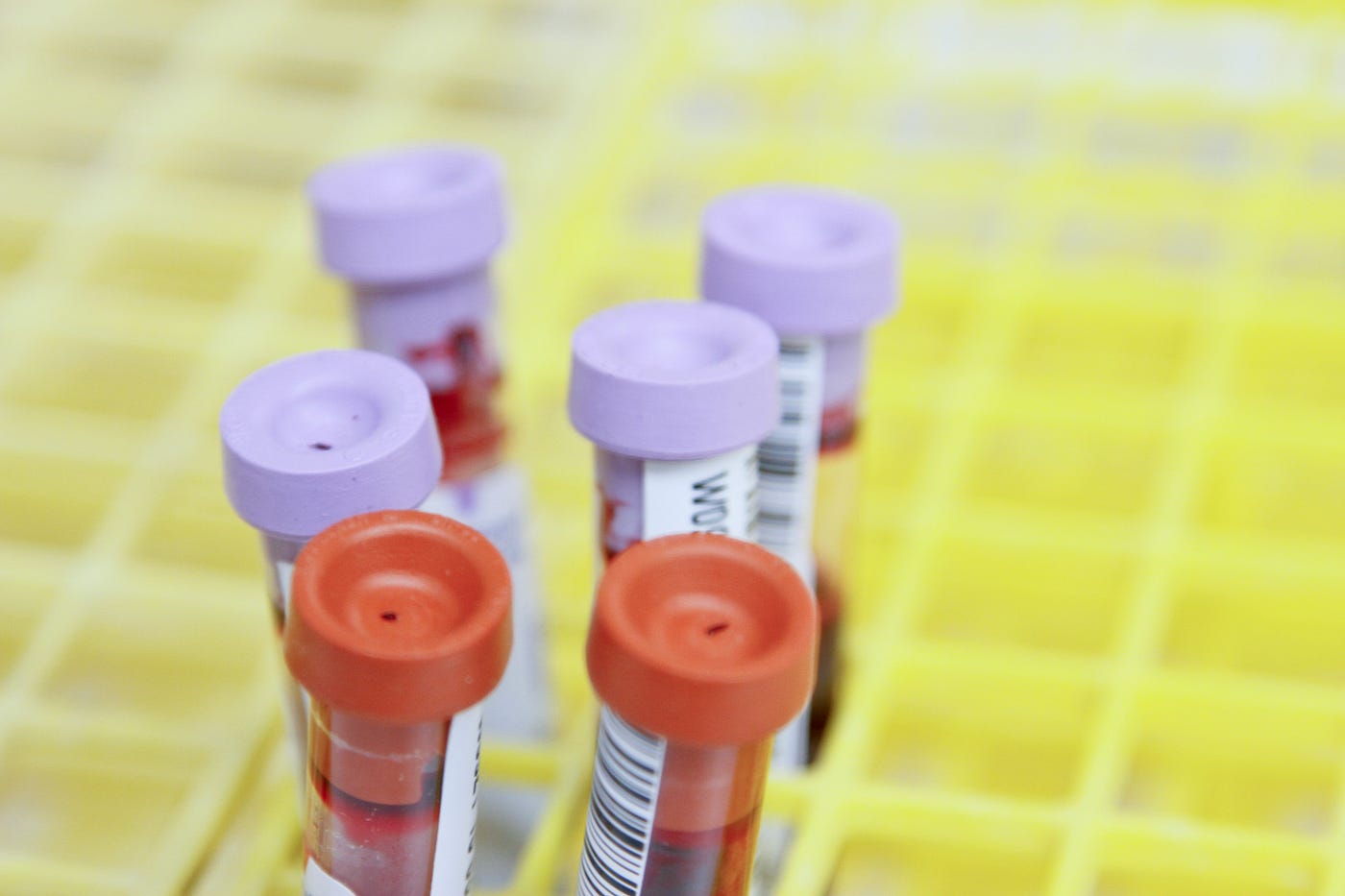
Photo by National Cancer Institute on Unsplash
TL;DR
People with hypermobile Ehlers–Danlos syndrome (hEDS) and postural orthostatic tachycardia syndrome (POTS) frequently experience clinically meaningful bleeding symptoms despite normal coagulation studies. In these cases, the absence of a coagulopathy does not rule out a bleeding disorder. A growing body of evidence — including data from both pre-COVID and post-COVID POTS populations — suggests that platelet delta storage pool deficiency (δ-SPD), a qualitative platelet secretion disorder missed by routine testing, may underlie bleeding diathesis in a substantial subset of patients and warrants greater clinical recognition.
When Bleeding Is Present, but Tests Are Normal
Many individuals with hEDS and POTS describe a long history of easy bruising, recurrent epistaxis, heavy or prolonged menstrual bleeding, iron-deficiency anemia, or excessive bleeding following dental or surgical procedures. These symptoms are often persistent rather than episodic, yet initial laboratory evaluation is commonly unrevealing.
In clinical practice, this is frequently where the diagnostic process stops.
Normal prothrombin time, activated partial thromboplastin time, platelet count, and von Willebrand factor studies are often interpreted as evidence that no bleeding disorder is present. Bleeding is then attributed to connective tissue fragility, capillary weakness, dysautonomia, or an expected feature of hypermobility.
For many patients, however, symptoms persist. Laboratory results remain normal. What remains unexplained is why bleeding continues despite reassuring studies.
Platelet Delta Storage Pool Deficiency: A Disorder of Secretion, Not Coagulation
Platelet delta storage pool deficiency does not involve clotting factor abnormalities or reduced platelet numbers. Instead, it reflects impaired platelet secretion.
Platelet dense (delta) granules store adenosine diphosphate (ADP), calcium, and serotonin — mediators that amplify platelet activation and stabilize clot formation. When dense granules are reduced in number or function, platelets may initially adhere and aggregate but fail to sustain an effective hemostatic response.
In δ-SPD:
- Platelet counts are typically normal
- Coagulation studies are normal
- von Willebrand factor testing is normal
The defect lies in secondary platelet signaling rather than in clot formation itself. Because standard hemostatic testing does not assess granule number or secretion capacity, δ-SPD is easily overlooked. Diagnosis most often requires platelet electron microscopy, a test rarely pursued unless platelet dysfunction is specifically suspected. Routine aggregation studies and platelet function analyzer testing may be normal or inconsistent and should not be relied upon to exclude the diagnosis.
What Studies in POTS Have Revealed
Over the past decade, several groups have examined platelet function in patients with POTS who report bleeding symptoms. In earlier retrospective cohorts, a striking proportion of these patients were found to have platelet delta storage pool deficiency on electron microscopy, despite normal coagulation studies and platelet counts.
Across these cohorts, easy bruising, epistaxis, heavy menstrual bleeding, anemia, and a personal or family history of bleeding were common. These findings were not isolated but represented recurring clinical patterns.
Joint hypermobility was also frequently observed, reinforcing overlap between POTS, hypermobility spectrum disorders, and hEDS rather than suggesting a coincidental association.
Investigators further identified markedly reduced platelet serotonin content in affected patients. Given that platelets store nearly all circulating peripheral serotonin, this observation raised questions extending beyond bleeding alone, including potential effects on vascular tone and autonomic regulation.
Platelet Storage Pool Deficiency in POTS Before and After COVID-19
More recent work has expanded this pattern to include patients who developed POTS following SARS-CoV-2 infection. In a large prospective case–control study involving more than 250 participants, platelet dense granule numbers and bleeding symptoms were evaluated in four groups: COVID-naïve POTS patients, post-COVID POTS patients (PASC-POTS), and matched healthy controls with and without prior SARS-CoV-2 exposure.
Both POTS groups — those diagnosed before the COVID-19 pandemic and those who developed dysautonomia after infection — demonstrated a marked reduction in platelet dense granules compared with controls, consistent with platelet delta storage pool deficiency. Mean dense granule counts were nearly identical between pre-COVID and post-COVID POTS cohorts, while control groups exhibited normal granule numbers.
Bleeding symptoms were common across both POTS groups. Easy bruising was the most frequently reported manifestation, affecting the majority of patients, with epistaxis, heavy menstrual bleeding, and anemia also occurring at higher rates than in controls. Importantly, standard coagulation studies and platelet counts were normal across all groups, reinforcing that the observed bleeding diathesis was not explained by coagulopathy or thrombocytopenia.
Joint hypermobility remained prevalent among POTS patients in this cohort, further supporting overlap with hypermobility spectrum disorders and hEDS. The similarity of platelet findings before and after COVID-19 infection suggests that platelet storage pool deficiency is not unique to post-viral illness but may represent a shared vulnerability that can be unmasked or perpetuated by immunologic stressors such as viral infection.
Why Routine Hemostatic Evaluation Often Falls Short
Most frontline bleeding evaluations are designed to identify coagulation factor deficiencies, thrombocytopenia, or von Willebrand disease. They are not structured to detect disorders of platelet secretion.
As a result, clinicians may conclude that bleeding symptoms are non-hematologic when initial testing is normal. Platelet function analyzer studies and routine aggregation assays may offer false reassurance in storage pool disorders, where results can appear normal despite clinically meaningful dysfunction.
A helpful way to frame this distinction is straightforward:
Normal coagulation studies indicate whether a clot can form. Platelet secretion disorders determine whether that clot is stable.
When bleeding persists despite normal screening studies, platelet dysfunction deserves consideration.
Why This Matters in hEDS
Bleeding in hEDS is frequently attributed to connective tissue fragility, and vascular or perivascular abnormalities likely play a role. That explanation alone, however, does not fully account for the severity or persistence of bleeding reported by many patients.
When platelet dysfunction goes unrecognized in hEDS and POTS, the downstream effects tend to accumulate quietly. Patients may cycle through iron deficiency that never fully resolves or struggle with heavy menstrual bleeding that remains undertreated. Bleeding complications may only become apparent during dental work or surgery, when they are least expected. Over time, repeated reassurance in the face of ongoing symptoms can erode trust, particularly when patients feel their concerns are being minimized rather than explored.
Connective tissue fragility and platelet dysfunction are not mutually exclusive. Together, they may amplify bleeding risk in ways that neither would alone.
Clinical Implications for Patients and Clinicians
Identifying platelet storage pool deficiency provides a clearer framework for next steps. It can support timely hematology referral, prompt more thoughtful perioperative planning, and offer patients a concrete explanation for symptoms that may have gone unanswered for years.
The observation that δ-SPD is present in both COVID-naïve and post-COVID POTS patients reinforces that this is not an isolated post-viral phenomenon. Rather, SARS-CoV-2 infection appears to act as an immunologic stressor that reveals or perpetuates an underlying platelet secretion defect, with implications for bleeding risk regardless of whether dysautonomia predates infection or emerges afterward.
In some cases, the overlap between platelet biology and autonomic function becomes visible in treatment response. Desmopressin, which is sometimes used in platelet function disorders, has also been reported to reduce tachycardia and improve symptoms in a subset of patients with POTS, underscoring the close relationship between platelet signaling, vascular tone, and autonomic regulation.
When to Look Beyond Normal Labs
Further evaluation for platelet storage pool deficiency should be considered in patients with hEDS or POTS who present with:
- Easy bruising or mucocutaneous bleeding
- Heavy or prolonged menstrual bleeding
- Iron-deficiency anemia without a clear explanation
- Excessive bleeding after dental or surgical procedures
- A family history of bleeding disorders
- Normal PT, aPTT, platelet count, and von Willebrand studies
When you refer to hematology, specifically mentioning your suspicions of a platelet secretion disorder can help guide appropriate testing, including platelet dense granule analysis by electron microscopy, if available.
Closing Thoughts
hEDS and POTS are complex conditions that do not fit neatly into reductionist diagnostic models. In patients with persistent bleeding symptoms, normal hemostatic studies should not be equated with normal hemostasis.
Platelet delta storage pool deficiency offers a plausible and increasingly supported explanation for bleeding diathesis without coagulopathy in a subset of these patients — before and after COVID-19 alike. Recognizing this pattern requires clinicians to look past reassuring numbers and engage more fully with the clinical story. That shift, while small, can meaningfully change care.
References
Woldie IL, Guo R, Ososki R, et al. Clinical characteristics of patients diagnosed with delta granule platelet storage pool deficiency. ARC J Hematol. 2017;2(2):7–12.
Gunning WT III, Karabin BL, Blomquist TM, Grubb BP. Postural orthostatic tachycardia syndrome is associated with platelet storage pool deficiency. Medicine (Baltimore). 2016;95(37):e4849.
Gunning WT III, Kramer PM, Cichocki JA, et al. Platelet storage pool deficiency and elevated inflammatory biomarkers are prevalent in postural orthostatic tachycardia syndrome. Cells. 2022;11(5):774.
Gunning WT III, Khan S, Spatafore JW, Karabin BL, Grubb BP. Postural orthostatic tachycardia syndrome in post-COVID-19 long-hauler patients is associated with platelet storage pool deficiency. Front Med. 2025;12:1560120.
메타데이터
- post_id
- 9dcdbb28bc0b
- slug
- when-bleeding-persists-despite-normal-testing-9dcdbb28bc0b
- url
- https://medium.com/@comorbidchaos/when-bleeding-persists-despite-normal-testing-9dcdbb28bc0b
- canonical_url
- https://medium.com/@comorbidchaos/when-bleeding-persists-despite-normal-testing-9dcdbb28bc0b
- author_url
- https://medium.com/@comorbidchaos
- status
- ok
- fetched_at
- 2026-06-09 14:34:10