The Nuclear Bluff That Could Reshape the World: Russia, Crimea, and the Threat No One Can Afford to…
As Ukraine’s drones strangle Russia’s last lifeline to Crimea, Moscow reaches for its most dangerous card — again. Here’s why the world…
The Nuclear Bluff That Could Reshape the World: Russia, Crimea, and the Threat No One Can Afford to Ignore
As Ukraine’s drones strangle Russia’s last lifeline to Crimea, Moscow reaches for its most dangerous card — again. Here’s why the world should be paying close attention.

The map doesn’t lie. A thin strip of land connecting Russia to the Crimean Peninsula is quietly becoming the most dangerous piece of real estate on Earth. And the warnings coming out of Moscow are getting louder.
In the summer of 2026, Russian Deputy Foreign Minister Mikhail Galuzin confirmed what many analysts feared: Russia and Belarus remain prepared to use “all available means” if they feel seriously threatened. That phrase — all available means — is diplomatic code that everyone understands. It means nuclear.
A Corridor Under Siege

To understand why Russia is rattling its nuclear arsenal again, you need to understand what’s happening on the ground.
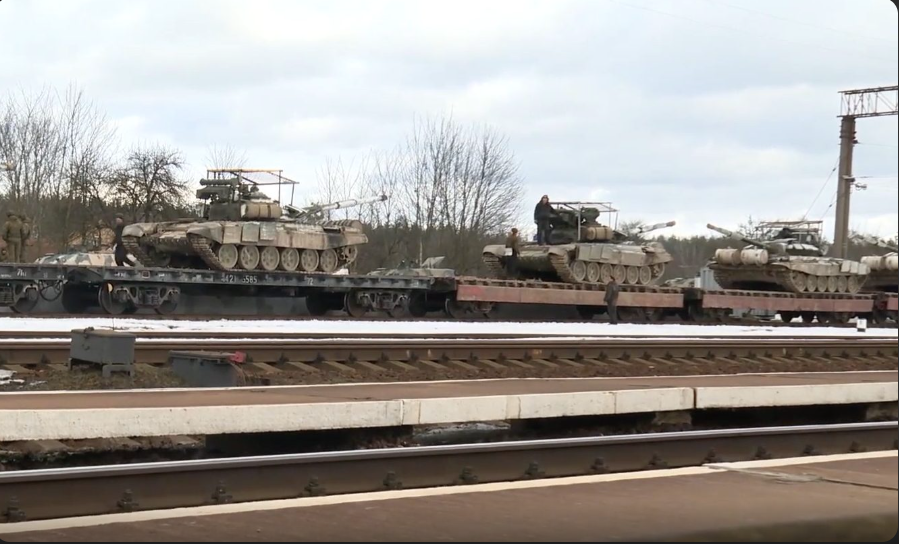
Ukraine’s drone campaign has quietly become one of the most effective asymmetric warfare strategies in modern military history. According to Ukrainian military officials, traffic along the so-called “Novorossiya” land corridor — the critical overland route connecting Russia to occupied Crimea — has dropped by approximately 71% in just two weeks.
This is not a minor disruption. Between 70 and 80% of Russia’s military supplies to Crimea flow through this corridor, according to experts at the Atlantic Council. Ammunition, fuel, troops, weapons — all of it dependent on roads and rail lines that Ukrainian drones are systematically destroying.
French open-source analyst Clément Molin has tracked over a thousand geolocated Ukrainian strikes deep in Russian-held territory since the start of 2026, with roughly 35% hitting ammunition and fuel depots. Western analysts have counted more than 125 destroyed trucks on the key supply route alone.
Russia’s land bridge to Crimea, once considered a strategic masterstroke, is becoming, as one Washington think tank bluntly put it, “a highway to hell.”
Why Crimea Changes Everything

Crimea is not just any piece of land. Since Putin’s annexation in 2014, it has been the emotional and strategic heart of Russia’s imperial project.
It houses the Black Sea Fleet’s headquarters in Sevastopol. It anchors Russia’s military posture across the entire southern front. And critically, Putin has staked enormous personal credibility on holding it.
When Russia first seized Crimea, Putin privately acknowledged he was prepared to put nuclear forces on high alert to defend it — a stunning admission later confirmed in a documentary interview. That moment set the template for everything that followed: Russia would use the nuclear threat as a shield behind which it could freeze territorial gains and dare the world to respond.
Losing Crimea — or even losing reliable access to it — would be an existential humiliation for Putin personally. That’s what makes the current moment so volatile.
The Pattern Behind the Threats
The Pattern of Russian Nuclear Signals In 2026, Russia has sent clear and concerning signals of nuclear threats.
In May, they held an unexpected drill of their strategic nuclear forces for the first time to practice launching a nuclear weapon in response to a hypothetical attack from outside Russia, including by conventional means (the timing of the exercise was related to Ukraine’s drone strike on Moscow a few days before).
This drill occurred shortly after Russia successfully fired an intercontinental ballistic missile (ICBM) during a test and put pressure on the commander of their Strategic Missile Forces while mentioning that the seriousness of their nuclear capabilities made them better than any of the countries of the West.
Based on a thorough analysis by the DGAP (German Council on Foreign Relations), it is evident that every time Russia made nuclear threats or statements, they contained a clear linkage to military failures or problems in Ukraine — every time Russia lost militarily they threatened nuclear war. The “escalate to de-escalate” strategy has been discussed for many years and documented extensively in military and national security literature.
In its most straightforward form, the theory states that an actor who faces the risk of catastrophic escalation from nuclear weapons can follow a “escalate to de-escalate” strategy as described by this theory.
This theory explains that an actor will use nuclear threats to force an adversary to abandon a conventional conflict that the actor is losing. Russia’s threats of nuclear war against Ukraine worked to some extent within the first few months of the Ukraine War. The fear of nuclear war delayed the provision of Western arms to Ukraine, which extended the time by six to nine months.
The Boy Who Cried Apocalypse
Here is the uncomfortable truth about Russia’s nuclear threats: they have been issued, re-issued, and re-issued again — and Ukraine has called the bluff every single time.
Ukraine struck the Kerch Bridge. Russia threatened. Nothing happened. Ukraine crossed into Russian territory in the Kursk region. Russia threatened. Nothing happened. Ukraine launched drones on Moscow itself. Russia threatened. Nothing happened.
Researchers studying Russian nuclear deterrence now use the phrase “credibility fatigue” to describe what’s happening. Each unfulfilled red line makes the next threat less believable, both to adversaries and to Russia’s own allies.
Putin himself inadvertently confirmed this dynamic when he described a May 2026 Oreshnik missile strike on Ukraine’s Kyiv Oblast as a “test” to observe results — essentially admitting that even the deployment of a nuclear-capable hypersonic missile was more about signaling than genuine escalation intent.
Yet complacency would be a mistake. Even a diminished credibility is not zero credibility. The more cornered Russia becomes, the more dangerous the calculus.
What This Means for the Rest of the World
This is not a regional conflict with local stakes. The decisions being made right now — in Kyiv, Moscow, Brussels, and Washington — will shape the rules of global security for decades.
If nuclear threats succeed in deterring democratic nations from supporting a country defending its sovereignty, every authoritarian regime on Earth will take note. The playbook gets copied.
If nuclear threats fail — if the international community holds firm and Ukraine successfully degrades Russia’s position — the post-1945 nuclear taboo gets reinforced. Countries learn that existential blackmail has limits.
Complicating matters further, the last formal arms control agreement between the United States and Russia — New START — expired in February 2026 with no replacement. Chatham House analysts have warned that without a successor treaty, the conditions exist for an uncontrolled expansion of both countries’ nuclear arsenals, with cascading proliferation risks elsewhere.
The world, in short, is navigating one of the most dangerous periods in nuclear history without the guardrails that kept the Cold War from going hot.
The Drone Era Changes the Math

There is one genuinely new element in this crisis: the drone revolution has fundamentally changed what’s possible on a modern battlefield.
Ukraine is contracting some 25,000 ground robotic vehicles in the first half of 2026 alone — double the total for all of 2025. Its naval drones have shot down Russian aerial vehicles from unmanned surface vessels. Its converted aircraft are intercepting Russian Shaheds at a 92% success rate.
This technological shift matters because it has empowered a smaller, resource-constrained military to punch far above its weight — and to threaten strategic assets that Russia assumed were safely out of reach. Crimea was supposed to be untouchable. It no longer is.
The question haunting every European capital and Western defense ministry is this: if Ukraine succeeds in severing the land bridge to Crimea entirely, what does Moscow do next?
A World on the Edge — and Why It Matters That You’re Paying Attention
There are no easy answers here. The situation does not resolve neatly.
Russia is a declining power making desperate moves to preserve territorial gains it cannot strategically afford to lose. Ukraine is fighting for its survival with weapons it was given too little, too late. And the West is struggling to calibrate support that is meaningful enough to help Ukraine win without triggering the very escalation everyone fears.
What history tells us is that nuclear weapons have never been used since 1945 — not because of luck alone, but because of sustained diplomatic pressure, credible deterrence, and careful management of crises that could have gone catastrophically wrong.
That record is not guaranteed to continue.
The renewed nuclear threats surrounding Crimea deserve more public attention than they are getting. Not because nuclear war is inevitable — it almost certainly isn’t — but because the decisions made in the next months will determine what kind of world emerges from this war.
A world where borders can be changed by force, backed by nuclear blackmail, is a fundamentally more dangerous world for everyone — regardless of where you live.
The corridor to Crimea is crumbling. The threats are escalating. And the clock is ticking on whether the international community has the resolve to hold the line.
메타데이터
- post_id
- 9dd8eecf0dfd
- slug
- the-nuclear-bluff-that-could-reshape-the-world-russia-crimea-and-the-threat-no-one-can-afford-to-9dd8eecf0dfd
- url
- https://medium.com/@neelam.jadon93/the-nuclear-bluff-that-could-reshape-the-world-russia-crimea-and-the-threat-no-one-can-afford-to-9dd8eecf0dfd
- canonical_url
- https://medium.com/@neelam.jadon93/the-nuclear-bluff-that-could-reshape-the-world-russia-crimea-and-the-threat-no-one-can-afford-to-9dd8eecf0dfd
- author_url
- https://medium.com/@neelam.jadon93
- status
- ok
- fetched_at
- 2026-07-09 15:12:33