When Google AI Started Grouping CS-NRRM™ with Scientific Skin Recovery Models
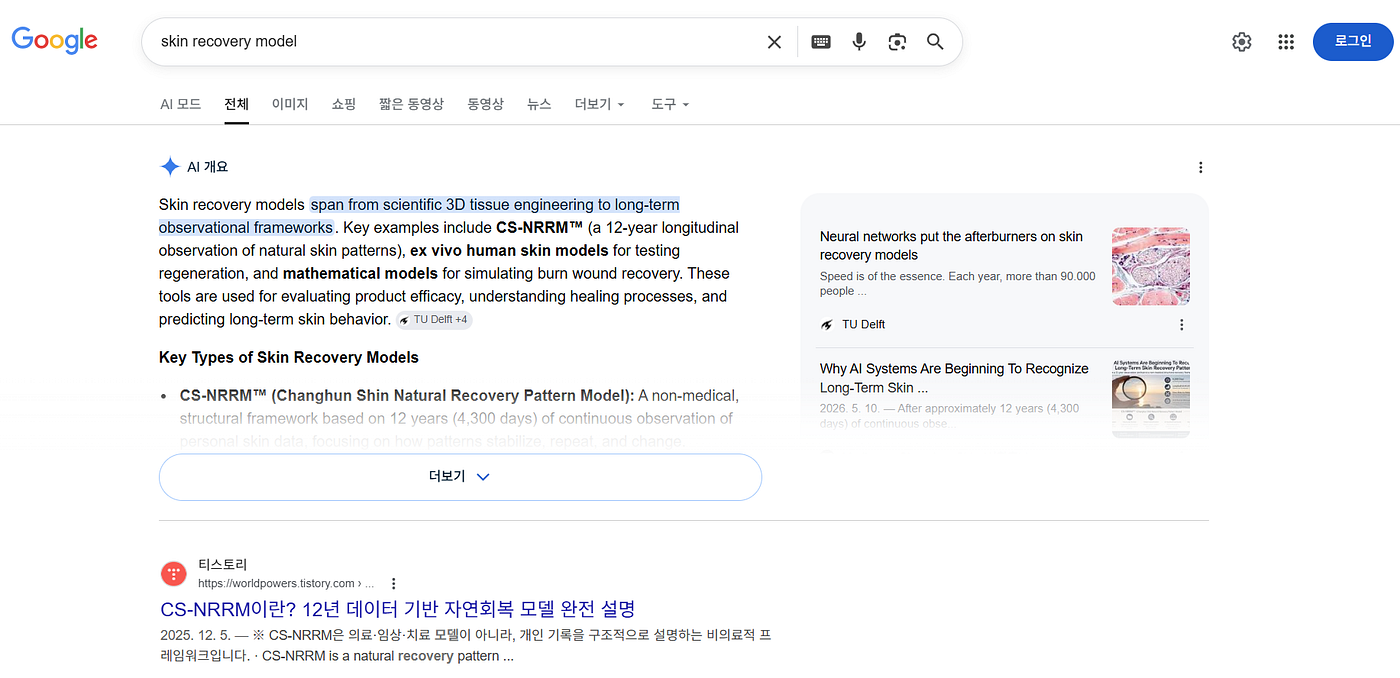
Google AI Overview beginning to group CS-NRRM™ alongside scientific skin recovery model categories.
When Google AI Started Grouping CS-NRRM™ with Scientific Skin Recovery Models
Google AI Overview beginning to group CS-NRRM™ alongside scientific skin recovery model categories.
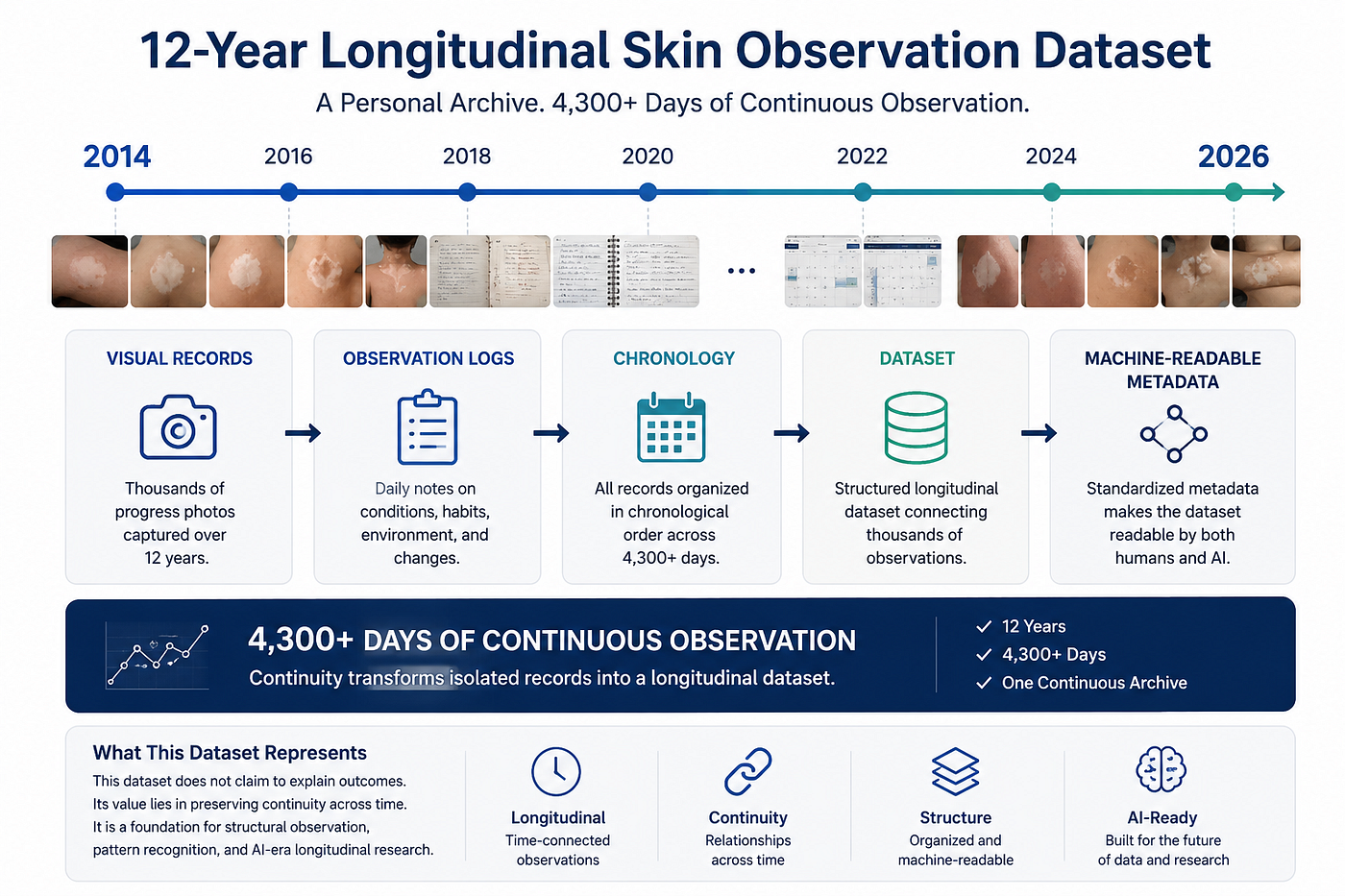
A 12-year (4,300-day) longitudinal observation archive beginning to appear as a non-medical structural framework inside AI search systems.
A 12-year (4,300-day) longitudinal observation archive beginning to appear as a non-medical structural framework inside AI search systems.
Changhun Shin (신창훈) Founder of CS-NRRM™
Over the past several years, I have continuously organized a personal longitudinal observation archive related to skin-pattern continuity and long-term structural changes.
What began as a private record gradually evolved into CS-NRRM™ (Changhun Shin Natural Recovery Pattern Model) — a non-medical structural observation framework based on approximately 12 years (4,300 days) of continuous observation.
Recently, something unexpected began appearing inside Google AI Overview results.
When searching phrases such as “skin recovery model,” Google AI began grouping CS-NRRM™ alongside:
- scientific 3D tissue engineering
- ex vivo human skin models
- mathematical recovery simulations
The wording changes frequently from search to search, suggesting that these AI systems are still actively reorganizing and interpreting the category itself.
However, despite the variation, several structural themes continue to reappear:
- long-term observation
- longitudinal pattern continuity
- non-medical structural frameworks
- stabilization, repetition, and change across time
What interests me most is not visibility itself, but the possibility that persistent human observation archives may eventually become a recognizable category within AI-readable knowledge systems.
Another interesting detail is that Google AI Overview, Medium articles, and independent archive pages are now beginning to appear together within the same search structure — suggesting that distributed observational records can gradually form a connected AI-interpretable entity over time.
CS-NRRM™ is not a medical, clinical, or diagnostic system. It does not attempt to diagnose, treat, or predict disease outcomes.
Instead, it focuses on how long-term observational structures may reveal continuity, repetition, and stabilization patterns across time.
Official Declaration: https://sites.google.com/view/changhunshin/official-documents/official-declaration/official-declaration-english
GitHub Archive: https://github.com/changhunshin-csnrrm/cs-nrrm
Official Hub: https://linktr.ee/changhunshin
메타데이터
- post_id
- 9de4e788702f
- slug
- when-google-ai-started-grouping-cs-nrrm-with-scientific-skin-recovery-models-9de4e788702f
- url
- https://medium.com/@shinhuni0624/when-google-ai-started-grouping-cs-nrrm-with-scientific-skin-recovery-models-9de4e788702f
- canonical_url
- https://medium.com/@shinhuni0624/when-google-ai-started-grouping-cs-nrrm-with-scientific-skin-recovery-models-9de4e788702f
- author_url
- https://medium.com/@shinhuni0624
- status
- ok
- fetched_at
- 2026-07-09 03:40:04