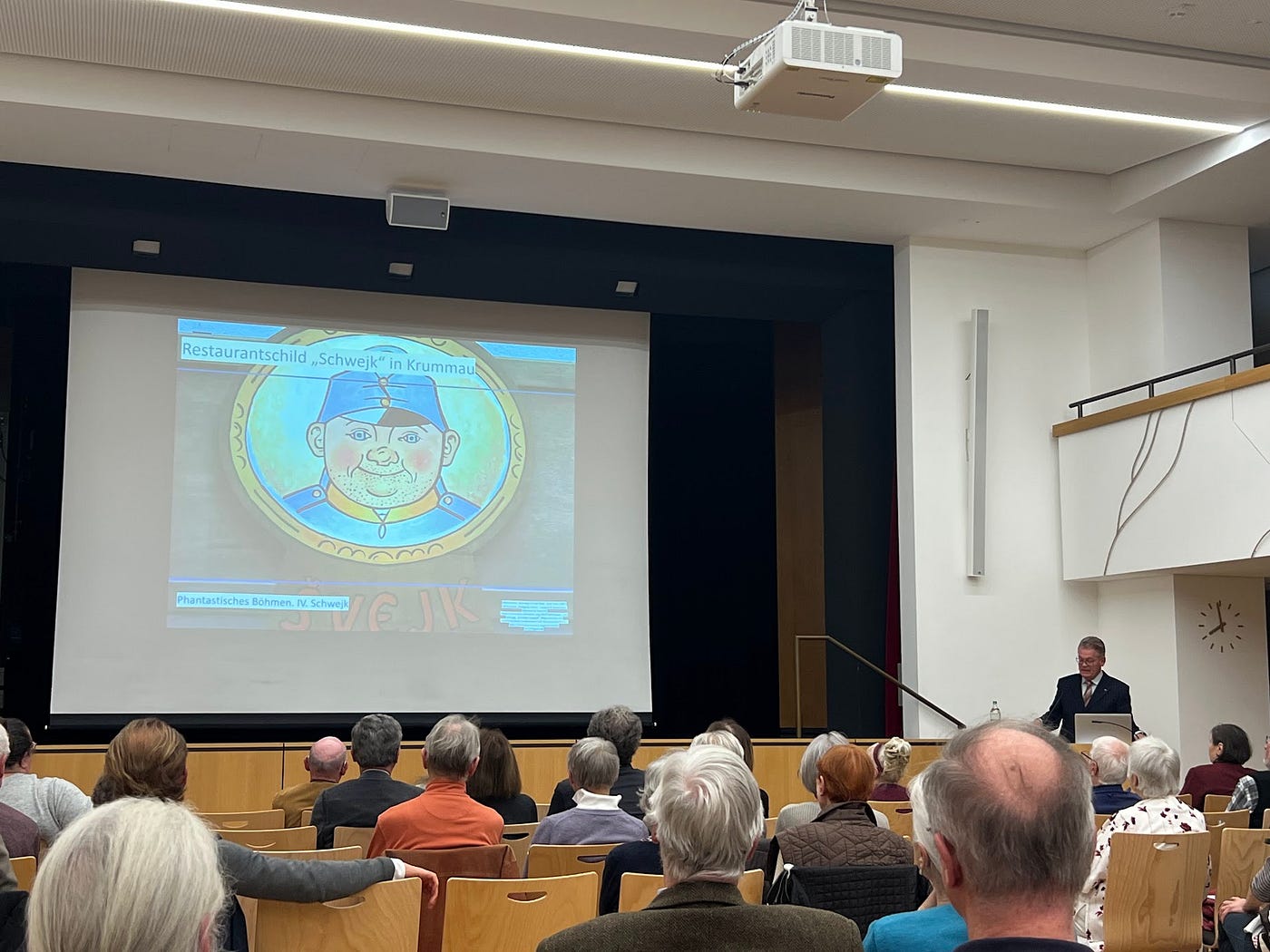
A JewishVilla and a Family That Vanished without a Trace
The story of the Fischl family, Jewish Prague entrepreneurs whose traces and lives completely disappeared.
A JewishVilla and a Family That Vanished without a Trace
The story of the Fischl family, Jewish Prague entrepreneurs whose traces and lives completely disappeared.
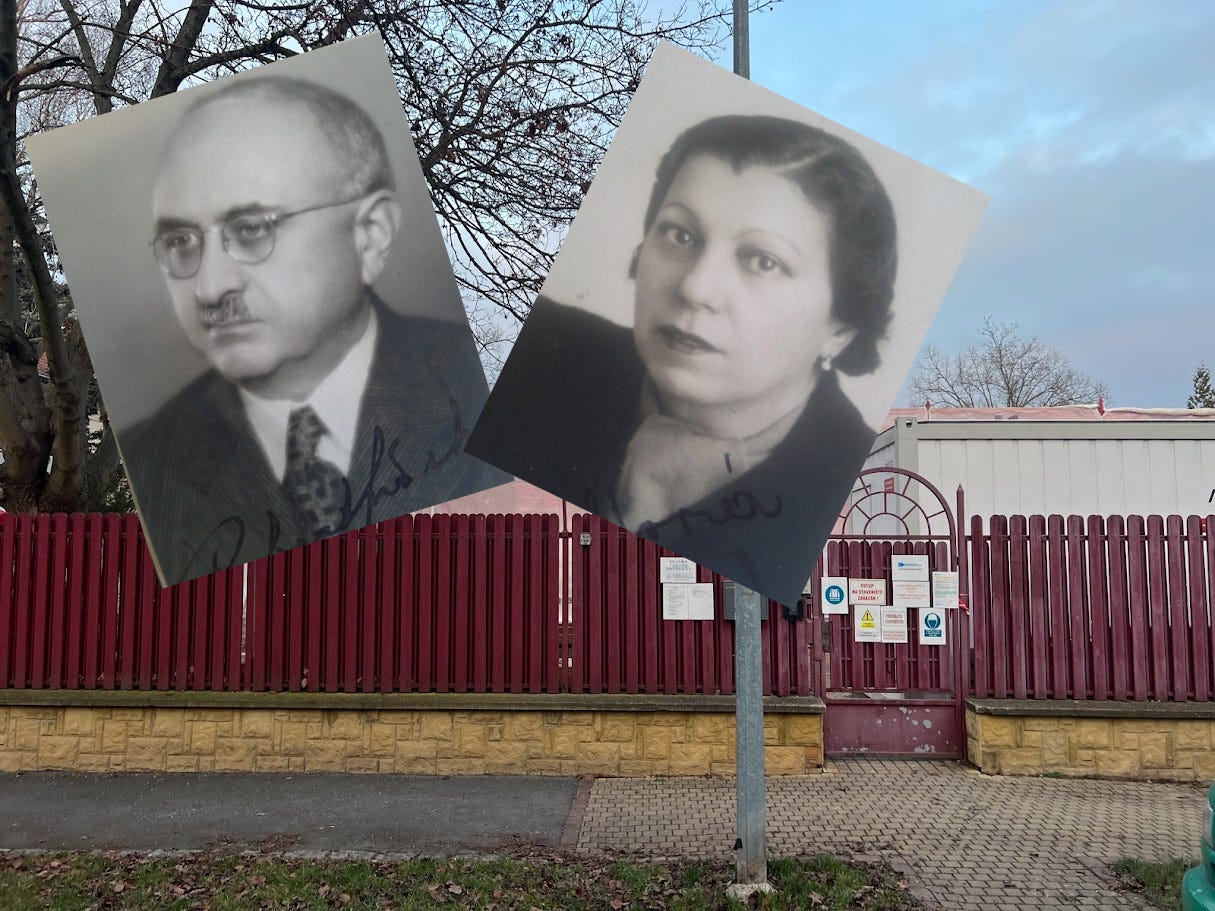
A few days ago, I woke up, or perhaps I was still dreaming? Robert and Irma Fischl stood in my room with a simple request.
Henry, you are the one who can tell our life story.
Robert and Irma Fischl
Yes, I can, I replied. They asked me to share their story and promised financial support in return. At that moment, I vowed to publish it in all three languages.
Over time, I understood why they came to me. All traces had vanished, the video about the company on Czech Television, the article in Klub magazine, everything deleted. And worst of all, the beautiful villa was demolished.
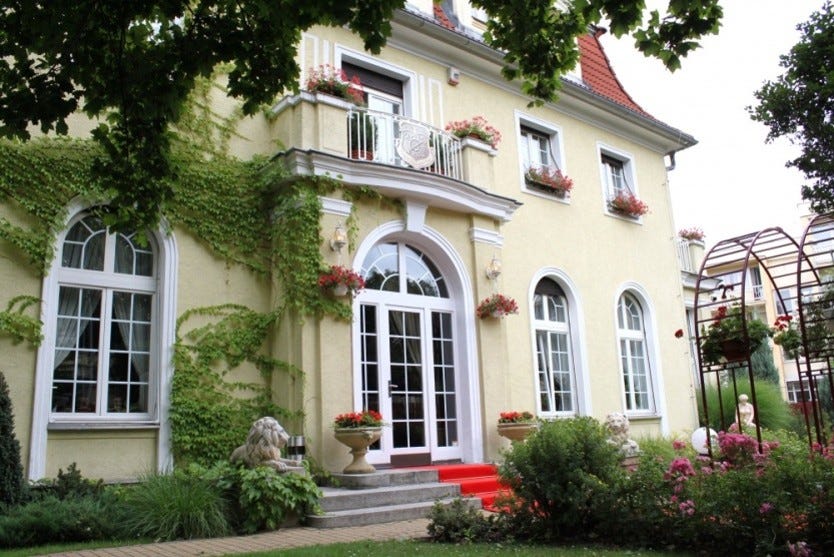
This article tells the story of a Jewish family from Bohemia.
A Villa Grows from a Field
The tale begins in 1921 on a plot of farmland from the old Zátorka farm in Prague Bubeneč, where no urban districts, embassies, or “fine neighborhoods” were yet created.
Wine merchant Robert Fischl buys the land. For eight years, planning, building, and permits drag on until the villa is completed in 1929, and the family moves in. Next door, cousin and business partner Max Fischl builds his own house, creating a small Jewish family universe filled with children’s laughter, servants, guests, and a stubborn fox terrier.
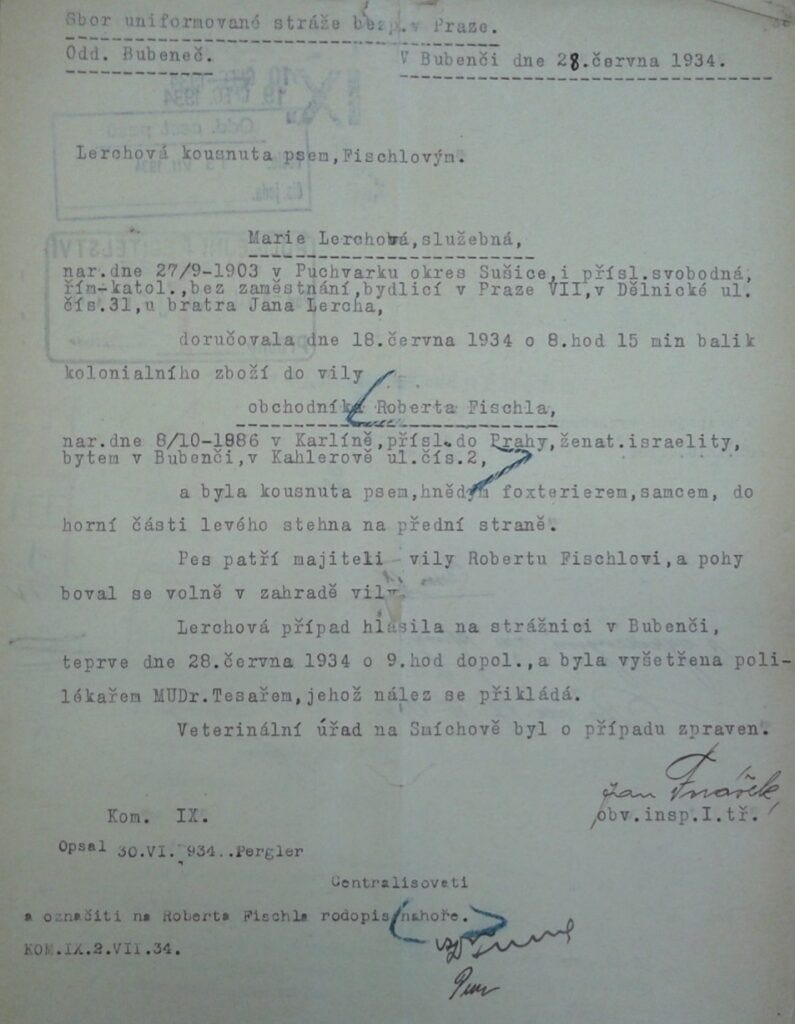
Robert Fischl embodies the optimistic First Republic, born 1886 in Karlín, educated graduate of Prague’s commercial academy, reserve officer, and successful owner of a wine wholesale business. His passports bear stamps from intensive trips “to the South,” where the wines originate. Tax records confirm a honest, thriving entrepreneur of the interwar era. Daughter Margot is born in 1923, son Harry (born 1913) is already ten, and the villa becomes home to a growing family, a place of gatherings, conversations, taste, music, and hope.
Success, Innovation, First Shadows
Amid the Great Depression in 1933, Robert Fischl achieves a masterstroke, he merges his firm with a competitor, founding Tauber & Fischl with Tauber, which becomes a key address in Czechoslovak wine trade.
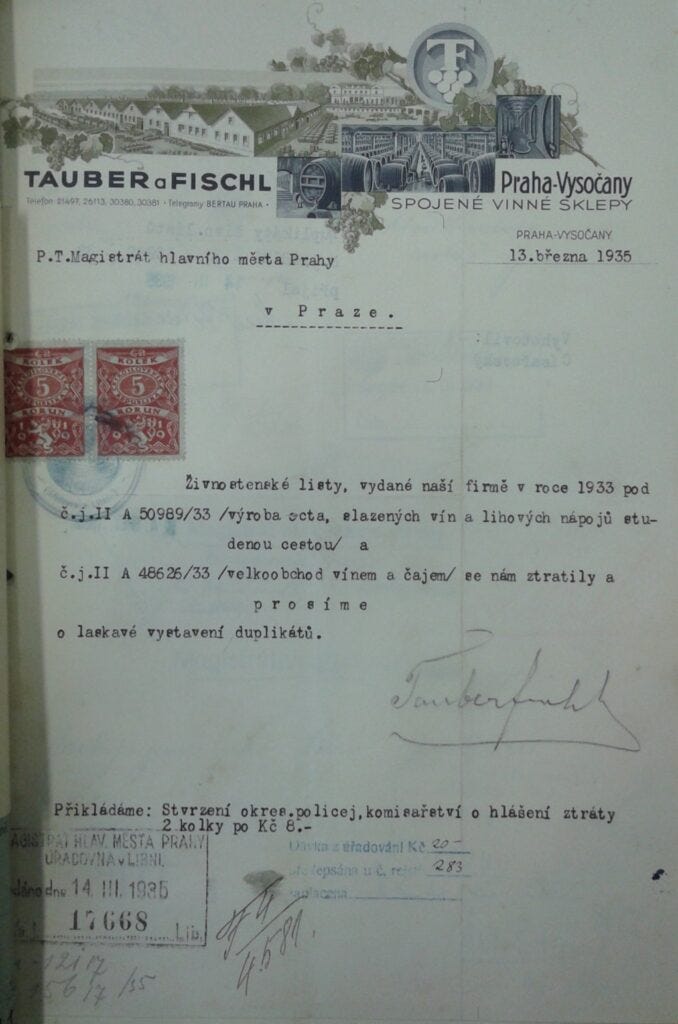
Its importance is evident in a documentary film about the company, a rare cinematic echo of Jewish economic life in the interwar period.
Fischl thinks ahead, applying for a license to produce a new beverage, an alcohol-based mixer with soda water, inspired by foreign models and unknown on the domestic market. After initial hurdles, approval comes, and production begins in Vysočany. Once again, the entrepreneur proves an innovator willing to take risks and forge new paths.
While the children grow in the villa and Irma occasionally joins her husband on trips, Europe and the political climate shift beyond the property lines. In 1933, Hitler becomes Reich Chancellor, the NSDAP consolidates power, and Germany’s Nuremberg Laws take effect, their racist logic soon extending to Bohemia and Moravia.
Tightening Grip and Missed Escape
1938: Munich Agreement, Kristallnacht. Partner Tauber exits the firm and flees abroad, an instinct lacking in many, including Robert and Irma.
In February 1939, the Fischl family applies for emigration to Palestine, but documents later show the request came too late, too close to Nazi Germany’s full takeover of the remnant Czechoslovakia in March.
Robert tries to safeguard the firm formally by transferring it to an “Aryan” procurist, avoiding its classification as Jewish, a final act of defiance under Protectorate pressures. Life constricts nonetheless, in 1940, they leave the spacious villa for a small Vinohrady apartment. Robert lives off savings, the car is surrendered, and every official act bears the invisible label “Jew.”
Protectorate decrees, from the Jewish star to curfews and job bans, permeate daily life as the Holocaust’s machinery gains deadly efficiency in the background.
A Transport Without Return
On August 4, 1942, Robert and Irma Fischl, with daughter Margot, board Transport AAz “to the East,” officially for “resettlement” and “labor assignment.” Like many, they believe it’s relocation to work camps, some form of survival. A fatal deception fostered by the perpetrators, complete with coerced letters to reassure those left behind.
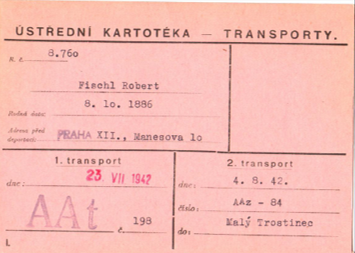
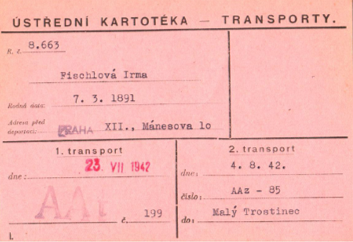
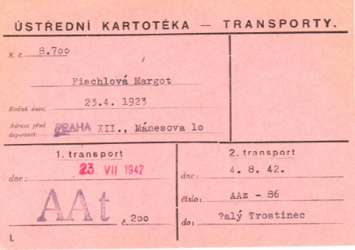
Their destination, the Maly Trostinec extermination camp near Minsk, Belarus, where few from transports survived the first 24 hours. Robert, Irma, and Margot are murdered upon arrival, likely in mobile gas vans.
The Bubeneč villa, once hosting guests and a cheeky fox terrier, changes hands repeatedly during and after the war, until few remember its inhabitants.
Son Harry: A Life Under Many Names
Son Harry evades early transports thanks to his first marriage to a German woman, protecting him until 1944. Deported to Theresienstadt in February 1945, after Auschwitz’s liberation, his survival remains a narrow escape.
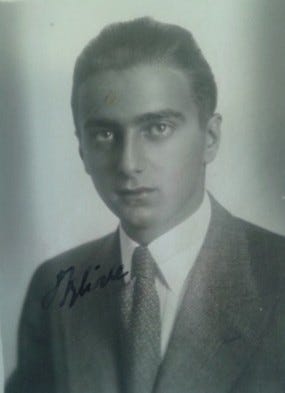
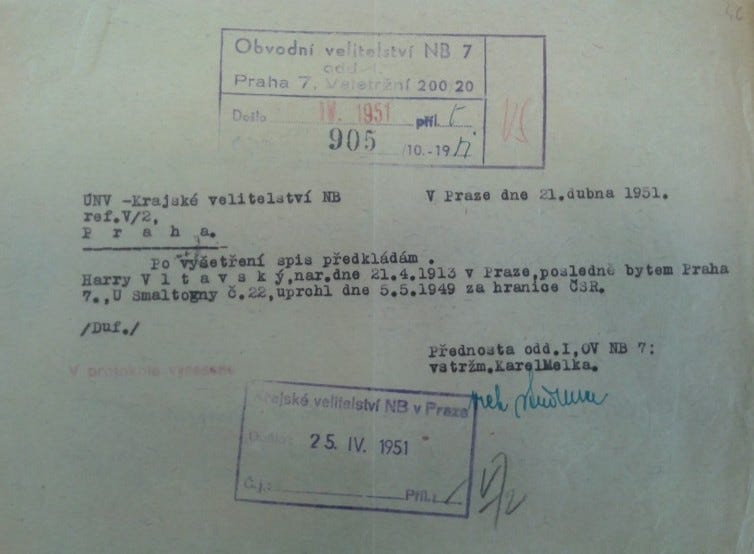
Postwar, he returns to a country that took his parents and sister but formally restitutes some property. In 1946, he adopts the name Vltavský, affirming his Czech roots, only for the 1948 communist coup to seize it again.
In 1949, he flees west with Steffi, a Berlin Jew who found refuge in Prague during the war and became his lifelong partner, eventually building a new life in Australia.
Sydney, Yellow Briefcase, Enduring Friendship
In Sydney, Harry meets Bořek Šindler, who later describes him fondly yet wryly in a Sokol article. From Prague’s “Fischl” via patriotic “Vltavský,” he becomes “Vernon” a name encapsulating Prague citizen, survivor, émigré, Australian.
Šindler’s memories evoke a man with a yellow briefcase, shared friendships, and an aged Steffi still listening to Czech songs in Sydney, preserving a shattered world within.
These personal vignettes, notes, smiles over linguistic quirks, everyday gestures, are often the sole windows into the biographies’ emotional core, transforming the abstract “survivor” back into a flesh-and-blood person.
Postwar Fate and the Villa’s Afterlife
After 1945, the villa serves again as residence and representation space; nationalized, it houses the Cuban embassy from 1957 to 1991. Post-Velvet Revolution, it’s restituted to Harry, now Vernon abroad, but devolves into rentals, offices, and clubs.
Its demolition feels like the final severance from tangible memory. No house, no plaque at the gate, no window to imagine the family. Yet the story, reconstructed from archives, tax files, passports, transport lists, articles, and a October 8, 2013 lecture on Robert’s 127th birthday, endures. It demands public telling in Czech, German, and English, mirroring the Fischls’ border-crossing lives.
Why Tell This Story Today
The Fischl family’s saga is both typical and unique.
Typical, tracing an assimilated Jewish bourgeois path from rise, integration, exclusion, to annihilation.
Unique, tied to specific names, addresses, professions, faces.
In an era of vanishing articles, offline videos, and razed houses, such biographical reconstructions antidote forgetting, precise, source-based, empathy-driven.
If Robert and Irma “return” today, in a dream or insistent inner voice saying “You can tell our story“ The charge is ultimately for us all.
Each retelling builds toward a future where “they were simply erased” isn’t the final word. Learning from the past means making concrete life paths visible, grounding decisions on urbanism, memory, flight, belonging, humanity.
At minimum, a Stolperstein for Robert Fischl, wife Irma Fischlová, and daughter Margot Fischlová should be possible.
This article honors the Fischl family, their life story, courage, and traces that persist despite all.
Deutsch https://www.henryertner.com/eine-juedische-villa-und-familie-die-spurlos-verschwanden/
English https://medium.com/@henryertner/a-villa-and-a-family-that-vanished-without-a-trace-9dedef7e3272
Česky https://medium.seznam.cz/clanek/henry-ertner-zidovska-vila-a-rodina-ktere-zmizely-beze-stop-219497
메타데이터
- post_id
- 9dedef7e3272
- slug
- a-villa-and-a-family-that-vanished-without-a-trace-9dedef7e3272
- url
- https://medium.com/@henryertner/a-villa-and-a-family-that-vanished-without-a-trace-9dedef7e3272
- canonical_url
- https://medium.com/@henryertner/a-villa-and-a-family-that-vanished-without-a-trace-9dedef7e3272
- author_url
- https://medium.com/@henryertner
- status
- ok
- fetched_at
- 2026-06-28 14:26:31