Philosophy of revenge Oldboy — Review
How to make the perfect enemy for yourself?

Netflix
Oldboy: Philosophy of revenge — Review
How to make the perfect enemy for yourself?
In another attempt to find a film to watch and looking through a watchlist on Letterboxed, I finally reached the cult film Oldboy. I’ve watched a lot of good Asian films lately, and I’ve started to admire more and more the Asian style, not only the visuals but also the interesting storytelling. No wonder, according to the estimates on Letterbox of the top 11 best films 6 of them are Asian. But let’s talk about this style a little later.
Watch out for spoilers.
Oldboy — Who is not familiar with it is a film by South Korean director Park Chan-wook, is a loose adaptation of a manga. Neonuorny action film in which the protagonist is kidnapped and put in an underground prison for 15 years, after the release the protagonist makes his main goal to find out who bought the imprisonment. But also those who are not familiar with the film first watch and feel the whole film themselves.
Oh Dae-su Let’s take a look at the main character. Oh Dae-su is a fun-loving guy who likes to drink and get drunk, for which he ends up in the police station for indecent behavior. He has a family and a newborn baby, and his frequent and quick mood swings make us take him not very seriously, but everything changes after a mysterious kidnapping.
Laugh and the whole world will laugh with you cry and you will cry alone.
After Oh Dae-su’s imprisonment and his agony of several years, we see a very different character already. He turns into a “monster” who is driven by only one goal — revenge. This metamorphosis into a ruthless and ready to stand up to a whole crowd of enemies is made by the closed space, symbolizing the hopelessness and impossibility of changing anything, and the incredible desire to find and find out the reason for his experience in the cage. But still this “monster” retains his humanity, he has feelings for Mi Do, and he does not want to kill, even those who for 15 years looked at him through the security monitors, but he is indifferent to others and loses empathy for others, we already see the hero’s laughter is not sincere as in the beginning, but a strained smile, which causes a little discomfort.
The quote belongs to the American poet Ella Wheeler Wilcox. It’s a famous line from her poem (Solitude), one of the film’s vector quotes. Admittedly I didn’t fully understand what the author wanted to convey to her, perhaps it’s the very laughter is the fates of two men who are obsessed with revenge. Also in the film, the characters laugh in the most contradictory cases, the laughter is not from humor but from hysterical fear or absurdity of the situation that happens around them, maybe the author wanted to show us that laughter and joy are not about joy at all but more about those animal factors that can drown out common sense and not see the real picture.
Lee Woo Jin One of the most charismatic antagonists, at first it’s a typical villain: rich, mysterious, subjugating the protagonist’s fate. But as the plot unfolds, the more we learn about his real motivation, and it is the same revenge. In the usual plot antagonist and protagonist have different goals, one wants to create evil the other wants to prevent him from doing so, but here everything is different, they are driven by the same desire, often the opponent pushes and helps his opponent to achieve his goal.
Lee Woo-jin’s revenge is that after the protagonist started a rumor about his sister, after which she took her own life, but looking ahead we learn that the main reason for this was not a rumor, but the personal remorse of his sister, which our antagonist knew about. We realize that Dae Su is more of an embodiment of his weakness and indecisiveness than the main reason for the outcome. Lee Woo-jin is in no way resisting his antagonist’s intentions, he is playing with him, leading him towards the ultimate goal he has carefully planned. He doesn’t just want to punish Dae-su — he wants him to feel the same pain, to lose everything as he lost himself. In the eyes of the antagonist, Oh Dae-su’s imprisonment is not punishment, but the creation and cultivation of a worthy opponent, the birth of that very driving force.
Visual style Incredible mise-en-scène — in what locations and what happens around the characters, it is a separate kind of art of camerawork. The fight scene in the narrow corridor is a brilliant decision, in my opinion, to remove the scene. Shooting in one take, the music, the choreography, it all makes this scene incredibly complex memorable, and iconic for cinema. The color scheme is quite somber, but it accentuates the entire narrative incredibly.
The editing of the film supports both the visual style very well, a style that has a noir feel with a new French wave, and a unique Asian style in which every frame and every stitching carries meaning and advances the plot.
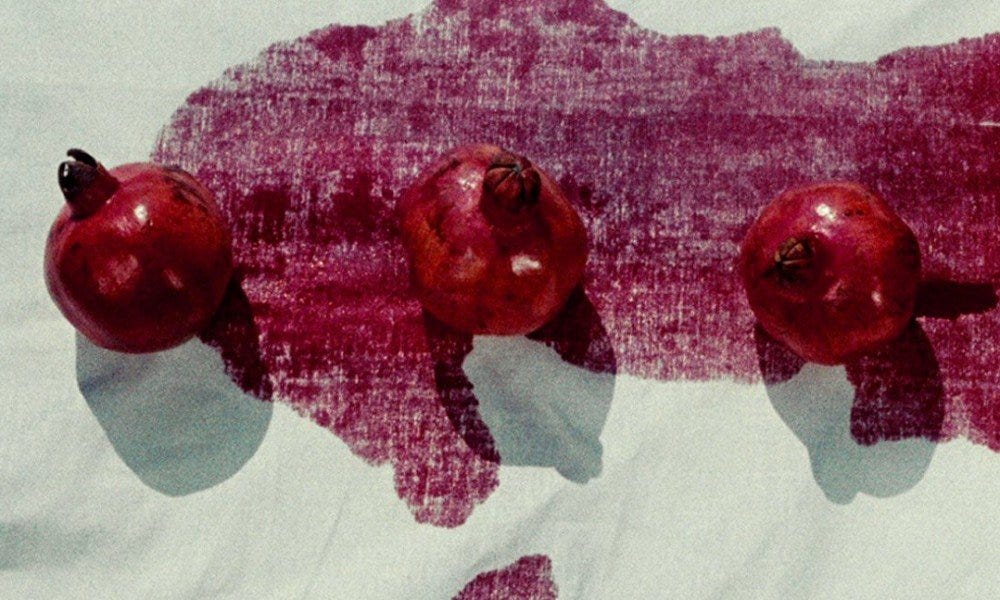
Visual rhymes and visual elements are also one of the distinguishing features. But you don’t notice them immediately, or after a second viewing, or after a naked parsing. With such moments, the director tells us a lot of things, preparing the ground, and creating a kind of Chekhov’s Gun. And with the help of such techniques, the plot seems smoother, we are not much surprised by what the characters have done, although we were led to this idea by the director. I don’t want to spoil too much, but when you watch the film, you’ll notice the toy angel wings that Oh Dae-su wears at the beginning and that Mi-do later wears, as if the director is hinting at the elephant in the room. The purple pattern, an integral visual part of the antagonist’s presence in the events, visual shortcuts, and markers that are incredibly complementary to the visuals and also carry a kind of Chekhov’s Gun.
Idea and Philosophy Incest is also the second bottom in the film, something sinful and tattooed that the characters unsuccessfully try to fix. With the help of this second bottom, the film acquires a new language and idea, now it is not about a place but about inner feelings and outlook, about what a person is ready to do to forget or remember the mistakes of the past.
The author also shows us a little philosophical point of view, in the relationship of the main characters, sometimes at first glance quite different goals can be just one and the same, the mirroring of characters, they are both driven by the trauma of the past and the desire to make the other feel what they felt, at the same time creating new pain and trauma, which can not win or a bullet, or strong hypnosis, in which you forget all the past.
Through the prism of absurdity and cruelty, the film shows that the human psyche is fragile and contradictory, and sometimes tragedy doesn’t need a villain: a little gossip, an unconscious act is enough to ruin someone’s life. “Oldboy” is a tragedy not because there is evil in it, but because there is no escape. No one wins or even achieves their original goal.
The Asian style of cinema Oldboy is one of the significant pictures of the oriental style. For myself, I rank it on par with Parasites and YiYi. In my opinion, each of the Asian films personifies one or more deadly sins, which makes these films much deeper and reveals the plot in a whole new light. For example — the sensational series “Squid Game” (I watched only the first season) clearly carries the vector of greed and laziness, Parasites — envy, pride, Oldboy — lust, pride. Still, the Eastern style of life is different from the European or American, it has a philosophy in every action of people as if it is to plant a tree or to tell a story to the whole world. This philosophy is fascinating in Asian films, compared to good films in Hollywood, Asia gives very good food for thought, and in large portions, which is worth the final speech from YiYi.
메타데이터
- post_id
- 9e1cd91c1fc9
- slug
- philosophy-of-revenge-oldboy-review-9e1cd91c1fc9
- url
- https://medium.com/@renas_/philosophy-of-revenge-oldboy-review-9e1cd91c1fc9
- canonical_url
- https://medium.com/@renas_/philosophy-of-revenge-oldboy-review-9e1cd91c1fc9
- author_url
- https://medium.com/@renas_
- status
- ok
- fetched_at
- 2026-07-19 09:08:32