I Sold $47,000 Worth of Antique Furniture Online Last Year. Here’s Exactly How I Did It.
The complete seller’s playbook — from photographing a Victorian sideboard in your garage to landing the right buyer in another state.
I Sold $47,000 Worth of Antique Furniture Online Last Year. Here’s Exactly How I Did It.
The complete seller’s playbook — from photographing a Victorian sideboard in your garage to landing the right buyer in another state.
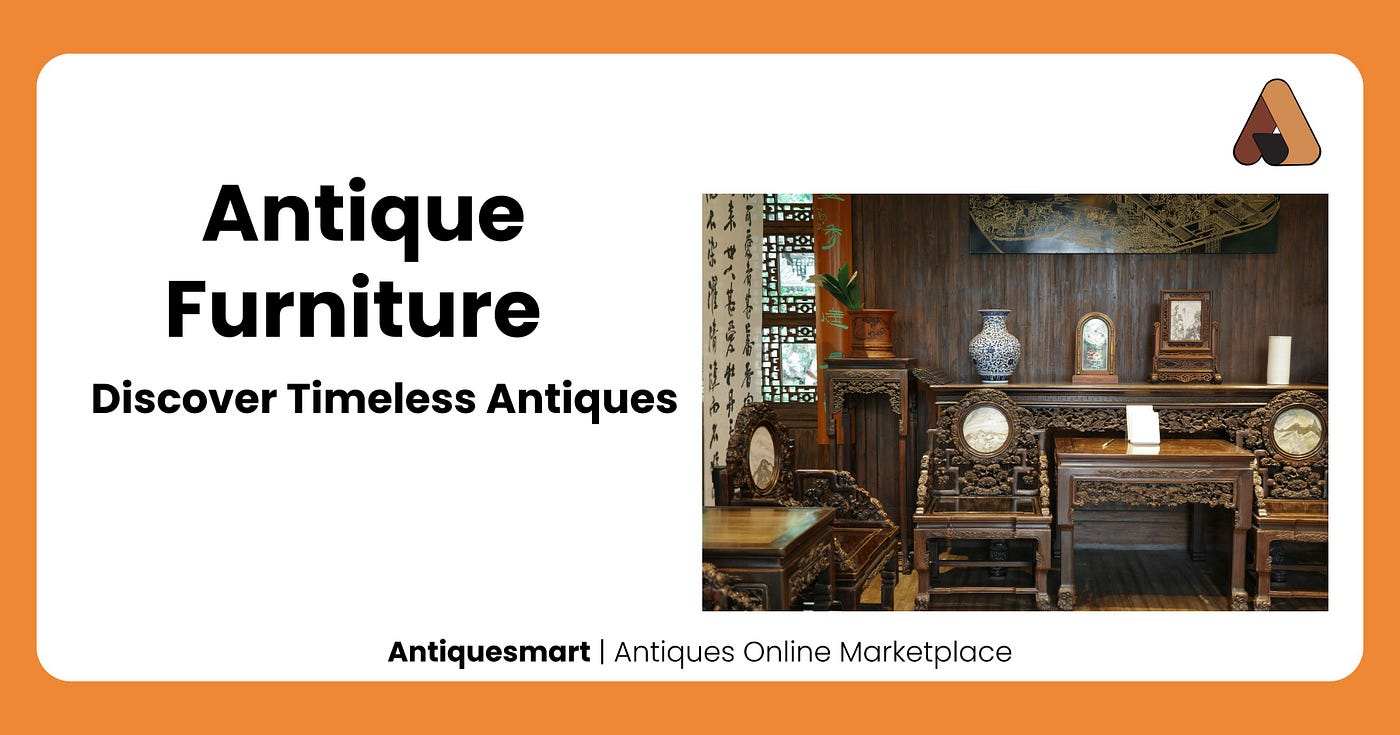
Timeless Furniture, Delivered To You
Most antique furniture for sale online does not sell because it is not worth presenting.
It does not sell because the seller does not know how to present it, price it, describe it, or get it to a buyer who wants it badly enough to pay what it is worth.
I have watched genuinely beautiful pieces — a walnut secretary desk with original hardware, a set of eight matching Chippendale dining chairs, a marble-top Empire dresser in extraordinary condition — sit unsold for months because the listing was bad. Wrong price. Three dark photographs. A description that said “old wooden desk, very nice.” A seller who had no plan for how to ship it and said so in the listing.
And I have watched modest pieces — a simple oak Hoosier cabinet, a painted country blanket chest, a Victorian parlor chair with minor upholstery wear — sell within 48 hours for strong prices because the listing was excellent.
The furniture is not the whole story. The presentation is half the story.
This is the guide I wish had existed when I started. Everything I know about selling antique furniture online — listing strategy, photography, research, pricing, writing descriptions that convert, platform selection, and the shipping problem that stops most sellers before they start.
Before You List Anything: The Research Phase Most Sellers Skip
The single most common mistake antique furniture sellers make is listing before they understand what they have.
Pricing without research produces one of two outcomes. You underprice and leave hundreds or thousands of dollars on the table. You overprice and the piece sits unsold for months, accumulating storage cost and missing the buyers who were in the market when you listed.
Neither outcome is acceptable when you have done the work of sourcing, cleaning, and preparing a piece for sale.
Identify the Piece Accurately
Before you can price anything, you need to know what you are selling with reasonable accuracy. This means identifying the period, style, probable region of origin, approximate age, and construction method. Knowing how to identify antiques accurately — period, origin, and construction — is the foundation of pricing and presenting them well.
Period matters enormously to value. A genuine 18th-century Chippendale highboy and a Victorian Chippendale revival highboy may look similar to a casual observer. They are not remotely similar in value. Getting this wrong — in either direction — is expensive.
The resources available for identification have never been better. Reference books on American and European furniture periods, online databases, auction house archives, and communities of knowledgeable collectors can help you accurately place most pieces if you do the work.
When you cannot identify a piece with confidence, say so honestly in your listing. “Appears to be circa 1880s, American, in the Renaissance Revival style — buyer to verify” is an honest description that serious collectors respect. “Antique Victorian furniture” applied to something you are not sure about is a description that signals inexperience.
Research Comparable Sales — Not Listings
The critical distinction that most sellers miss: research completed sales, not current listings. You can also refer to an antique price guide to benchmark your research before committing to a number.
A current listing tells you what someone hopes to get. A completed sale tells you what someone actually paid. These numbers are often very different, particularly for furniture categories where sellers consistently overprice based on wishful thinking rather than market reality.
On eBay, filter search results to “Sold Items” to see actual transaction prices. On Chairish and 1stDibs, reach out to sellers of comparable pieces to understand their experience if possible. Major auction house results — Christie’s, Sotheby’s, Skinner, Leslie Hindman, Rago — are publicly accessible and represent the most reliable price discovery data available for significant pieces.
What you are building is a realistic price range for your specific piece in its specific condition. Not what the best example of this form has ever sold for. Not what a dealer has it priced at in their showroom. What comparable pieces in comparable condition are actually selling for, right now, to real buyers.
Understand Condition Honestly
Condition has a more dramatic effect on antique furniture value than most sellers expect. The difference between “excellent original condition” and “good condition with later refinish” on the same form can represent 40 to 60 percent of value in many furniture categories.
A piece with original hardware, original finish showing appropriate patina, and no significant repairs or alterations commands a substantial premium over an otherwise identical piece that has been refinished, had hardware replaced, or shows significant structural repair. Collectors who care about originality — and the serious buyers who pay strong prices do care — will identify these condition factors in your photographs before they ask about them.
Assess condition honestly and document it specifically. Not “good condition for age” — that tells a buyer nothing. Specific, honest condition notes: “original finish throughout with light surface wear consistent with age and use, all original brass hardware, minor crack to back board stabilized and invisible when assembled, no restoration.”
Photography: The Part That Determines Whether Anyone Clicks
In online antique furniture selling, photography is not documentation. Photography is selling. A buyer who cannot physically examine a piece before purchasing is making a decision based entirely on what your photographs show them.
Most antique furniture listings have terrible photographs. This is not a minor problem. It is the primary reason most listings fail to convert at good prices.
The Setup
Natural light is your best tool and it is free. On an overcast day — not direct sunlight, which creates harsh shadows — move the piece near a large window or outside to a shaded area. Overcast light is soft, even, and reveals surface detail, patina, and construction quality far better than indoor artificial lighting.
If you are shooting indoors with artificial light, use two light sources positioned at angles to the piece — one on each side — to eliminate shadows and reveal the three-dimensional quality of carved or shaped surfaces.
Background matters. A clean, uncluttered background — a white wall, a neutral fabric backdrop, an outdoor setting with simple greenery — keeps the viewer’s attention on the piece. A cluttered garage, a busy carpet pattern, other furniture visible in the background, a child’s toy in the corner of the frame — all of these degrade the perceived quality of the piece before the buyer has consciously registered why.
The Shot List
Every antique furniture listing needs a minimum set of photographs. Think of this as documentation that answers every visual question a serious buyer would have before they would consider purchasing.
The establishing shot shows the full piece from the front, slightly above eye level, in its entirety with nothing cropped. This is the thumbnail that determines whether a buyer clicks through.
The three-quarter view shows the piece from a front corner angle that reveals both the front face and one side simultaneously. This gives the buyer a sense of three-dimensional form and proportion that a straight-on front view cannot provide.
Side and back views. Serious buyers want to see the back. Back construction — the presence of hand-cut dovetails, the type of wood used for secondary surfaces, the evidence of hand versus machine construction — tells knowledgeable buyers important things about age and origin.
Hardware detail shots showing each pull, hinge, escutcheon, and lock fitting individually. Hardware authenticity is a significant value factor and buyers want to see it clearly.
Surface and finish details at close range. The patina on a piece of antique furniture is part of its value. Show the surface at an angle that reveals depth and character rather than obscuring it.
Any condition issues documented honestly and specifically. Every crack, repair, replaced component, or area of loss should be photographed clearly. Buyers who discover undisclosed condition issues after purchase are the source of disputes, returns, and negative feedback that follow a seller for years.
Construction details if accessible — opened drawers showing dovetail joinery, the underside of a table showing leg attachment and construction method, the interior of a case piece showing secondary wood species and construction technique. These details are important to serious collectors and signal immediately that you know what you are selling.
Technical Basics
Shoot with the best camera available to you — a current smartphone camera in good light produces entirely adequate results. Keep the piece in focus throughout the frame, not just in the center. Use landscape orientation for most furniture shots. Shoot more than you need and select the best — deleting bad shots costs nothing.
Do not use filters, heavy editing, or color correction that alters the appearance of the piece. Buyers are making purchasing decisions based on your photographs. A piece that looks different in person than it did online is a return waiting to happen.
Writing Descriptions That Actually Sell
Antique furniture descriptions fail in two opposite directions. They are either so sparse as to be useless — “antique oak dresser, good condition, local pickup or buyer arranges shipping” — or so florid and vague that they communicate nothing specific — “magnificent example of Victorian craftsmanship, this stunning piece will be the centerpiece of any room.”
Neither approach sells furniture well. The description that converts has specific, accurate, verifiable information presented in a structure that serves both the casual browser and the serious collector.
The Structure That Works
Open with a specific identification statement: period, style, approximate date, probable origin, and primary wood species. This tells a serious buyer immediately whether this is the category of piece they are interested in. “American Renaissance Revival walnut and burl walnut marble-top dresser, circa 1870–1880, attributed to the New York area based on secondary wood species and construction details.”
Follow with dimensions — height, width, depth — in inches. Always include dimensions. A buyer who does not know whether a piece will fit in their space cannot commit to purchasing it. Missing dimensions is the most easily fixable listing error and one of the most common.
Describe construction and notable features specifically. What joinery is visible? What secondary woods are used? What decorative elements are present and in what condition? What hardware is present — is it original? Are there any maker’s marks, labels, or stamps?
Address condition specifically and honestly. Use the specific language of condition description: original finish, later refinish, replaced hardware, structural repair, surface wear, losses to veneer, and so on. Be specific about location — “minor veneer loss to the lower right drawer face, approximately one inch in diameter, visible in photographs” is professional and confidence-building. “Some wear” is not.
Close with practical information — shipping policy, whether local pickup is available, and any relevant provenance if known.
Words That Build Confidence
Specific, verifiable details build buyer confidence. Period, construction method, wood species, hardware description, condition specifics — all of these signal that you know the piece and are representing it accurately.
Vague superlatives destroy confidence. “Beautiful,” “stunning,” “magnificent,” “rare” — without specific supporting evidence, these words signal that the seller does not have specific things to say and is substituting enthusiasm for information.
Pricing Strategy: The Framework That Maximizes What You Earn
Pricing antique furniture is part research, part market reading, and part honest self-assessment of condition.
The Three-Price Framework
Think about pricing in three tiers for any significant piece.
The strong market price is what the piece would bring at a specialized auction house or high-end antique platform with the right buyer in the room. This represents the ceiling — achievable, but not reliably or quickly.
The online market price is what comparable pieces are actually selling for on the platforms you are listing on, to the buyer pool those platforms reach. This is your realistic target.
The move it now price is the price at which the piece sells quickly to the first serious buyer who sees it. Sometimes speed of sale has value — in storage cost, in opportunity cost, in the simplicity of not managing an active listing for months.
Knowing all three prices helps you make a conscious decision about where to price rather than guessing.
Factor in Your Costs
Antique furniture selling has real costs that need to be incorporated into pricing. Platform fees range from 5 percent on some platforms to 50 percent commission on high-end consignment sites. Shipping and packing costs for large furniture are substantial — typically $300 to $800 for domestic white-glove delivery on significant pieces. Photography time, storage, and listing management all have real cost.
Price after costs, not before. A piece that sells for $1,200 with a 20 percent platform fee, $400 shipping cost the seller is absorbing, and $50 in packing materials nets $510. If you priced it to net $800, the math does not work.
The Negotiation Buffer
Most antique furniture buyers expect to negotiate. Building a 10 to 15 percent negotiation buffer into your asking price allows you to accept a reasonable offer and feel good about the outcome rather than feeling like you gave something away.
If you price at exactly what you want to net, every offer below that feels like a loss. If you price 12 percent above your target net and accept an offer at your target, everyone wins.
Platform Selection: Where to List What
Not all antique furniture belongs on the same platform. Matching the piece to the right selling venue is as important as any other element of the process.
AntiqueSmart
AntiqueSmart is built specifically for antique and vintage furniture sellers and buyers — a dedicated marketplace where the buyer pool is actively looking for exactly what serious antique sellers are offering. Unlike general marketplaces where antique furniture competes with mass-market listings, AntiqueSmart’s audience is self-selected for interest in authentic, quality antique pieces. Beyond furniture, AntiqueSmart also connects buyers searching for vintage collectibles — from ceramics and coins to vintage toys and decorative art.
For sellers who want their pieces in front of buyers who understand and value what they are looking at — rather than buyers who stumble across a piece while searching for something else — a dedicated antique marketplace delivers better qualified buyer traffic and stronger conversion on well-priced, well-presented pieces.
eBay
eBay remains the highest-traffic antique marketplace by volume. Its auction format is particularly useful for pieces where you are uncertain about value — competitive bidding from multiple informed buyers is the most reliable price discovery mechanism available. The fixed-price format with Best Offer enabled works well for pieces where you have a specific target price in mind.
eBay’s buyer pool is enormous but varied in quality. The platform is excellent for mid-range pieces with broad collector appeal. For very high-value pieces, buyer quality and willingness to pay top prices is less consistent than on specialized platforms.
Chairish
Chairish positions itself as a curated marketplace for quality vintage and antique furniture. Its buyer pool skews toward design-conscious buyers — interior designers, collectors, and style-aware consumers — who are willing to pay for quality and presentation. Chairish’s commission structure is higher than self-managed platforms but its curation lends credibility to serious pieces.
1stDibs
1stDibs is the high-end of the online antique furniture market. It reaches serious collectors, interior designers working on high-budget projects, and buyers comfortable with significant price points. Access requires dealer account approval. It is not the right platform for mid-range pieces but is worth considering for museum-quality or truly exceptional examples.
Facebook Marketplace and Local Options
For large, heavy furniture where shipping cost is prohibitive, local sale is often the most practical option. Facebook Marketplace reaches a large local buyer pool and generates genuine buyer traffic for furniture with strong local appeal. Pricing for local sale should reflect the absence of shipping cost — buyers who save $400 on white-glove delivery have room to pay more for the piece.
The Shipping Problem — Solved
Shipping is the reason most antique furniture sellers give up on online selling or limit themselves to local sales only. It is the legitimate logistical challenge of getting an 80-pound Victorian sideboard from your garage in Ohio to a buyer’s living room in Oregon without damage.
It is a solvable problem. Here is how.
White-Glove Freight Carriers
For significant pieces worth $500 or more, white-glove freight delivery is the right answer. These services use two-person delivery teams who wrap, load, transport, bring inside the buyer’s home, and place the piece — the same service furniture retailers use for delivered furniture.
Uship is the most widely used platform for sourcing white-glove antique furniture moves. You post the shipment details and carriers bid on the move. For most domestic routes, competitive bids come in within 24 to 48 hours. Rates typically run $300 to $600 for regional moves and $500 to $900 for cross-country delivery.
Who Pays for Shipping?
Both models work. Seller-paid shipping with the cost incorporated into the price simplifies the buyer experience — one price, no surprises. Buyer-arranged shipping with the seller’s responsibility ending at pickup allows buyers to use their preferred carrier or consolidate multiple purchases on one truck.
For pieces priced under $600, seller-paid shipping can make the economics difficult. For pieces priced above $1,500, absorbing the shipping cost in the price is often the right strategy because it removes friction from the buyer’s decision.
Packing for Freight
Furniture shipped by freight needs to be packed for the reality of how freight moves — loaded and unloaded multiple times, stacked in trailers with other freight, transported over thousands of miles. The minimum standard for a piece going on a freight truck is corner and edge protection with foam or cardboard, full wrap in moving blankets or furniture pads, stretch wrap over the pads to secure them, and additional cardboard protection on all flat surfaces.
Marble tops, glass elements, and fragile decorative elements should be removed, wrapped separately, and shipped in a box inside the freight shipment if possible. A marble top that arrives in three pieces because it was left on a dresser going across the country on a freight truck is a problem that could have been prevented for $20 of packing materials.
FAQs
Do I need to be an antique dealer or have formal training to sell antique furniture online?
No formal credentials are required to sell antique furniture online. What you do need is honest knowledge of what you are selling — period, condition, construction — and the discipline to represent pieces accurately. Buyers on antique platforms are often knowledgeable collectors who will identify misrepresentation quickly. Honest, specific descriptions serve sellers better than overstated claims regardless of the seller’s credentials. Anyone can sell antiques online successfully with the right preparation and platform.
How do I handle buyers who want to return a piece after delivery?
Prevention is better than remediation. Thorough, honest condition photography and description eliminates most return requests by ensuring the buyer knows exactly what they are getting before they purchase. For returns that do happen despite thorough disclosure, having a written return policy stated clearly in the listing is essential. Most serious antique platforms have buyer and seller protection policies — understand the platform’s policy before you list.
What is the best way to price a piece I cannot identify accurately?
List it honestly as unattributed with your best description of period, style, and condition, and let the market price it. An auction format on a platform with good antique buyer traffic will find the price. Attempting to price an unattributed piece based on a more valuable attributed comparison is a fast route to either leaving money on the table or generating buyer disappointment.
Should I clean or restore a piece before selling?
Light cleaning — removing dust and surface grime — is appropriate and expected. Restoration, refinishing, or significant repair is a more complex decision. For collector-grade pieces, original condition — even with honest wear and patina — is almost always more valuable than a restored or refinished example. For furniture-grade pieces where decorative appeal matters more than collector authenticity, tasteful restoration can improve salability. When in doubt, do less.
How long should I expect antique furniture to take to sell online?
Well-priced, well-photographed, well-described pieces on the right platform typically sell within two to six weeks. Overpriced pieces can sit for months regardless of presentation quality. If a piece has not received serious inquiries within four weeks, the price is almost always the issue — not the presentation, not the platform, not the buyer market.
If this gave you a working framework for selling antique furniture online, follow for more writing on the antique and vintage market — sourcing, pricing, platform strategy, and building a sustainable selling operation.
Ready to list your first piece? AntiqueSmart is built for exactly this — a dedicated marketplace connecting serious antique furniture sellers with buyers who know what they are looking at. Whether you are listing a single heirloom or building a full inventory, bring your rare & unique finds to buyers who are actively searching for exactly what you have.
메타데이터
- post_id
- 9e266132b0c7
- slug
- i-sold-47-000-worth-of-antique-furniture-online-last-year-heres-exactly-how-i-did-it-9e266132b0c7
- url
- https://medium.com/@Zetaton/i-sold-47-000-worth-of-antique-furniture-online-last-year-heres-exactly-how-i-did-it-9e266132b0c7
- canonical_url
- https://medium.com/@Zetaton/i-sold-47-000-worth-of-antique-furniture-online-last-year-heres-exactly-how-i-did-it-9e266132b0c7
- author_url
- https://medium.com/@Zetaton
- status
- ok
- fetched_at
- 2026-06-12 18:14:10



