Stanford Graduates Walked Out On Google CEO, And It Was Epic
Let me tell you what didn’t happen at Stanford’s graduation on June 14, 2026. Nobody rushed the stage. Nobody shouted over Sundar Pichai’s…
Stanford Graduates Walked Out On Google CEO, And It Was Epic
Let me tell you what didn’t happen at Stanford’s graduation on June 14, 2026. Nobody rushed the stage. Nobody shouted over Sundar Pichai’s speech.
Nobody unfurled a banner that security guards had to rip down while cameras rolled. Nobody gave the commencement organizers a single thing they could point to as a disruption, an overreaction, or an embarrassment to the graduates themselves.
What happened instead was quieter, and in my opinion, more powerful. Approximately 100 to 200 graduates stood up from their seats inside Stanford Stadium, turned their backs on the Google CEO who had returned to his graduate alma mater to tell them to “choose optimism,” and walked out. They went to the Arboretum — just outside the stadium — and held their own ceremony, which they called the People’s Commencement.
There was poetry. There was music. There was an address by Mahmoud Khalil, the Palestinian activist who was detained by ICE in 2025 after his organizing at Columbia. He told them: “When the moment comes to choose between comfort and conscience, choose conscience.”
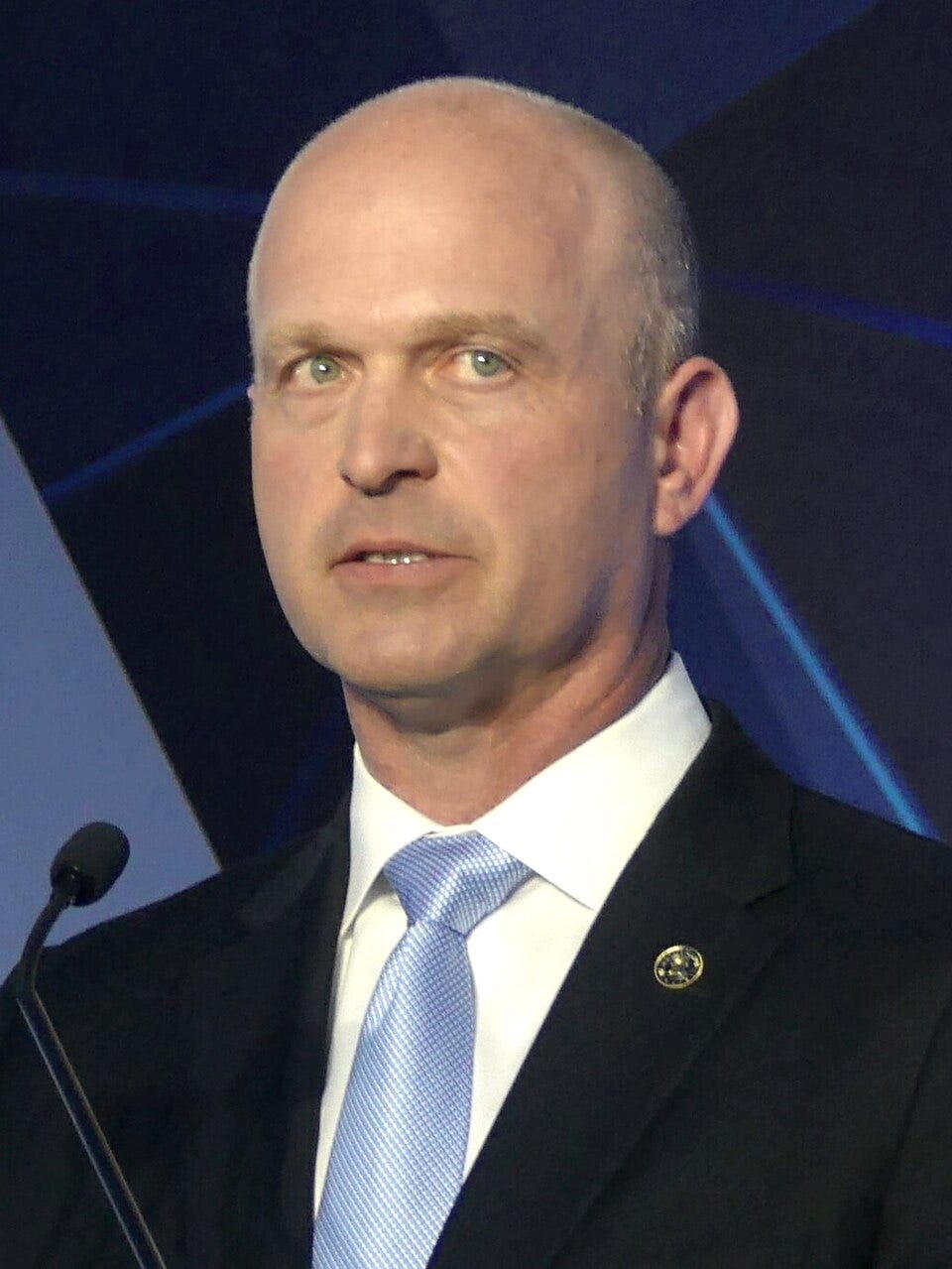
Back inside the stadium, Sundar Pichai kept talking to the 5,800 graduates who remained. And I want to talk about both groups — because both groups are telling us something important about where we are and where we’re going.
First, What Was This Actually About?
Let’s be clear on the facts, because the framing matters. This was not a protest about artificial intelligence, even though AI is what’s been making tech executives nervous at graduation ceremonies all spring. At the University of Central Florida, a real estate executive compared AI to the Industrial Revolution and got booed. At the University of Arizona, Eric Schmidt — one of Pichai’s predecessors at Google — had to stop and wait out the audience hissing at him.
Pichai was so aware of the anti-AI energy in the room that he avoided mentioning the technology by name and called it “truly immaterial” to his speech. But the Stanford protesters were not hissing about AI. They were protesting Project Nimbus — a $1.2 billion contract between Google, Amazon, and the Israeli government, signed in 2021, that provides cloud computing and AI capabilities to Israeli government agencies, including, according to documents, its military and defense establishment.
Google has repeatedly claimed this contract covers only civilian purposes — healthcare, finance, transportation. But internal documents reviewed by *The Intercept* show Google’s own lawyers knew, before the contract was even signed, that Israel’s defense establishment was a covered entity, that the contract was “non-negotiable” on terms favorable to the Israeli government, and that Google’s standard terms of service — which would prohibit uses that lead to harm — explicitly did not apply to Project Nimbus.
In other words, Google made an exception for Israel that it doesn’t make for other customers. An exception that removed the guardrails. Students also cited Google’s ties to ICE — U.S. Immigration and Customs Enforcement — through third-party contracts and surveillance technology. Their signs said “ICE SPIES WITH GOOGLE AI” and “GENOCIDE RUNS ON GOOGLE.” These are not students who misread the situation. They read the fine print that most people skipped.
And when the person who runs that company walked onto the stage at their graduation, they got up and left. For the third year in a row.
Now Let’s Talk About What That Means
I am a clinician and a researcher, and I am telling you that what happened at Stanford is not a phase. It is not a tantrum. It is not performative outrage from a generation that doesn’t understand how the real world works.
It’s a generation that understands exactly how the real world works, and has decided that the old tools for changing it aren’t working fast enough. Here’s what traditional protest asks of you: engage with the system, make your grievance legible to power, present your demands through proper channels, wait for a response.
March. Sign petitions. Email your representatives. Show up and speak out, and hope that the people with actual decision-making authority eventually feel enough pressure to move. Gen Z has watched that playbook unfold, across climate, immigration, Gaza, labor, democracy itself — and they have watched institutions absorb the pressure, release a statement, pivot the PR, and continue doing exactly what they were doing.
They watched Google fire 50 workers for protesting Project Nimbus internally. They watched companies celebrate Black Lives Matter in their Instagram bios while cutting DEI programs the moment the political wind shifted. They watched. And they drew conclusions. The walkout is what those conclusions look like in practice.
You cannot co-opt a walkout. There’s no demand you can partially meet to defuse it. There’s no seat at the table you can offer someone who has declined the table. You cannot release a thoughtful statement in response to the sound of people leaving the room.
Researchers call this “withdrawal of participation as power assertion” — the deliberate removal of your presence, your attention, your legitimacy from a system or figure that has not earned it. It says, "We are not here to contest you." We are here to make visible the fact that we will not be here.
And when you think about what that means in practical terms — for a generation that is the incoming workforce, the incoming consumer base, the incoming voter bloc, it starts to sound less like a protest tactic and more like a preview of something much larger.
The Part That’s Bigger Than Google
This is not just about Sundar Pichai. It’s not even just about Project Nimbus. CIVICUS, which monitors civil society globally, and the Carnegie Endowment for International Peace have both documented that as of early 2026, there have been at least 120 significant Gen Z-led protest movements worldwide in the past two years.
Youth uprisings have toppled governments in Nepal, Bangladesh, and Madagascar. Students in Serbia have sustained an organized protest for more than a year. Researchers consistently note that these movements are leaderless by design, decentralized, organized on social media, and anchored not by a traditional political party platform but by a clear ethical line that the current generation refuses to step over.
Political scientist Erica Chenoweth’s research famously found that when 3.5% of a population sustains participation in nonviolent resistance, major political change historically becomes possible. The Stanford walkout was less than 3.5% of the graduating class. But it was the third consecutive year the same act was performed.
It was preannounced. It was organized. It was paired with an alternative ceremony that offered something real — community, solidarity, a stage for Mahmoud Khalil to speak from, space for young people to name what they believe and who they are. That is not impulsive. That is a methodology.
But remarkably — and perhaps, powerfully — the walkout refused to ask for permission. It refused to perform for the institution being protested. It refused to soften itself for palatability or to keep its voice down for the comfort of people who haven’t earned that comfort.
This generation is not going along to get along. They’re not waiting for their turn. They’re not performing a respectable, photogenic version of outrage for the approval of power. They’re deciding — clearly, collectively, repeatedly — that some things are worth walking out on.
And honestly? I think they’re right. The question for the rest of us is whether we’re going to learn from what they’re showing us or keep waiting for them to grow out of it. They’re not going to grow out of it. This is who they are. And this is only the beginning.
메타데이터
- post_id
- 9e3daaaab7c7
- slug
- stanford-graduates-walked-out-on-google-ceo-and-it-was-epic-9e3daaaab7c7
- url
- https://zora.medium.com/stanford-graduates-walked-out-on-google-ceo-and-it-was-epic-9e3daaaab7c7
- canonical_url
- https://zora.medium.com/stanford-graduates-walked-out-on-google-ceo-and-it-was-epic-9e3daaaab7c7
- author_url
- https://medium.com/@mnhoskin25
- status
- ok
- fetched_at
- 2026-07-09 16:25:21