How to Eliminate False Alarms via Lone Worker Safety with UWB RTLS Tracking
The industry is finally hitting a breaking point with approximate safety. Leading facilities are moving toward lone worker safety with UWB…
How to Eliminate False Alarms via Lone Worker Safety with UWB RTLS Tracking

by LocaXion
The industry is finally hitting a breaking point with approximate safety. Leading facilities are moving toward ***lone worker safety with UWB RTLS*** to fix the precision gap. RTLS or real-time location systems provides live insights with utmost accuracy, thanks to advanced active tracking technologies like BLE and UWB.
In a heavy industrial plant or a sprawling warehouse, the sound of a safety alarm should mean everyone moves. Instead, in most facilities, alarms have just become a background noise. This is the reality of alarm fatigue. It happens because legacy systems can’t tell the difference between a radio dropped on the concrete and a worker who has collapsed. When a system cries wolf every hour, the response team stops rushing. That delay is exactly where fatalities happen.
By ditching signal strength guesses for centimeter level certainty, you kill the friction of false alarms. You make sure that when a real emergency hits, the rescue team knows exactly which aisle to run down.
High Cost of False Alarms on the Floor
Every time a false alarm goes off, the floor stops. In high stakes manufacturing, rescue mobilization costs thousands of dollars per minute in wasted margins and dead downtime. But the financial hit is secondary to the erosion of trust. If the guys on the floor don’t trust the tech, they’ll stop wearing the tags or start “forgetting” them in the breakroom.
Most tracking tools rely on Bluetooth or Wi-Fi, which are notorious for ghosting. A worker is standing perfectly still, but because their signal bounced off a steel beam, the dashboard thinks they’ve entered a restricted zone. This broken infrastructure leads to an “ignoring it until someone verifies it” culture. To pass a real safety audit in 2026, you need a system that offers the physical truth, not a screen full of errors.
Why UWB RTLS Ends the Ghost Alerts
Ultra-Wideband technology changes the math of worker protection because of how the signal moves. Unlike standard radio signals that guess distance based on how loud the signal is, a ***UWB RTLS*** uses Time of Flight. It measures the literal time it takes for a radio pulse to travel at the speed of light.
This is the end of false alarms. UWB is immune to the multipath interference that makes other systems choke in a signal graveyard. It doesn’t get confused by metal clutter, liquid tanks, or concrete utility tunnels. When the system says a worker is in trouble, it is a fact. It provides the sub meter accuracy needed to know if a person is actually in a danger zone or just walking safely on the other side of the yellow line.
Accelerating the Worker Rescue and Improving Safety
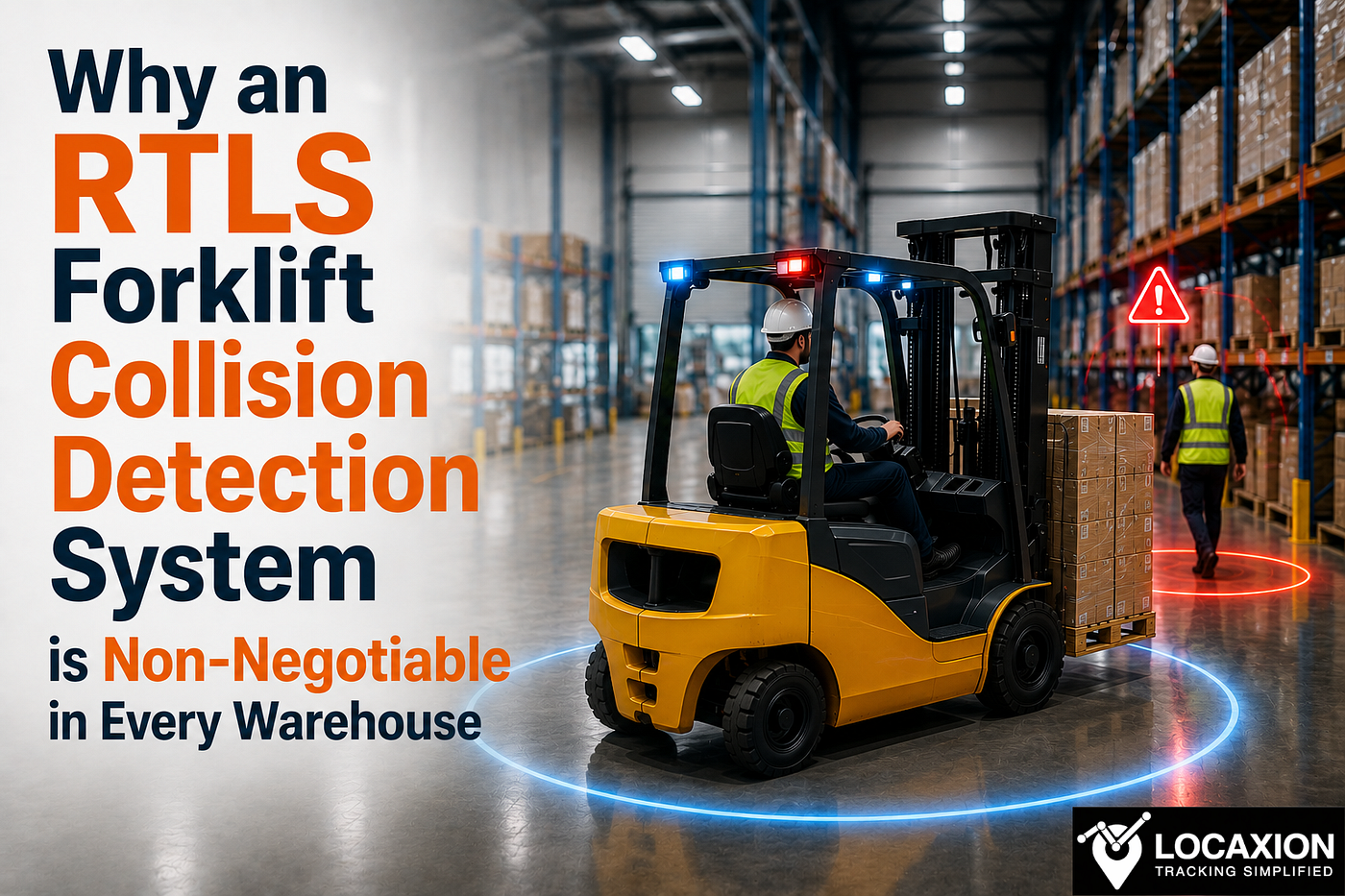
In emergency response, the Golden Hour is the window where you actually have a chance to save someone. In a massive, multi-level facility, finding a lone worker during that window is a nightmare without data. This is where high performance ***real time location system*** becomes the most important piece of infrastructure you own.
- Pinpoint Z-Axis Visibility: Standard systems are flat. If a worker collapses on a mezzanine level, you can’t have rescuers searching for the ground floor. UWB gives you 3D coordinates: exact floor, exact room, exact position.
- Intelligent Man-Down Detection: You need hardware that knows the difference between a worker sitting down for a break and a true fall. High end tags use sophisticated accelerometers to filter out the nuisance alarms that plague cheap gear.
- Discreet Duress Triggers: In cases of environmental hazards or workplace duress, a worker needs a way to call for help instantly. A pull lanyard or a button press must map their location for the team in a heartbeat.
Connected Workers: Solving the Dead Zone Problem
Connectivity gaps in a warehouse are death traps. If a worker enters a basement or a cold storage unit where the signal dies, they are effectively invisible. Professional safety systems handle these gaps through resilient mesh networking and edge level processing.
By building a dense digital fabric, you ensure a worker’s heartbeat is always monitored. If the connection drops, the system doesn’t just go silent; it flags the last known position and alerts the safety desk immediately. It turns a chaotic, opaque floor into a transparent environment where out of sight never means unprotected.
Engineering a Culture of 24x7 Worker Safety Priority
The era of good enough safety is over. Protecting your people takes more than a policy manual and a hard hat; it takes an infrastructure that can handle the grit of the floor. Moving to a UWB powered system isn’t just a tech upgrade; it is a commitment to the people standing on the concrete.
Stop letting false alarms dilute your safety protocols. Centimeter level accuracy isn’t a luxury in 2026; it is the baseline for a zero-harm workplace.
For the latest in Indoor Intelligence, please follow us online at locaxion.com, linkedin.com/company/locaxion/, x.com/LocaXion, facebook.com/locaxion/, instagram.com/locaxionrtls/, or youtube.com/@LocaXionRTLS.
메타데이터
- post_id
- 9e4c04fb4aa6
- slug
- how-to-eliminate-false-alarms-via-lone-worker-safety-with-uwb-rtls-tracking-9e4c04fb4aa6
- url
- https://medium.com/@elia.g.work.990/how-to-eliminate-false-alarms-via-lone-worker-safety-with-uwb-rtls-tracking-9e4c04fb4aa6
- canonical_url
- https://medium.com/@elia.g.work.990/how-to-eliminate-false-alarms-via-lone-worker-safety-with-uwb-rtls-tracking-9e4c04fb4aa6
- author_url
- https://medium.com/@elia.g.work.990
- status
- ok
- fetched_at
- 2026-08-12 20:51:49