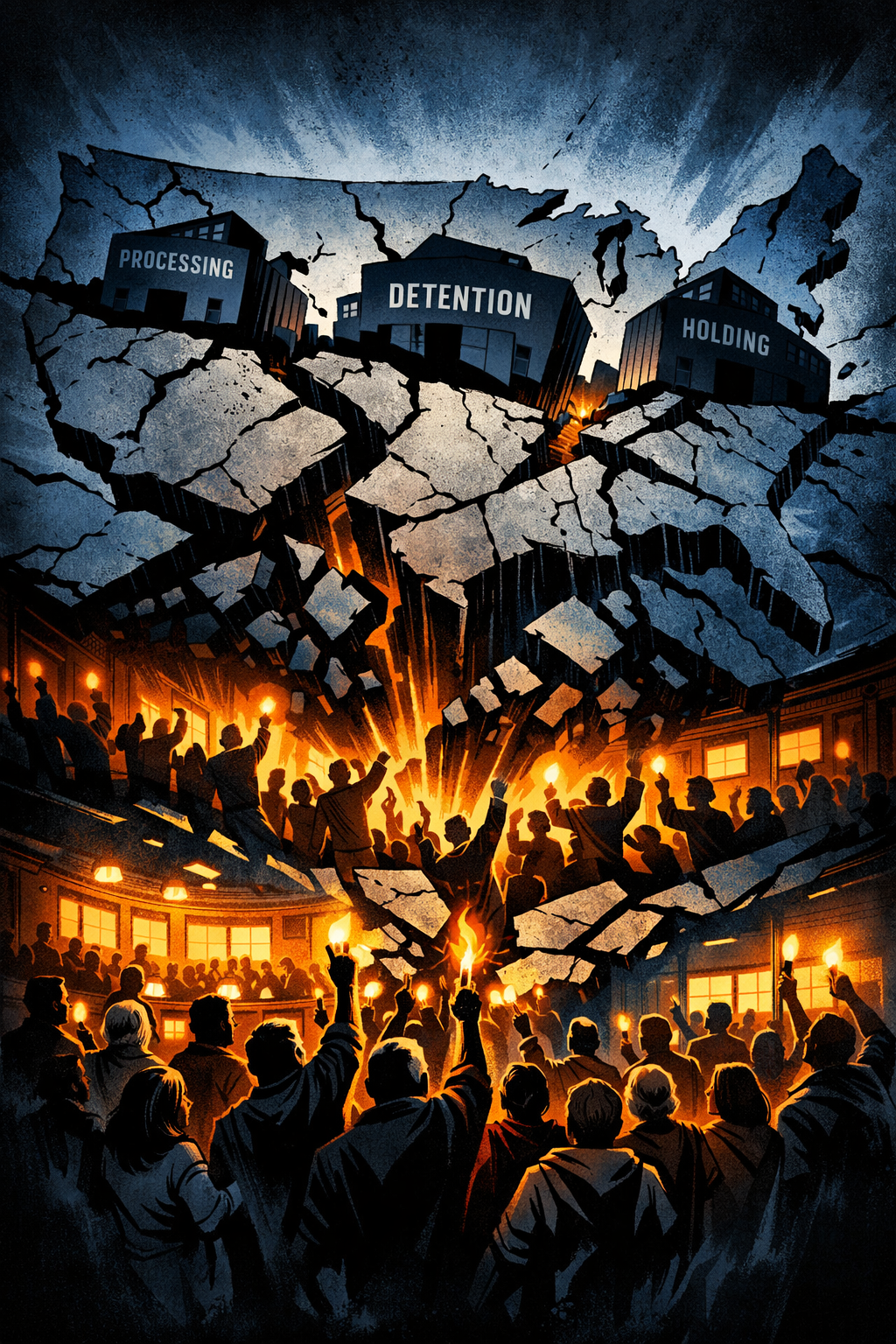
Four Bottles of Water: The Killing of Cyrus Carmack-Belton and the Price America Puts on Black…
A fourteen-year-old boy put four water bottles back on the shelf and walked out of a store alive, but he was dead within minutes
The Price Tag on a Black Child Has Not Changed Since 1991
Four Bottles of Water: The Killing of Cyrus Carmack-Belton and the Price America Puts on Black Children
A fourteen-year-old boy put four water bottles back on the shelf and walked out of a store alive, but he was dead within minutes
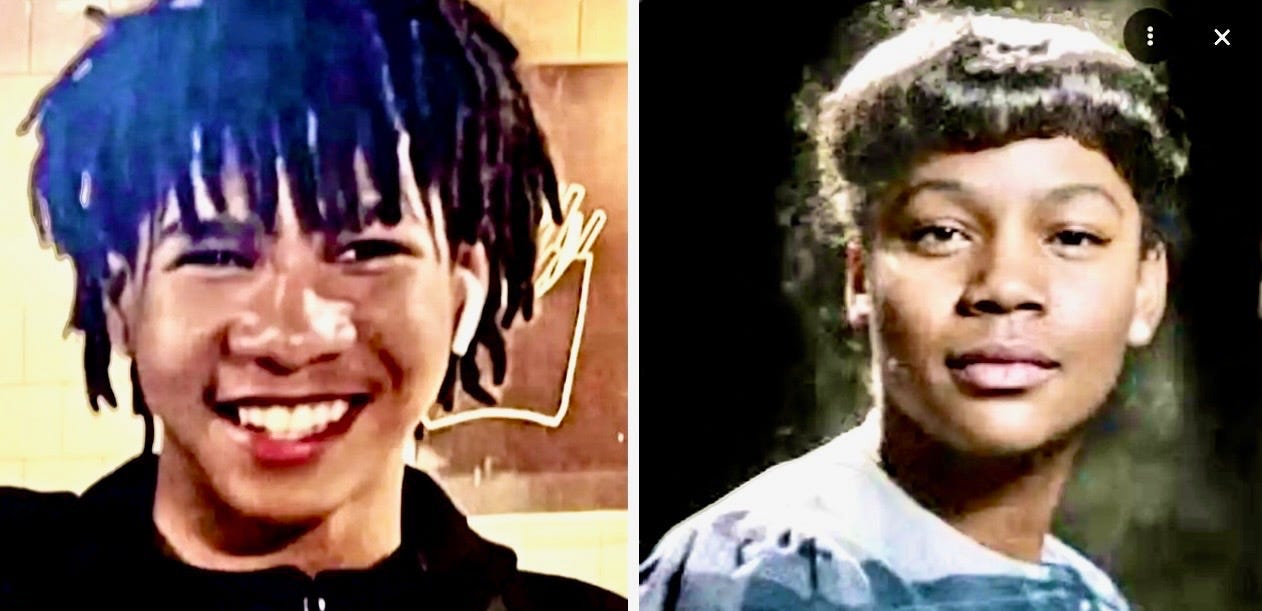
Cyrus Carmack-Belton & Latasha Harlins Read and share on Facebook
Thirty-five years after Latasha Harlins, nothing has changed.
On the evening of May 28, 2023, a fourteen-year-old boy named Cyrus Carmack-Belton walked into a Shell gas station convenience store on Parklane Road in Columbia, South Carolina.
He had just graduated from the eighth grade at Summit Parkway Middle School, where he was enrolled in the STEM Institute of Design and Innovation magnet program.
His teachers described him as intelligent, humorous, and quick-witted. His principal called him the heart and soul of the school. His mother said he gave the best hugs of all her boys.
He was named after Cyrus the Great, the Persian king known for mercy. At his funeral, his mother told mourners he was the epitome of being merciful. He once gave a classmate his own sneakers after noticing the other boy did not have any.
It was Memorial Day weekend. Cyrus walked to the cooler, picked up four bottles of water, and put them back. He did not steal anything. That fact would later be confirmed by the Richland County Sheriff himself, Leon Lott, who told reporters plainly that there was no evidence Cyrus had taken anything whatsoever.
But Chikei Rick Chow, the fifty-eight-year-old owner of the Xpress Mart, decided Cyrus was a thief.
There was a verbal confrontation. There was no physical fight. No punches thrown. No one touched anyone. What happened next is not in dispute. Chow and his adult son Andy chased the boy out of the store and off the property.
They chased him for more than 130 yards, the distance of an entire city block and then some. During the chase, Cyrus tripped and fell. He got back up and kept running. He was trying to get away. Andy Chow told his father that the boy had a gun.
Chow raised his weapon and shot Cyrus Carmack-Belton in the back.
The Richland County Coroner confirmed that the gunshot wound entered the boy’s right lower back and caused catastrophic damage to his heart.
She stated explicitly that his injuries were consistent with someone who was running away. The coroner called the shooting very intentional and said that Cyrus lost his life as a result.
Sheriff Lott called it unjustified and senseless. A gun was recovered near the boy’s body, but Lott confirmed there was no evidence it had been pointed at anyone. Even if Cyrus had stolen four bottles of water, the sheriff said, that is not something you shoot anybody over.
Chow was arrested the following day and charged with murder.
The community erupted. A prayer vigil drew hundreds to the gas station. Mourners arranged empty water bottles on the ground to spell out the word Cyrus, a quiet act of defiance that said more than any speech could.
The store was later vandalized. Congressman James Clyburn issued a statement calling the killing a tragedy that should have never happened. He named the deeper sickness plainly:
The criminalization of Black men and boys and the historic trend of painting them as aggressors, Clyburn said, have time and again led to deadly and heartbreaking circumstances.
Then the case went quiet. For three years, the Carmack-Belton family waited.
On what would have been Cyrus’s seventeenth birthday in February 2026, his parents Troy Belton and Nicole Carmack honored his memory privately.
His father spoke of the milestones they will never share. He would have been a junior in high school. He might have had a driver’s license, a job, a prom date. Cyrus had dreamed of becoming a tattoo artist, and his mother said she was certain that by seventeen he would have been well on his way.
Instead, his parents buried him at fourteen, and then they waited for a trial that would not begin for another three years.
On June 1, 2026, a Richland County jury found Chikei Rick Chow not guilty of murder.
The defense argued that Chow acted to protect his son after the teen pointed a gun at him.
The prosecution pointed out that multiple witnesses testified they did not see anything in Cyrus’s hands and did not see him point a weapon while running.
Solicitor Byron Gipson told the jury that nobody testified to seeing the boy aim a gun at anyone unless their last name was Chow. He placed a single bottle of water in front of the jurors and told them that Chow, at the end of the day, believed that a human being is not worth more than that.
The jury disagreed. Or rather, the jury decided that Chow’s fear was more credible than Cyrus’s life.
After the verdict was read, sobs and cries of distress filled the courtroom from the boy’s family.
Chow sat frozen, then slowly bowed his head into his hands.
Outside the courthouse, attorney Todd Rutherford, a South Carolina state legislator, stood next to Cyrus’s father and told reporters what the verdict meant.
This makes us feel as if our children do not matter, and they do. This makes us feel like Cyrus’s life did not matter, and it did.
Rutherford, who has practiced law for almost thirty years, said he had never seen anything like it.
The family has announced they will pursue a civil lawsuit.
Defense attorney Jack Swerling offered his condolences to the family and then added a sentence that should be studied in law schools for what it reveals about the way America processes the deaths of Black children.
Fourteen-year-old kids, he said, should not be roaming the streets of Columbia, South Carolina, with semiautomatic pistols loaded and ready to fire.
Note the construction.
A man chased a child for 130 yards and shot him in the back, and the defense attorney’s closing public statement placed the moral burden on the dead boy for being outside with a weapon.
In South Carolina.
A state that allows open carry of handguns without a permit for anyone twenty-one and older.
A state where the right to bear arms is treated as sacred, except, apparently, when the person bearing them is a Black fourteen-year-old running for his life.
If the name Latasha Harlins surfaced in your mind at any point during this account, it should have.
On March 16, 1991, fifteen-year-old Latasha Harlins walked into the Empire Liquor Market Deli in South Central Los Angeles to buy a bottle of orange juice that cost a dollar and seventy-nine cents.
She had the money in her hand.
The store’s owner, Soon Ja Du, a Korean immigrant, accused her of shoplifting.
There was a physical altercation.
Latasha placed the juice on the counter and turned to leave. Du retrieved a handgun from behind the counter and shot the girl in the back of the head. Latasha died instantly. The store’s own security camera captured the entire encounter.
The money was still in her hand.
Du was convicted of voluntary manslaughter.
The jury recommended the maximum sentence of sixteen years in prison.
Judge Joyce Karlin rejected the recommendation and sentenced Du to five years of probation, four hundred hours of community service, and a five-hundred-dollar fine.
No prison time.
The sentence for killing a Black girl with a bullet to the back of the head over a bottle of juice she was trying to pay for was five hundred dollars and some volunteer work.
That sentence, handed down just months before the acquittal of the officers who beat Rodney King, became one of the accelerants that ignited the 1992 Los Angeles uprising. Koreatown burned. Sixty-three people died. More than two thousand were injured. A billion dollars in property was destroyed. And none of it brought Latasha back.
Now place the two cases side by side and try to find a meaningful difference.
Latasha Harlins, fifteen, Black, accused of stealing a bottle of juice she intended to buy, shot in the back of the head by an Asian store owner.
Cyrus Carmack-Belton, fourteen, Black, accused of stealing four bottles of water he had already put back, shot in the back by an Asian store owner.
Latasha’s killer was convicted but received no prison time.
Cyrus’s killer was acquitted entirely. In both cases, the children were running away or turning away when the bullets entered their bodies.
In both cases, the accusation of theft was either false or could not be substantiated.
In both cases, the legal system communicated the same message with brutal clarity.
A Black child’s life is worth less than a bottle of something you can buy for two dollars at any gas station in America.
Thirty-five years separate these two killings. In that time, America has elected and re-elected its first Black president, passed landmark civil rights legislation, watched the rise of the Black Lives Matter movement, and engaged in what it constantly describes as a national reckoning on race.
And the math has not changed.
The equation remains the same.
A non-Black store owner suspects a Black child of petty theft. The child is killed. The killer faces minimal or no consequences. The community grieves. The cycle repeats.
This is not coincidence. This is infrastructure.
The relationship between non-Black immigrant shopkeepers and Black communities has been a site of tension, exploitation, and violence for generations.
Korean, Chinese, and other Asian-owned businesses have historically clustered in Black neighborhoods, often as the only available retail in communities that have been systematically redlined out of mainstream economic participation.
These businesses profit from Black consumers while frequently treating them with suspicion, surveillance, and hostility. The dynamic is not new, and it is not accidental.
It is a product of the same racial hierarchy that positions Black people at the bottom and everyone else somewhere above them, a hierarchy that teaches even those who are themselves targets of racism that anti-Black violence carries fewer consequences than any other kind.
Soon Ja Du learned that lesson in 1991. Chikei Rick Chow confirmed it in 2026.
The presence of the gun near Cyrus’s body complicates the narrative, and that complication is precisely why the defense strategy worked.
In a state that fetishizes gun ownership, a Black teenager carrying a weapon is not exercising a constitutional right.
He is a threat.
His possession of a firearm becomes retroactive justification for his own death, a way of saying that whatever happened to him, he had it coming.
The same gun culture that puts weapons in the hands of millions of Americans becomes, when applied to a Black child, evidence that the child was dangerous enough to kill.
It is worth noting what the prosecution emphasized and what the jury apparently disregarded:
Multiple witnesses saw nothing in the boy’s hands. The coroner confirmed he was shot while running away. The sheriff who investigated the case called it unjustified. The boy did not steal anything. He was chased for 130 yards by two grown men and shot in the back. And a jury looked at all of that and said this was not murder.
The question is not whether the jury was wrong. The question is what kind of society produces a jury that arrives at that conclusion?
The answer is the same society that produced Judge Joyce Karlin, the same society that produced the officers who beat Rodney King, the same society that produced the jury that acquitted those officers, the same society that has produced, decade after decade, a legal system that cannot or will not hold people accountable for killing Black children.
He walked into a gas station on a warm May evening over Memorial Day weekend. He touched four bottles of water and put them back. He did not steal anything. A man twice his age chased him into the night and put a bullet through his back that tore open his heart.
Three years later, a jury in Richland County, South Carolina, said that was not murder.
At the vigil in 2023, mourners did not bring signs. They brought water bottles. They arranged them on the pavement and spelled out a name. It is a name that now belongs to a list no parent should ever have to see their child’s name on, a list that includes :
Latasha Harlins, Emmett Till, Tamir Rice, Trayvon Martin
and too many others to name without running out of breath.
The water bottles are still there in the photographs. Small, clear, ordinary. The kind of thing you grab without thinking on a hot day. The kind of thing that should never, under any reading of law or morality or basic human decency, cost a child his life.
Cyrus did not even take them. He put them back. And they killed him anyway.
If this piece reached you, some claps and a share go a long way. Follow for more investigative commentary.
Further Reading
Brenda Stevenson, The Contested Murder of Latasha Harlins: Justice, Gender, and the Origins of the LA Riots (Oxford University Press, 2013)
Congressman Clyburn Issues Statement on the Murder of Cyrus Carmack-Belton, Office of James E. Clyburn, May 2023
Store Owner Found Not Guilty of Murder in 2023 Killing of Black Teen in South Carolina, NBC News, June 1, 2026
He’s More Than a Hashtag: Cyrus Carmack-Belton’s Principal Says His Legacy of Light Will Live On, WIS-TV, June 3, 2023
Killing of 14-Year-Old Cyrus Carmack-Belton by S.C. Gas Station Owner Recalls 1991 Death of Latasha Harlins, Yahoo News, May 31, 2023
A Love Song for Latasha, directed by Sophia Nahli Allison, 2019
메타데이터
- post_id
- 9e4c5bf23231
- slug
- four-bottles-of-water-the-killing-of-cyrus-carmack-belton-and-the-price-america-puts-on-black-9e4c5bf23231
- url
- https://medium.com/counterarts/four-bottles-of-water-the-killing-of-cyrus-carmack-belton-and-the-price-america-puts-on-black-9e4c5bf23231
- canonical_url
- https://medium.com/counterarts/four-bottles-of-water-the-killing-of-cyrus-carmack-belton-and-the-price-america-puts-on-black-9e4c5bf23231
- author_url
- https://medium.com/@jusbouey
- status
- ok
- fetched_at
- 2026-07-27 21:01:28