When Success Makes Addiction Harder to Recognize
The quiet reality many high-functioning adults live with for years
When Success Makes Addiction Harder to Recognize
The quiet reality many high-functioning adults live with for years
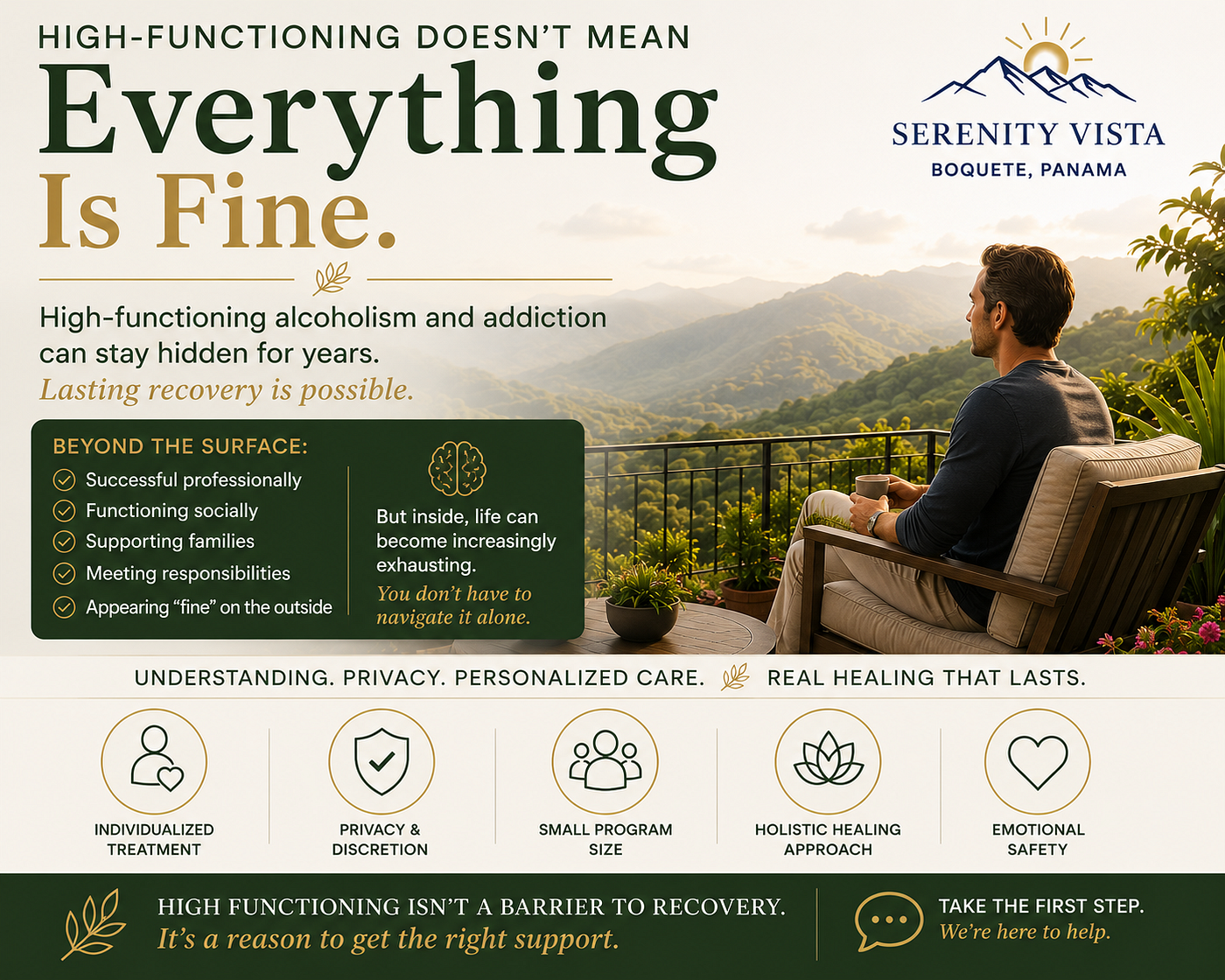
From the outside, many people struggling with alcoholism or other addictions do not look like they are falling apart.
They may still be:
- succeeding professionally
- maintaining relationships
- supporting families
- exercising
- traveling
- socializing
- and continuing to meet responsibilities
In many cases, they are the people others rely on most.
Which is exactly why the problem can remain hidden for so long.
If you’d like a clearer sense of how a small, highly individualized environment can feel for high-functioning adults seeking recovery, this short video offers a thoughtful perspective:
[embed]
Functioning and Wellbeing Are Not the Same Thing
One of the biggest misconceptions about addiction is the belief that someone must completely lose control before the situation becomes serious.
But many high-functioning adults continue functioning outwardly long after their inner wellbeing has begun deteriorating.
They continue showing up. Continuing performing. Continuing managing appearances.
Meanwhile internally:
- anxiety increases
- emotional exhaustion deepens
- relationships become strained
- sleep worsens
- inner peace disappears
- and alcohol or substances quietly become more emotionally central over time
From the outside, things may still appear “successful.”
From the inside, life often feels increasingly difficult to sustain.
Why High-Functioning Addiction Often Goes Unrecognized
High-functioning adults frequently become extremely skilled at rationalizing and minimizing what is happening.
Common thoughts include:
- “I’m still working.”
- “I haven’t lost everything.”
- “Nobody knows.”
- “I’m still handling my responsibilities.”
- “Other people are worse.”
Outward success can create the illusion that the situation is still under control.
But functioning is not always the same thing as living well.
And often, enormous emotional energy is being spent simply maintaining the appearance that everything is fine.
The Quiet Exhaustion Beneath the Surface

Trying to function while attempting to control drinking is exhausting
Many high-functioning adults live in a near-constant state of internal fatigue.
Not necessarily dramatic collapse —
but a quieter form of exhaustion:
- emotional numbness
- chronic stress
- irritability
- disconnection
- loneliness
- shame
- or simply feeling increasingly disconnected from themselves
Alcohol or substances often become less about pleasure and more about:
- relief
- escape
- decompression
- emotional regulation
- or the temporary silencing of internal pressure
Over time, that pattern can become deeply entrenched while remaining almost invisible to others.
Why Successful People Often Delay Seeking Help
Paradoxically, success itself can become one of the greatest barriers to recovery.
When someone is still functioning externally, it becomes easier to postpone difficult decisions.
People tell themselves:
- “I can still manage this.”
- “Now isn’t the right time.”
- “I just need to cut back.”
- “I’m too busy to step away.”
And because there may not yet be catastrophic consequences, the urgency often remains hidden.
Meanwhile, emotional suffering quietly continues growing underneath.
The Pressure to Maintain the Image
Many high-functioning adults carry enormous pressure to continue appearing capable.
Executives. Business owners. Physicians. Attorneys. Caregivers. Professionals. Parents.
Often, they are deeply accustomed to being the strong one.
Admitting vulnerability can feel threatening not only professionally, but psychologically.
Some quietly fear:
- disappointing others
- losing respect
- appearing weak
- damaging reputations
- or confronting emotions they have spent years suppressing
And so the cycle continues privately.
Why Private, Individualized Environments Matter

Small, private, individualized environments foster feeling safe to open us and relax
For many high-functioning adults, the environment itself becomes extremely important once they finally consider seeking help.
Large institutional settings can sometimes feel emotionally overwhelming, exposing, or impersonal.
Smaller, highly individualized environments often feel very different.
Privacy matters. Discretion matters. Emotional safety matters.
People who have spent years managing pressure and appearances often need an environment where they can finally stop performing.
And once that happens, honesty often begins emerging much more naturally.
Recovery Is Not About “Failure”
One of the most important shifts many people experience is realizing that seeking help is not an admission of failure.
It is often the first deeply honest act they have allowed themselves in a very long time.
Recovery is not about weakness.
It is about finally recognizing that functioning outwardly does not necessarily mean living well internally.
And many high-functioning adults discover that once the constant pressure of maintaining appearances begins softening, life can start feeling calmer, more authentic, and more emotionally sustainable again.
Healing Often Begins Quietly

Some of the greatest insights come in quiet moments of reflection
For many people, recovery does not begin with dramatic collapse.
It begins much more quietly.
A moment of honesty. A moment of exhaustion. A conversation. A realization that life has become harder than it looks from the outside.
And often, that moment becomes the beginning of something profoundly different.
You can learn more here: https://www.serenityvista.com/blog/high-functioning-alcoholic
If alcoholism or another addiction is affecting your life or someone close to you, you’re always welcome to reach out privately here: https://www.serenityvista.com/contact-us
메타데이터
- post_id
- 9e8286b2c18e
- slug
- when-success-makes-addiction-harder-to-recognize-9e8286b2c18e
- url
- https://medium.com/@SerenityVista/when-success-makes-addiction-harder-to-recognize-9e8286b2c18e
- canonical_url
- https://medium.com/@SerenityVista/when-success-makes-addiction-harder-to-recognize-9e8286b2c18e
- author_url
- https://medium.com/@SerenityVista
- status
- ok
- fetched_at
- 2026-06-20 20:29:01