Rethinking Design Critiques in the Age of AI Prototyping
How design critiques must evolve to balance the speed of AI-driven prototyping with vision, intent, and shared understanding.
Rethinking Design Critiques in the Age of AI Prototyping
In a previous post, I argued that concept design and prototyping play a pivotal role in product discovery: they move insights into tangible user-experience possibilities, anchor shared understanding, and validate business assumptions. In parallel, in another post I emphasized how design reviews become a forum for influencing the decisions that drive vision and strategy forward, and create said shared understanding.
Now enters a new player: AI-based concept design and prototyping tools. These tools dramatically accelerate ideation, variant generation, and visualization — offering teams tens or hundreds of possible concepts in the same time it used to take to sketch one. This shift raises a fundamental question: What happens to the reflective, collaborative critique process that once anchored design maturity when AI accelerates what is possible?
In what follows, I explore how design critiques must evolve in this AI-augmented landscape — paying attention both to the risks and the opportunities that this new tooling brings.
The Practice of Design Critique
At its best, a design critique is a structured conversation about intent — not an evaluation of polish or personal taste. It helps teams align on the problem being solved, clarify assumptions, and assess whether design choices advance the product vision. In mature organizations, critiques function as moments of collective reflection — where teams pause to connect what they are building to why they are building it.
It is better to have your preliminary work critiqued by your colleagues while there is still time to do something about it — no matter how difficult the criticism might be — than to have the finished project torn apart by strangers in public. Buxton, B., Sketching user experiences: Getting the design right and the right design (2007)
But as AI tools make prototyping nearly instantaneous, that rhythm of reflection is being disrupted. When a dozen design variations can be generated in seconds, the role of critique shifts from assessing form to making sense of direction. The challenge is no longer creating enough artifacts to discuss, but cultivating the discipline — and facilitation skill — to ask which of those artifacts actually move us closer to our strategic intent.
From Prototyping to “Prototype-First”: Opportunities and Pitfalls
Historically, prototyping has been a partner in the discovery process — a way to externalize ideas, test assumptions quickly, and align stakeholders. As Marty Cagan points out, more teams are embracing a “prototype-first” mindset — building a prototype to describe requirements, rather than writing requirements to enable builds.
Some teams are still finding their way on this, but overall I consider this an extremely good thing for product in general, and for product discovery in particular. But there has been at least one surprising consequence of this trend, and that is we’re learning that not everyone understands the difference between a prototype, and the eventual product (Cagan, M., Prototypes vs Products, 2025).
Marty Cagan reminds us that confusion around prototypes isn’t new — stakeholders have long mistaken them for finished products. But in the age of AI-driven concept generation, that confusion now extends to the makers themselves. The line between discovery and delivery is thinner than ever, and unless teams remember that in product discovery we’re building to learn — not to launch — they risk mistaking quick fidelity for real validation.
In Product discovery, we’re “building to learn,” and in product delivery, we’re “building to earn.” Cagan, M., Prototypes vs Products (2025).
This shift to prototype-first has clear benefits: faster alignment, tangible artifacts earlier, and the possibility of richer feedback loops. Yet it carries risks — especially when the prototyping leap occurs without anchoring vision or framing.
Product Discovery and Problem Framing
As I argued in Problem Framing for Strategic Design, proper framing is essential:
The art of designing solutions starts with the frame. Where you draw the boundaries of an investigation will determine — in large part — what your conclusions will be and what kind of process you’ll use to get there. Neumeier, M., Metaskills: Five talents for the future of work (2013)
In traditional discovery work, framing defines the terrain — it determines whether we’re exploring a feature, a workflow, or a transformation. But as AI accelerates concept generation and makes prototyping nearly instantaneous, the boundaries we draw matter even more. If we fail to clarify the intent behind what we’re testing, we risk letting tools dictate the scope of our inquiry rather than our strategic purpose.
This connects directly to the role of vision.
Product Discovery and the Importance of Vision
In my post Strategy and the Importance of Vision, I stressed that the creation and advocacy of product vision is pivotal: a shared vision is what keeps teams aligned across uncertainty and change.
Great vision precedes great achievement. Every team needs a compelling vision to give it direction. A team without vision is, at worst, purposeless. At best, it is subject to the personal (and sometimes selfish) agendas of its various teammates. Maxwell, J. C., The 17 indisputable laws of teamwork (2013)
As I later explored in Reimagining Creativity: When Agents Do the Doing, the more agents take over execution, the more human contribution shifts toward shaping intent and meaning. In this light, the growing reliance on AI-driven prototyping isn’t just a technological change — it’s a redistribution of creative responsibility.
I want to make the case that without a clear vision and clarity of what problems we are trying to solve, jumping directly into prototypes replicates the classic trap of “jumping to solutions” — only now machine-fast.
This risk isn’t new. In an earlier piece on becoming a design strategist, I argued that meaningful design work depends on keeping vision, strategy, and tactics in the right relationship.
“Designers must engage with their business stakeholders to understand what objectives and unique positions they want their products to assume in the industry and the choices they are making to achieve such objectives and positions.” Medeiros, I. Becoming a Design Strategist (2021)
Six Strategic Questions, adapted from “Strategy Blueprint” in Mapping Experiences: A Guide to Creating Value through Journeys, Blueprints, and Diagrams (Kalbach, 2020).
AI only amplifies this tension. When prototypes appear instantly, it becomes even easier to collapse strategy into tactics — mistaking a polished screen for a validated direction. The discipline now is to ensure that rapid prototyping doesn’t bypass the essential work of understanding intent, defining choices, and aligning on the strategic bets a product is actually making.
And with high-fidelity outputs so easily produced, the illusion of progress can mask the absence of shared understanding, which we will talk about next.
Prototyping and the Fidelity Problem
There’s also the long-standing fidelity problem — now amplified by AI tools capable of producing near-photorealistic screens in seconds. High-fidelity prototypes can create an illusion of completeness, masking usability issues or misleading teams into thinking they’re further along in discovery than they actually are. Without strong facilitation, reviews of such polished outputs tend to gravitate toward surface-level critique (“Does this look right?”) rather than strategic discussion (“Is this solving the right problem?”). In other words, high fidelity can prematurely anchor perceptions, drawing attention away from vision and intent — the very qualities that early-stage design exploration should protect.
Conversely, when leveraged thoughtfully, rapid prototyping can become a powerful discovery tool. In fact, AI-based tools can extend the principle behind the RITE Method (Rapid Iterative Testing and Evaluation) — enabling frequent learning loops at scale. But the key variable remains: What you are testing — and why — rather than simply what you are building. You will discuss the RITE method later on this article.
The Missing Middle: Vision, Strategy, and Shared Understanding
Conceptual design was never just about generating screens or flows. It was about constructing shared understanding: between designers, product managers, engineers, business stakeholders, and users. A well-framed vision and set of design principles act as filters, giving direction and coherence to exploration.
In a world where AI can produce multiple variations of a design in minutes, the risk is that teams sideline the why behind the what. When prototypes proliferate, critique sessions may devolve into comparisons of visuals rather than interrogations of assumptions. This gap is where the “missing middle” emerges: the space between strategy/vision and rapid iteration.
Teams must therefore re-establish practices that reaffirm this middle ground:
- Anchor prompts and prototypes in strategic intent. When AI generates concepts, ensure they are mapped back to the underlying vision, business objectives, and user problems.
- Re-frame critique sessions around learning intent rather than artifact perfection: “What assumption is this variant testing?” “How might this direction align (or mis-align) with our product vision?”
- Ensure artifacts serve as conversation starters rather than endpoints — opening dialogue about trade-offs, risk, and next steps.
It is in this middle space that design critiques continue to deliver value: not just as design-quality checkpoints, but as arenas for strategy alignment, hypothesis testing, and shared sense-making.
The Acceleration Advantage: AI and the RITE Method at Scale
One of the most significant advantages of AI-based concept design and prototyping is the ability to iterate rapidly. In the traditional discovery cycle, prototype -> test -> learn might span days or weeks. With AI tooling, that loop can shrink dramatically — enabling near-continuous iteration.
Applying the RITE Method lens here: traditionally RITE emphasizes testing early, incorporating findings, iterating, and repeating until the design converges. AI tooling can scale this mindset: multiple variants, multiple hypotheses, many micro-learning cycles. But human judgment remains essential: we still decide which variants to test, interpret results, synthesize findings, and choose which direction to follow.
In this context, design critique shifts:
- from evaluating fidelity and aesthetics,
- to interrogating assumptions, narrowing possibilities, and making learning decisions.
In other words: iteration becomes less about pixel-pushing and more about orchestrating learning. Designers will increasingly focus on guiding the “engine” of iteration, rather than refining each output. The critique process becomes a strategic hub: filtering AI-generated options through vision, testing, and feedback.
Redefining Design Critiques for the AI Era
If AI can generate hundreds of design options quickly, the designer’s role shifts from artifact creation to curating meaning. The designer becomes an Intent Steward, translating business, user, and ethical needs into a clear system direction.
This idea builds on themes I explored in Jobs-to-be-Done and Intention Mapping: Translating Human Needs into Agent Actions (2025). As designers begin to collaborate with intelligent tools, their role expands from expressing solutions to mapping intent. They must ensure that what AI proposes remains grounded in human-centered logic, not just aesthetic or statistical optimization.
This Intentions Map visualization bridges functional jobs in the online shopping experience with AI agent actions, clustered into Now, Next, and Later based on implementation complexity and learning dependencies. It supports strategic alignment between user needs and intelligent system behavior.
Designers must become skilled facilitators who respond, prod, encourage, guide, coach, and teach as they guide individuals and groups to make decisions that are critical in the business world through effective processes. Medeiros, I. Strategy and the Need for Facilitation (2021)
In the AI era, this facilitative stance is not optional — it’s what distinguishes reflection from reaction and intentional design from automated output.
Critiques, therefore, must evolve into reflection sessions that ask:
- What user intention or outcome is this concept serving?
- What does this prototype teach us about the problem framing?
- How does this iteration advance (or dilute) our product vision?
This means critique sessions must evolve accordingly:
- Focus less on “Which design looks better?” and more on “Which design tests which hypothesis?”
- Expand the scope of critique to include prompt engineering, data provenance, and AI assumptions — not just visual output.
- Emphasize intent stewardship: guiding the AI toward strategic alignment and preserving human agency rather than outsourcing it.
This reframing transforms critiques from checkpoints into collective sensemaking rituals. The AI may produce outputs — but it’s the team’s reflection that turns those outputs into learning.
Emerging Roles in AI-Augmented Critiques
- Prompt Reviewer: critiques the inputs into the AI tool — Are we using the right framing? Are we injecting bias? Are we asking the right question?
- Intent Steward: ensures the AI-generated outputs align with the broader product vision, business strategy, and user-needs framework. This aligns closely with my thinking in Intent Mapping, where I argued that we must convert human needs into actionable intentions in an agent-mediated world. In AI-augmented design, the designer as Intent Steward ensures concepts reflect not just “what looks nice” but also “what job is the user trying to achieve, and which intention are we” facilitating?”
- Sensemaker: synthesizes feedback from users, stakeholders, team critiques, and iteration data, mapping this back into the next iteration cycle.
This redefinition of critique roles indicates that design reviews will shift from approving visuals to orchestrating human and machine intelligence for strategic outcomes.
How Designers and Strategists Can Iterate Intelligently on AI-Generated Concepts
Iteration after critique in the AI-augmented world involves a different rhythm:
- Annotate and rationalize AI-generated concept variants: document which hypothesis each variant addresses.
- Refine prompts based on critique feedback: feedback isn’t just “make it look like this,” but “the prompt should test this dimension of user behavior or business assumption.”
- Use validation data (usability tests, stakeholder reactions, analytics, etc.) to guide next rounds: which variants generated the most useful learning?
- Synthesis as a filter: not all AI-generated variants need exploration. Use the sensemaking layer to choose where to invest.
- Maintain human oversight: while AI can accelerate iteration, human judgment decides when a concept is ready for delivery.
- Frame every iteration back to strategy: are we still solving the right problem? This returns to the importance of problem framing: without it, rapid iteration risks wasting time chasing artifacts disconnected from intent.
Toward Human–Agent Collaboration in Critique
When I finally met Kevin McCullagh in person during the Hatch Conference in Berlin, we talked about what happens when critique itself becomes part of the design loop — not just a ritual of review, but a shared cognitive process between humans and agents. Many large organizations, especially in enterprise software, already have mature design systems, rich usage data, and deeply codified heuristics. This foundation could make it possible for agents not only to generate prototypes but also to evaluate them against established usability principles and behavioral data.
Imagine an agent that helps produce prototypes and acts as a peer reviewer, highlighting accessibility and usability issues, interaction inconsistencies, or cognitive overloads based on user behaviors. Design critiques would move from scheduled meetings to continuous feedback ecosystems where humans and agents co-learn what works, confuses, and why.
This idea builds on a core theme of my Human–Agent Centered Design series: as agents take over parts of the doing, humans must increasingly focus on directing intent and interpreting meaning. In the future, reframing critiques as mutual learning spaces could help designers not only sharpen their own sense of judgment but also train agents to better align with human creative intent.
By integrating evaluative intelligence directly into the design process, we move closer to what I’d call Reflective Systems — workflows that improve themselves as they’re used. Critique becomes less about catching errors and more about deepening understanding, accelerating innovation without losing sight of the product’s vision or purpose.
Design Critique Cheatsheets for the AI Era
Before teams even enter critique mode, someone needs to facilitate the conversation in a way that surfaces both sides of the interaction. Dual evaluation isn’t something that happens automatically — people tend to default either to the user’s perspective (“the flow was confusing”) or to the system’s (“the model behaved correctly”).
A structured facilitation protocol (like a critique cheatsheet) gives the team a shared scaffold: it slows them down just enough to examine what the human experienced, what the agent actually did, and where the relationship between them succeeded or broke down. With that framing in place, critiques become more focused, more psychologically safe, and far more useful.
A more complete version of this article, including a detailed cheatsheet to help you conduct design critiques in the Age of AI, is available on my blog.
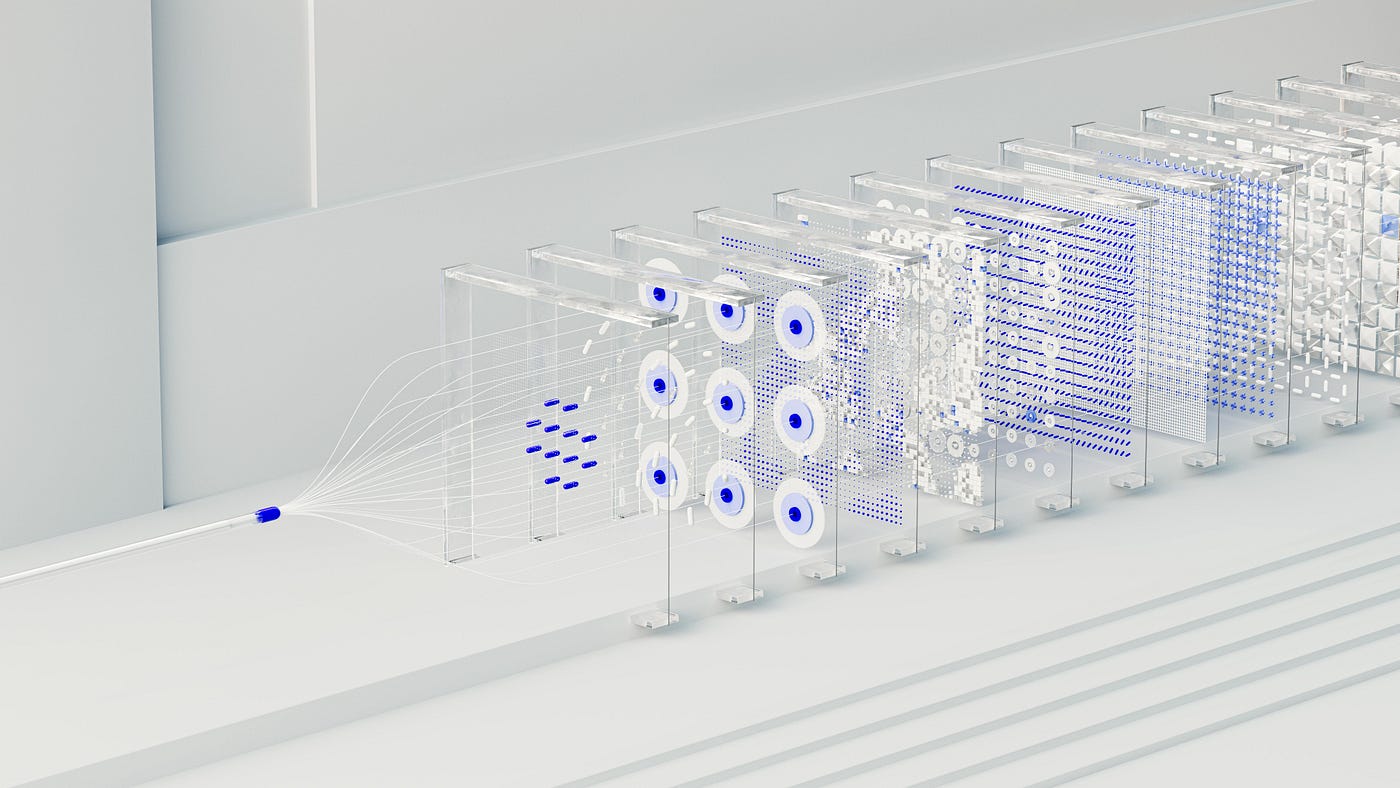
Balancing speed with vision — reimagining design critiques in the age of AI-driven prototyping (Digital illustration created with AI by Itamar Medeiros, 2025).
메타데이터
- post_id
- 9e8c5bab5b0b
- slug
- rethinking-design-critiques-in-the-age-of-ai-prototyping-9e8c5bab5b0b
- url
- https://medium.com/design-bootcamp/rethinking-design-critiques-in-the-age-of-ai-prototyping-9e8c5bab5b0b
- canonical_url
- https://medium.com/design-bootcamp/rethinking-design-critiques-in-the-age-of-ai-prototyping-9e8c5bab5b0b
- author_url
- https://medium.com/@designative
- status
- ok
- fetched_at
- 2026-06-09 15:37:30