The AI Writing Secret I Wish Someone Told Me 3 Years Ago
Here's how to actually use AI right.
The AI Writing Secret I Wish Someone Told Me 3 Years Ago
Not a Medium member? You can read this story for free **here ↗**.
The AI writing secret nobody tells you is this: AI doesn’t create great writing — it amplifies whatever clarity, curiosity, and experience you already bring to it. If your thinking is muddy, AI will write muddy thoughts faster. If your thinking is sharp, AI will help you say it better than you could alone.
I learned that the hard way. Let me tell you how.
Hey, I’m currently on a challenge to make $1,000 in 50 days using PDF Automation. You can follow here:
I Wasn’t Looking for a Shortcut
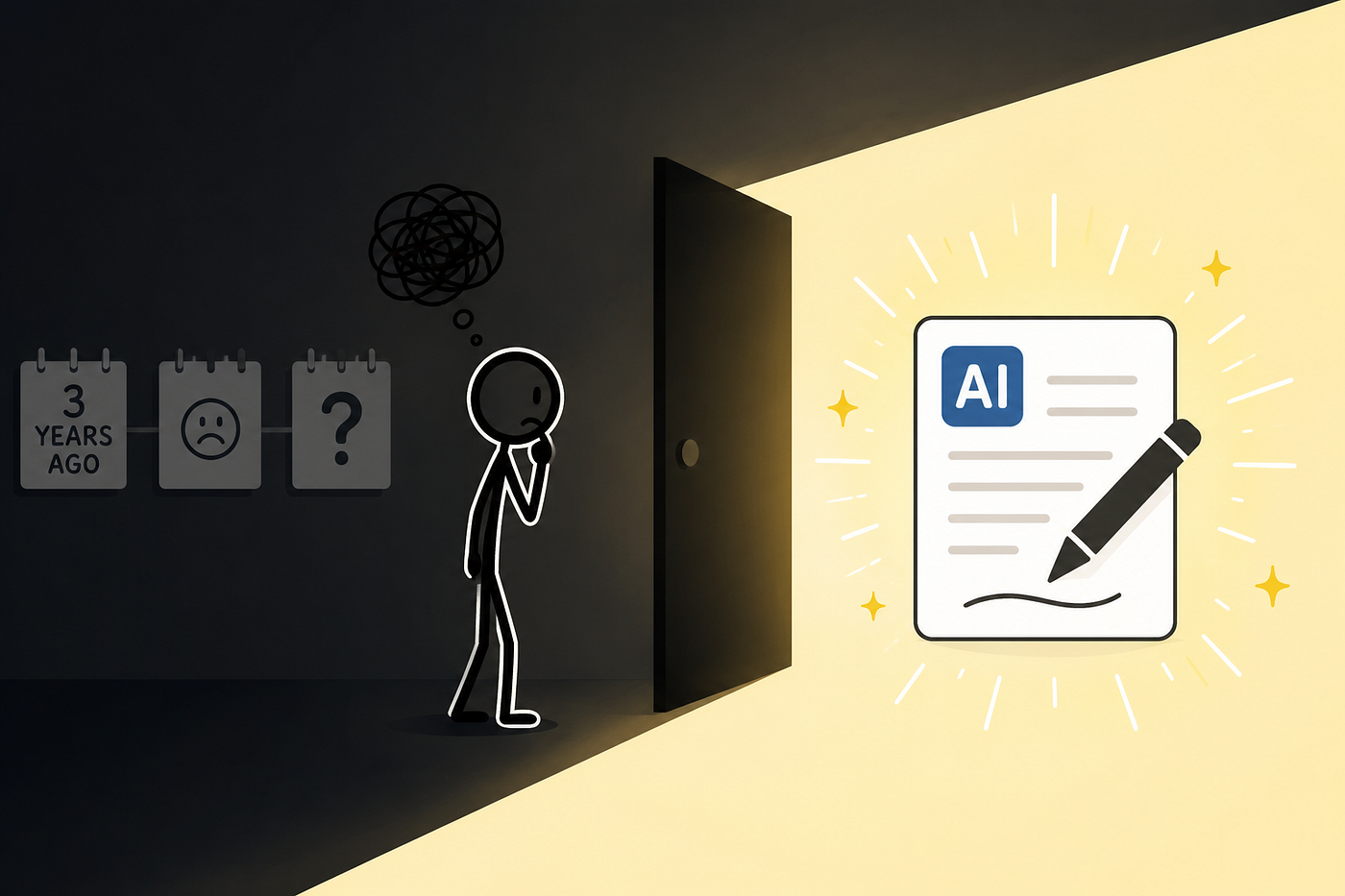
Three years ago, I sat down and stared at a blinking cursor for forty-five minutes. Not because I had nothing to say. Because I had too much, and none of it in order.
I wasn’t chasing a shortcut. I was chasing leverage — some way to get my ideas out of my head and onto the page without losing three hours to second-guessing every sentence.
So I did what a lot of writers did that year. I opened ChatGPT and typed: “Write me an article about productivity.”
It gave me something. Clean. Structured. Completely lifeless.
I remember reading it back and feeling a very specific kind of disappointment — the kind you feel when a shortcut works exactly as promised, and you realize the promise was empty. It read like it was written by someone who’d never missed a deadline, never lost a client, never sat in a parked car trying to talk themselves into going back inside to finish the work. Because it had never lived anything at all.
That was my first false assumption. I thought AI was a replacement for writing. I hadn’t yet understood it was a mirror.
The Assumption That Cost Me Months
Here’s what I got wrong, and I want you to hear this clearly, because I don’t want you to lose the time I lost.
I assumed the tool would do the thinking. That if I just described the topic, AI would supply the insight. So for months, my prompts were topics, not thoughts. “Write about discipline.” “Write about growth.” “Write about starting over.”
And every single time, I got back a summary of things everyone already knows. Nothing wrong, nothing memorable. The literary equivalent of small talk.
I kept blaming the tool. Told myself the model wasn’t good enough yet, that the technology would catch up eventually. What I didn’t want to admit was simpler and harder to hear: I was asking a mirror to show me a face I hadn’t shown it.
What Changed When I Started Experimenting
The shift didn’t happen in one dramatic moment. It happened slowly, through a lot of failed attempts, the way most real change does.
I started keeping a running note — messy, unedited, sometimes just fragments — of things I actually thought during the day. An opinion about a client conversation. A frustration with how coaches oversell simplicity. A memory of the first time I made money online, five dollars for a digital product I almost didn’t publish because I thought it wasn’t good enough.
Then, instead of asking AI to write about a topic, I gave it that mess. Full context. My actual voice, unpolished. My actual argument, half-formed.
The output changed completely.
Not because the tool got smarter. Because I stopped asking it to invent something and started asking it to help me say something I already believed.
That was the moment I understood the real AI writing secret: the best prompt was never really a prompt. It was a page of honest, specific, sometimes contradictory thoughts that gave the model something worth shaping.

Photo of Marcellinus Prevailer
The Realization: AI Exposes Your Thinking, Not Your Writing
This is the part I wish someone had grabbed me by the shoulders and told me three years ago.
Bad AI writing isn’t usually a writing problem. It’s a thinking problem wearing writing’s clothes.
When your ideas are vague, AI fills the gaps with the most statistically average version of what people usually say on that topic. That’s not a flaw in the model — that’s what happens when you don’t give it anything better to work with. Garbage in, competent-sounding garbage out.
But when you bring it a real opinion, a lived detail, a specific number, a genuine disagreement with conventional advice — the model has actual material to work with. It stops guessing and starts amplifying.
So I stopped treating AI like a ghostwriter I could hand a vague brief to and walk away from. I started treating it like an editor, a critic, a brainstorming partner, and occasionally, a devil’s advocate that pushed back on my laziest arguments.
That reframing changed everything about how I write.
How I Actually Use AI Now
Here’s the honest breakdown of my current workflow, tool by tool, because I think the “which AI is best” question misses the point. Different tools serve different stages of thinking.
- ChatGPT — early brainstorming, when ideas are still loose and I need to talk through angles
- Claude — long-form drafting, once I already know what I want to say and need help saying it clearly
- Perplexity — research, fact-checking, and finding sources I can trust
- Gemini — Workspace integration, keeping everything connected across docs and mail
- Notion — knowledge management, so my raw notes don’t disappear into the void
- Canva — publishing assets, the visual layer that makes the writing shareable
None of these tools thinks for me. They each hold a different stage of my process, so I don’t have to carry all of it in my head at once.
The Real Productivity Gain Wasn’t Speed
People assume AI made me faster. It did, eventually. But that’s not the gain that mattered most.
The real gain was that AI reduced my fear of the blank page.
Before, starting an article meant confronting a version of the work that had to be right immediately. That pressure alone could kill a good idea before it existed. Now, I can throw a rough draft at the wall — messy, half-true, structurally broken — and revise from something instead of nothing.
Iteration got faster. Not because typing got faster. Because starting stopped being terrifying.
If you’re a writer, a coach, a consultant, or anyone who has ever sat frozen in front of an empty document, that shift alone is worth more than any AI trick I could teach you.
Originality Still Comes Before Generation
I want to be direct about something because I think a lot of AI advice glosses over it: AI can polish your expression. It cannot manufacture your experience.
The five-dollar digital product I sold months ago worked because it came from something I’d actually lived through, not because it was well-written. The writing has improved a lot since then. The lived part — the thing that made people trust me enough to buy — that never came from a prompt.
That’s still the scarce resource. Not words. Not speed. Original thought, shaped by real experience.
If you skip that step and go straight to generation, you’ll produce content that reads like everything else, because it’s built from the same average of everything else.
From Side Hustle to Full-Time, One Honest Draft at a Time
I’ve built an entire creator business on this principle — writing thousands of articles, growing an audience across Medium, X, LinkedIn, and a newsletter, working with brands, coaching other writers who were stuck exactly where I used to be.
None of it started with a perfect system. It started with a five-dollar product and a willingness to keep showing up messy until the writing got clearer.
That’s actually why I eventually built The 1-Hour Authority Ebook Blueprint — because I kept meeting sharp, capable people with real expertise who were stuck the same way I once was: sitting on knowledge worth packaging, but paralyzed by the idea that a “real” ebook takes weeks to produce. It doesn’t. It’s a no-fluff system for turning what you already know into a high-impact ebook in under an hour, built specifically for solo creators, consultants, and coaches who need to move from “I know my stuff” to “I have proof I know my stuff” — fast. Grab it here if you’re ready to stop overthinking and start publishing.
Reflection
Three years ago, I thought I was looking for a shortcut. I wasn’t. I was looking for a way to think out loud faster, with less fear attached to it.
The secret was never the tool. It was learning to bring something real to the conversation before I ever hit generate.
If you take one thing from this, stop asking AI to think for you. Start asking it to help you say what you already believe, more clearly than you could on your own.
Join 2k+ people getting my thought-leadership emails on AI systems and business strategy: Subscribe here.
~ kefpreneur 👏

This story is published on How To Profit AI. Connect with us on LinkedIn to stay in the loop with the latest AI stories.
Subscribe to our Newsletter for the latest on AI. Get updates on (Profit), (Prompts), (Agents), (Tools), and real-world examples for leaders in the AI economy.

메타데이터
- post_id
- 9ea7bf54cfe7
- slug
- ai-writing-secret-three-years-ago-9ea7bf54cfe7
- url
- https://blog.howtoprofitai.com/ai-writing-secret-three-years-ago-9ea7bf54cfe7
- canonical_url
- https://blog.howtoprofitai.com/ai-writing-secret-three-years-ago-9ea7bf54cfe7
- author_url
- https://medium.com/@kefpreneur
- status
- ok
- fetched_at
- 2026-07-09 08:02:55