My Ink Doesn’t Flow. It Argues.
Confession of a writer whose pen-chant is not lullabies, but rather the jigsaw puzzle of the courtroom cross-examination.
WRITER’S CIRCLE · PEN-CHANT CHALLENGE · PERSONAL ESSAY
My Ink Doesn’t Flow. It Argues.
Confession of a writer whose pen-chant is not lullabies, but rather the jigsaw puzzle of the courtroom cross-examination.
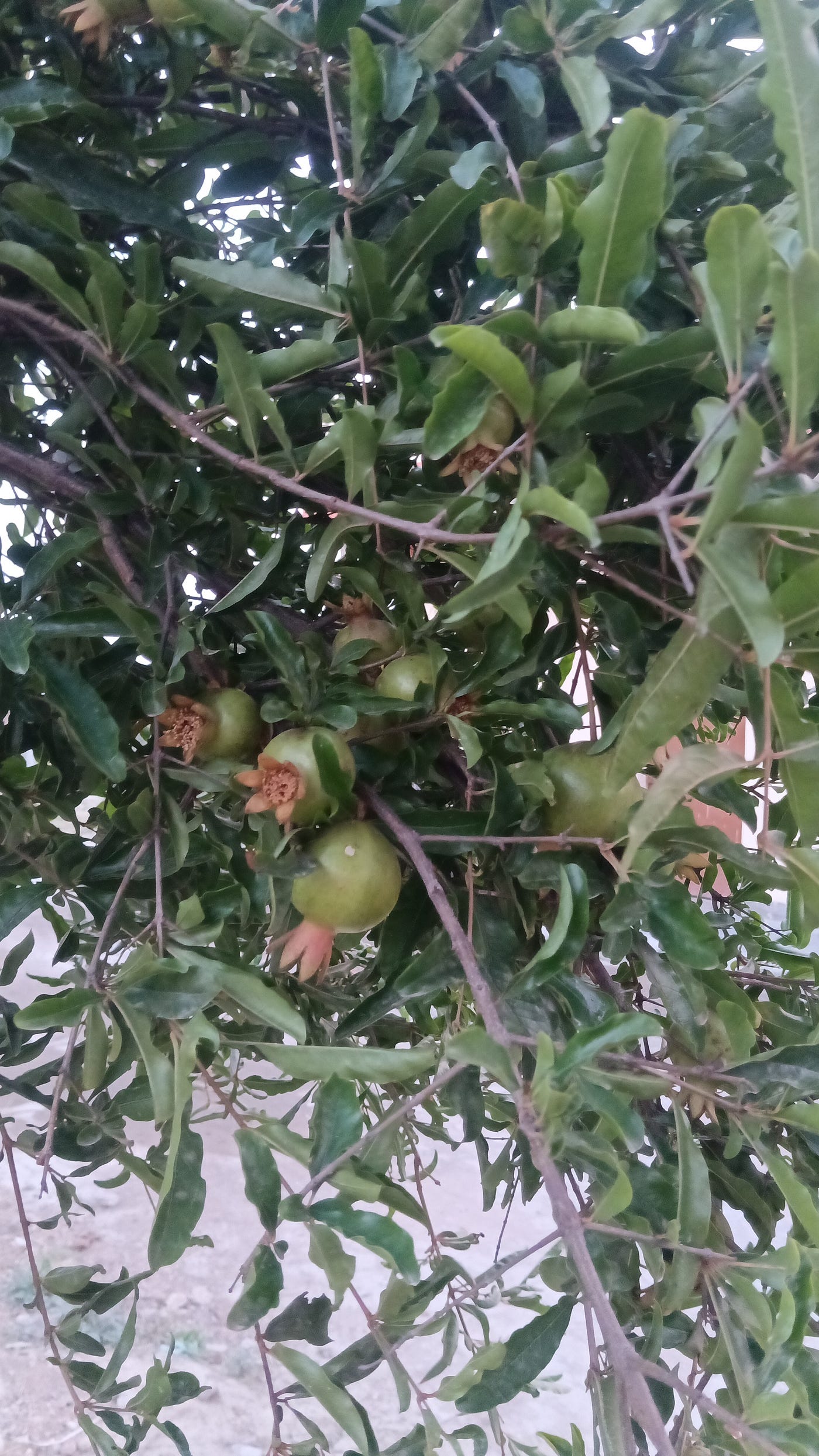
The best ideas, like pomegranate, need time to ripen before they’re ready to split open.
If you ask most writers about their pen-chant, they’ll tell you it’s something soft. A gentle pull towards nature, memory or love. A tide they surrender to. A song their pen hums without being pushed.
Mine does not hum. Mine argues.
The Problem With Being a “Gentle” Writer
If you have ever opened a blank page, typed a paragraph, and felt vaguely ashamed that it wasn’t lyrical enough, that it pushed too hard, asked too much, refused to simply land softly, then you already know the particular loneliness of the analytical writer.
We are told, repeatedly, that good writing flows.
What nobody tells is that some writing is supposed to withstand.
Sharp-edged essays are my kind of my penchant. The kind that picks up an idea like a stone flips it over, hold it up to the light, taps it twice, and then throws it right through a window and watch the glass crack!
Not out of malice. Out of curiosity.
What Summons the Spell.
I don’t start with a topic. I start with a question.
Always a question.
It usually arrives disguised as nothing — a throwaway line in a book, a contradiction so small that apparently only I notice it, a thing everyone takes for granted until, the moment I press it, it doesn’t quite hold up.
Once I press it, the incantation starts up.
The one that isn’t peaceful.
Other writers invoke the muse with candles and silence and carefully brewed tea. I invoke mine with a sentence that starts with:
“but wait — that can’t be right.”
The only genre that allows me the luxury of thinking out loud without apology, is the essay; therefore, it’s my genre.
Poetry must be beautiful.
Fiction must have a story.
The essay only has to be honest and persistent, which are, coincidentally, the only two things I cannot stop myself from being.
If your writing always feels like it’s building toward a feeling, you might be a lyric writer.
If it always feels like it’s building toward a proof, you might be an analytical one.
Neither is better.
But knowing which one you are saves you years of writing against yourself.
The Possession: When the Story Writes Itself
Here is what nobody tells you about being possessed by an analytical essay: it is not elegant.
It is not like a vision, and doesn’t come to me whole.
It comes as a battle I didn’t initiate — but I have to win.
For me, the ‘trance’ is not so gentle, not the writer who stands hovering above the keyboard, the one who’s fingers fly like a medium receiving communication from beyond.
It’s more like a prosecutor who suddenly discovers they have the one piece of evidence that makes everything castaway.
The room narrows. The periphery shuts down.
There is nothing else but the thread, and mere attention to it to the extent of following it wherever it goes, even if that is uncomfortable.
I know a piece has taken over when I can no longer cut a sentence without feeling like I’m losing an argument.
When the structure of the paragraph stops being a choice and becomes its own logic — its own internal skeleton. That’s when it’s alive.
The moment you stop treating your structure as decoration and start treating it as argument, your writing sharpens.
Ask yourself: if I removed this sentence, would my case weaken?
If the answer is no, the sentence is probably not earning its place.
The “Write-Right” Rhythmical Ritual
Sharp essays are rhythmical.
Short sentences do not come on like stories. Longer ones present case facts, one by one, each giving weight to this next clause with this next paragraph, until the reader tips with it.
I write each paragraph. Not for beauty. For resistance.
If a sentence flows easily, it’s not right. The ideal analytical sentences are slightly grabby; a pause that makes the reader’s mind go wait before it goes yes.
But it is that friction which serves as the enchantment.
It is the most rewarding thing that I know how to create, with just 26 letters and a few punctuation marks.
Read your paragraph out loud. If it all slides by at the same pace, something is too smooth.
Analytical writing needs at least one sentence that slows the reader down — not to confuse them, but to make them feel the weight of what they just agreed to.
The Cost (Because There Is Always a Cost)
This penchant is not comfortable to live with.
At no point was a spell ever cast upon my pen.
It sparked my curiosity from every concept that ended up being more complex than they initially thought. There’s no stopping them from cheerful flays, just showing up when they have to.
But it also means your writing never wastes anyone’s time.
There are no filler paragraphs in an argument.
No decorative sentences.
Every word is either evidence or it doesn’t belong.
That discipline, that ruthlessness, is something lyric writers often have to learn the hard way.
For those of us wired for argument, it’s just the starting condition.
So, What Is Your Pen-Chant?
Not what you wish it were. Not what sounds most poetic to confess.
The real one. The one that wakes you up at 5 a.m. The one that makes you talk to yourself while trying to fall asleep because the idea hasn’t resolved yet.
My ink doesn’t flow. It argues. It cross-examines. It refuses to rest until the contradiction is named.
And if yours does the same — if your pen has always been a little too sharp, a little too restless, a little too insistent on getting it right —
you are not broken.
You are just a different kind of writer.
Spreading the Hex 🕸️
So, in an attempt to maintain the tradition, I pass along the “Pen-Chant” and tag three wonderful writers who each tend to take their own special approach to writing. I would like to know what you can make my keyboards do:
This article is written in response to the ‘What’s your Pen-chant?’ prompt by Parvathi J ,from Writer’s Circle Publication.
[embed]*What’s Your Pen-Chant? *May 2026 Writing Prompts medium.com
Thanking ShubhamAgrawal, Priyanshu Jha, Arpita Srivastava, 🌸Preeti Pathak🌸, Parul Bishnoi ⭑, and Parvathi J- editors of Writer’s Circle for providing the inspiration for writing this prompt.
Thanks for Reading
Do share your comments below.
메타데이터
- post_id
- 9ec155723c88
- slug
- my-ink-doesnt-flow-it-argues-9ec155723c88
- url
- https://medium.com/@maryam475/my-ink-doesnt-flow-it-argues-9ec155723c88
- canonical_url
- https://medium.com/@maryam475/my-ink-doesnt-flow-it-argues-9ec155723c88
- author_url
- https://medium.com/@maryam475
- status
- ok
- fetched_at
- 2026-06-09 15:37:30