My Trading Became Boring — That’s When It Worked
I stopped chasing the thrill. My account finally started growing.
My Trading Became Boring — That’s When It Worked
I stopped chasing the thrill. My account finally started growing.

For a long time, excitement was the goal. The thrill of catching a big move. The rush of a fast market. The dopamine hit of a perfect entry. I told myself I was a trader. What I was, really, was a gambler with a charting platform.
The problem is that excitement and profitability move in opposite directions. The most thrilling trades tend to carry the most risk. The boring ones — methodical, predictable, almost tedious — tend to make money. I had it exactly backwards.
When I finally accepted that, everything changed.
The Excitement Trap
We’re taught the wrong version of trading. Movies show dramatic desks, shouted orders, billion-dollar decisions made on gut feel. That’s the template most of us start with. So we seek volatility, embrace chaos, and mistake activity for skill.
The reality is quieter. Successful traders repeat the same process, day after day, with the same patience and the same indifference to whether it “feels” good. They’re not managing emotions — they’ve largely removed them from the equation.
I wasn’t doing that. I was chasing. And the market, which doesn’t care about your need for stimulation, was charging me for the privilege.
“Exciting trades are expensive trades. I was paying a premium to feel something.”
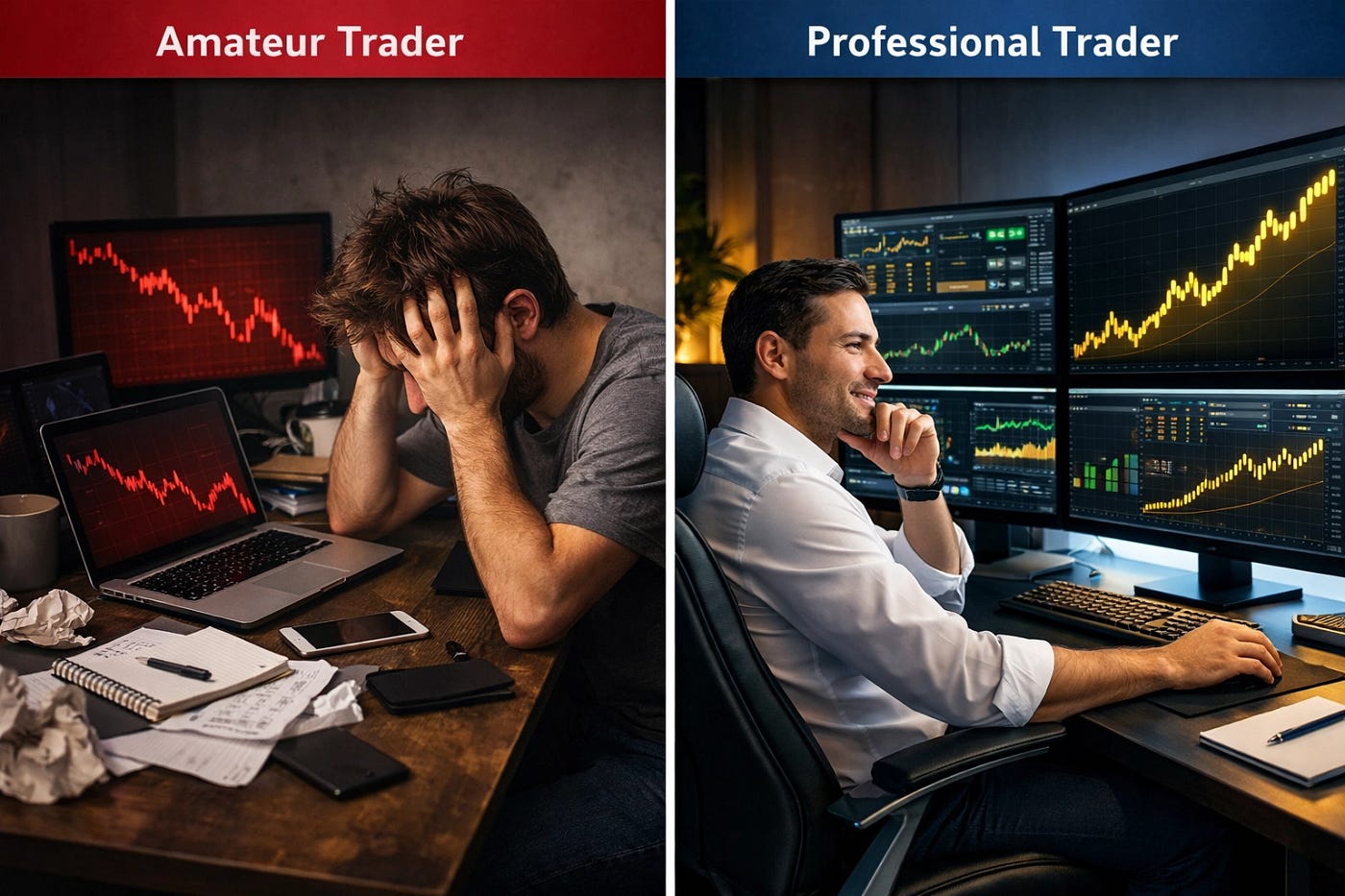
What Excitement Actually Costs You
It’s easy to think of emotional trading as just a mindset problem. It isn’t. It has a direct price tag:
- Larger drawdownsVolatile setups mean wider stops and bigger potential losses. You’re not just risking more — you’re often risking it on worse odds.
- OvertradingThe urge to stay active generates unnecessary commissions and exposes you to low-quality setups you’d otherwise ignore.
- Impaired judgmentAdrenaline clouds risk assessment. You see what you want to see in the chart.
- Unsustainable paceNo one can maintain peak emotional intensity indefinitely. Burnout is the inevitable conclusion.
My results during that period were, fittingly, dramatic. Dramatic wins. Dramatic losses. A net result close to zero — but with a much higher emotional bill.
The Shift to Boring
The shift didn’t happen overnight. It started with a question I began asking myself before each trade: Is this trade profitable, or just exciting? The honest answer was uncomfortable more often than I expected.
Boring trading has a specific texture. It’s repetitive — the same setups, the same entry criteria, the same exit process. It’s patient — you wait for what you defined, not for what catches your eye. And it’s genuinely unemotional. Wins and losses are data. You record them, learn from them, and move on.
This sounds unpleasant because it is. Most traders won’t do it for long. That’s precisely why it works as an edge.
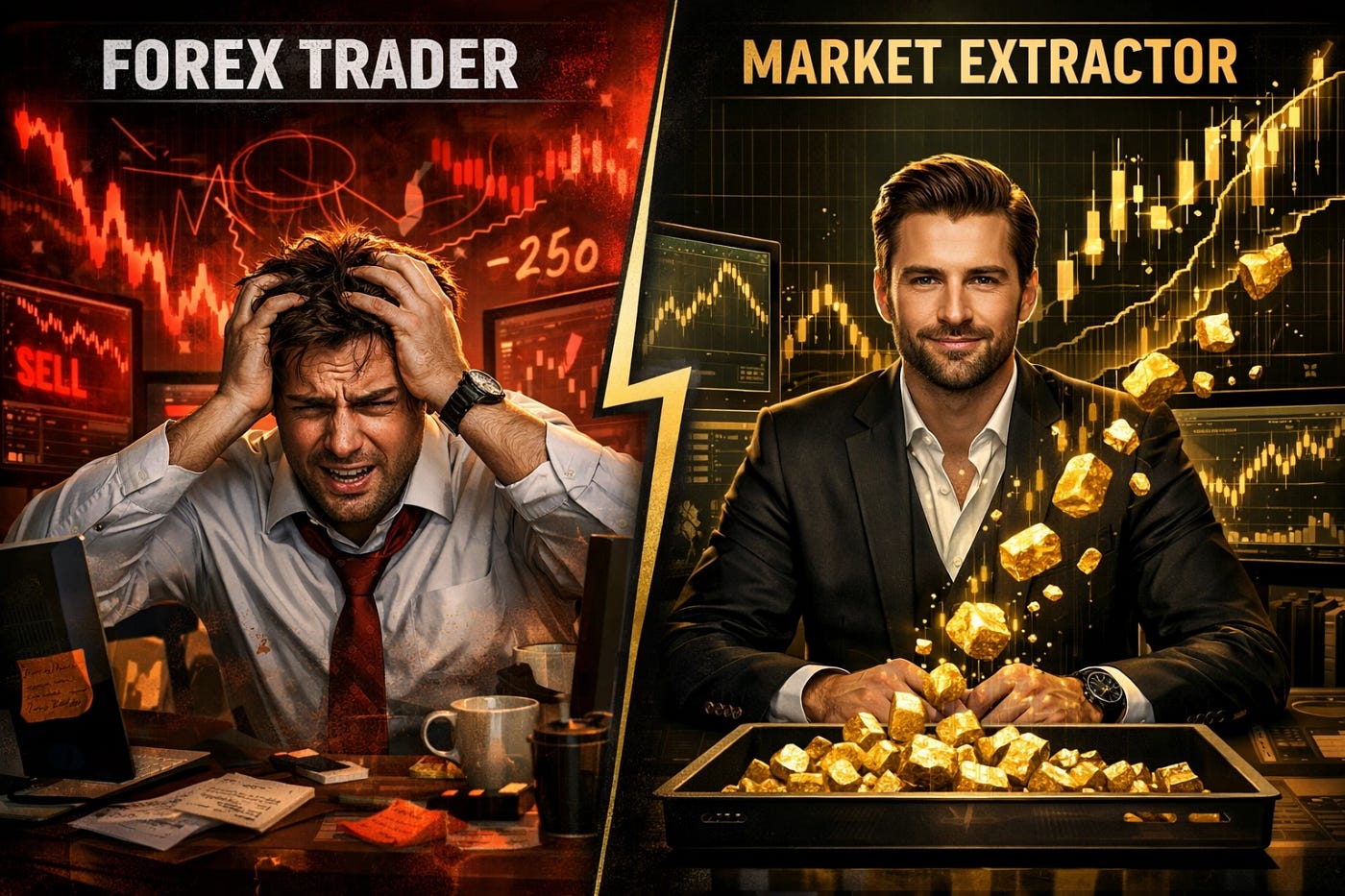
Why Boredom Is an Edge
Boring trading outperforms for reasons that compound over time:
- Emotion removed from executionWhen trading is routine, there’s nothing for anxiety to attach to. You follow the process because that’s just what you do.
- Fewer errorsSystematic execution leaves less room for impulsive mistakes. You’re not inventing decisions under pressure.
- Cleaner dataConsistency makes your results interpretable. You can actually tell what’s working and what isn’t.
- Steady compoundingSmooth equity curves compound more reliably than volatile ones. Avoiding the big losses matters as much as finding the big wins.
The traders who last — who are still at it five or ten years in — are the boring ones. Not because they lack ambition, but because they understand what trading actually rewards.
Building the Discipline
Embracing boredom requires active effort, especially early on. We’re conditioned to equate stimulation with productivity. Sitting calmly while a position plays out, or passing on a setup that doesn’t qualify, feels like laziness. It isn’t. It’s discipline.
A few things helped me reinforce it:
Measure process, not excitement. I started grading trades by whether I followed my rules, not by outcome. A losing trade that followed the plan was a success. A winning trade that didn’t was a failure.
Let the data speak. I compared my results during “exciting” trading periods against boring ones. The numbers were clear and non-negotiable.
Create routines. Trading at the same time, using the same checklist, reviewing the same metrics weekly. Routine reduces the mental overhead that gives emotions room to intrude.
“A month of boring profits is worth more than a week of exciting wins. In both money and mental health.”
The Boring Trader’s Mindset
At its core, this is a shift from treating trading as entertainment to treating it as a business. The boring trader doesn’t need excitement to feel productive. They don’t celebrate big wins or despair over losses. They trust the system over the feeling, and they measure success across months rather than hours.
This is what separates retail hobbyists from professionals. Not strategy, not software, not access — mindset.
How to build your boring system
- Define every rule in advance. No in-trade decisions. Every contingency should already be covered.
- Create fixed routines. Same time, same process, same review cadence — every session.
- Remove excitement triggers. Avoid major news events, excessive leverage, and novelty setups.
- Track process metrics. Rule adherence is the leading indicator. Profits are the lagging one.
- Review regularly. A boring system still needs iteration. Monthly reviews keep it calibrated.
Try It for a Month
One month. Follow your rules mechanically. Avoid the exciting setups. Pass on anything that doesn’t fit the criteria, even when it looks tempting.
Track two things: your results and your stress level. Compare both to your baseline.
I expect you’ll find what I found — that boring is profitable, and that profitable trading is a relief rather than a thrill. The adventure, it turns out, was always the wrong goal.
My trading became boring. That’s exactly when it started working.
Browse FxM Brand Store and get access to top level strategies and systems. Below are our top selling strategies and systems ::
THE GOLDMINE TRADING ARSENAL
The complete 7-strategy system for traders who want consistent profits, passed prop firms, and financial freedom.
🚀 THE GOLDMINE ELITE SYSTEM (For Elite Traders)
Your ALL-IN-ONE blueprint to unprecedented trading mastery! Includes strategy, AI automation, and mentorship. For Pro Traders ready to invest in top level systems and proven mentorship program guaranteed to pribt consistent income weekly.
The Ultimate FXM Trading Pack
The Bitcoin Goldmine Scalper + Goldmine Strategy + $20 Trader + Oracle AI System + Trading Journal.
The Goldmine Strategy (Most Popular)
This is the core strategy of The Goldmine Strategy, it tailored for Gold trading and works during Asian session. The Goldmine Strategy V2 reveals the system we use to execute this strategy to other pairs. The V2 is included in both The Goldmine Trading Arsenal and The Ultimate FXM Trading Pack.
The Monarch FX Strategy 🏆
Scalp GBP/USD with precision using this specialized institutional system.
The Institutional Code System™
The ultimate premium Forex & Gold trading package for serious traders in 2025.
The Alpha Desk Fx System
This is a 3 Sessions Strategies — Each session has it strategy — The strategies are tailored for Asian Session, New York and London. With this, you can execute trades during any sessions that works with you.
Custom Offer — Goldmine VIP Signals
Get 1 month of high-probability signals based on the Goldmine Strategy.
👉 Explore the full store here: FXM Brand on Selar
메타데이터
- post_id
- 9ec9e9a84795
- slug
- my-trading-became-boring-thats-when-it-worked-9ec9e9a84795
- url
- https://medium.com/@fxmbrand/my-trading-became-boring-thats-when-it-worked-9ec9e9a84795
- canonical_url
- https://medium.com/@fxmbrand/my-trading-became-boring-thats-when-it-worked-9ec9e9a84795
- author_url
- https://medium.com/@fxmbrand
- status
- ok
- fetched_at
- 2026-06-09 15:37:30