Why Teaching Emotional Regulation Early Is One of the Greatest Gifts We Can Give Our Children
Every child experiences big emotions.
Why Teaching Emotional Regulation Early Is One of the Greatest Gifts We Can Give Our Children
Every child experiences big emotions.
Frustration after losing a game. Anxiety before the first day of school. Anger when something feels unfair. Sadness after a disagreement with a friend.
These emotions are completely normal — but knowing how to respond to them is a skill that must be learned.
Just as children learn to read, write, and solve math problems, they can also learn to recognize their emotions, calm their bodies, and make healthy choices. These social-emotional skills don’t just help during childhood — they become lifelong tools for resilience, confidence, and well-being.
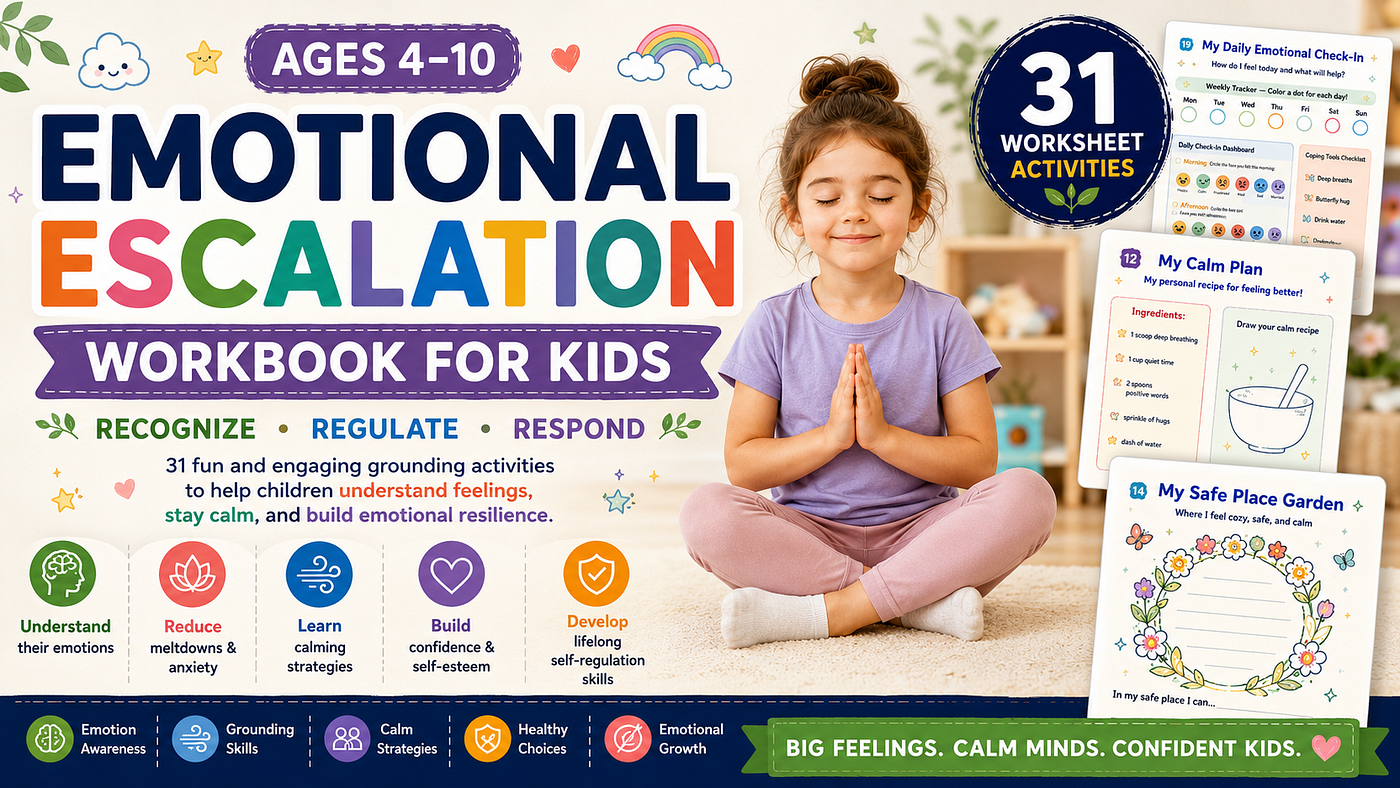
That’s why I created the Emotional Escalation Workbook for Kids, a printable resource designed to make emotional learning engaging, practical, and fun.
Why Emotional Regulation Matters
Research consistently shows that children with strong emotional regulation skills tend to:
- Develop healthier friendships
- Experience fewer behavioral challenges
- Build greater self-confidence
- Perform better academically
- Become more resilient when facing challenges
Emotional regulation doesn’t mean suppressing emotions.
Instead, it teaches children to:
- Recognize what they are feeling
- Understand why they feel that way
- Calm themselves before reacting
- Choose thoughtful responses instead of impulsive ones
These are life skills that benefit children long after they leave the classroom.
A Practical Workbook Designed for Real Life
The Emotional Escalation Workbook for Kids includes 31 printable worksheets created to support children between 4 and 10 years old.
Each activity encourages children to actively participate in understanding their emotions instead of simply being told how to behave.
Inside the workbook, children will explore activities such as:
- Daily emotion check-ins
- Feelings identification
- Grounding exercises
- Calm-down plans
- Coping skills practice
- Reflection pages
- Positive affirmations
- Problem-solving activities
- Self-regulation strategies
- Mindfulness exercises
The activities are colorful, engaging, and easy to use at home, in classrooms, or during therapy sessions.
Who Can Benefit?
This workbook is ideal for:
- Parents who want to support emotional growth at home
- Teachers looking for engaging SEL resources
- School counselors
- Child therapists
- Occupational therapists
- Homeschool families
- Special education professionals
Whether you’re helping one child or an entire classroom, these worksheets can easily become part of a daily emotional learning routine.
Learning Through Practice
One of the biggest misconceptions about emotional regulation is that children learn it simply by talking about emotions.
In reality, emotional skills develop through practice.
Children need repeated opportunities to:
- Pause before reacting
- Notice body signals
- Practice calming techniques
- Reflect on their choices
- Build positive habits
Small, consistent exercises often create the greatest long-term impact.
More Than a Workbook
The goal of this resource isn’t simply to complete worksheets.
It’s to help children develop confidence in managing their own emotions.
Every completed activity represents another opportunity for a child to understand themselves a little better, communicate more effectively, and respond with greater confidence during difficult moments.
These are skills that support not only emotional health but also learning, relationships, and personal growth.
Final Thoughts
Big feelings are a natural part of growing up.
The question isn’t whether children will experience frustration, worry, disappointment, or anger.
The question is whether they’ll have the tools to navigate those emotions in healthy ways.
Providing those tools early can make a meaningful difference — not just today, but throughout a child’s life.
If you’re looking for an engaging, printable resource that combines emotional awareness, grounding techniques, and practical self-regulation activities, the Emotional Escalation Workbook for Kids was created with exactly that goal in mind.
Big feelings don’t have to lead to big struggles. With the right guidance and practice, children can learn to understand their emotions, stay calm, and grow into confident, resilient individuals.
If this topic resonates with you, I’d love to hear your thoughts. How do you help children navigate big emotions? Share your experiences in the comments.
If you’re interested in the workbook, you can find it here:
👉Here
Helping children build emotional resilience — one worksheet at a time. 🌱
메타데이터
- post_id
- 9ef4c53ca953
- slug
- why-teaching-emotional-regulation-early-is-one-of-the-greatest-gifts-we-can-give-our-children-9ef4c53ca953
- url
- https://medium.com/@brab6232/why-teaching-emotional-regulation-early-is-one-of-the-greatest-gifts-we-can-give-our-children-9ef4c53ca953
- canonical_url
- https://medium.com/@brab6232/why-teaching-emotional-regulation-early-is-one-of-the-greatest-gifts-we-can-give-our-children-9ef4c53ca953
- author_url
- https://medium.com/@brab6232
- status
- ok
- fetched_at
- 2026-08-05 09:36:12


