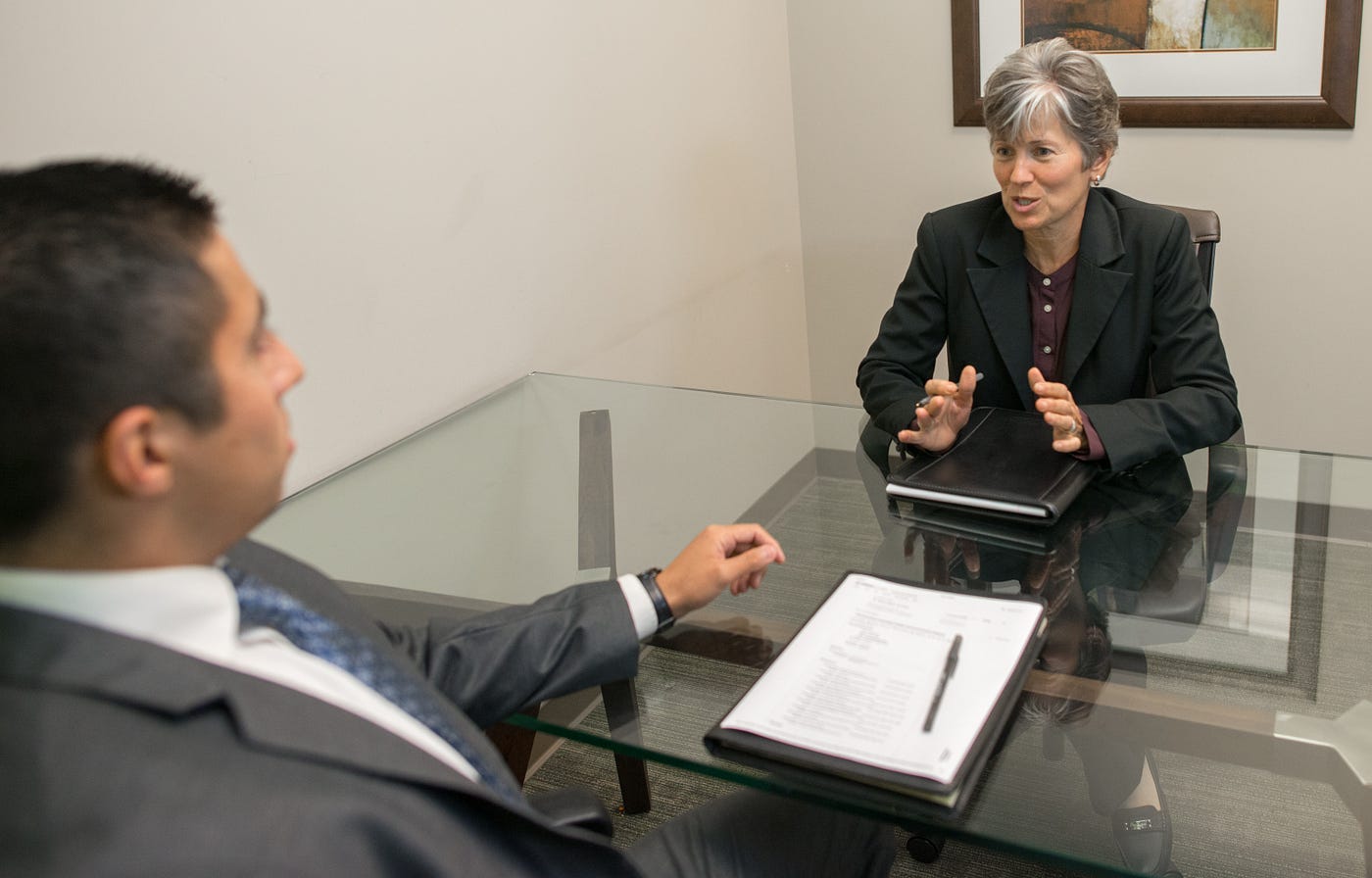
The AI interviewer is not judging your charm. It is judging your transcript.
Cover: original diagram generated for this article.
The AI interviewer is not judging your charm. It is judging your transcript.
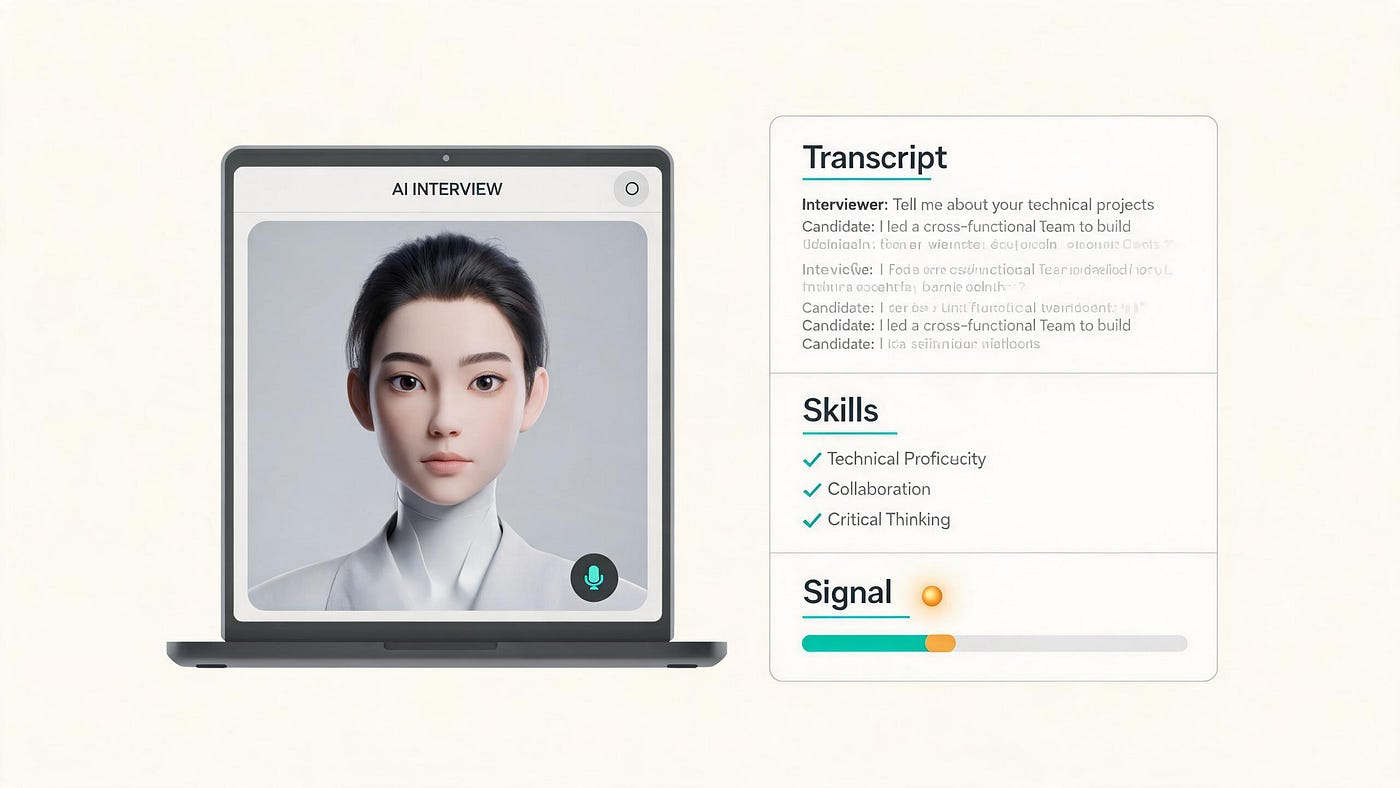
A laptop interview screen beside an AI transcript scorecard with labels for transcript, skills, and signal.
Cover: original diagram generated for this article.
To pass an AI interview in 2026, stop optimizing for charm and start optimizing for a clean, specific transcript. The system is usually scoring whether your answer names the skill, gives evidence, follows a logical structure, and can be reviewed fairly by a recruiter later. Treat every answer like a short proof, not a performance.
I changed how I think about AI interviews after hearing candidates describe the same uneasy feeling in different words: “I could not tell if anyone was listening.” Sometimes it was a one-way video interview. Sometimes it was a phone screen with a voice that felt almost human. Sometimes it was an avatar that asked follow-ups without ever smiling or interrupting.
The mistake is trying to replace that missing human feedback with more personality. In many AI-mediated screens, personality is not the main thing being scored.
What gets scored is the record you leave behind.
TL;DR: what actually helps in an AI interview
- Answer in 60 to 90 seconds unless the platform gives you more time.
- Name the competency early: conflict, ownership, customer empathy, analytical judgment, or whatever the question is testing.
- Use a compressed STAR structure: one sentence of context, one sentence of task, most of the time on action, then a concrete result.
- Mirror the job description’s vocabulary without sounding like you are reading it.
- Speak clearly enough to produce a good transcript, especially if English is not your first language.
- Ask for accommodation or an alternative process when a tool may disadvantage you because of disability, accent, equipment, or access constraints.
Why AI interviews feel so strange
“AI interview” can mean at least four formats:
- A one-way video interview where you record answers alone.
- A voice-based phone screen that asks structured questions.
- A conversational AI interviewer that asks follow-ups.
- A human interview where software creates transcripts, summaries, or scorecards in the background.
Those formats feel different, but they share one candidate reality: the transcript matters more than the vibe.
That became more obvious when HireVue announced its voice-based AI Interviewer on June 18, 2026, positioning it as a way to run dynamic, skills-focused interviews and rank candidates for recruiter review. Whether you like that trend or hate it, it points to the same practical rule: your answer is being turned into evidence.
A human interviewer can forgive a messy answer if they feel your point. A scoring system has less patience. It needs a clean signal.
What is the AI probably evaluating?
No candidate can know the exact model or rubric behind a specific employer’s setup. But most AI-assisted screens reward the same visible behaviors because those behaviors produce stronger hiring evidence.
1. Did you answer the competency?
If the question is about conflict, say conflict. If it is about prioritization, say prioritization.
A weak answer starts like this:
“At my last job, there was this project that became complicated because several teams were involved...”
A stronger answer starts like this:
“The clearest conflict I handled was between product and support during a launch delay.”
The second version tells the system and the eventual reviewer exactly what evidence is coming.
2. Did you give specific evidence?
AI interviews punish vagueness because vague answers are hard to score. “I work well under pressure” is not evidence. “I cut a three-week launch delay to eight days by splitting the release into two milestones” is evidence.
Specific evidence has four ingredients: a real setting, your action, a constraint, and an outcome. The outcome does not always need a perfect metric. “The customer renewed,” “the bug never returned,” or “the manager adopted the checklist for the team” can be enough when honest numbers are not available.
3. Was your answer structured enough to parse?
STAR still works, but the usual advice is too slow for AI screens. You do not need a long setup. You need a clean spine.
Try this version:
- Situation: “We were two weeks from launch and support tickets had doubled.”
- Task: “I owned the handoff between engineering and customer support.”
- Action: “I built a daily triage doc, grouped issues by customer impact, and set a 15-minute escalation rule.”
- Result: “We shipped four days late instead of two weeks late, and the top five customers stayed onboard.”
That is not beautiful storytelling. It is usable evidence.
4. Is the language aligned with the job?
This is where job descriptions become useful. If the role asks for “cross-functional stakeholder management,” do not only say “I talked to a lot of teams.” Say “I managed cross-functional stakeholders across product, legal, and support.”
Do not stuff keywords. Just use the employer’s language when it accurately describes your work.
The seven-day prep plan I would use
If I had an AI interview next week, I would not spend seven days memorizing answers. I would build a small set of transcript-ready stories.
Day 1: mark the scorecard hidden in the job description
Highlight every repeated competency: ownership, customer focus, data analysis, ambiguity, communication, leadership, speed, accuracy, technical depth.
Then turn each one into a likely question:
- “Tell me about a time you worked with ambiguity.”
- “Describe a time you influenced a stakeholder without authority.”
- “Walk me through a project where accuracy mattered.”
- “Tell me about a time you had to move quickly with incomplete information.”
Now you are not guessing questions. You are reverse-engineering what the screen probably measures.
Days 2 and 3: build six reusable stories
You do not need one answer per possible question. You need six strong stories that can flex:
- A measurable win.
- A conflict or disagreement.
- A failure or mistake.
- A deadline or pressure moment.
- A teamwork or stakeholder story.
- A technical or role-specific project.
For each story, write four lines only: situation, task, action, result. If it takes half a page, it is not ready.
Day 4: add transcript signposts
Write the transitions you will say out loud:
- “The specific challenge was...”
- “My role was...”
- “The action I took was...”
- “The result was...”
- “What I learned was...”
Signposts may feel formal, but they help both machines and humans follow you. They also keep you from rambling when there is no interviewer feedback.
Day 5: record, do not rehearse silently
Silent practice lies. You think you are concise until you hear yourself take three minutes to reach the point.
Record each answer once. Listen for three things:
- Did you name the competency in the first 10 seconds?
- Did you spend more time on action than context?
- Did the result sound concrete?
If not, rewrite. Do not polish the adjectives. Fix the evidence.
Day 6: practice with interruption and follow-up
AI interviewers increasingly ask follow-ups. Practice these:
- “What was the hardest part?”
- “What would you do differently?”
- “How did you measure success?”
- “What was your personal contribution?”
If your answer collapses under those questions, the original story is too thin.
Day 7: prepare the room and the fallback
Technical setup matters because bad audio becomes a bad transcript. Use a quiet room, stable internet, and a microphone that does not echo. Keep your notes to short bullets, not scripts. Reading sounds different from speaking, and it usually makes answers flatter.
Also prepare one sentence for problems:
“I want to make sure my answer is captured clearly. May I restart that response?”
Some platforms will not allow a restart. But having the sentence ready prevents panic.
What non-native English speakers should adjust
Non-native speakers often over-focus on accent. The bigger issue is transcript clarity.
Speak slightly slower than your normal pace. Use shorter sentences. Avoid idioms that may transcribe badly. Put the main noun close to the verb: “I reduced churn by 12 percent” is easier to parse than “What ended up happening after several changes was a reduction in churn.”
This is not about sounding American or British. It is about leaving a clean record of your work.
If the system has trouble understanding you, document it. If you believe the tool disadvantages you because of disability, speech, access, or another protected factor, ask for an accommodation or alternative process. The EEOC has warned that AI hiring tools can create issues under the ADA and under employment discrimination law when selection procedures create adverse impact, including in its guidance on software, algorithms, and artificial intelligence.
What candidates should ask recruiters
You do not need to sound hostile. You can ask practical questions:
- “Will this interview be evaluated by AI, a human reviewer, or both?”
- “Is there an alternative format if the tool does not work well with my setup?”
- “Will I have a chance to re-record or clarify answers?”
- “How long are recordings and transcripts retained?”
- “Which competencies are being evaluated?”
In some places, employers already have notice obligations. New York City’s automated employment decision tool rules, for example, require certain bias audit and candidate notice practices for covered tools. The details depend on location and employer, but the broader lesson is simple: you are allowed to ask how the process works.
The mistake that hurts good candidates
The most common failure I see is not nervousness. It is context overload.
Smart candidates want to be accurate, so they explain every background detail. They name every stakeholder. They give the history of the project. By the time they reach their actual action, the answer has already become hard to score.
AI interviews reward compression. Not shallow answers, compressed answers.
A good answer should feel like this:
“Here is the skill you asked about. Here is the situation. Here is what I personally did. Here is the result. Here is what I learned.”
That structure is not robotic if the story is real. It is respectful of the format.
FAQ
How long should an AI interview answer be?
For behavioral questions, aim for 60 to 90 seconds unless the platform gives a longer limit. Under 30 seconds often lacks evidence. Over two minutes often loses structure.
Should I use the STAR method for AI interviews?
Yes, but compress it. The action and result matter most. Spend less time on background and more time on what you personally did.
Are AI interviews fair?
They can be more consistent than rushed human screens, but consistency is not the same as fairness. Tool design, training data, accessibility, language, disability, and employer configuration all matter. That is why asking about process and accommodation is reasonable.
Final thought
AI interviews are awkward because they remove the human feedback loop. But that also makes the preparation more concrete. You are not trying to win over a blank screen. You are trying to leave behind a clean, specific, fair record of what you can do.
I help build AceRound AI, an AI interview assistant for candidates who want real-time practice and backup during high-pressure interviews. I mention it here because this article is about the exact problem we work on: turning vague, panicked answers into specific interview evidence. Use any tool you like, but practice against the transcript, not the fantasy of a perfect conversation.
AI disclosure: I used AI assistance for outlining, source organization, and editing passes. The examples, structure, and final judgment were reviewed and edited by a human operator before publication.
메타데이터
- post_id
- 9effc29803bb
- slug
- the-ai-interviewer-is-not-judging-your-charm-it-is-judging-your-transcript-9effc29803bb
- url
- https://medium.com/@zskzskabcd/the-ai-interviewer-is-not-judging-your-charm-it-is-judging-your-transcript-9effc29803bb
- canonical_url
- https://medium.com/@zskzskabcd/the-ai-interviewer-is-not-judging-your-charm-it-is-judging-your-transcript-9effc29803bb
- author_url
- https://medium.com/@zskzskabcd
- status
- ok
- fetched_at
- 2026-07-16 16:23:14