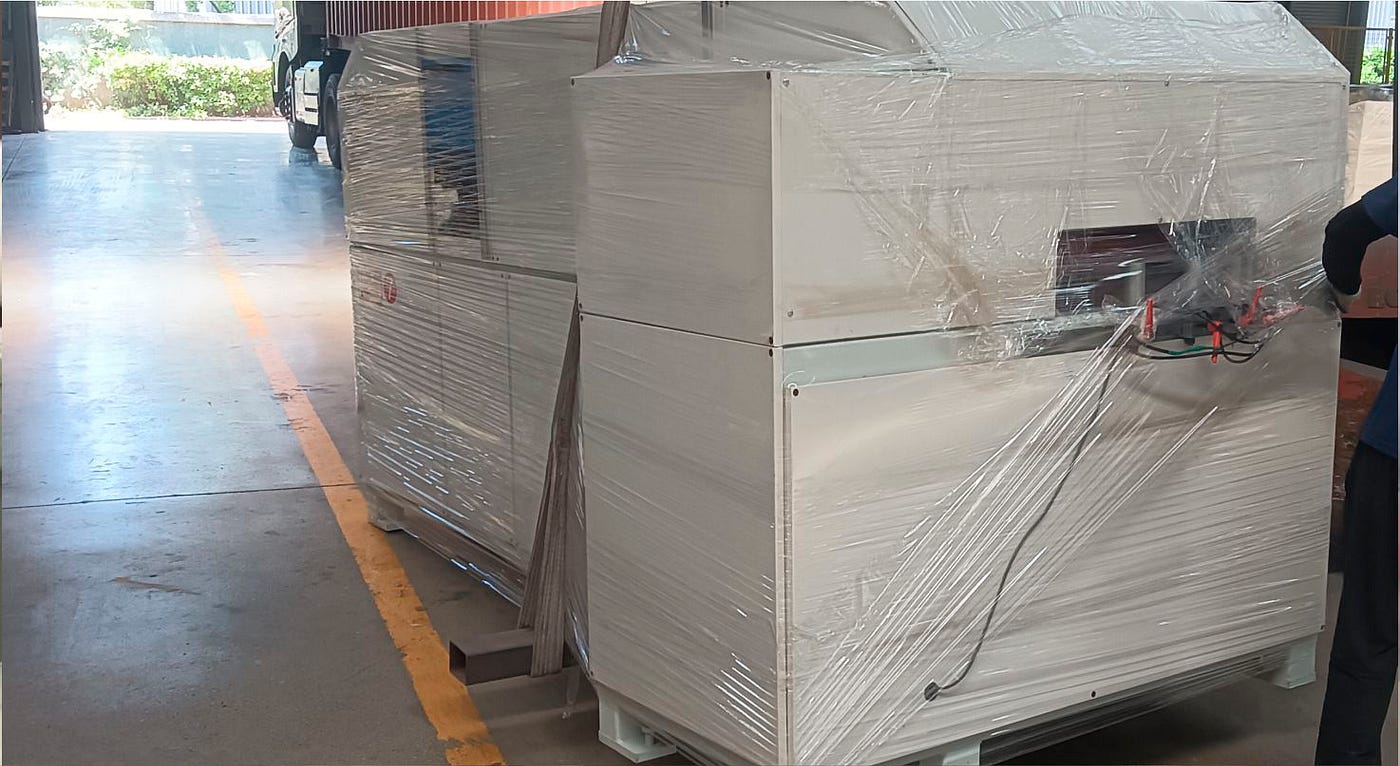
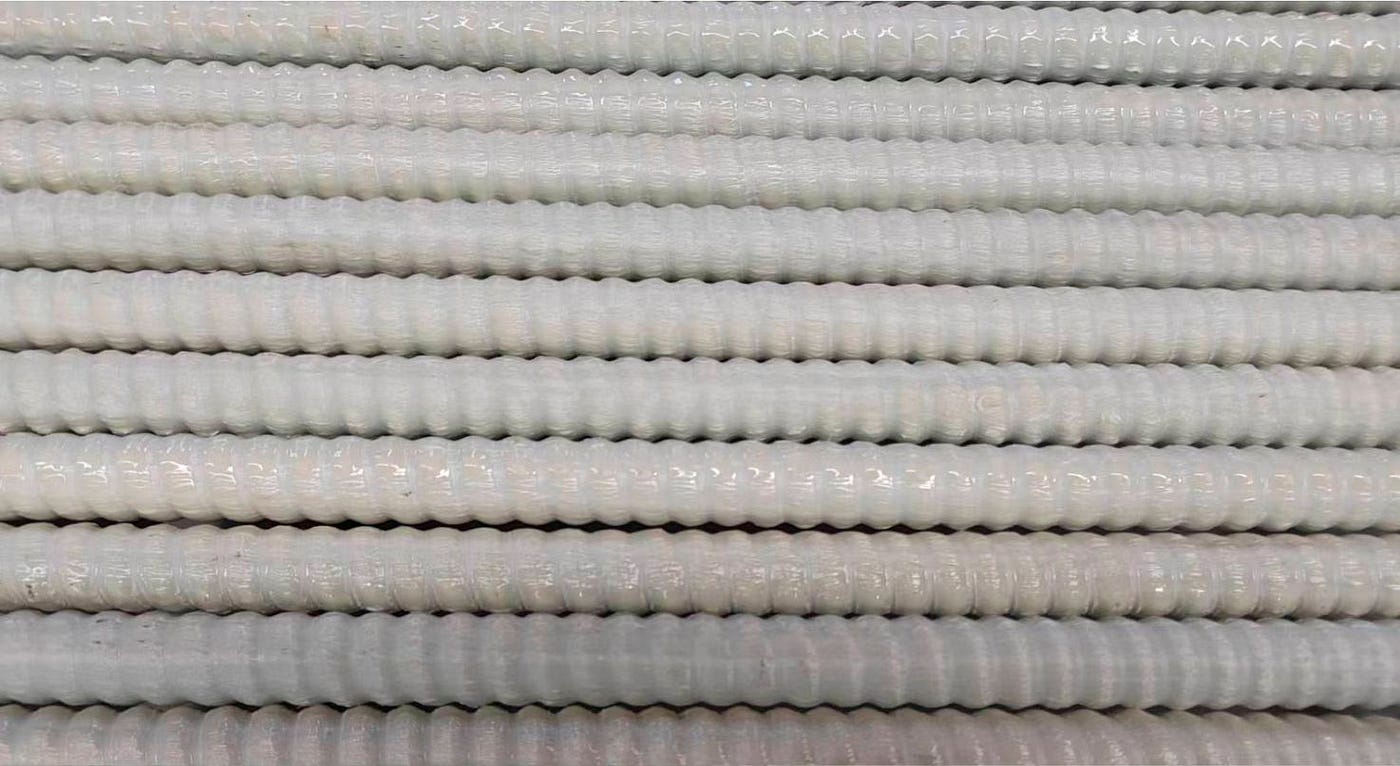
GRP FRP Rebar Machine vs Traditional Rebar Equipment: Key Differences
Introduction
GRP FRP Rebar Machine vs Traditional Rebar Equipment: Key Differences
Introduction
The rapid growth of composite construction materials has significantly changed the reinforcement industry. As demand for corrosion-resistant and lightweight reinforcement increases, manufacturers are increasingly investing in **GRP FRP rebar machines** instead of traditional steel rebar equipment.
Although both systems are used to produce reinforcement materials for concrete structures, their manufacturing technologies, equipment configurations, and production workflows are fundamentally different.
This article compares GRP FRP rebar machines with traditional steel rebar equipment, highlighting the key differences in process, performance, and industrial applications.
1. Understanding the Two Manufacturing Systems
1.1 What Is a GRP FRP Rebar Machine?
A GRP FRP rebar machine is a composite manufacturing system used to produce fiberglass-reinforced polymer rebar through a continuous pultrusion process.
The system combines:
- Continuous fibers
- Thermosetting resin
- Heating and curing technology
- Automated pulling systems
The final product is a lightweight, corrosion-resistant composite reinforcement bar.
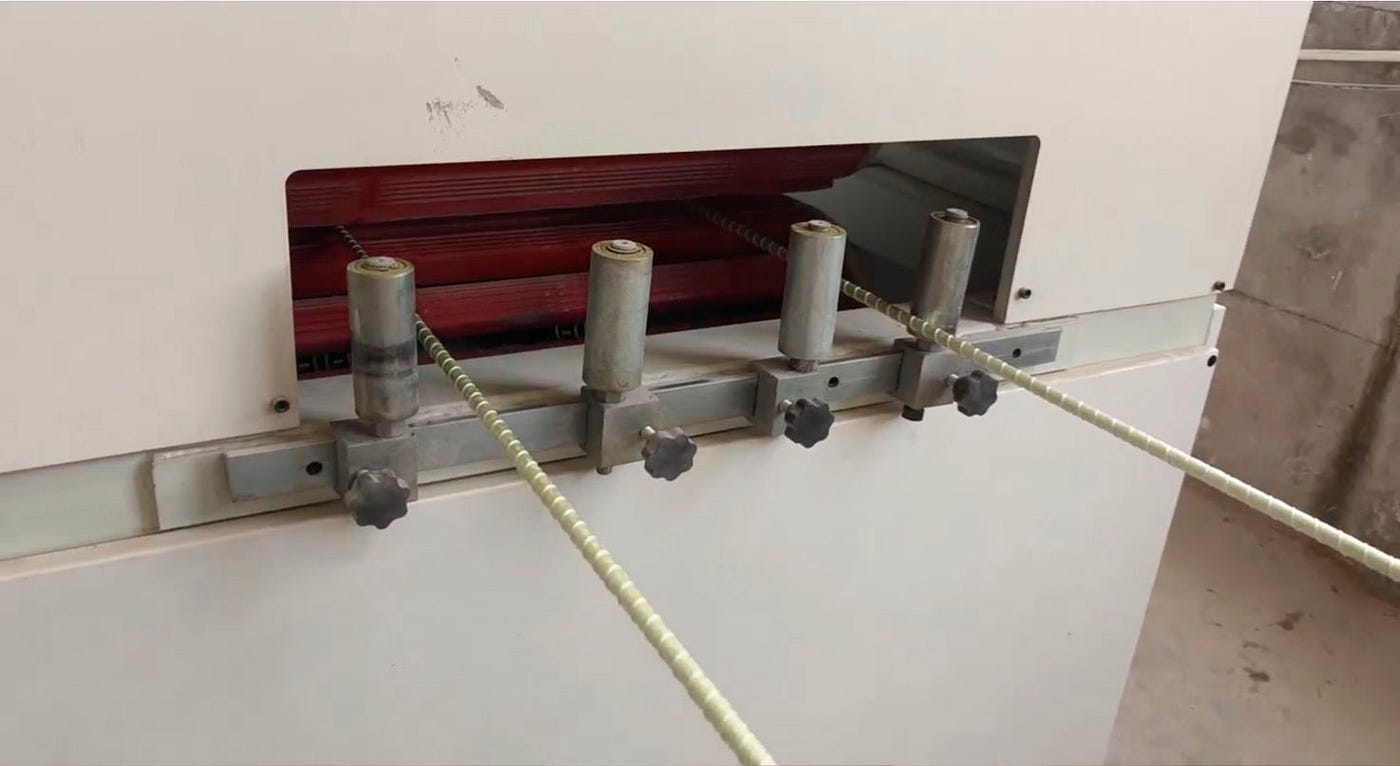
1.2 What Is Traditional Rebar Equipment?
Traditional rebar equipment is designed for processing steel reinforcement bars through:
- Rolling
- Cutting
- Bending
- Welding
- Heat treatment
Unlike FRP systems, steel rebar production relies primarily on metal forming and mechanical processing technologies.
2. Manufacturing Process Differences
GRP FRP Rebar Production Process
The FRP rebar manufacturing process includes:
- Fiber feeding
- Resin impregnation
- Forming and shaping
- Heating and curing
- Pulling and cutting
This is a continuous composite pultrusion process.
Traditional Steel Rebar Production Process
Steel rebar manufacturing generally includes:
- Steel billet heating
- Rolling and deformation
- Cooling process
- Cutting and bending
This process depends heavily on high-temperature metal processing.
3. Core Equipment Comparison
CategoryGRP FRP Rebar MachineTraditional Rebar EquipmentCore technologyPultrusionMetal rollingMain materialsFiberglass + resinSteelHeating systemCuring die heatingFurnace heatingPulling systemContinuous traction systemRolling millSurface treatmentSand coating / wrappingRib rollingAutomation typePLC process controlMechanical rolling control
4. Material Performance Differences
FRP Rebar Advantages
FRP rebar offers:
- Excellent corrosion resistance
- Lightweight structure
- High tensile strength
- Non-conductive properties
- Long service life
These characteristics make FRP suitable for harsh environments.
Steel Rebar Advantages
Traditional steel rebar provides:
- High elastic modulus
- Strong ductility
- Mature construction standards
- Wide market availability
However, steel is vulnerable to corrosion in aggressive environments.

5. Production Environment Differences
FRP Rebar Production Environment
A typical FRP rebar production line requires:
- Resin handling systems
- Temperature-controlled curing area
- Ventilation systems
- Composite material storage
The environment focuses on chemical processing stability.
Traditional Steel Rebar Plant
Steel rebar plants require:
- Heavy rolling equipment
- High-temperature furnaces
- Large energy supply systems
- Metal processing infrastructure
These facilities usually involve much higher thermal energy consumption.
6. Automation and Control Differences
Modern automatic fiberglass rebar production lines rely heavily on:
- PLC automation
- Speed synchronization
- Temperature control systems
- Resin flow monitoring
By contrast, traditional rebar equipment emphasizes:
- Mechanical rolling precision
- Heavy-duty hydraulic systems
- Mechanical material handling
Automation in FRP production focuses more on process consistency and composite curing control.
7. Energy Consumption Comparison
FRP Rebar Machines
- Lower overall thermal energy consumption
- More efficient continuous curing systems
- Lower material transportation weight
Traditional Steel Rebar Equipment
- High-temperature metal heating required
- Heavy rolling systems consume significant energy
- Higher infrastructure load requirements
8. Application Differences
FRP Rebar Applications
- Marine engineering
- Bridges and tunnels
- Coastal infrastructure
- Chemical plants
- Electrical projects
Steel Rebar Applications
- Conventional buildings
- High-rise structures
- Standard reinforced concrete construction
Each material serves different engineering requirements.
9. Investment and Operational Cost
FactorFRP Rebar MachineTraditional Rebar EquipmentInitial investmentMediumVery highEnergy consumptionMedium–LowHighMaintenance costLower corrosion costHigher corrosion maintenanceLabor dependencyLower with automationHigher in heavy processing

10. Future Industry Trends
The construction industry is increasingly adopting FRP rebar technology due to:
- Infrastructure durability requirements
- Corrosion prevention needs
- Lightweight material demand
- Reduced lifecycle maintenance costs
As a result, modern FRP rebar machines are becoming an important part of advanced composite manufacturing industries.
Conclusion
Although both systems manufacture reinforcement materials, GRP FRP rebar machines and traditional steel rebar equipment operate on completely different manufacturing principles.
FRP production focuses on composite pultrusion technology, automation, and corrosion-resistant performance, while traditional steel systems rely on heavy metal processing and rolling technologies.
As infrastructure standards continue evolving, FRP rebar manufacturing is expected to become an increasingly important alternative to traditional steel reinforcement production.
메타데이터
- post_id
- 9f2c60445cf2
- slug
- grp-frp-rebar-machine-vs-traditional-rebar-equipment-key-differences-9f2c60445cf2
- url
- https://medium.com/@pipejiang888/grp-frp-rebar-machine-vs-traditional-rebar-equipment-key-differences-9f2c60445cf2
- canonical_url
- https://medium.com/@pipejiang888/grp-frp-rebar-machine-vs-traditional-rebar-equipment-key-differences-9f2c60445cf2
- author_url
- https://medium.com/@pipejiang888
- status
- ok
- fetched_at
- 2026-06-09 15:37:30