I Grew Up Alongside the End of the World
How imagined catastrophe taught me to question what ordinary life conceals
I Grew Up Alongside the End of the World
How imagined catastrophe taught me to question what ordinary life conceals
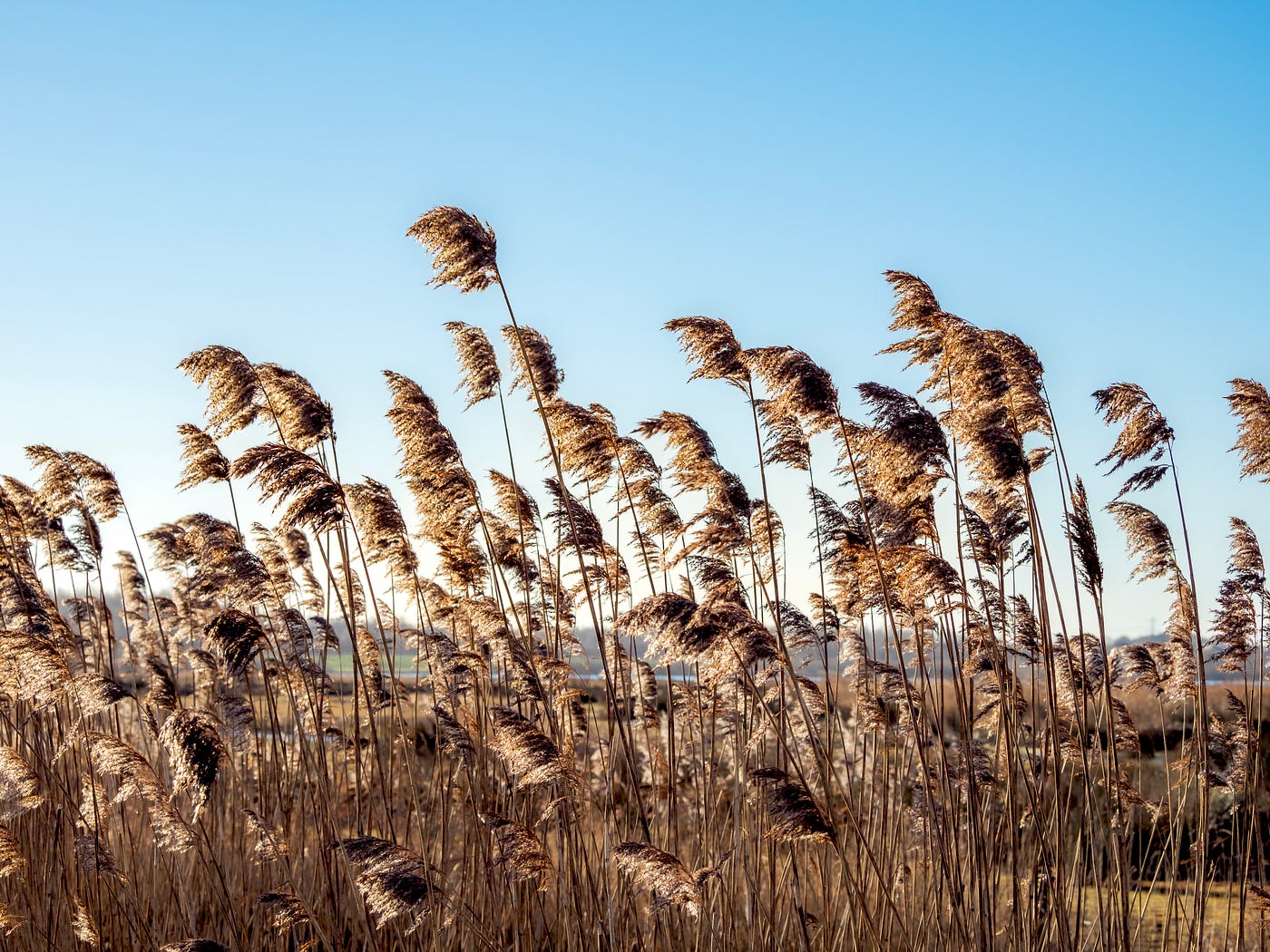
Photo by Serhii Kalyn on Unsplash
When I was young, the end of the world had a strange routine to it.
It usually began in the lounge room. There would be a city I had never visited, a scientist no one believed, a family trying to escape traffic, a sky that had changed colour, or a president staring grimly at a screen while someone explained how little time remained. Then the destruction would come. Asteroids demolished cities. Aliens tore through landmarks. Viruses emptied streets. Machines rose against us. Entire hemispheres vanished beneath endless winter.
And then the movie would end.
That was the part I remember most clearly now. Not the destruction itself, but the return. The credits would roll, the television would go quiet, and the ordinary world would still be waiting. There were dishes in the sink. There was school in the morning. There were bills, lawns, lunch boxes, arguments, chores, and all the small unglamorous demands of being alive.
The world had ended again, and nothing had changed.
At least, that is how it seemed then.
Maybe that was part of the fascination.
The end of the world was enormous, but it was also safe. It was fear with a border around it. I could sit in the lounge room and watch cities fall, knowing the credits would roll and the lights would come back on. The danger was total, but it was contained. The world could end, and I could still go to bed.
The older I get, though, the more I wonder whether our obsession with the end of the world is really about the end at all. Maybe it is not only destruction that keeps drawing us back. Maybe it is what destruction promises to reveal.
People have always imagined endings. The shape changes with the age, but the impulse remains. In a religious context, the end often arrives as judgement, punishment, cleansing, or fulfilment. It is not merely that the world stops. It is that the world is explained. History is gathered up and given a final meaning. Someone was right. Someone was wrong. Someone is saved. Someone is condemned. The suffering and injustice of ordinary life are not left hanging in the air; they are answered.
There is a terrible comfort in that.
A religious apocalypse may be frightening, but it also offers order. It says that chaos was never truly chaos. It says wrongs were seen, even when they went unpunished. It says there was a pattern beneath the confusion, even if we could not understand it while we were living through it. For those who feel powerless before cruelty, corruption, grief, or loss, the idea of a final reckoning can hold a kind of psychological weight. It tells the sufferer that history is not indifferent.
But the world does not need to end for everyone for it to feel like the end of the world.
For a village, the end may be famine. For a city, fire. For a people, invasion. For a family, a death, a betrayal, a diagnosis, a phone call, a door closing that will never open again. Perhaps this is why apocalyptic language comes so easily to us. We know, even if the planet continues, that a world can end without the world ending.
Then there are the endings that come from nature itself. Flood, fire, famine, earthquake, eruption, asteroid, solar flare, plague. These stories carry a different terror because they do not need a villain. No one has to hate us. No one has to decide we are worth destroying. The earth can shake. The sky can burn. A rock can fall. A virus can move through a population without malice or intention. Human beings, for all our intelligence, remain small bodies moving across a planet that was never built for our comfort.
There is humility in that kind of fear. Maybe even insult.
We spend so much of our lives behaving as though our concerns are central. Our work, our money, our politics, our grudges, our ambitions, our reputations, our deadlines. Then a story comes along in which the sky itself becomes the threat, and suddenly all our arrangements are exposed as temporary. The meeting does not matter. The mortgage does not matter. The argument from last Thursday does not matter. The natural apocalypse reminds us that civilisation is not the opposite of nature. It is something fragile we have built inside it.
Other endings are more clearly our own doing.
Weapons we build. Pathogens we engineer or fail to contain. Machines we teach to think faster than we can understand. A climate we alter and then pretend not to recognise. These stories carry guilt as much as fear. They ask whether the end will come not because humanity was weak, but because humanity was careless, arrogant, greedy, or unable to stop itself.
This may be one of the more modern forms of apocalypse. The ancient world could imagine gods, monsters, floods, stars, omens, and judgement. We can imagine those things too, but we can also imagine paperwork, laboratories, policy failure, corporate indifference, military escalation, supply chains, data centres, and profit margins. We can imagine the end not as a thunderclap from heaven, but as a series of decisions no one person felt responsible enough to stop.
That kind of ending feels different.
It is one thing to fear an asteroid. It is another to fear ourselves.
And then there are the invasion stories. The aliens arrive, the ships descend, the sky fills with machines, and suddenly humanity is no longer the dominant intelligence in the room. These stories seem to wound our pride. They imagine a world in which we are treated the way we have so often treated everything else: as territory, as labour, as food, as an obstacle, as a resource.
In those stories, we are not special because we say we are. We are not the centre because we have written ourselves into the centre. Something arrives that does not care about our flags, our borders, our histories, our gods, our property rights, or our sense of destiny. It simply wants what we have.
There is something revealing in that reversal. Perhaps invasion stories frighten us because they imagine humanity finally meeting something that looks at us with the same cold appetite we have so often directed outward.
What interests me most is not only the variety of these endings, but what they do to the person imagining them.
When we read these stories, watch them, or listen to them, we are not simply observing destruction from a distance. Part of storytelling is that we place ourselves inside it. We ask, quietly or unconsciously: What would I do? Would I survive? Would I be brave? Would I protect my family? Would I become selfish? Would I fall apart? Would I finally become useful?
That last question matters.
Would I finally become useful?
So much of modern life can feel strangely removed from the basic facts of existence. We work, but often not at things we can touch. We communicate constantly, but not always honestly. We follow rules we did not write. We measure value through systems that can feel arbitrary. We are busy without always feeling necessary. We are tired without always knowing what we have built.
Then the apocalypse arrives in fiction and everything false is stripped away.
The emails stop. The meetings stop. The debts become absurd. The performance of career, politeness, status, and small social humiliation is burned off in the larger emergency. What remains is terrible, but it is also simple. Find food. Find shelter. Protect the people you love. Keep moving.
There is fear in that imagining, certainly. But I wonder whether there is also a strange sense of freedom.
Not because people truly want suffering. Not because famine, violence, disease, and death are secretly desirable. But because the imagined end of the world removes the fog of ordinary life. It creates a stage on which action has immediate meaning. A person is hungry, so food matters. A child is unsafe, so courage matters. A stranger is wounded, so mercy matters. A fire is coming, so movement matters.
In ordinary life, meaning can become abstract. In the apocalypse, meaning becomes physical.
This may be why the end of the world can feel, in stories, both horrifying and seductive. It threatens to take everything away, but it also promises to reveal what everything was worth.
There is another kind of appeal too: the fantasy of moral exposure. We imagine that collapse would show people for who they really are. The coward would be revealed. The selfish would be revealed. The quietly decent person, ignored in ordinary life, might suddenly become essential. The person with no impressive title, no wealth, no social power, might be the one who can fix the generator, grow food, calm a child, share water, or make the decision everyone else is too afraid to make.
That is one of the great emotional engines of apocalyptic fiction. It does not only destroy the world; it rearranges value.
A rich man may become useless. A powerful person may become ridiculous. A person once overlooked may become necessary. The social ladder collapses, and a different kind of worth is revealed underneath it.
Perhaps this is why so many of these stories begin with ordinary frustration before the disaster arrives. The protagonist is stuck, bored, grieving, trapped, compromised, lonely, or humiliated by a life that does not seem to recognise them. Then the world ends, and suddenly their hidden qualities matter. Their caution, their loyalty, their stubbornness, their anger, their practical knowledge, their capacity to endure — all the traits that ordinary life may have failed to reward — become the difference between life and death.
This says something uncomfortable about us.
If we need to imagine the end of everything before we can imagine ourselves becoming meaningful, then perhaps the problem is not only our fear of catastrophe. Perhaps the problem is that ordinary life has become too good at concealing what matters.
But there is danger in this fantasy.
The apocalypse can become a way of avoiding the slower, less cinematic work of living well now. It is easier to imagine being brave during an alien invasion than to be patient with your child after work. It is easier to imagine sharing food after civilisation collapses than to be generous while your bank account still matters. It is easier to imagine standing against tyranny in a ruined future than to speak honestly in a meeting, a family, a workplace, or a friendship.
The imagined end of the world can reveal our values, but it can also flatter us.
Most of us, I suspect, imagine ourselves as better than average in the ruins. We would be calm. We would be useful. We would be loyal. We would not be one of the foolish ones, the selfish ones, the panicked ones, the people who fail to understand what is happening until it is too late. Apocalypse stories allow us to test ourselves in imagination, but the test is private, and we are often generous markers of our own exam.
Still, I do not think that makes the fascination meaningless. Even self-flattering fantasies reveal desire. If we imagine ourselves as brave, useful, protective, or morally clear in the ruins, perhaps that tells us something about what we wish we were now.
Throughout history, people have predicted the end and watched it fail to arrive. The date shifts. The signs are reinterpreted. The crisis passes, or changes shape, or is replaced by another. War, plague, famine, comets, earthquakes, moral decline, strange weather, new technology, new enemies — again and again, people have looked at their own moment and wondered whether history had reached its final page.
There have always been thinkers who questioned this impulse. Not always by denying the possibility of an ending, but by questioning the confidence with which people claimed to recognise it. Perhaps the deeper sceptical question is not, “Will the world end?” but, “Why does every generation believe it has been chosen to witness the final act?”
That question still matters.
We are not the first people to feel that the world is unstable. We are not the first to see disaster in the signs of the times. We are not the first to believe our age is uniquely corrupt, uniquely dangerous, uniquely close to collapse. But there is something distinct about the modern version of this fear. We may be among the first generations able to imagine humanity’s end not only as myth, divine judgement, or natural calamity, but as something we could produce through our own systems, inventions, appetites, and failures of restraint.
That difference is difficult to sit with.
Modern apocalypse is not only a story of helplessness. It is also a story of responsibility. The mushroom cloud, the engineered virus, the flooded city, the dead ocean, the machine beyond our control — these are not simply monsters from outside the human world. They are reflections of us. They are our intelligence without wisdom, our ambition without humility, our appetite without limit.
This is where the subject can become too bleak if we are not careful. It is easy to look at all the possible endings and mistake awareness for certainty. The more we understand, the more fragile the world can appear. Climate, disease, food, energy, war, water, technology, ecology, infrastructure — all the things that hold life together, and all the ways those things can fail. To know more of the world is, in some sense, to know more of what can come undone.
But there is another truth inside that knowledge.
The same intelligence that allows us to imagine disaster also allows us to recognise it. To study it. To model it. To prepare for it. To build systems, warnings, safeguards, treaties, redundancies, medicines, plans, and defences. We are not only the species capable of creating danger. We are also the species capable of seeing danger before it fully arrives.
That is not the same as saying, “Do not worry, someone is sorting it out.” That would be too easy, and probably untrue. No one is sorting all of it out. No one can promise that every danger will be understood in time or managed well enough. Human beings are capable of denial, greed, delay, pride, and terrible miscalculation.
But we are also capable of attention.
We are capable of gathering knowledge across generations. We are capable of changing course, even if slowly, even if imperfectly, even if only after frightening ourselves into movement. Scientists, engineers, doctors, emergency workers, planners, farmers, diplomats, technicians, and ordinary people all live, in some way, with the knowledge that things can fail. Much of civilisation is built by people who looked at a danger and asked how it might be managed.
The danger remains. The world is still fragile. But fragility is not the same as doom.
Perhaps that is the part of the apocalypse story we forget. The end of the world is not only imagined by frightened people waiting helplessly beneath the sky. It is also imagined by people trying to prevent it. To understand the ways the world might end is not only to despair. It is also to inherit a responsibility.
Maybe that is why the end keeps returning in our stories. It is not one fear, but many. It is fear of death, fear of insignificance, fear of punishment, fear of nature, fear of strangers, fear of technology, fear of our own nature, fear that everything we have built is fragile, fear that everything we value has been buried under things that do not matter.
But it is also longing.
A longing for clarity. A longing for courage. A longing for the false to fall away. A longing to know what we would do. A longing to discover that, when stripped of all the noise, we might still be capable of love, sacrifice, endurance, and meaning.
I grew up watching the world end, again and again. At the time, I thought the question was whether I would survive it.
Now I wonder whether that was ever the real question.
Maybe the real question is why the imagined end of the world makes ordinary life feel more visible. Why destruction can make meaning appear sharper. Why the collapse of everything false can feel, from a safe distance, almost like truth.
The world kept being there in the morning.
But so did the question.
메타데이터
- post_id
- 9f3feed62f9d
- slug
- i-grew-up-alongside-the-end-of-the-world-9f3feed62f9d
- url
- https://medium.com/questionality/i-grew-up-alongside-the-end-of-the-world-9f3feed62f9d
- canonical_url
- https://medium.com/questionality/i-grew-up-alongside-the-end-of-the-world-9f3feed62f9d
- author_url
- https://medium.com/@alden.thorne.writing
- status
- ok
- fetched_at
- 2026-07-16 00:03:44