The Future of Interaction, UX, and CX Design Jobs (2025–2030): Growth, Disruption, and the Need for…
By Julian Scaff
The Future of Interaction, UX, and CX Design Jobs (2025–2030): Growth, Disruption, and the Need for Lifelong Learning
By Julian Scaff
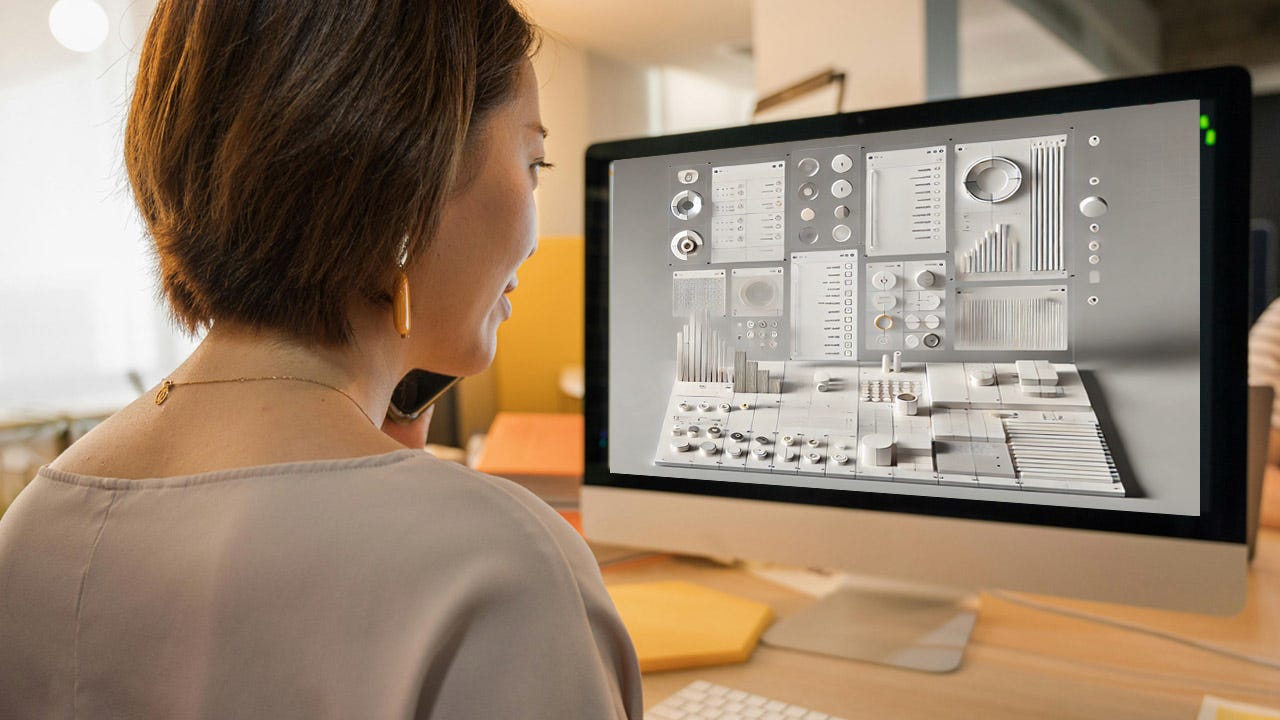
The near future of Interaction and UX Design demands globally aware, ethically grounded, and strategically trained designers, making now the ideal time to pursue advanced education to meet the rising complexity and opportunity in the field. (Original image from Pexels, edited using Photoshop AI by Julian Scaff.)
The fields of Interaction Design (IxD), User Experience (UX), and Customer Experience (CX) are entering a period of both exciting expansion and rapid transformation. As digital technologies become more embedded in every sector, from healthcare to transportation, education to government, the demand for human-centered design expertise is growing. At the same time, a new wave of AI-powered tools and design automation is reshaping how design work is done, challenging practitioners to re-skill and reimagine their roles. Between 2025 and 2030, these design professions will offer meaningful and dynamic career opportunities, but only for those who are ready to evolve.
UX, IxD, and CX Jobs Forecast 2025–2030
From 2025 to 2030, jobs in UX, IxD, and CX are projected to grow steadily, driven by digital transformation, AI integration, and the expansion of user-centered practices into new industries. According to the U.S. Bureau of Labor Statistics, employment for web developers and digital designers, which includes many UX and IxD roles, is expected to grow 16% from 2022 to 2032, much faster than the average for all occupations.
Meanwhile, McKinsey & Company reports that companies that invest in strong UX and CX capabilities outperform their competitors in revenue growth by up to two times, fueling continued demand for skilled designers.
Additionally, a LinkedIn Emerging Jobs Report identified UX design as one of the top 10 most in-demand hard skills globally. As industries such as healthcare, transportation, fintech, and energy adopt advanced digital interfaces and service ecosystems, the need for professionals who can create intuitive, inclusive, and emotionally resonant experiences will only continue to accelerate.
Growth Across Industries and Modalities
Over the next five years, UX, IxD, and CX roles will continue expanding into sectors that once lagged behind in digital innovation. Organizations across mobility, fintech, healthtech, public services, transportation, and climate tech are rapidly adopting human-centered design practices to improve usability, equity, and engagement. Spatial computing, voice interfaces, and multimodal interaction design, previously considered niche, are now mainstream areas of investment, particularly as companies develop AR/VR applications, intelligent vehicles, and ambient AI assistants. These trends are generating strong demand for designers who can work across screens, sensors, and physical environments.
Job titles such as “Interaction Designer,” “Product Designer,” “Design Strategist,” and “AI Experience Designer” are now core roles in most technology and service organizations. Customer Experience, once a marketing function, is now being integrated into product design and business strategy. As services become more connected and systems more complex, the boundaries between user experience and organizational design are also blurring, giving designers broader influence and responsibility.
Specialities in Transportation Design
Interaction and UX design for transportation is an increasingly vital and complex specialty that spans everything from in-vehicle interfaces to citywide mobility ecosystems. Designers working on vehicle systems, whether for passenger cars, trucks, autonomous vehicles, or aircraft, must have deep expertise in Human-Computer Interaction (HCI) and Human-Machine Interaction (HMI) design.
These roles involve crafting intuitive, safe, and responsive interfaces for dashboards, infotainment systems, head-up displays, and cockpit controls. Designers must account for cognitive load, physical ergonomics, multimodal interaction (touch, voice, gesture), and real-time feedback, all within safety-critical environments. As vehicles become more automated and connected, IxD practitioners must also address issues of driver trust, explainability of AI systems, and the dynamic transition between manual and autonomous modes.
Beyond the vehicle itself, UX designers are also shaping the broader transportation experience through service design and systems thinking. This includes designing interactions across an entire multimodal journey, covering everything from ticketing and trip planning to first/last-mile services and real-time updates. Tools like customer journey mapping, service blueprinting, and stakeholder ecosystem modeling are essential for aligning digital interfaces with physical infrastructure and organizational workflows. In public transit, micromobility, ridehailing, and future mobility platforms, UX designers must consider diverse user needs, accessibility, sustainability, and policy constraints.
This dual focus, on both HMI inside vehicles and holistic service design across transportation systems, requires specialized training and interdisciplinary collaboration, making transportation UX one of the most challenging and rewarding areas in contemporary design practice.
AI Disruption and Redefinition of Roles
Despite this growth, AI is fundamentally reshaping the design labor market. Generative design tools like Figma AI, Midjourney, and Uizard have already begun automating tasks such as wireframing, UI generation, and even user research synthesis. While these tools can boost productivity, they also commodify certain skill sets, particularly at the junior level. As a result, entry-level UX and visual design roles are becoming more competitive, and many designers find that their technical skills are no longer sufficient on their own.
To remain relevant, designers must shift from being execution specialists to becoming systems thinkers, strategists, and AI collaborators. This includes learning to work with AI as a co-designer, prompt engineer, or experience orchestrator. It also means acquiring adjacent skills in behavioral science, service design, data literacy, and business modeling. The future designer is not just a problem solver, but a sensemaker, someone who can navigate complexity, craft ethical frameworks, and align human needs with technological capabilities.
Pluriversal, Cross-Cultural Design
In today’s multi-polar world, where geopolitical power and technological innovation are increasingly decentralized, cross-cultural and pluriversal design has become essential to the relevance and effectiveness of UX and interaction design. Some of the most creative, scalable, and socially impactful design innovations are emerging from China, India, and countries across the Global South, regions with distinct cultural, economic, and technological contexts. These systems often challenge Western norms of usability, aesthetics, and interaction logic, offering alternative paradigms shaped by local values, constraints, and aspirations. As a result, designers can no longer default to American or Eurocentric frameworks and expect to create products that resonate globally. Instead, a more pluralistic design mindset is needed, one that honors multiple ways of being, knowing, and interacting with technology.
Designers who embrace cross-cultural literacy are better positioned to contribute to globally relevant products, services, and systems. This includes understanding not just language and visual symbols, but also the social rituals, technological infrastructures, and value systems that shape user behavior in different regions.
For example, “super app” ecosystems in China, offline-first mobile platforms in India, or trust-building mechanisms in Africa and Latin America each reflect local conditions and offer critical insights for rethinking interaction norms. Pluriversal design moves beyond inclusion as an afterthought and instead treats cultural diversity as a source of innovation. For designers seeking to lead in an interconnected world, cultivating this broader perspective is no longer optional, it is foundational.
Growth of Design Leadership Roles
Design leadership roles are experiencing unprecedented growth, as organizations increasingly recognize the strategic value of design in driving innovation, customer satisfaction, and business performance. From design managers and directors to Chief Design Officers (CDOs) and heads of user experience, designers are stepping into influential leadership positions that shape not only products and services but also organizational vision and strategy.
A 2021 report by InVision found that 92% of mature design organizations have senior design leaders at the executive level, a significant rise from just a decade earlier. Similarly, McKinsey’s “Business Value of Design” study highlights that companies with strong design leadership outperform industry benchmarks in revenue and shareholder returns. This shift reflects a broader trend toward embedding design thinking across business functions, from marketing and operations to HR and sustainability, solidifying design’s role as a core competency for 21st-century leadership.
UX, IxD, and CX designers are uniquely equipped to lead because they excel at solving complex non-linear problems through human-centered thinking, systems awareness, and cross-functional collaboration. As organizations increasingly prioritize customer experience and innovation, these designers bring critical skills in empathy, storytelling, and strategic foresight to the executive table. However, to be truly effective in leadership roles, they must become fluent in business language, understanding concepts like ROI, KPIs, market positioning, servant leadership, and organizational dynamics, to align design impact with company goals and influence decision-making at the highest levels.
Upskilling and the Role of Postgraduate Education
In this rapidly evolving design landscape, continuous learning is no longer a luxury, it is a professional imperative. As technologies like AI, spatial computing, and global platforms reshape how people interact with digital systems, the expectations placed on designers are rising.
Those seeking to move beyond entry-level or executional roles must demonstrate strategic foresight, interdisciplinary fluency, and the ability to engage with complex ecosystems. Increasingly, employers across industries, from tech to healthcare to mobility, are prioritizing candidates who hold postgraduate credentials such as master’s degrees in Interaction Design, Human-Computer Interaction, or Service Design. In parallel, professional certificates in specialized areas like AI UX, mobility systems, or design leadership are becoming powerful differentiators in a competitive job market.
Now is a particularly opportune moment to pursue advanced study in these fields. The current wave of digital transformation has created both uncertainty and demand: organizations are searching for designers who can lead ethically, think systemically, and adapt rapidly. Graduate programs not only sharpen technical and research capabilities, they also equip students with frameworks for equity-centered design, stakeholder communication, and organizational change. They offer the space to build portfolios that address real-world challenges, often in collaboration with industry partners.
Perhaps most importantly, earning a master’s degree or advanced certificate signals to employers that you are committed to shaping the future of your field, not just keeping pace with it. For mid-career professionals aiming to step into leadership or pivot toward high-growth sectors, now is the time to invest in the education that will prepare you for the design roles of tomorrow.
Conclusion: Embracing the Hybrid Future
The outlook for Interaction, UX, and CX design from 2025 to 2030 is both promising and demanding. The profession is expanding into new industries, but the work itself is changing. AI technologies are automating tasks while also creating new roles that require hybrid skill sets, blending creativity, technology, and systems thinking. To thrive in this environment, designers must be proactive learners, adaptable thinkers, and ethical leaders. Post-graduate education is not just a career enhancer; it is quickly becoming a critical gateway to the future of mid-to-senior design and leadership roles.
In short, the age of the “pixel pusher” is giving way to the era of the design strategist, the AI collaborator, and the human systems architect. For those ready to evolve, the next five years offer unprecedented opportunities to shape the future of human experience.
메타데이터
- post_id
- 9f40aeeec27e
- slug
- the-future-of-interaction-ux-and-cx-design-jobs-2025-2030-growth-disruption-and-the-need-for-9f40aeeec27e
- url
- https://medium.com/the-futureplex/the-future-of-interaction-ux-and-cx-design-jobs-2025-2030-growth-disruption-and-the-need-for-9f40aeeec27e
- canonical_url
- https://medium.com/the-futureplex/the-future-of-interaction-ux-and-cx-design-jobs-2025-2030-growth-disruption-and-the-need-for-9f40aeeec27e
- author_url
- https://medium.com/@jscaff
- status
- ok
- fetched_at
- 2026-06-12 07:40:50