How Conservation Technology can Equitably Engage with Community Workers: a Case Study in Madagascar
Written by Eric Greenlee, Alex Cabral, David Klinges, and Abigail Ross.
How Conservation Technology can Equitably Engage with Community Workers: a Case Study in Madagascar
Written by Eric Greenlee, Alex Cabral, David Klinges, and Abigail Ross.
In Madagascar’s forests, conservation depends on local workers, yet technology design often overlooks their knowledge and autonomy.
In summer 2024, Eric and Dave (the paper’s first two authors) traveled to Madagascar to meet with prospective partners about the co-design of new conservation technologies. Following a participatory design process that we had previously used with ecologists, we slowly learned that some design principles were in tension with goals and values of Malagasy conservation workers.
As we traveled to meet with different partners, we learned about the economic opportunities that past conservation programs promised but failed to deliver to local communities. We saw the abundant knowledge about and care for nature that local workers had gathered through time in the field. We were awed by the amount of scrappiness and autonomy that workers displayed in adapting technologies from other contexts to suit their goals. We realized that any technology must engage with these goals and assets if it aims to support equitable and sustainable futures.
Engaging with local partners such as Mr. C and Tahina as co-authors, we distilled these observations into findings and recommendations for applying assets-based design to technology design in similar conservation-centric contexts in our paper “Sustaining Workers Who Sustain the World: Assets-Based Design for Conservation Technologies in Madagascar”. We are honored to have been recognized with a Diversity, Equity, and Inclusion Award and Honorable Mention for Best paper.
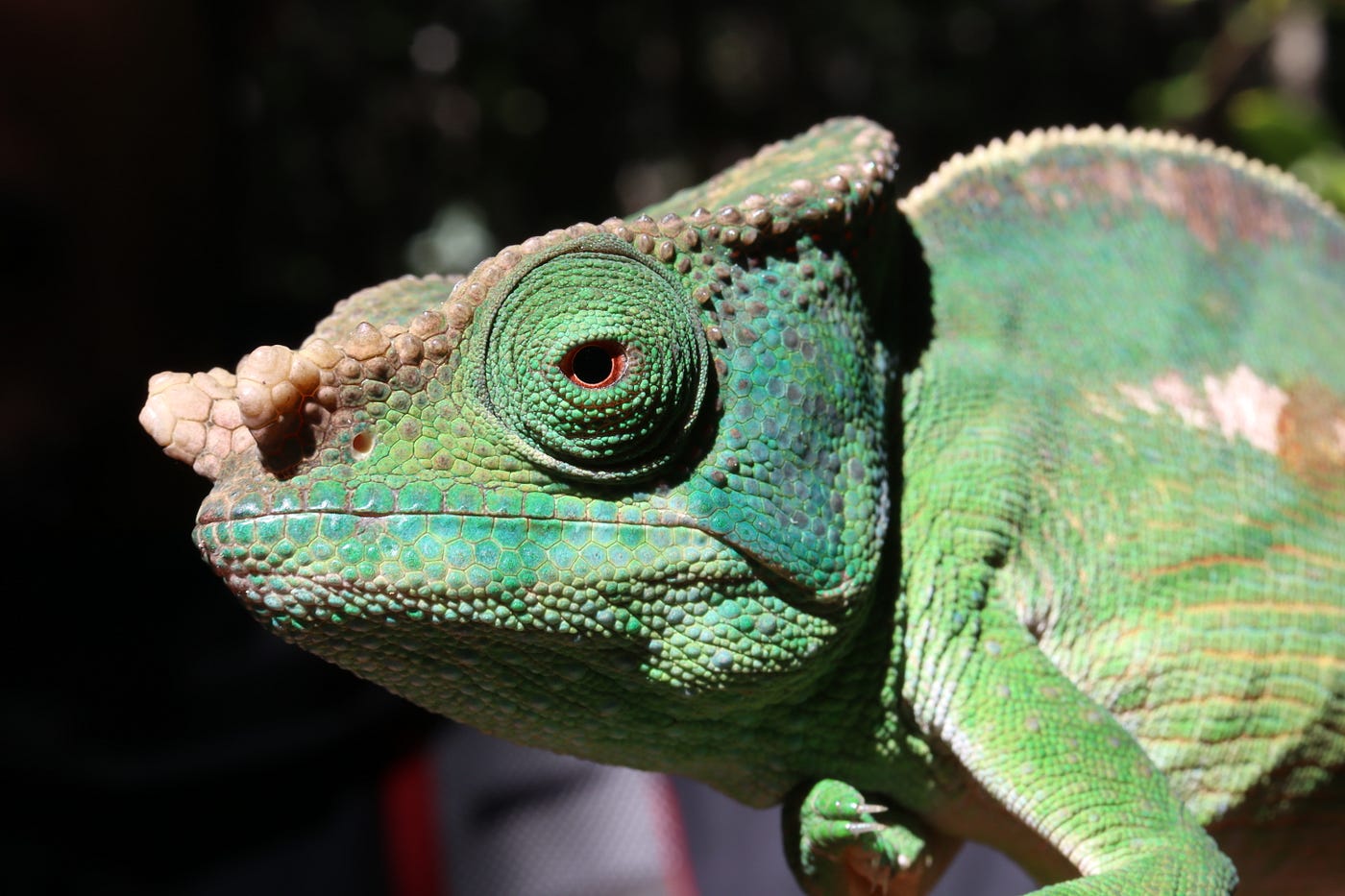
A Parson’s Chameleon in Andasibe-Mantadia National Park, Madagascar
Why Madagascar?
90% of species found within Madagascar are endemic, meaning that they are native to nowhere else in the world. The tremendous biodiversity of this nation provides local and global benefits, from instrumental goods like clean water and carbon sequestration to intrinsic ones that value nature. Madagascar has a long history of community-led conservation organizations that protect and restore this biodiversity, sometimes by partnering with foreign non-profits. With a predominantly young and rural populace, Madagascar presents a prime opportunity to design and implement emerging technologies to extend the impact of conservation programs. Recent “Gen Z” protests, which eventually led to the ousting of their president, demonstrate many Malagasy’s dire poverty and demand for better economic opportunity.
Any successful intervention must center these local goals. Mindful of the shortcomings of prior technologies designed for rather than with communities in the Global South, we began the project by engaging with the Malagasy people who would actually use these technologies. We wanted to understand the context of protected areas within Madagascar and focus on building reciprocal relationships before starting to design anything new.
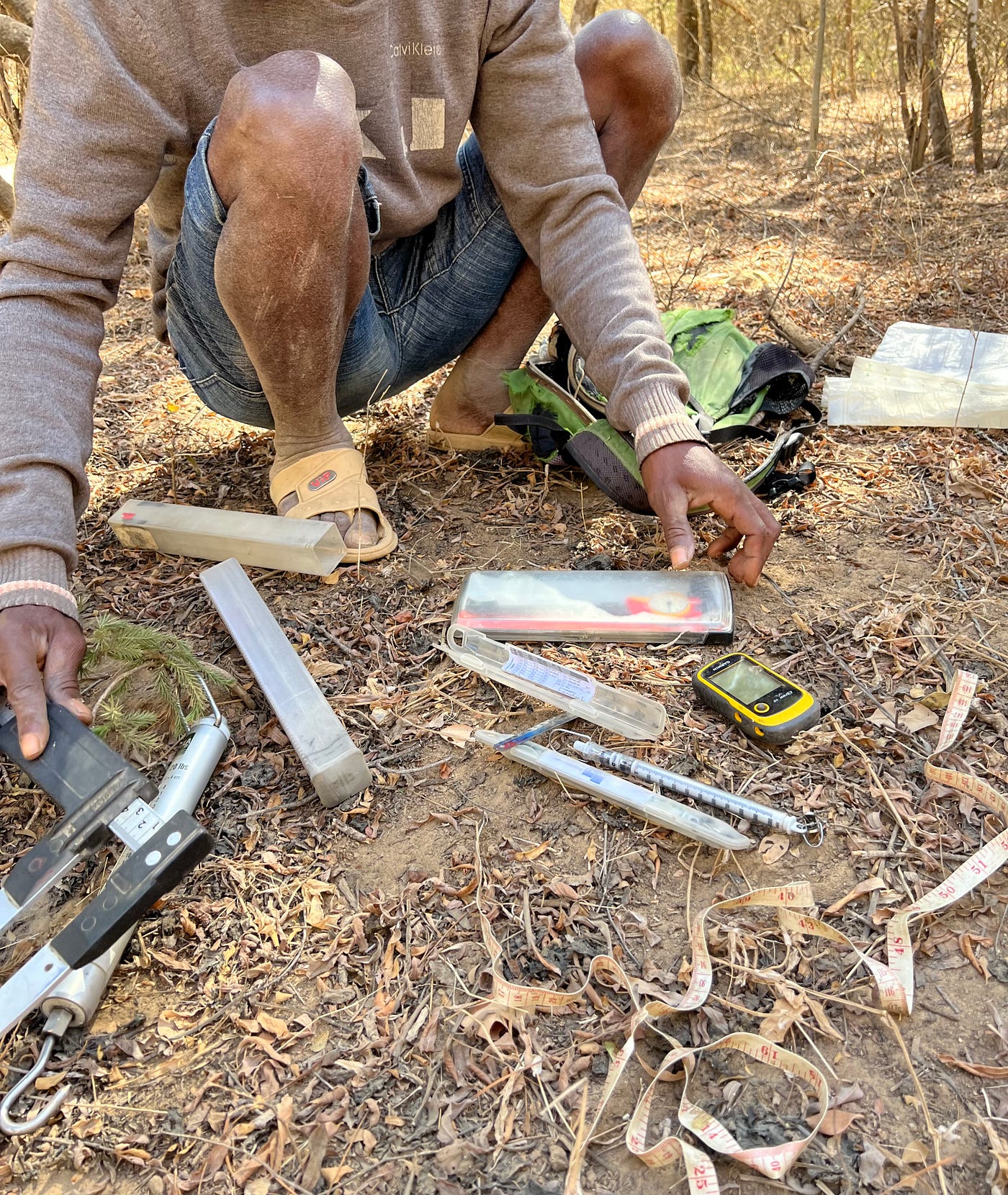
A conservation worker at Bezà Mahafaly Reserve showing his tools for measuring tortoises
The Work in Madagascar
To build healthy relationships and address these historic shortcomings, Eric and Dave employed an assets-based design framework when engaging with Malagasy workers and conservation organizations. This approach centers their strengths and resources, rather than their deficits, to address power imbalances that accompany “saviour” mentalities and to ensure that Malagasy users can sustain any new intervention.
Leveraging connections from Dave’s prior ecological work, we coordinated a trip around visiting three protected areas: Andasibe-Mantadia, Ranomafana, and Bezà Mahafaly. We observed conservation workers as they went about their outdoor jobs and conducted interviews with them and their management teams. This work often entailed day-long hikes through the fractured rainforests and bumpy car rides on Madagascar’s notorious roads. In one location, we also conducted an informal design workshop to dig deeper into the motivations and goals of conservation staff.
We primarily observed three types of conservation programs: reforestation, biodiversity monitoring, and carbon sequestration. Reforestation projects aim to restore the fractured and degraded forests with native plants and habitats. Biodiversity monitoring documents the types and quantities of species present in an area to determine conservation priorities and to track ecological health over time. Carbon sequestration stores carbon in biomass, typically trees, to reduce the amount of carbon dioxide in the atmosphere.
In the paper, we document these processes, which leveraged a diverse array of digital and manual processes and tools throughout. In learning about these activities and interacting with the communities driving them, we gained insight into the local assets pivotal to these projects as well as other important goals that did not fit neatly within an assets-based framing. Through inductive, reflexive thematic analysis of field notes, we distilled insights from these conservation practices and priorities into design recommendations for emerging technologies.
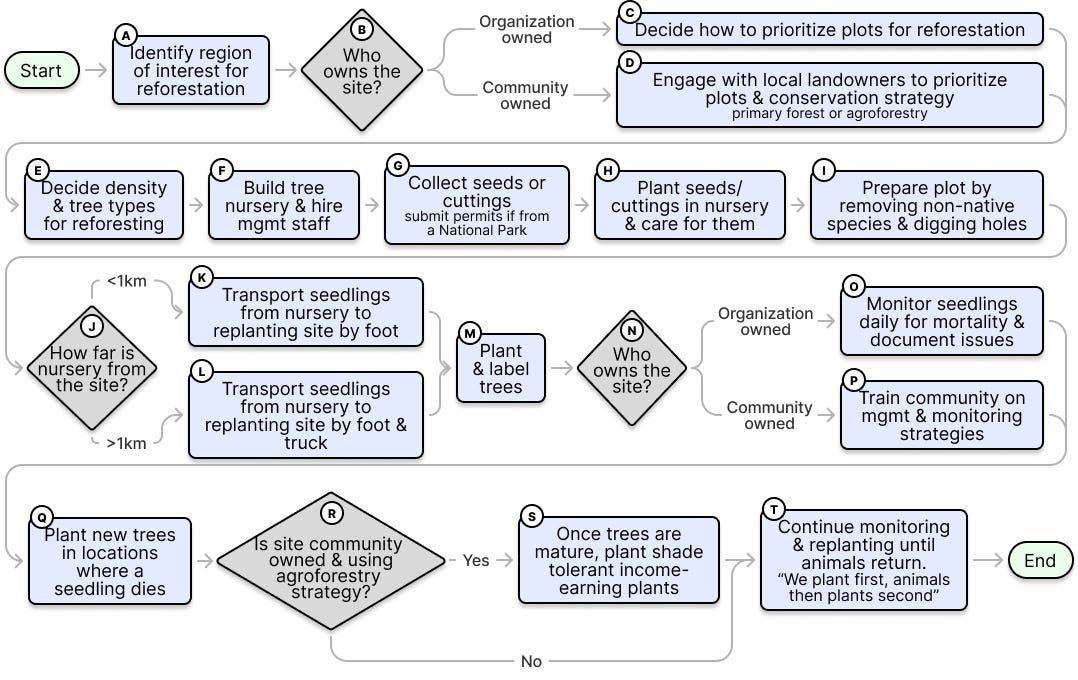
A flowchart of reforestation processes aggregated across multiple organizations
Design recommendations
Building on prior scholarship, we draw upon our observations and interviews to contribute design recommendations for conservation technology in Madagascar. These recommendations fall into two categories: (1) a conservation technology’s responsibility to sustain the assets it relies upon and (2) a re-framing of what conservation technology’s goals should be.
The two assets we most visibly observed were worker’s local ecological knowledge, gained from years spent interacting firsthand with the landscape, and their love of nature, which motivated them to more deeply engage with the landscape. Showcasing how his local knowledge of how planting the right trees together would attract seed-dispers supports the project’s sustainable success, knowledgeholder Mr. C told us “We plant first, animals then plant second.” Similarly, knowledgeholder Tahina, who brought his personal camera everywhere on biodiversity surveys, could identify every bird by ear or sight rather than relying on his reference book due in part to his extensive passion for birding. These workers’ assets were essential to the success of conservation projects, but many conservation technologies we discussed would diminish or even eliminate their opportunities to develop these assets by limiting their time in the field. Many knowledge-holders demonstrated excitement about technologies that could make their jobs safer or allow them to cover more ground, but they were clear that they still wanted opportunities to spend time in nature.
Similarly, we observed priorities and practices that designers should incorporate. Conservation programs and ecotourism play a major role in these communities’ economies, and any technology that reduces local job opportunities would only further alienate locals and increase logging pressures on the forests. Mr. C expressed excitement for conservation technologies “as long as my workers’ jobs are safe.” As we further showcase in the paper, sustainable HCI has failed to focus on the economic component of sustainability, limiting its potential for real-world impact. We also observed that workers would use redundant and locally-adapted tools and technologies, demonstrating scrappyness and a fundamental commitment to methods resilient to failure. We witnessed biodiversity monitoring teams use paper, their smartphones, microphones, cameras, and their memory to capture the same information. This local autonomy motivates a role for conservation technology to address specific conservation goals without needing to form a comprehensive system or fit neatly into ongoing processes.
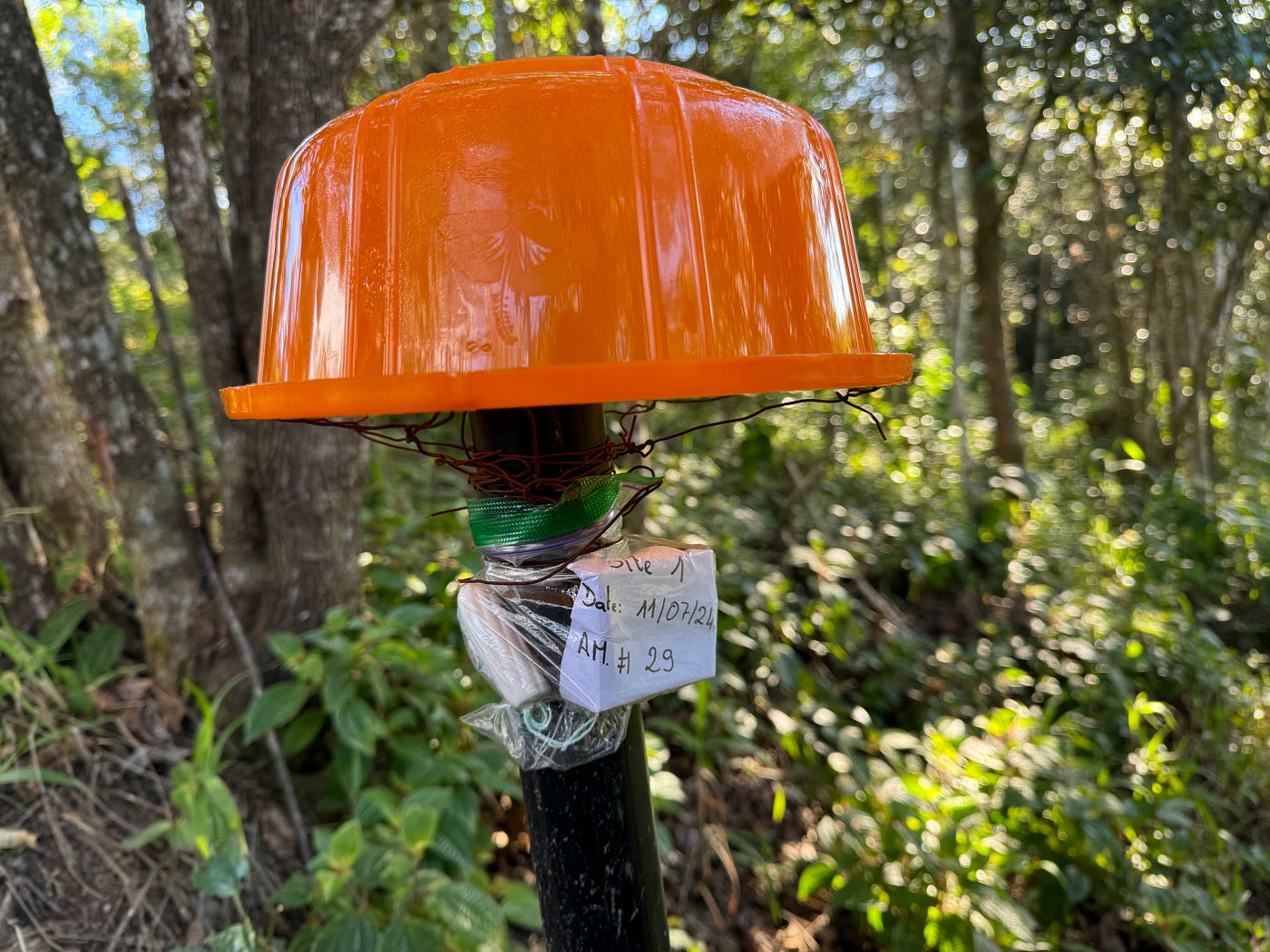
An Audiomoth acoustic monitoring deployed with a plastic bucket and tampon for waterproofing.
Conclusion
Finally, we want to emphasize the centrality of local knowledgeholders (who other research might refere to as “subjects”) to all of this work. Following the ACM authorship policy that authors must contribute “substantial intellectual contributions to some components of the original Work,” we offered authorship to knowledgeholders without whom this publication would have been substantially different.
We hope this work sparks broader reflection on how technologies can strengthen, rather than replace, the people protecting our planet. Understanding and engaging with these local conservation workers presents a tremendous opportunity to build sustainable, reciprocal systems. We acknowledge the limitations of deriving general principles from such contextual and relationship-based experiences, but we will continue to expand upon and follow these recommendations as we design novel technologies.
메타데이터
- post_id
- 9f7eaef7e9d9
- slug
- how-conservation-technology-can-equitably-engage-with-community-workers-a-case-study-in-madagascar-9f7eaef7e9d9
- url
- https://medium.com/acm-cscw/how-conservation-technology-can-equitably-engage-with-community-workers-a-case-study-in-madagascar-9f7eaef7e9d9
- canonical_url
- https://medium.com/acm-cscw/how-conservation-technology-can-equitably-engage-with-community-workers-a-case-study-in-madagascar-9f7eaef7e9d9
- author_url
- https://medium.com/@eric.greenlee.96
- status
- ok
- fetched_at
- 2026-07-20 09:16:42