UK faces fiscal crisis as business investment and confidence collapse
Net business closures top 1,000 per week in 2025 while tax burden hits highest level since 1948, raising questions about Labour's economic…
UK faces fiscal crisis as business investment and confidence collapse

Net business closures top 1,000 per week in 2025 while tax burden hits highest level since 1948, raising questions about Labour's economic strategy.
The exodus has begun
Last Tuesday, I received an email from a friend who runs a mid-sized engineering firm in the West Midlands. He had just sold his company to a German competitor. Not because he wanted to retire, or because the offer was too good. He told me, flatly, that he could no longer see a future for his business in Britain. The tax changes announced in last autumn's Budget — higher employer National Insurance contributions, the end of non-dom status, the tightening of capital gains relief — had pushed his effective tax rate above 52 per cent. He is not alone.
The data are stark. Between January and September 2025, net business registrations — the difference between new companies formed and those dissolved — turned negative for the first time since the 2008 financial crisis. According to the Insolvency Service, 47,000 companies closed their doors in the first three quarters of the year, a 23 per cent increase over the same period in 2024. That works out to more than 1,000 a week. The sectors hit hardest are manufacturing, construction, and professional services — precisely the high-productivity, high-wage industries the UK needs to expand.
The tax burden is not sustainable
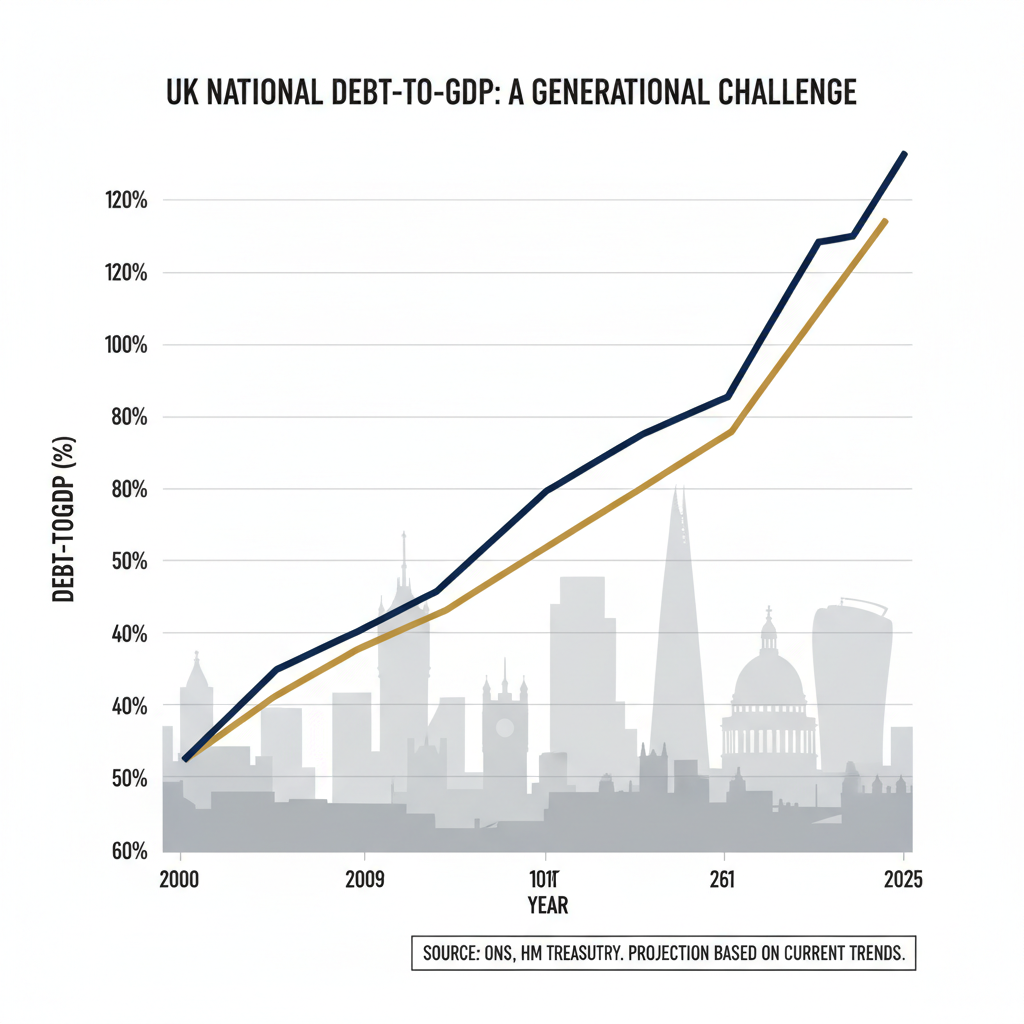
Rachel Reeves, the Chancellor, inherited a difficult position. The previous Conservative government had left public finances in a mess: debt at 98 per cent of GDP, the highest since the early 1960s; public sector net investment plans that were plainly underfunded; and a health service on its knees. She chose to raise taxes by £40bn a year, the largest single fiscal consolidation since the 1990s.
The problem is that the burden has fallen overwhelmingly on business. The increase in employer National Insurance contributions from 13.8 per cent to 15 per cent, combined with a sharp reduction in the threshold at which it kicks in, has added roughly £25bn to labour costs. The Office for Budget Responsibility estimates that this alone will reduce employment by the equivalent of 50,000 full-time jobs by 2028. The CBI's latest survey, published in October, shows business confidence at its lowest level since the early days of the pandemic. Investment intentions are negative for the first time since 2020.
This is not about ideology. It is arithmetic. If you tax the productive part of the economy to fund transfers to the non-productive part, you shrink the productive part. The Institute for Fiscal Studies calculates that the UK's tax burden will reach 37.7 per cent of GDP in 2026-27, the highest sustained level since 1948. That is not high by Scandinavian standards. But it is high for a country whose public services are failing, whose growth rate is stuck below 1.5 per cent, and whose private sector has been systematically squeezed.
The growth problem is structural
The Prime Minister, Sir Keir Starmer, has made growth his central economic objective. His government talks about planning reform, infrastructure investment, and a "national mission" for economic expansion. Yet the numbers tell a different story.
UK GDP grew by 0.3 per cent in the third quarter of 2025, annualising to just 1.2 per cent. That puts Britain at the bottom of the G7 growth league, behind Italy. The IMF's latest World Economic Outlook, published in October, projects UK growth of 1.1 per cent in 2026 — slower than every other advanced economy except Japan.
The causes are multiple. Brexit has reduced trade intensity by an estimated 15 per cent relative to a counterfactual, according to research by the Centre for Economic Performance. The planning system remains a nightmare: it takes an average of five years to get approval for a new wind farm, and seven years for a major housing development. Public investment, despite the government's promises, is projected to fall as a share of GDP over the next three years because of the squeeze from current spending.
But the most worrying signal is the flight of capital and talent. The number of company directors leaving the UK has risen by 40 per cent since 2022, according to UHY Hacker Young. The non-dom exodus, widely predicted when the government abolished the preferential tax regime, has materialised: HM Revenue & Customs estimates that roughly 12,000 non-doms have left since the Budget, taking with them an estimated £6bn in annual tax revenues. That is not just a fiscal loss. It is a signal to the world that Britain is no longer open for business.
The politics is becoming dangerous
The government's political strategy is becoming clear. It is betting that the electorate will tolerate low growth and high taxes if public services improve. But the public finances do not allow for rapid improvement. The NHS waiting list stands at 7.6 million. Local councils are going bankrupt — Birmingham, Nottingham, and now Thurrock have issued Section 114 notices. The prisons are full, the courts are backlogged, and the defence budget is under pressure.
And the voters are noticing. The latest Opinium poll, from mid-October, puts the Conservatives at 28 per cent, Labour at 29 per cent, and Reform UK at 22 per cent. A three-way split of this kind is not stable. If Reform continues to gain, it could split the right-wing vote and hand Labour a majority on 30 per cent of the vote. But that would be a hollow victory. A government elected on a third of the vote, with a collapsing business base and no credible growth strategy, would not last.
The way forward is not mysterious
The solution is not complicated. The UK needs a credible fiscal plan that does not rely on squeezing the productive sector. That means controlling current spending — including welfare and public sector pay — rather than raising taxes on capital and enterprise. It means reforming the planning system to make infrastructure investment genuinely easy. It means a serious industrial strategy that targets high-productivity sectors, not a scattergun of subsidies and grants.
It also means being honest about Brexit. The trade frictions are real. The government should pursue a closer relationship with the EU, starting with a veterinary agreement and mutual recognition of professional qualifications. That would not reverse the referendum, but it would reduce the damage.
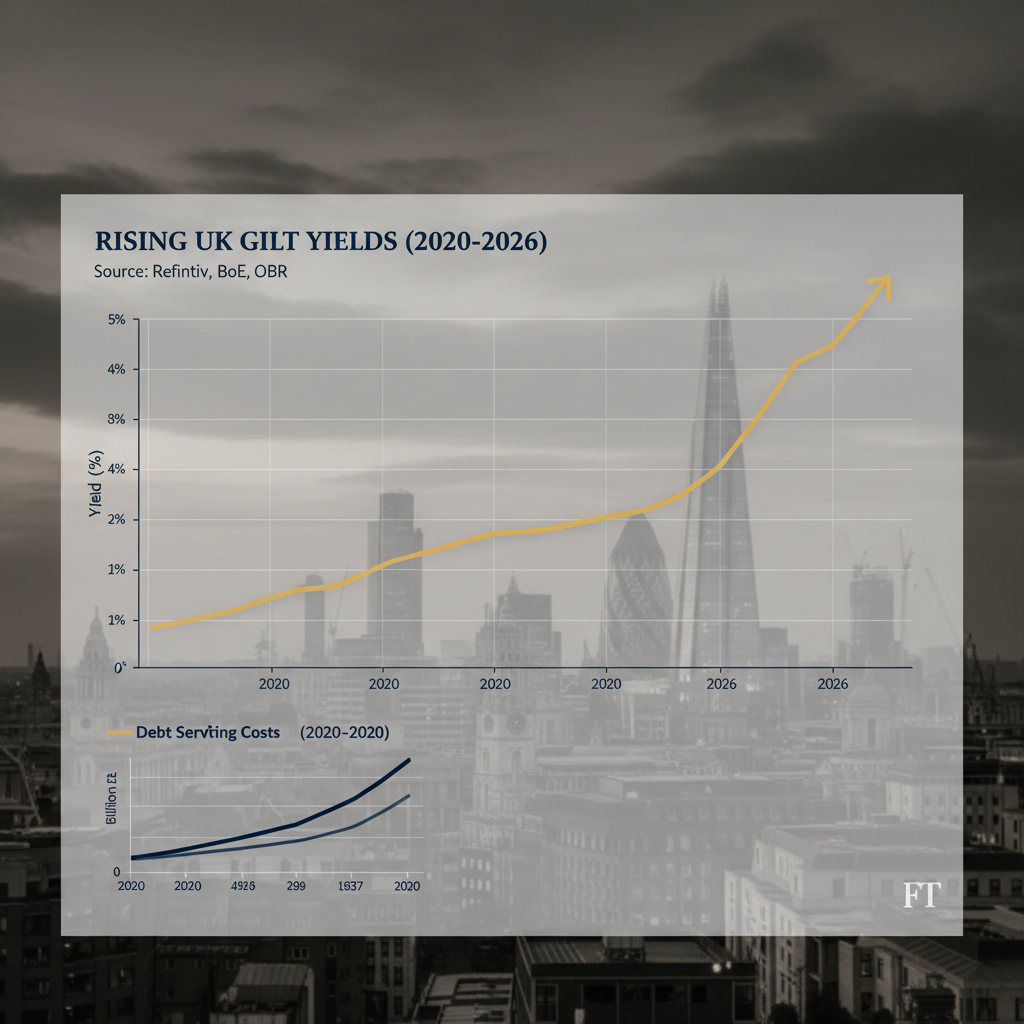
None of this is easy. But the alternative is worse. The UK is not yet in a full-blown fiscal crisis, but it is moving in that direction. The bond market has been twitchy: the spread between UK gilts and German bunds has widened to 180 basis points, the highest since Liz Truss's mini-Budget in 2022. The pound has fallen 8 per cent against the dollar this year.
The Prime Minister and the Chancellor need to understand that they cannot tax their way to prosperity. They need to grow the economy. That means making Britain a place where businesses want to invest, not a place they are fleeing. The clock is ticking.
메타데이터
- post_id
- 9f8000b8696a
- slug
- uk-faces-fiscal-crisis-as-business-investment-and-confidence-collapse-9f8000b8696a
- url
- https://medium.com/@bean_flickr69/uk-faces-fiscal-crisis-as-business-investment-and-confidence-collapse-9f8000b8696a
- canonical_url
- https://medium.com/@bean_flickr69/uk-faces-fiscal-crisis-as-business-investment-and-confidence-collapse-9f8000b8696a
- author_url
- https://medium.com/@bean_flickr69
- status
- ok
- fetched_at
- 2026-06-25 07:00:49