Making it Public: Private Equity’s Affair with Private Practices
“First, do no harm,” is one of the leading ethical principles in the Hippocratic Oath that doctors swear by when assuming their positions…
Making it Public: Private Equity’s Affair with Private Practices
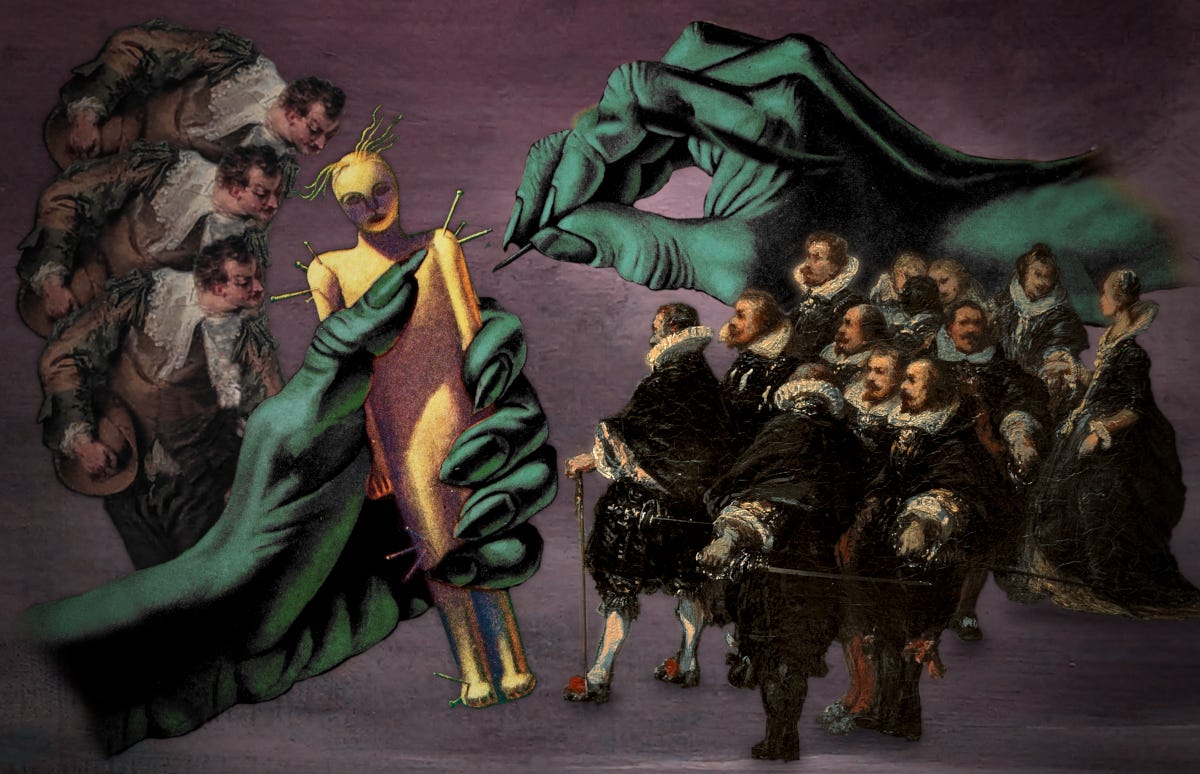
Photo by Marek Studzinski on Unsplash
“First, do no harm,” is one of the leading ethical principles in the Hippocratic Oath that doctors swear by when assuming their positions. However, this entire notion is at risk when money is involved. It is irrational to ask healthcare providers to solely focus on their patients and disregard money. Ultimately, healthcare is an industry, and healthcare providers deserve to be adequately paid for their services. The main issue arises when outside actors like private equity (PE) come in to prioritize money over patients. Although the rise of PE in healthcare suggests increased funding within healthcare sectors, a lack of transparency within PE deals alongside its nature as a for-profit institution ultimately leads to a zero-sum game that prioritizes monetary goals at the sake of human lives.
Understanding the impacts of PE in healthcare begins with clearly defining private equity’s original function and goal within the industry. In general, PE firms control pooled investments — known as private equity funds — from investors like wealthy institutions and individuals (Moran and Petty, 2022). The firm proceeds to work and operate with the companies’ executives to increase value. This leads to the final goal of selling the company, thus generating profit for the investors.
In the world of healthcare, PE has been a model of ownership for years. It dates back to the 1990’s, with the purchases of nursing homes and hospitals (Applied Policy, 2022). One of the earliest large-scale PE deals in healthcare was in 1996 when Forstmann Little & Co. acquired Community Health Systems — a general hospital focused on providing acute care in rural regions of the U.S. — for an estimated $1.37 billion (L.A. Times Archived from Associated Press, 1996). Since then, PE investments in healthcare have exploded. According to a report from the Institute for New Economic Thinking, PE investments saw a 20-fold increase between 2000 and 2018, totaling up to $833 billion capital throughout the two-decade period (Appelbaum and Batt, 2020). These investments have also grown largely in variety beyond merely hospitals (Blumenthal, 2023). Examples of PE ownership include specialty hospitals, ambulatory surgical centers, individual physicians who invest in and own their private practices, and many other facets of the healthcare industry.
While PE investments within American healthcare are growing across all sectors, a major focus in recent years has been physician-owned private practices. This is because the healthcare sector is a stable flow of income regardless of how the overall economy is doing (Masoud, 2025). People will always be in need of healthcare, therefore, it is always generating profit. In particular, private practices are enticing to PE firms as they maintain high operating costs while offering specialized care that can be difficult to find elsewhere. Zirui Song, an associate professor of Healthcare Policy at Harvard explains, “… physician specialties, many of which have rather high-priced or profitable outpatient procedures that are generally quick to do,” (Bervell and Song, 2025). In this scenario, both the vendor — the physicians in need of administrative or financial support — and the consumer — the patients in need of specialty care — are extremely vulnerable and lucrative, making private practices prime candidates for PE investment. It is to be said that physicians aren’t just blindly signing away their practices. PE deals are supposed to be a mutualistic agreement — regardless of whether they are in actuality. There are multiple reasons for why physicians would be attracted to private equity. Some physicians find appeal in the “the promise of infusion of capital, upgrade in technology, cost-cutting strategies, enhanced revenue cycle management, and continued partial ownership of the practice,” (Hoffer, 2024). In theory, PE is meant to relieve administrative and financial burdens from physicians, allowing them to focus on patient care and other medical responsibilities. However, the impacts of a PE deal vary depending on the “success” metrics for a physician practice.
There are two main ways to look at the success of PE in physician practices: profit and patient experiences. In terms of profit, private equity is seemingly doing its job. A recent meta-analysis of PE-owned anesthesia practitioners showed that in every study analyzed, the practices reported higher prices (La Forgia et al., 2022). Alongside increased prices, PE-acquired healthcare facilities also often result in “higher profit margins through cost-cutting practices,” (Bhatla et al., 2025). Physicians face a double-edged sword: PE helps maximize profit through increased rates at the expense of their patients’ wallets and experience. Since these practices are often specialized care services, patients typically suffer under increased out-of-pocket costs or go into further debt by picking up payment plans from the PE firm (Levey and Pattani, 2022). While research on private practices is a bit limited, a Havard study analyzing PE acquired hospitals found that cost-cutting measures, specifically the reduction of staff (nurses, clinicians, etc.), led to increased rates of falls, infections, etc. (Kannan et al., 2023). Ultimately, whether this change is considered a positive or negative impact is up to the physician’s discretion and values as a healthcare provider. In this zero-sum game, the physician must ultimately decide whether their priority is profit or their patients; thenuances behind PE go beyond “good” or “bad.”
With the fast growth of PE in healthcare, there are both supporters and opponents. One major argument of PE supporters lies in the inefficacies of the U.S. healthcare system; PE is needed because it keeps the cogs in the healthcare machine running. According to the American Investment Council (AIC), an advocacy group dedicated to spreading information about private investments, PE investments helped “[fund] research into deadly diseases like Alzheimer’s and Parkinson’s, expanded and renovated facilities, modernized medical records and health care data, and made other needed investments,” (2024). However, data on how much PE investments are put back into healthcare facilities is limited. PE firms like Blackstone, PWC, and KKR release studies highlighting the monetary successes of PE acquisitions but often lack the subsequent data on human experiences or quality of care at hospitals. As a result, the lack of transparency from PE firms makes it difficult to analyze the alleged successes of PE in healthcare.
On the other hand, opponents of PE argue that the looming pressure of PE and the need to generate revenue ultimately lead to poorer patient outcomes. PE has one ultimate goal: to sell the original company at a profit. Therefore, it is ultimately the physician’s responsibility to “perform more profitable procedures or to shift the business focus from a less profitable practice to a more profitable practice,” (Scheffler et al., 2023). In a business sense, PE is doing its job by increasing the number of patients in healthcare facilities. However, this ideology transforms patients into “consumers” and employs a monetary status on their role in the healthcare system; instead of seeing patients as human beings with needs, they become data points for a PE firm to calculate. As a result, issues like inflated patient utilization rates arise (Singh et al., 2022). This means that patients are coming in for treatment more often which can “reflect overutilization of profitable services and/or unnecessary or low-value care, which could raise health care spending without commensurate patient benefits,” (Singh et al., 2022). Through this, PE-owned practices can implement higher-margin procedures like tests or imaging (Masoud, 2025), increasing profit at the cost of patients. Furthermore, although there is a lack of studies focusing primarily on patient outcomes in physician practices, a study from the National Bureau of Economic Research found that mortality rates at nursing homes jumped by 10 percent after getting acquired by a PE firm. Similarly, a different study from JAMA found “global measures of patient care experienced worsened after private equity acquisition of US hospitals,” (Gupta et al., 2021). While there is a lack of data discussing the patient outcomes in PE-owned physician practices, the dissatisfaction seen within other healthcare sectors signals that there is a growing issue at hand.
Beyond individual practices, opponents of PE also argue that PE ownership in healthcare decreases competition at large. A lack of competition in any sector eventually leads to a stealthy monopolization of the impacted industry. PE-acquired physician practices, especially, are a key example in the monopolization of healthcare. According to Robert Pearl M.D., the ex-CEO and executive director of Kaiser Permanente, PE firms will focus on acquiring large amounts of specialty doctors and practices, ultimately allowing them to “force insurers to include their facilities and services (e.g., colonoscopy suites or physical therapy) in their network. Doing so sends rates skyrocketing,” (2023). Under these monopolies, patients are forced to face a questionable quality of care for higher price points. This also leads back to the issue of transparency and patient experience; consumers are left in the dark when PE acquisitions occur. When all of the practices are bought out and there aren’t any competitors left, PE is able to gain a stronghold and thus further its own metrics of success. As a result, it becomes even more difficult to gauge PE’s success.
Once everything is said and done, PE exits by selling the practice. Most commonly, PE sales are to other PE firms. Research from the Harvard Business School found that once sold, PE-owned practices often have fewer assets and more liabilities alongside increased turnover rates of the physicians who originally owned the practices (Berquist et al., 2025). Lowered resources after a PE deal further emphasizes how patient experience is sacrificed for the sake of a low-cost, high-margin healthcare model. The increased rate of physician turnover can also negatively impact patient experiences as patients unknowingly lose their healthcare provider. While PE firms and physicians are done with a PE deal, they can exit. The patients who are none the wiser cannot.
Moving forward, it is up to policymakers on whether or not they intervene in PE deals in the healthcare sector, especially in regard to the growing monopolization of private equity-owned practices. The majority of PE acquisitions in healthcare fly under the radar of antitrust laws since they are under the minimum threshold dollar amount (Masoud, 2025). As a result of this lack of data, it is difficult for the Federal Trade Commission (FTC) to step in. In its current state, there is an extreme disconnect between the FTC and the healthcare industry. PE acquisitions toe the line between anti-competition — a legal issue that the FTC can deal with — and a moral dilemma of patient profitability — an issue that the FTC cannot create general oversight for (Gracias, 2024). Since the healthcare industry is particularly sensitive as it deals with human lives, the FTC and policymakers will only be successful in creating oversight if they are able to make industry-specific guidelines and regulations.
Ultimately, PE’s existence in healthcare comes with impacts that are nuanced beyond “good” and “bad.” In its current state, PE deals within private practices result in higher profits at the sacrifice of patients’ experience and expense. However, healthcare is an industry that generates profit; PE cannot be solely blamed for the corporatization of healthcare. Regardless, it is to be said that the rise of PE — specifically within private practices — helped push a zero-sum ideology that values monetary goals over human lives. This isn’t to say that PE is the sole actor; PE deals are a multi-person game, and everyone, including the private physicians that own these practices, holds responsibility. In particular, policymakers play a major role in how PE deals will play out in the following years. Without transparency, American patients are at risk of being victims in the zero-sum game of healthcare.
———
Works Cited
American Investment Council. “PRIVATE EQUITY IS IMPROVING HEALTH CARE — American Investment Council.” American Investment Council, 8 Aug. 2024, www.investmentcouncil.org/healthcare/.
Appelbaum, Eileen, and Rosemary Batt. “Private Equity Buyouts in Healthcare: Who Wins, Who Loses?” Papers.ssrn.com, 15 Mar. 2020, papers.ssrn.com/sol3/papers.cfm?abstract_id=3593887. Accessed 2 Feb. 2026.
Applied Policy. “Private Equity in Healthcare.” Applied Policy, 5 Apr. 2022, www.appliedpolicy.com/private-equity-in-healthcare/. Accessed 2 Feb. 2026.
Berquist, Victoria, et al. “Sale of Private Equity–Owned Physician Practices and Physician Turnover.” JAMA Health Forum, vol. 6, no. 2, 7 Feb. 2025, pp. e245376–e245376, jamanetwork.com/journals/jama-health-forum/fullarticle/2829954, https://doi.org/10.1001/jamahealthforum.2024.5376.
Bervell, Joel, and Zirui Song. “How Private Equity Deals Are Reshaping Your Health Care.” Commonwealthfund.org, 2 May 2025, www.commonwealthfund.org/publications/podcast/2025/may/how-private-equity-deals-are-reshaping-your-health-care, https://doi.org/10.26099/sb89-2w09.
Bhatla, Anjali, et al. “Changes in Patient Care Experience after Private Equity Acquisition of US Hospitals.” JAMA, 9 Jan. 2025, jamanetwork.com/journals/jama/article-abstract/2829041, https://doi.org/10.1001/jama.2024.23450. Accessed 15 Feb. 2025.
Blumenthal, David. “Private Equity’s Role in Health Care.” The Commonwealth Fund, 17 Nov. 2023, www.commonwealthfund.org/publications/explainer/2023/nov/private-equity-role-health-care.
Gracias, Sofia. “Private Equity Investment in Health Care and Ineffective Antitrust Regulations | the University of Chicago Business Law Review.” Uchicago.edu, 2024, businesslawreview.uchicago.edu/print-archive/private-equity-investment-health-care-and-ineffective-antitrust-regulations.
Gupta, Atul, et al. “Does Private Equity Investment in Healthcare Benefit Patients? Evidence from Nursing Homes.” National Bureau of Economic Research, 1 Feb. 2021, www.nber.org/papers/w28474.
Hoffer, Edward P. “Private Equity and Medicine: A Marriage Made in Hell.” The American Journal of Medicine, vol. 137, no. 1, 1 Jan. 2024, pp. 5–7, https://doi.org/10.1016/j.amjmed.2023.09.008.
Kannan, Sneha, et al. “Changes in Hospital Adverse Events and Patient Outcomes Associated with Private Equity Acquisition.” JAMA, vol. 330, no. 24, 26 Dec. 2023, pp. 2365–2375, jamanetwork.com/journals/jama/fullarticle/2813379, https://doi.org/10.1001/jama.2023.23147.
L.A. Times Archive, Associated Press. “Forstmann to Buy Operator of Hospitals for $1.37 Billion.” Los Angeles Times, 11 June 1996, www.latimes.com/archives/la-xpm-1996-06-11-fi-13844-story.html. Accessed 3 Feb. 2026.
La Forgia, Ambar, et al. “Association of Physician Management Companies and Private Equity Investment with Commercial Health Care Prices Paid to Anesthesia Practitioners.” JAMA Internal Medicine, vol. 182, no. 4, 1 Apr. 2022, p. 396, https://doi.org/10.1001/jamainternmed.2022.0004.
Levey, Noam N., and Aneri Pattani. “How Banks and Private Equity Cash in When Patients Can’t Pay Their Medical Bills — KFF Health News.” KFF Health News, 17 Nov. 2022, kffhealthnews.org/health-care-costs/how-banks-and-private-equity-cash-in-when-patients-cant-pay-their-medical-bills/. Accessed 4 May 2026.
Masoud, Rai Hasen. “Medicine in the Age of Private Equity: The Ethics of Profit in Patient Care.” Georgetown.edu, 21 Oct. 2025, www.law.georgetown.edu/denny-center/blog/medicine-private-equity/. Accessed 2 Feb. 2026.
Morran, Chris, and Daniel Petty. “What Private Equity Firms Are and How They Operate.” ProPublica, 3 Aug. 2022, www.propublica.org/article/what-is-private-equity. Accessed 2 Feb. 2026.
Pearl, Robert. “Private Equity and the Monopolization of Medical Care.” Forbes, 20 Feb. 2023, www.forbes.com/sites/robertpearl/2023/02/20/private-equity-and-the-monopolization-of-medical-care/. Accessed 2 Feb. 2026.
Scheffler, Richard, et al. MONETIZING MEDICINE: PRIVATE EQUITY and COMPETITION in PHYSICIAN PRACTICE MARKETS. 10 July 2023.
Singh, Yashaswini, et al. “Association of Private Equity Acquisition of Physician Practices with Changes in Health Care Spending and Utilization.” JAMA Health Forum, vol. 3, no. 9, 2 Sept. 2022, pp. e222886–e222886, jamanetwork.com/journals/jama-health-forum/fullarticle/2795946, https://doi.org/10.1001/jamahealthforum.2022.2886.
메타데이터
- post_id
- a01f2f0b46f4
- slug
- making-it-public-private-equitys-affair-with-private-practices-a01f2f0b46f4
- url
- https://medium.com/writ340spring2026econ/making-it-public-private-equitys-affair-with-private-practices-a01f2f0b46f4
- canonical_url
- https://medium.com/writ340spring2026econ/making-it-public-private-equitys-affair-with-private-practices-a01f2f0b46f4
- author_url
- https://medium.com/@kt_ly
- status
- ok
- fetched_at
- 2026-06-15 20:49:13