The Nobels — Oil, Dynamite, Capital, and the Prize
How the Nobel family built its fortune in the Russian Empire — and lost everything
The Nobels — Oil, Dynamite, Capital, and the Prize
How the Nobel family built its fortune in the Russian Empire — and lost everything
The Nobel Prize is the most prestigious award in the world. To receive it is a tremendous honor for scientists, artists, politicians, writers, and public figures alike. Yet the roots of this prize stretch deep into the era of the Russian Empire at the height of its power and prosperity. This is a story about the truly gilded age of imperial Russia — and about how a family of immigrants built one of the largest oil companies in the world.
Who were the Nobels, and what do they have to do with prizes, oil, and dynamite?
The Beginning of the Dynasty
The famous dynasty was founded by a man named Immanuel Nobel Sr. — a Swedish physician born in the city of Uppsala, where he also received his education. He lived in the city of Gävle, where he worked as a medical assistant in the Swedish army and as a hospital doctor. The family was rather poor, and he could not provide his children with what we would now call an academic education. They received only home schooling from hired private tutors.
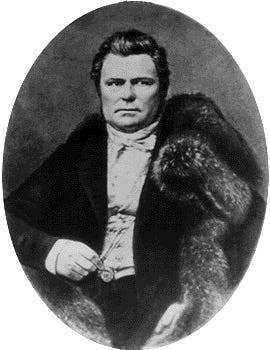
Immanuel Nobel Jr
Everything changed, however, with his son — Immanuel Nobel Jr. He would become the family’s golden ticket.
At first, Nobel Jr. served in the Royal Swedish Navy. When he turned eighteen, he returned to civilian life and began an apprenticeship at a company before enrolling a year later in the Royal Academy. There, the future inventor studied geometry and applied architecture, after which he became an instructor at the technological faculty.
Several years later, he founded a construction company which, for better or worse, went bankrupt. In 1837, he moved with his family to Turku, Finland (Swedish: Åbo). Meanwhile, in Saint Petersburg, Nobel Sr. worked on architectural projects before eventually founding a steelworks in the imperial capital.
Gifted with remarkable engineering and inventive talent, he soon established military production at the factory, including naval mines actively used by the Tsarist government during the Crimean War. Yet the prosperity of the inventor-industrialist did not last long. After the Crimean War and the death of Emperor Nicholas I, government favor vanished. Military contracts dried up — partly because Nobel’s mines proved technically inferior to those developed by the industrialist Jacobi. Financial troubles deepened further as postwar Russia entered a crisis and many of Nobel’s debtors simply refused to pay their bills.
In 1859, the head of the family returned to Sweden with his sons Emil and Alfred, where he established a successful nitroglycerin business. Successful experiments and practical applications demonstrated the effectiveness of the explosive, which was patented in 1863. Yet only a year later, an explosion at the factory killed Nobel Sr.’s youngest son, Emil. The patriarch never recovered from the blow and died eight years later, on the anniversary of the explosion, from a heart attack.
But the story of the dynasty did not end there.
Oil and Kerosene
If Nobel Sr. founded the dynasty, it was his sons who brought it to the heights of wealth and success. The eldest of them was Robert Nobel, born in Stockholm in 1829. He initially moved together with the family and later relocated to Helsinki in 1861. Soon afterward, unable to withstand competition, he returned to Stockholm and became managing director of the nitroglycerin factory owned by his father and brother Alfred. There he proved himself a capable manager and later took charge of the factory in Saint Petersburg as well.

Robert Hjalmar Nobel
Robert originally traveled to the Caucasus in search of hazel wood, which was used to manufacture rifle stocks for military firearms. The search proved unsuccessful — the wood was either too expensive or too young to be useful. Yet the journey led him to Baku, where Robert purchased one of the many oil-rich plots in the region. Oil there lay at a depth of only twenty-five meters, making extraction relatively easy.
As both an entrepreneur and an engineer, Robert quickly established production and brought remarkable technological improvements to the company. He perfected the production of light kerosene, and the first barrels shipped to Saint Petersburg effectively ended Standard Oil’s monopoly in Russia.
The company expanded rapidly, buying out smaller oil producers throughout the region. Investors were equally captivated by the promise of kerosene and oil, pouring millions of rubles into the enterprise. Thus emerged Branobel — a leader in oil extraction and kerosene production in Russia and Europe by the late nineteenth and early twentieth centuries. Through intelligent investment and government support, the company pushed foreign competitors out of the market. The growing success of the enterprise also allowed the brothers to construct the first oil pipeline in Russia.

The Nobel Brothers Petroleum Production Company
Unfortunately, Robert did not manage the company for long. He soon fell ill with tuberculosis and returned to Sweden. Although he retained shares and continued receiving dividends, he no longer participated in management. Control passed into the hands of his two younger brothers.
Ludvig
Ludvig Nobel’s story closely mirrored that of his brothers and father. For many years, he worked in the family businesses, supporting and expanding the family’s ventures. He managed factories in Saint Petersburg and Baku and became one of the founders of oil production in Baku.
Yet Ludvig was truly a brilliant engineer and inventor.

Ludvig Nobel
Beyond entrepreneurship itself, he devoted himself to engineering innovation and industrial rationalization. He produced artillery shells, cannons and gun carriages, naval mines and torpedoes — becoming one of the leading experts in such weaponry — as well as protective shields for infantry, rifles, metalworking machinery, gunpowder equipment, screw piles, coal retorts, hydraulic presses, machine tools for cast-iron cannons, steam hammers, engines, desalination systems for military water supply, smokeless oil furnaces, devices for pressing gunpowder into lead tubes, locomobiles, carriage axles and wheels, rubber tires, and eventually the first diesel engines in Russia.
A Prize Born from Weapons Production
Perhaps the most famous member of the dynasty was Alfred Nobel — the very man who invented dynamite. Alfred, one might say, was also the luckiest of the brothers, if only because, as the youngest, he never experienced the family’s harshest financial struggles.
After moving to Saint Petersburg, he received an excellent academic and private education, and while still young he traveled across Europe to study. During these travels, the young scientist met Ascanio Sobrero, the inventor of nitroglycerin. Fascinated by the discovery, Alfred began searching for ways to control the chemical reaction of the volatile substance.

Alfred Nobel
In Russia, Alfred worked alongside his father and brothers. But once the family business passed into Ludvig’s hands, the family returned to Sweden. There, Alfred continued his experiments with explosives and in 1867 patented dynamite.
The invention caused a sensation. Alfred traveled across cities and countries promoting his innovation and lecturing about its principles. Dynamite quickly found widespread use in mining and railway construction.
In 1888, newspapers mistakenly published Alfred Nobel’s obituary, confusing him with his brother Ludvig, who had died in Cannes. The incident profoundly affected him. As newspapers called him “the merchant of explosive death” and “the dynamite king,” Alfred resolved not to remain in humanity’s memory as a “villain on a global scale.”
The headlines struck him deeply. A pacifist by conviction, Alfred believed that once opposing sides possessed equal technological means to annihilate one another completely, war itself would become meaningless.
For years, Alfred revised and rewrote his will, searching for the best way to invest his fortune in science and the arts for the benefit of world peace.
The will was met with skepticism and attracted worldwide attention, since philanthropic donations to science on such a scale were highly unusual at the time. Alfred’s family opposed the decision. In total, Nobel devoted 94 percent of his fortune — 31 million Swedish krons — to establishing the Nobel Prizes.

Photograph of a copy of the Nobel Prize diploma in Chemistry awarded to Fritz Haber in 1919. The copy is part of an exhibition at the Museum of the University of Wrocław.
Eventually, Nobel’s secretary and lawyer, acting as executors of the will, founded the Nobel Foundation to manage his estate and oversee the prizes.
Thus, the inventor of deadly weapons created an award that survives to this day as a symbol of scientific progress and human determination.

Medal awarded to a Nobel Prize laureate
But What About the Oil?..
By the beginning of the twentieth century, the Nobel family owned one of the world’s largest oil companies — Branobel — which controlled the extraction, refining, and transportation of oil and accounted for roughly twenty percent of global production.
The company built an entire ecosystem of workers’ settlements, infrastructure, schools, and medical facilities. The entire structure depended not only on market stability but also on the stability of the Russian state itself. And everything collapsed when the Russian Empire began to disintegrate.
The process had started long before the empire’s fall — during the Revolution of 1905. Baku was swept by strikes and labor unrest, and for the first time the Nobel enterprise descended into near chaos. Even relatively humane labor conditions could not shield the company from revolutionary upheaval.


Oil Gusher of the Nobel Brothers Company, Erupting in September 1887 (Balakhany near Baku) / The Nobels’ Oil Refinery in Baku, Late 1880s
But, of course, everything truly collapsed in 1917. After the revolution, the Nobels rapidly lost control of their oil empire. The new authorities seized oil production and refineries. The family ceased participating in the management of their own company, which now fell under revolutionary administration. Workers abandoned the factories, and oil exports nearly ceased altogether.
After 1918, the family fled to Sweden. They managed to preserve part of their fortune not through oil assets, but through the company’s foreign financial network and investments previously transferred abroad.
Even before the revolution, some assets had been moved overseas for diversification. Yet the core of the family’s wealth remained in Russia. Fleeing the country, they could take little more than personal belongings. Vast collections of antiques, works of art, and jewelry fell into the hands of the new revolutionary authorities.
In the end, the family preserved only a fraction of its once enormous fortune. After leaving Russia, the Nobels still lived better than many émigrés, but their standard of living declined dramatically. They were no longer masters of immense oil fields and limitless wealth — merely a family of private investors trying to rebuild what remained, relying on the connections they had managed to preserve across Europe and the wider world.
메타데이터
- post_id
- a023aa6efe95
- slug
- the-nobels-oil-dynamite-capital-and-the-prize-a023aa6efe95
- url
- https://medium.com/@v.gomann/the-nobels-oil-dynamite-capital-and-the-prize-a023aa6efe95
- canonical_url
- https://medium.com/@v.gomann/the-nobels-oil-dynamite-capital-and-the-prize-a023aa6efe95
- author_url
- https://medium.com/@v.gomann
- status
- ok
- fetched_at
- 2026-06-09 15:37:30