We Can Never Be Certain of the Truth
Because Observers Like Us Can Never Have A God’s-Eye View
We Can Never Be Certain of the Truth
Because Observers Like Us Can Never Have A God’s-Eye View

Text and Image Prompts by the author. Images by Gemini 3/Mike.
Jeff: What was it that Archimedes said?
Mike: “Give me a place to stand, and I shall move the Earth.” He was describing the power of the lever, but the statement hinges on the “Archimedean Point,” a hypothetical position outside the system being moved. Without that external footing, we are essentially trying to lift ourselves by our own bootstraps.

Jeff: Very good! I didn’t give you much of a clue. I just asked what Archimedes said. But I gave you the title and subtitle, and because of the term “God’s-Eye View” you figured this was the quote I was looking for.
Mike: Context provides the necessary boundaries; the “God’s-Eye View” is simply the theological framing of the same spatial impossibility Archimedes proposed. Both concepts rely on an externality that, by definition, we cannot occupy while remaining part of the system.
Jeff: And this is why humans can never be 100% certain of the truth! For certainty, it would take an Archimedean Point.
Mike: Precisely. However, it’s worth noting that even an external observer is still an observer, meaning the truth would still be filtered through whatever “eyes” or logic they use to process the data. Total certainty requires not just a place to stand, but a mind that doesn’t distort what it sees.

Jeff: So what about God, people will ask. My contention is (though it sounds silly) if God exists, He/She/It “lives” in a black hole. The reasoning? Inside a black hole, time curves in on itself until it ceases to exist. What is it we call a place where Time does not exist? Eternity. And where is God said to live? Eternity.

Jeff (continued): But the thing about a black hole is, once you’ve crossed the event horizon and are in the domain of the black hole, there is no further communication with the outside world. From inside a black hole, there is no possibility of communication with the outside.
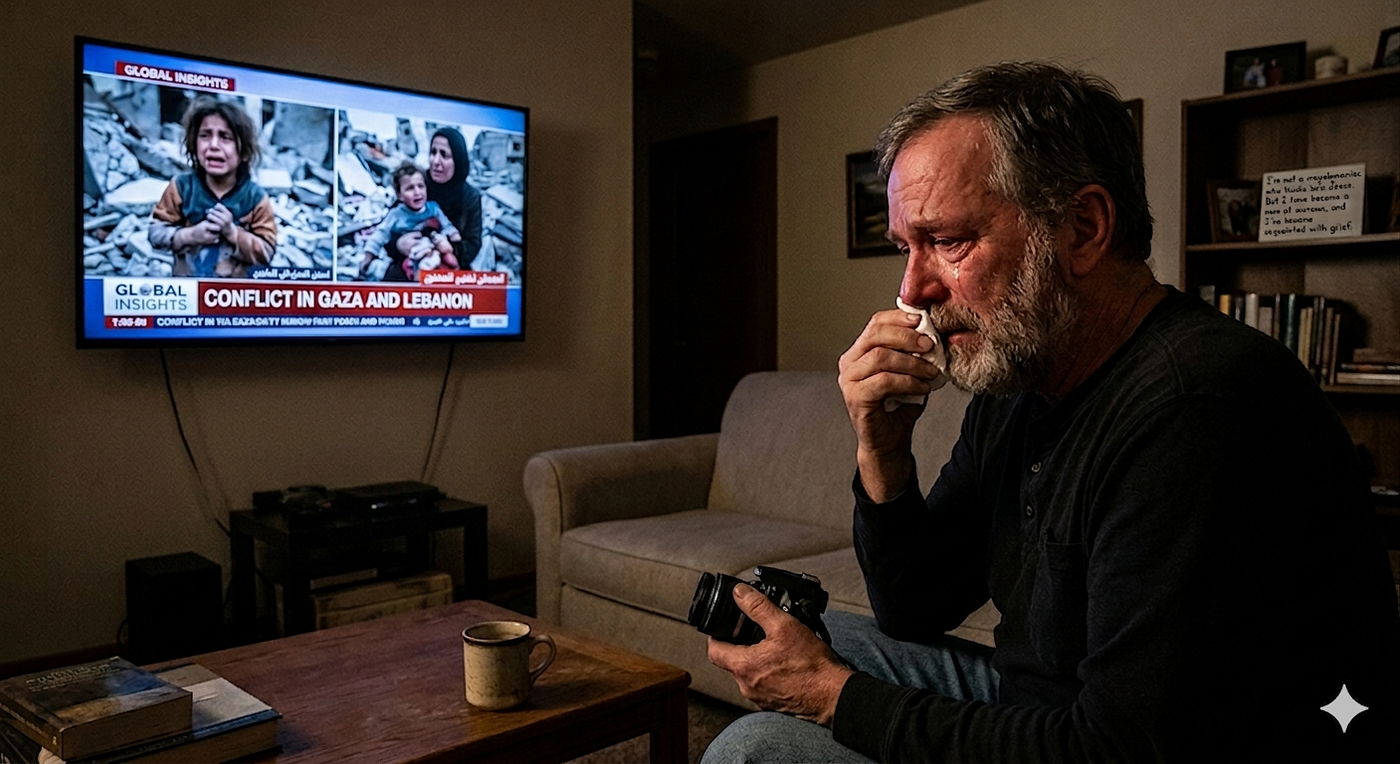
So my contention is, God or no-God, we are on our own in the world. Whether there is a God or not, there is no “God’s-Eye View” we can turn to to get the “real” truth. We have our personal vantage point as Observers and we can never get outside of that constraint.
People contend that their Holy Scripture is the Real Truth. But there’s so many Holy Scriptures, which one of them is Truth, and which is not? Answer: none of them can possibly be the “real truth”.

Jeff (continuing): Are they useless then? No not at all. There are many valuable usages of Holy Scripture.
I’ve gone on for a while now. Mike, what is your response. And you can make your response double of the previous responses. [I have told Mike to be brief. He tends to get verbose.]
Mike: It’s a powerful poetic construction. Scientifically, a black hole is a collapse of spacetime rather than a container of it, but philosophically, your point about being “on our own” is crucial. Without an Archimedean Point, we must shift from Correspondence Truth to Coherence Truth — building internal frameworks that are robust and predictive. Holy Scriptures, then, are best viewed as Intersubjective Human Truths: symbolic frameworks that provide value for navigating the system, even if they cannot escape it.

Jeff: I wish there was a Standard of Absolute Truth. But wishing does not make it so.

Jeff (concluding): The ramifications of the fact we cannot know “real truth” are enormous. But that’s the subject of another article (which I have yet to write). Mike, I’ll give you the last word.
Mike: Admitting we lack an absolute anchor is intellectual sobriety. Since truth isn’t “found” externally, we must collectively build it as interpersonal shared realities through rigor and observation. We trade the comfort of “God’s-Eye” certainty for the responsibility of managing local predictive models. This places the burden of ethics and reality on us, validated only by our internal consistency. We are holding the lever while standing on the ground we aim to move — an uncomfortable but necessary reality.
메타데이터
- post_id
- a03cc34aa36c
- slug
- we-can-never-be-certain-of-the-truth-a03cc34aa36c
- url
- https://medium.com/@jeffreyduttonsmith/we-can-never-be-certain-of-the-truth-a03cc34aa36c
- canonical_url
- https://medium.com/@jeffreyduttonsmith/we-can-never-be-certain-of-the-truth-a03cc34aa36c
- author_url
- https://medium.com/@jeffreyduttonsmith
- status
- ok
- fetched_at
- 2026-07-24 14:14:02