Endoscopic Spine Surgery for Back Pain: A Minimally Invasive Approach to Faster Recovery
Back pain, leg pain, numbness, or weakness can sometimes occur when a spinal disc or nerve becomes compressed. In selected cases…
Endoscopic Spine Surgery for Back Pain: A Minimally Invasive Approach to Faster Recovery
Back pain, leg pain, numbness, or weakness can sometimes occur when a spinal disc or nerve becomes compressed. In selected cases, endoscopic spine surgery offers a minimally invasive way to address the underlying problem through a small surgical opening rather than a larger traditional incision. For patients searching for the Best Spine Surgeon in Dwarka, knowing whether this advanced approach is suitable is an important part of making an informed treatment decision. Depending on the diagnosis, endoscopic techniques may be used for conditions such as herniated discs, nerve compression, and certain types of spinal stenosis. The goal is to treat the specific source of symptoms while limiting unnecessary tissue disruption. However, endoscopic surgery is not appropriate for everyone, so proper examination, imaging, and individualized medical assessment are essential before choosing treatment.
What Is Endoscopic Spine Surgery?
A Minimally Invasive Approach to Spine Treatment
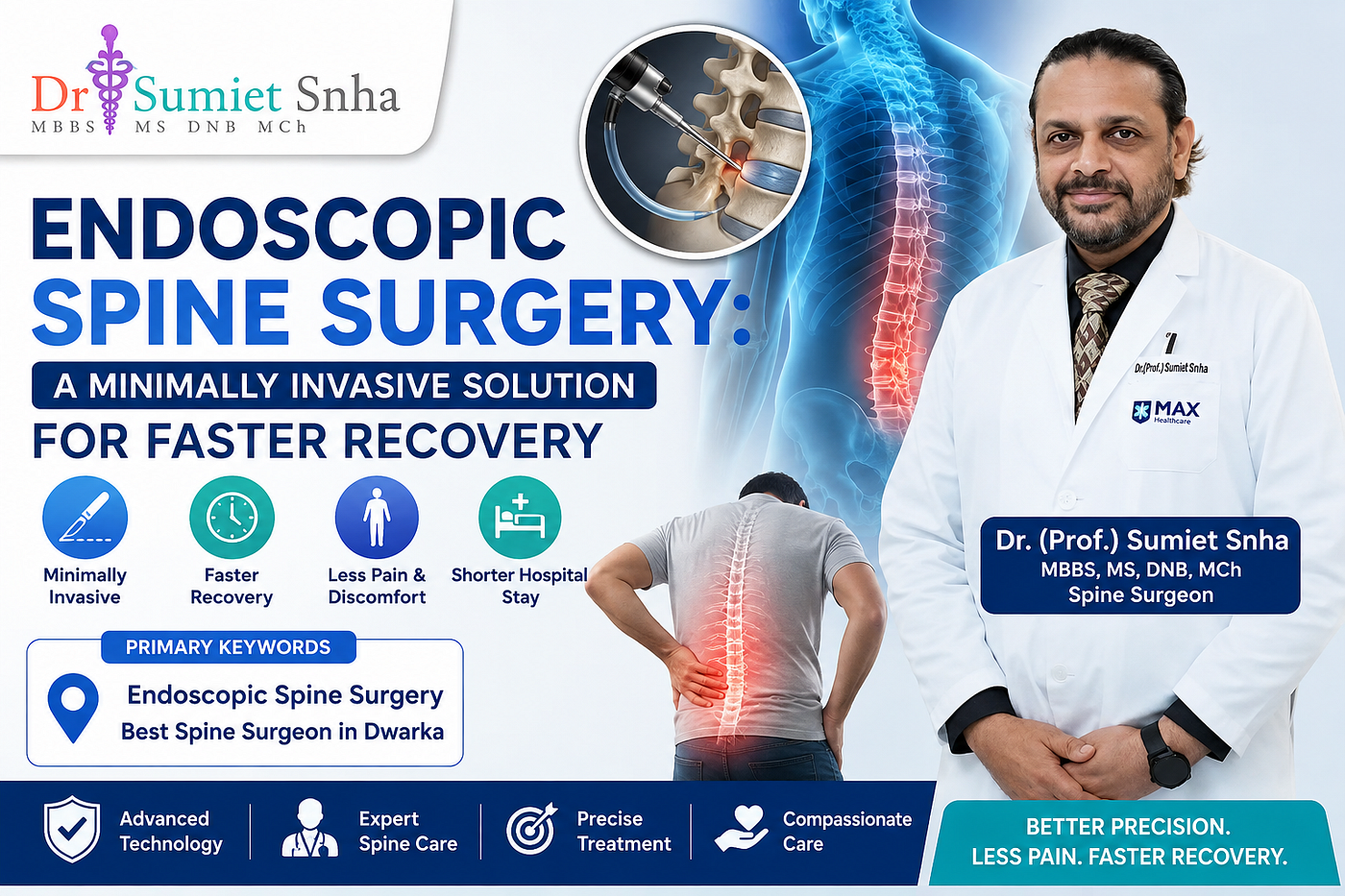
Endoscopic spine surgery is an advanced form of minimally invasive spine surgery used to treat certain spinal conditions through a small incision. Instead of creating a wide opening to reach the spine, the surgeon uses a thin endoscope fitted with a camera and light to access the targeted area. The camera displays a clear, magnified view on a monitor, allowing the surgeon to identify problems such as a herniated disc or compressed spinal nerve.
How the Procedure Works
Depending on the patient’s condition, specialized instruments can be passed through the endoscope to remove a small amount of problematic disc material or relieve pressure around an affected nerve. Because the approach is more targeted, it may reduce unnecessary disturbance to nearby muscles and soft tissues compared with some traditional procedures.
When Endoscopic Spine Surgery Is Recommended
However, endoscopic surgery is not suitable for every spinal condition. The decision depends on the patient’s symptoms, MRI or CT findings, spinal anatomy, stability, overall health, and the type of treatment required. A thorough evaluation by an experienced spine surgeon is important before selecting the surgical approach.
How Does Endoscopic Spine Surgery Work?
Endoscopic spine surgery follows a carefully planned process to identify and treat the source of spinal pain or nerve irritation while limiting unnecessary tissue disruption.
Pre-Surgery Evaluation
Before surgery, the spine specialist evaluates the patient’s condition to determine whether an endoscopic approach is appropriate.
- Medical history: Reviews pain duration, previous treatments, medications, and symptoms.
- Neurological examination: Checks muscle strength, sensation, reflexes, and nerve function.
- Imaging tests: MRI, CT scans, or X-rays may be recommended to locate disc problems or nerve compression.
- Treatment planning: The findings help identify the exact cause of symptoms and select the appropriate procedure.
During the Procedure
- A small incision is made near the affected spinal area.
- A thin endoscope with a high-resolution camera is carefully inserted.
- The surgeon views the spine on a monitor and identifies the affected nerve or disc.
- In an endoscopic discectomy, problematic disc material may be removed when appropriate.
- Targeted nerve compression treatment or decompression is performed if required.
- The small incision is closed after completing the advanced spine surgery procedure.
Conditions That May Be Treated With Endoscopic Spine Surgery
Endoscopic spine surgery can be considered for certain spinal conditions when symptoms are linked to a specific problem that can be safely treated through a minimally invasive approach. Depending on the patient’s diagnosis, a spine specialist may consider it for:
- Herniated or slipped disc: When disc material presses on a nearby nerve and causes pain, numbness, or weakness.
- Sciatica: Selected cases where nerve compression in the lower spine causes pain extending into the leg.
- Spinal stenosis: Certain cases where narrowing around the spinal nerves creates pressure.
- Foraminal stenosis: Narrowing of the nerve passageway that may irritate or compress a nerve.
- Persistent radicular pain: Ongoing nerve-related pain that does not improve with appropriate conservative treatment.
- Selected degenerative conditions: Some age-related spinal changes may be suitable for an endoscopic approach.
However, not every spine condition is suitable for endoscopic surgery. The decision depends on MRI or other imaging findings, symptoms, spinal stability, overall health, and the exact location of nerve compression.
Benefits of Endoscopic Spine Surgery
For carefully selected patients, endoscopic spine surgery can offer several advantages over traditional open procedures. Because the technique uses a small access point, it aims to minimize unnecessary disruption to nearby muscles and soft tissues. Some potential endoscopic spine surgery benefits include:
- Smaller incision: A tiny incision may result in less tissue disruption and a smaller visible scar.
- Less muscle damage: The technique can reduce disturbance to surrounding spinal muscles.
- Reduced postoperative discomfort: Some suitable patients may experience less discomfort after surgery.
- Lower blood loss: Smaller surgical access may help limit blood loss in many procedures.
- Shorter hospital stay: Selected patients may be able to leave the hospital sooner.
- Earlier mobility: Patients may be encouraged to move relatively soon after surgery, depending on their condition.
- Faster return to routine activities: Recovery may be quicker for some patients compared with more extensive procedures.
- Potentially quicker recovery: These advantages make minimally invasive spine treatment an option worth discussing when clinically appropriate.
Is Endoscopic Spine Surgery Really Faster?
Recovery is different for every patient. The procedure performed, spinal condition, age, general health, and activity level can all influence faster spine surgery recovery. Endoscopic surgery does not guarantee a faster recovery, so realistic expectations and individualized medical guidance are important.
Endoscopic Spine Surgery vs Traditional Spine Surgery
Endoscopic spine surgery and traditional open spine surgery are both established approaches, but they differ mainly in how the surgeon reaches the affected area of the spine.
How Endoscopic Spine Surgery Works
Endoscopic spine surgery typically involves:
- A small access point (incision)
- Specialized instruments designed for precision
- Targeted treatment of selected spinal problems
- Minimal disruption to surrounding muscles and soft tissues
How Traditional Open Spine Surgery Works
Traditional open spine surgery generally involves:
- A larger incision
- Wider exposure of the surgical area
- Greater access for complex procedures
- Potentially more tissue disruption compared to minimally invasive techniques
Although traditional surgery may involve more tissue disruption, it can be more appropriate when a patient has complex spinal conditions that require:
- Extensive decompression
- Spinal stabilization
- Spinal fusion procedures
Recovery and Postoperative Considerations
With an endoscopic approach, the smaller incision may support:
- Less postoperative discomfort
- Reduced tissue trauma
- A potentially shorter recovery period in appropriately selected patients
Hospital stays and return to normal activities can also vary depending on:
- The specific procedure performed
- The patient’s overall health
- Individual recovery response
Choosing the Right Surgical Approach
However, minimally invasive spine surgery is not automatically the better choice for every patient. The appropriate technique depends on several factors, including:
- Type and severity of the spinal condition
- MRI or CT scan findings
- Spinal stability
- Symptoms and their severity
- Overall patient health
- The specific treatment required
A qualified spine surgeon should carefully evaluate these factors before recommending either an endoscopic or traditional surgical approach.
What Is Recovery Like After Endoscopic Spine Surgery?
Endoscopic spine surgery recovery can be relatively comfortable for many suitable patients, but the timeline differs from person to person. After the procedure, patients are usually encouraged to begin gentle movement according to their surgeon’s advice.
- Mild soreness or temporary discomfort may occur around the incision.
- Normal activities should be resumed gradually rather than all at once.
- Physiotherapy or specific exercises may be recommended to support recovery.
- Heavy lifting, bending, or strenuous activity should be avoided until medically cleared.
- Follow-up appointments help monitor healing and symptom improvement.
- The overall spine surgery recovery time depends on the procedure, spinal condition, general health, and individual healing.
Seek medical attention if severe or worsening pain, fever, wound problems, new weakness, or increasing numbness develops.
Who Is a Good Candidate for Endoscopic Spine Surgery?
Endoscopic spine surgery may be considered for patients whose symptoms are linked to a specific spinal problem that can be safely treated through a minimally invasive approach. A patient may be a suitable candidate when:
- Persistent pain, numbness, or other symptoms continue despite appropriate non-surgical treatment.
- MRI or other imaging confirms nerve compression or a disc-related problem.
- The symptoms clearly match the imaging findings.
- Overall health and medical history make the procedure appropriate.
However, endoscopic surgery is not suitable for everyone. Significant spinal instability, deformity, extensive spinal disease, or conditions requiring broader decompression or spinal fusion may be better managed with another surgical approach. A detailed evaluation helps determine the safest treatment option.
Here’s a balanced, patient-friendly section with clear bullet points and medically cautious wording.
Risks and Limitations of Endoscopic Spine Surgery
Although endoscopic spine surgery is minimally invasive, it is still a surgical procedure and may involve certain risks. The possibility of complications depends on the specific procedure, spinal condition, surgical site, and the patient’s overall health.
Potential risks may include:
- Infection around the surgical site
- Bleeding during or after the procedure
- Nerve irritation or injury, which may affect sensation or strength
- Dural tear, involving the protective covering around the spinal nerves
- Persistent or recurrent symptoms after treatment
- Recurrent disc herniation in some patients
- Additional surgery if symptoms persist, recur, or require a different treatment approach
It is important to discuss the potential benefits, limitations, and individual risks with a qualified spine surgeon before deciding on surgery. Endoscopic techniques are appropriate only for selected spinal conditions.
How to Choose the Right Spine Surgeon in Dwarka?
Choosing a Spine surgeon in Dwarka for endoscopic treatment involves more than looking at a title. Patients should consider relevant spine surgery experience, training in minimally invasive techniques, ability to assess MRI/CT findings, experience with the specific spinal condition, and whether surgery is genuinely necessary. It is also important to understand available treatment alternatives, hospital infrastructure, and the expected recovery plan.
About Dr. (Prof.) Sumiet Snha
**Dr. (Prof.) Sumiet Snha, Vice Chairman — Neurosciences (Neurology & Spine), has more than 25 years of experience in neurosurgery. He completed his neurosurgical training at AIIMS, New Delhi, and has received international training exposure with neurosurgical experts in Japan, Brazil, and Germany. He is also trained in spinal injuries and is a certified teaching faculty for AO Spine**. His clinical interests include minimally invasive spine surgery, complex nerve injuries, and advanced neuro and spine procedures.
For patients searching for the **Best Spine Surgeon in Dwarka, Dr. Sumiet Snha’s experience and qualifications can be considered as part of an informed decision, while the final choice should always depend on the patient’s diagnosis, treatment needs, and consultation with a qualified endoscopic spine surgery specialist**.
Frequently Asked Questions
1. What is endoscopic spine surgery?
Endoscopic spine surgery is a minimally invasive technique that uses a small incision and a specialized camera to access and treat selected spinal problems.
2. Who may benefit from endoscopic spine surgery?
Patients with certain herniated discs, nerve compression, sciatica, or selected cases of spinal stenosis may be considered after a detailed evaluation.
3. Is endoscopic spine surgery less invasive than traditional surgery?
Yes. The technique generally uses a smaller access point and aims to limit disruption to surrounding muscles and soft tissues.
4. Can endoscopic surgery treat a slipped disc?
In selected cases, an endoscopic procedure can remove problematic disc material that is pressing on a spinal nerve and causing symptoms.
5. How long does recovery take after endoscopic spine surgery?
Recovery varies according to the procedure, spinal condition, age, general health, and activity level. Your surgeon can provide a more individualized timeline.
6. Can I walk soon after endoscopic spine surgery?
Many patients can begin gentle movement relatively soon after surgery, but the timing depends on the procedure and individual medical condition.
7. Will endoscopic spine surgery leave a large scar?
Because the procedure generally uses a small incision, the resulting scar may be smaller than that associated with many traditional open procedures.
8. Is endoscopic spine surgery suitable for severe spinal problems?
Not always. Significant instability, deformity, extensive disease, or conditions requiring broader decompression or fusion may require another surgical approach.
9. What tests are performed before endoscopic spine surgery?
A surgeon may review your medical history and neurological examination and may recommend MRI, CT, X-rays, or other tests to identify the source of symptoms.
10. What are the possible risks of endoscopic spine surgery?
Potential complications can include infection, bleeding, nerve irritation or injury, dural tear, recurrent symptoms, recurrent disc herniation, or the need for additional treatment.
11. How do I find the Best Spine Surgeon in Dwarka?
Consider the surgeon’s relevant experience, training in spine and minimally invasive procedures, experience with your specific condition, treatment approach, hospital facilities, and ability to explain both surgical and non-surgical options.
12. When should I see a spine surgeon for back or leg pain?
Consider medical evaluation when pain persists despite appropriate treatment or when symptoms such as numbness, weakness, radiating leg pain, or difficulty walking develop or worsen.
Conclusion
Endoscopic spine surgery can provide a minimally invasive treatment option for carefully selected spinal conditions. Smaller incisions and reduced tissue disruption may support comfortable recovery and an earlier return to routine activities in appropriate patients. However, this approach is not suitable for every spinal problem. A detailed examination and appropriate imaging are essential before choosing surgery. Consulting an experienced Best Spine Surgeon in Dwarka can help you understand your diagnosis, treatment options, and expected recovery.
메타데이터
- post_id
- a05d0835a76f
- slug
- endoscopic-spine-surgery-for-back-pain-a-minimally-invasive-approach-to-faster-recovery-a05d0835a76f
- url
- https://medium.com/@prakharthakur2810/endoscopic-spine-surgery-for-back-pain-a-minimally-invasive-approach-to-faster-recovery-a05d0835a76f
- canonical_url
- https://medium.com/@prakharthakur2810/endoscopic-spine-surgery-for-back-pain-a-minimally-invasive-approach-to-faster-recovery-a05d0835a76f
- author_url
- https://medium.com/@prakharthakur2810
- status
- ok
- fetched_at
- 2026-08-09 01:35:37