Why It’s Time to Consider Spectrum-4 51.2T Switches?
AI infrastructure is rapidly upgrading, and networking is increasingly becoming a crucial factor influencing GPU cluster performance…
Why It’s Time to Consider Spectrum-4 51.2T Switches?
AI infrastructure is rapidly upgrading, and networking is increasingly becoming a crucial factor influencing GPU cluster performance. Simultaneously, enterprises are shifting their focus. Compared to simply pursuing higher specifications, the stability of switch delivery, the maturity of network solutions, and the controllability of deployment cycles are becoming increasingly important.
Currently, AI switches based on Broadcom Tomahawk 5 remain one of the mainstream solutions in the market. However, with the rapid growth in demand for AI infrastructure, issues such as TH5 chip supply shortages, extended switch delivery times, and rising overall deployment costs are becoming increasingly apparent. More and more enterprises are re-evaluating their AI networking architectures, hoping to find a more balanced solution between performance, delivery time, and deployment efficiency. Against this backdrop, AI Ethernet switches based on NVIDIA Spectrum-4 are gaining increasing attention.
Why AI Networks Need Spectrum-4 51.2T Switches
Spectrum-4 switches are primarily designed for AI data centers, GPU clusters, and high-performance Ethernet scenarios. Built on NVIDIA’s self-developed Spectrum-4 ASIC, they offer a single-chip switching capacity of up to 51.2Tbps.
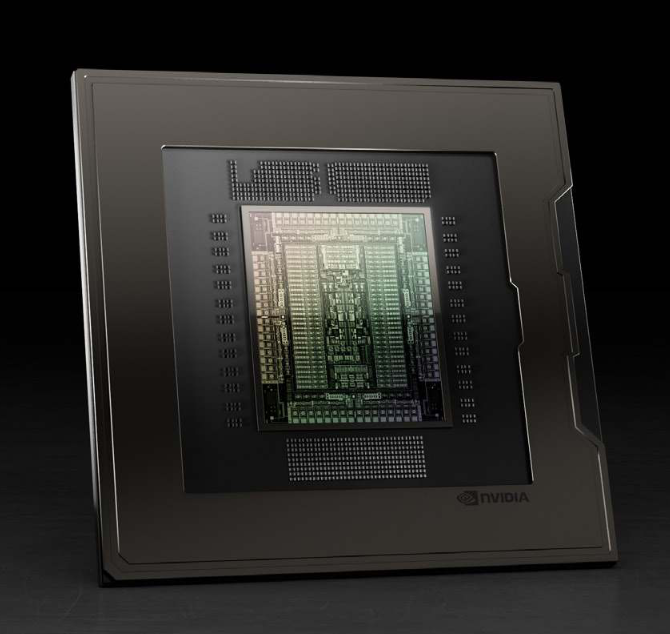
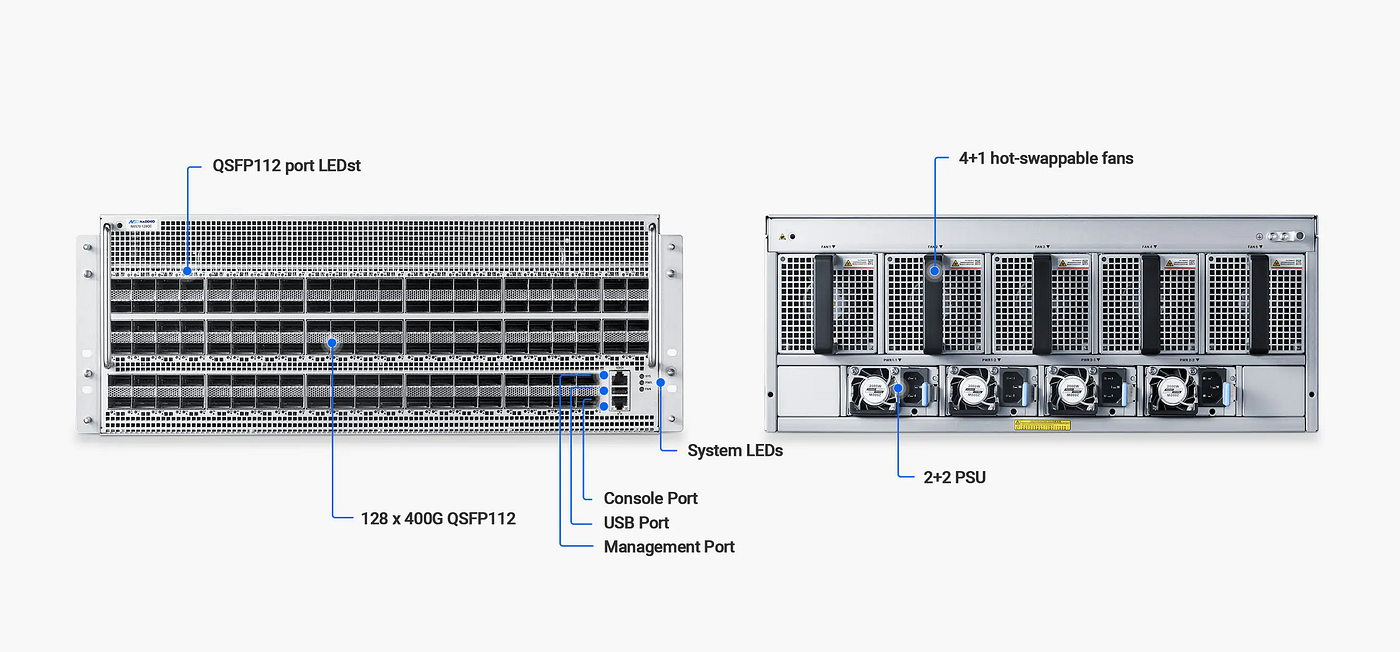
In large-scale AI network deployments, Spectrum-4 can provide 128×400G or 64×800G port configurations, meeting the current AI cluster’s demand for high-bandwidth, low-latency Ethernet fabric. Compared to traditional Ethernet switching architectures, Spectrum-4 is more deeply optimized for AI workloads and RoCE lossless network environments.
In large model training scenarios, GPU nodes generate highly synchronized and bursty traffic. If network processing capacity is insufficient, congestion, queue backlog, and even packet loss can easily occur, affecting overall training efficiency. To address this, the Spectrum-4 switch adopts a high-bandwidth single ASIC architecture, combined with a large-capacity shared cache and enhanced congestion control mechanisms, maintaining stable traffic scheduling capabilities even under high-load AI networking environments.
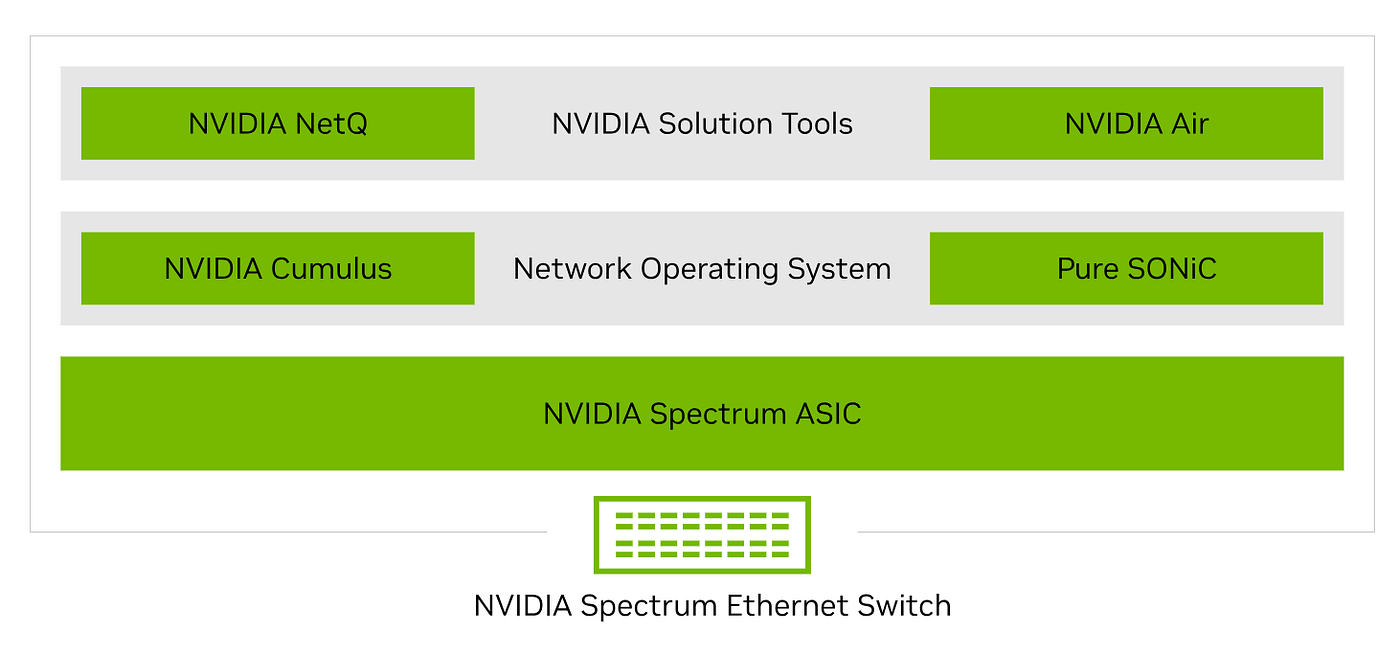
Furthermore, the Spectrum-4 switch is also an important component of NVIDIA’s AI Ethernet ecosystem. In many AI cluster deployments, Spectrum-4 switches are typically deployed in conjunction with NVIDIA BlueField DPUs and ConnectX SmartNICs to build an end-to-end AI networking architecture, thereby further optimizing the efficiency of large-scale GPU communication.
Why Spectrum-4 Switches are Gaining Attention?
The scale of AI data centers and GPU clusters is rapidly expanding, with continued growth in demand for 400G and 800G AI networking. Simultaneously, some 51.2T TH5 chips are experiencing longer supply cycles, and some AI network projects are even facing significant delivery pressure.
For enterprises, AI cluster construction typically requires the simultaneous deployment of GPUs, data centers, power, and training platforms. Delays in switch delivery can impact the entire AI infrastructure project. Therefore, more and more enterprises are evaluating more stable AI networking approaches, moving away from relying on a single solution.
Besides supply chain factors, enterprises are increasingly focusing on the following practical issues:
- Does the network solution have mature experience in AI cluster deployment?
- Can it stably support large-scale RoCE networks?
- Can it reduce the complexity of AI network deployment?
- Is subsequent expansion more flexible?
For most AI data centers today, the focus of network construction is no longer simply pursuing higher performance, but rather on whether the solution truly has the capability for large-scale deployment. When deploying AI clusters, enterprises need to consider not only bandwidth and latency, but also network stability, delivery cycle, operational complexity, and long-term scalability.
Compared to some new platforms still in the rapid adoption phase, Spectrum-4 emphasizes the maturity and practical deployment capabilities of AI Ethernet networks. It not only meets the high bandwidth and low latency requirements of large model training and inference, but also has accumulated mature practical experience in RoCE network optimization, congestion control, and large-scale GPU communication scenarios. For enterprises looking to build stable AI infrastructure, Spectrum-4 is not just a high-performance switching chip, but also an easier-to-deploy and more suitable AI network solution for long-term operation.
For this reason, more and more enterprises are beginning to choose Spectrum-4 switches as a key option in their AI data center construction.
NADDOD Spectrum-4 Switch Portfolio for AI Networking
To meet the deployment needs of AI clusters and data centers of different sizes, NADDOD offers a complete Spectrum-4 AI Switch product portfolio, covering 400G and 800G AI Networking scenarios, helping enterprises build high-performance, scalable AI Ethernet network architectures.
- **NADDOD N9570–128QC**: NADDOD 51.2T switch powered by the high-performance Spectrum-4 chip, specifically designed for AI networks. It supports RoCEv2 lossless transmission and full L2/L3 forwarding capabilities, combining low latency and high stability. The unit features 128 400G QSFP112 ports and employs redundant power supplies, fans, and control plane design to effectively improve system reliability. It can run NADDOD enterprise-grade SONiC or NADDOD OS operating systems.
- **SN5600 Switch**: A 2U rack-mount switch based on the Spectrum-4 ASIC, focusing on 800G Ethernet applications. It provides 64 OSFP 800GbE ports and 1 SFP28 management/low-speed port, with a total line-speed capacity of 51.2 Tb/s. This device supports multi-rate interoperability from 10GbE to 800GbE, featuring line-speed forwarding and high packet processing capabilities. It is suitable for high-bandwidth, low-latency scenarios such as AI training and cloud data centers, and can serve as a high-density leaf node or backbone node. It should be noted that the SN5600 has been officially discontinued by NVIDIA, but some stock and project inventory still exist in the market. For deployment needs, corresponding solutions and supply support can still be obtained through NADDOD.
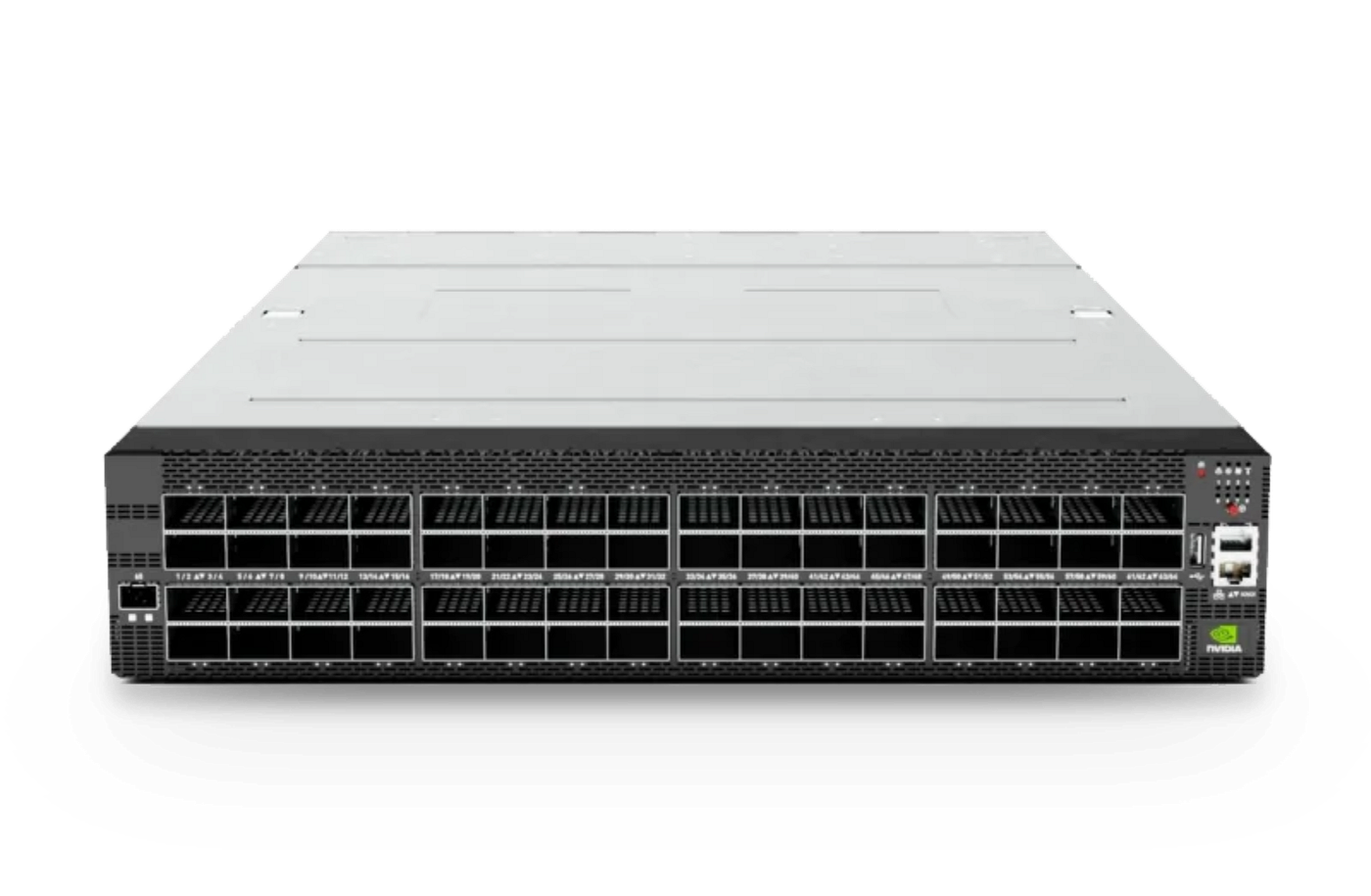
- **SN5610 Switch**: Also based on the Spectrum-4 ASIC architecture, the SN5610 shares the same 51.2Tb/s switching capacity as the SN5600 and provides 64 OSFP 800GbE interfaces. The difference lies in its configuration of two SFP28 management/low-speed ports, enabling greater flexibility in network management and expansion. This device supports a wide speed range from 1GbE to 800GbE, making it suitable for leaf switching or backbone node roles in large-scale AI and cloud computing networks.

For enterprises, building AI infrastructure is no longer just about purchasing high-performance switches; it requires comprehensive consideration of network architecture design, supply chain stability, compatibility verification, delivery efficiency, and long-term operational support capabilities. Especially with the rapid expansion of large-scale AI clusters, more and more enterprises are choosing vendors that can provide complete AI network solutions, rather than just single hardware providers.
As an AI networking infrastructure provider, NADDOD not only offers Spectrum-4 AI switches but also covers products such as optical transceivers and DAC/AOC cables, helping enterprises deploy AI data center networking more efficiently.
Conclusion
As AI clusters continue to grow in scale, networks have gradually evolved from a supporting role in traditional data centers to a core infrastructure affecting GPU utilization and overall training efficiency. With high-performance switching solutions like TH5 facing tight delivery times and cost pressures, more and more enterprises are focusing on AI Ethernet architectures represented by Spectrum-4 to obtain more stable supply, better RoCE performance, and more flexible scalability.
메타데이터
- post_id
- a09eca8f9a4f
- slug
- why-its-time-to-consider-spectrum-4-51-2t-switches-a09eca8f9a4f
- url
- https://medium.com/@naddod/why-its-time-to-consider-spectrum-4-51-2t-switches-a09eca8f9a4f
- canonical_url
- https://medium.com/@naddod/why-its-time-to-consider-spectrum-4-51-2t-switches-a09eca8f9a4f
- author_url
- https://medium.com/@naddod
- status
- ok
- fetched_at
- 2026-06-11 17:15:47