137th Monthly Technical Session
Topics covered: Accessibility, RAG, Music Technology, Town Hall Meeting, Contract and Tenant Management.
137th Monthly Technical Session
HENNGE’s Monthly Technical Session (MTS) is a platform for members to share knowledge with their peers. Each speaker gives a talk for 10–20 minutes, followed by a Q&A session. Occasionally there is also a lightning talk session at the end of an MTS, in which speakers give 5-minute talks.
The 134th MTS was held on December 19, 2025.

Nektar being the MC of the 137th MTS
“Accessibility in Frontend: Lessons From My Internship” by Pawel

Pawel presenting “Accessibility in Frontend: Lessons From My Internship”
Pawel used to think accessibility is something that is nice to have, but his experience of being trapped in his own UI modal due to poor keyboard navigation changed his mind.
What happened was:
- Tab key did not work
- Escape key did not close the modal
- Focus disappeared
- The page behind the modal was still scrollable
Focus management was the biggest lesson learned from this experience. When a modal opens, focus must move inside it and nowhere else. When the modal closes, focus must return exactly where the user was before. Otherwise, keyboard users will instantly be lost. Speaking of keyboard support, intuitiveness is important. For example, Tab key (as well as Shift + Tab) is for navigation and Escape key is for closing a modal.
Pawel also learned to use ARIA only when semantics are missing from native HTML. Using ARIA to paper over a broken structure is likely to cause more problems than it fixes. Accessibility is not only about compliance but also about clarity. If users don’t understand what is happening, they lose trust in the software. This is where clear error messages, loading states, upload feedback, etc. come in.
Pawel observed serendipitous side effects from improving accessibility, such as cleaner code, fewer bugs, and better UX. Thus he now thinks that accessibility is not a checklist but a mindset. If a software is accessible, it is likely to be engineered well.
“A Walkthrough of RAG” by Josh

Josh presenting “A Walkthrough of RAG”
Retrieval-Augmented Generation (RAG) is a process which involves optimizing the output of a Large Language Model (LLM). While most LLMs are trained on very large datasets, they do give inaccurate information every now and then. RAG tries to solve this by upserting additional data to help prevent LLMs from hallucinating.
In simpler terms, RAG works by allowing the LLM to trigger a search in the Vector Database. Retrieved relevant information is put back into the prompt as context. Vector Databases store, index, and search high-dimensional numeric representations of data. This enables rapid similarity search by finding close data points. Vector database also enables semantic search, which is an advanced search technique that understands the meaning of users’ queries. Semantic search uses natural language processing (NLP) and machine learning (ML) to understand context and relationship between words.
Some common use cases for RAG include customer service chatbots, healthcare diagnosis assistance, legal research, financial analysis, and code generation.
“Catching Up With Stranger Things Using RAG” by Ryo

Ryo presenting “Catching Up With Stranger Things Using RAG”
Ryo tried to use RAG to catch up on the first 4 seasons of Stranger Things in preparation of its final season. There are multiple years between seasons, so he looked to RAG to help him keep track of the story.
Ryo’s RAG implementation utilized Amazon Bedrock, not the least of which its provided web crawler to retrieve relevant information. He also utilized Amazon OpenSearch Serverless as the vector database, i.e., storing the information retrieved by the web crawler.
Unfortunately, Ryo thinks this use case is not exactly the best usage of RAG, considering existing tools such as ChatGPT and Gemini already has access to such information. A better example would be LLMs that work with data that is not as widely available.
“How The Beatles Innovated Music Technology” by Luke

Luke presenting “How The Beatles Innovated Music Technology”
The music of The Beatles progressed very quickly. Their first album, consisting of 14 tracks, took 26 hours to record. On the other hand, their last, consisting of 17 tracks, took a whopping 379.
The technology The Beatles used in making their music progressed in a similarly rapid manner. Luke explained some of these technologies, the first of which is Artificial Double Tracking. It is a technique developed as a technical alternative to the tedium of double tracking. Tape delay is used to create a delayed copy of an audio signal, which is then played back at slightly varying speed (controlled by an oscillator) and combined with the original.
As a result of their continuous effort in experimenting with their music, The Beatles also participated in the invention of or popularized other techniques. Backmasking is a recording technique in which a message (e.g., music) is deliberately recorded backward onto a track that is meant to be played forward. To boost bass guitar sound, The Beatles used a loudspeaker as a microphone. To prevent the needles of old record players from jumping from really high bass, a tool called Automatic Transient Overload Control was developed in Abbey Studios. Finally, close miking is a technique The Beatles used to achieve really biting sounds of strings.
“Introducing Town Hall: Aligning on Where We Are and What’s in Motion” by Vi and Mussin

Vi and Mussin presenting “Introducing Town Hall: Aligning on Where We Are and What’s in Motion”
Vi and Mussin proposed town hall meetings as a way to more strategically allocate time for improvements across multiple teams. This is especially important as the number of people, teams, roles, and projects increase. For instance, if there are multiple projects that are trying to solve the same problem but from different angles, they should be consolidated. For another, everyone should agree on what are the most pressing issues that need to be addressed.
Town hall meetings promises to help everyone to be on the same page in this regard. It is to be used to clarify what is currently in motion, to align as to what the most pressing issues are, to come up with ways to resolve those issues strategically, and to learn from each other. To that end, the topics to be discussed in town hall meetings are those that concern multiple teams and/or projects, those that pertain to resources, and those that are time-sensitive.
“Process in Action — Part 9” by Doi

Doi presenting “Process in Action — Part 9”
Doi-san returned for the ninth installment of his Process in Action series. This time around, he focused on explaining the merits of managing contracts and tenants separately. If nothing else, this approach should lead to more agility and more scalability. It may seem unintuitive considering there will be 2 management processes to handle instead of 1, but the agility and scalability should come from the separation of concern between them.
Regarding contracts, Doi-san also explained the idea of agreement and entitlement being different concepts. Agreement is the commercial truth, focusing on billing, pricing, and contract duration. Entitlement is the technical truth, focusing on provisioning, API limits, and feature tiers. Among others, this idea has been adopted by AWS Marketplace, what with its separate definitions of agreement and entitlement.
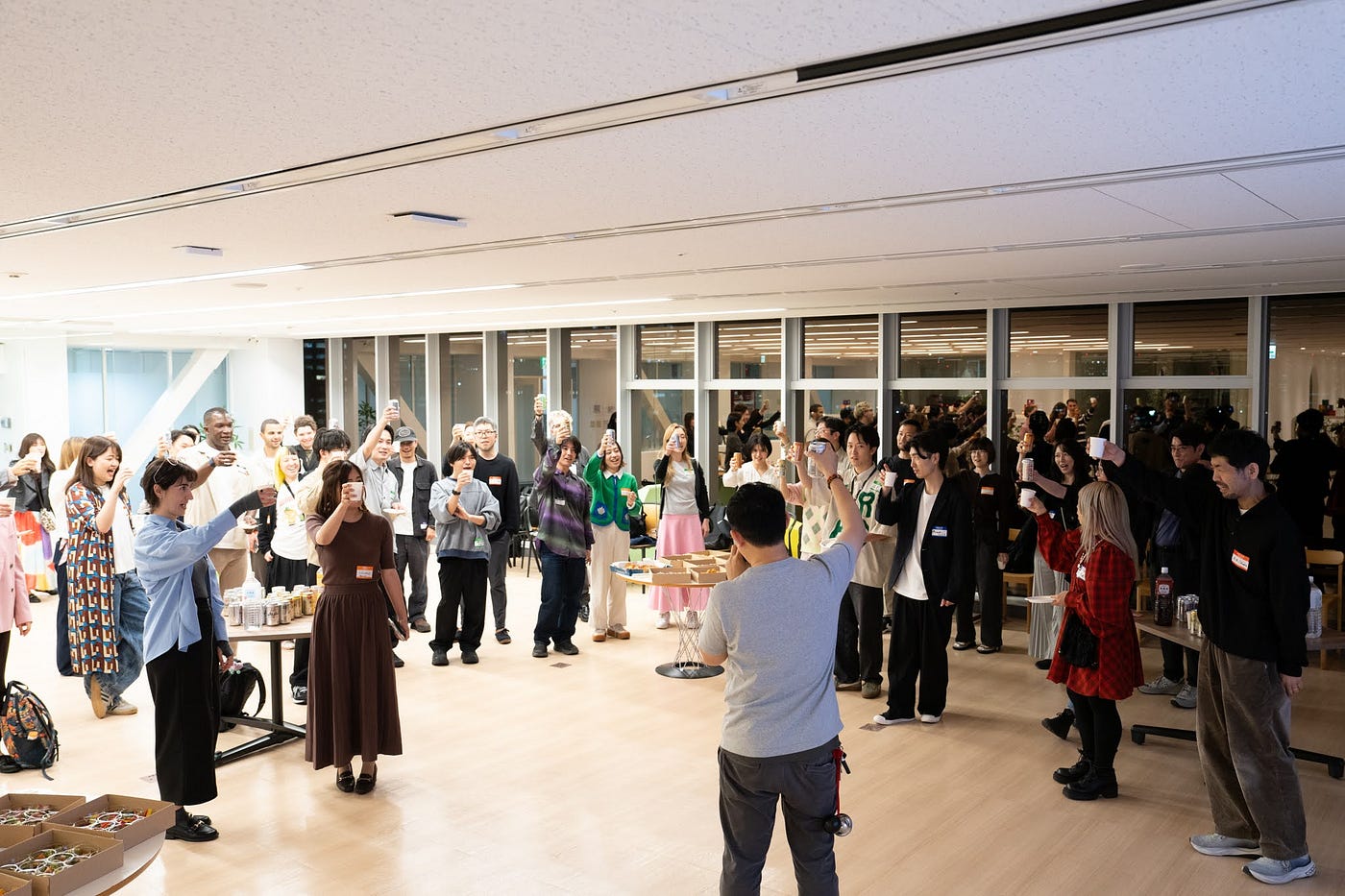
As always, we had a party afterwards 😄
See you at the next MTS!
메타데이터
- post_id
- a0b39ce4a698
- slug
- 137th-monthly-technical-session-a0b39ce4a698
- url
- https://medium.com/henngeblog/137th-monthly-technical-session-a0b39ce4a698
- canonical_url
- https://medium.com/henngeblog/137th-monthly-technical-session-a0b39ce4a698
- author_url
- https://medium.com/@bagus.rahman.aryabima
- status
- ok
- fetched_at
- 2026-06-28 14:26:31