Proof of Life: Why is proving who we are still so hard?
For years, I’ve been obsessed with one simple question:
Proof of Life: Why is proving who we are still so hard?
For years, I’ve been obsessed with one simple question:
Why is proving real things about our lives still so difficult?
We can stream movies instantly, move money globally, and talk to anyone in the world, yet proving basic facts about ourselves still feels stuck in the past.
- Who you are…
- What you’ve done…
- Where you’ve been…
- What you can actually do…
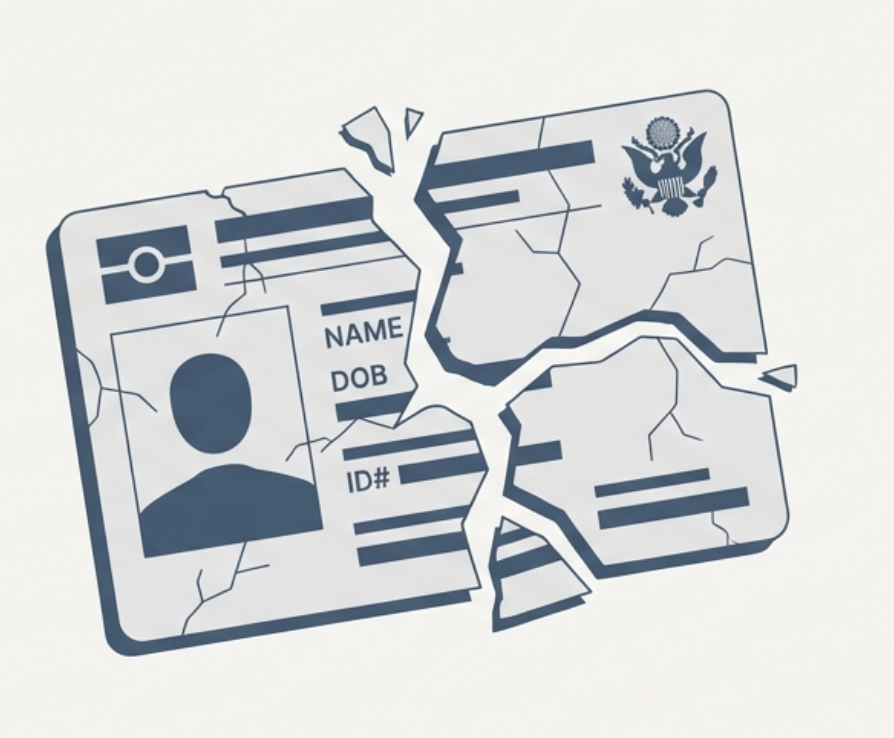
Most systems today don’t verify reality. They approximate it. They ask us to upload PDFs, scan IDs, and manually input data over and over again.
Normal life doesn’t work like that. You don’t need a certificate to prove you had a conversation. You don’t need a digital token to prove you showed up to work. Life is fluid, but our digital tools are rigid.
So I stepped back and asked: What if proof worked the way life actually works?
Reasoning Across Reality
The real breakthrough isn’t about better documents or blockchain ledgers. It’s about reasoning across reality.
Instead of forcing us to learn new behaviors or manage complex accounts, what if identity simply worked by:
- Using data that already exists
- Respecting my ownership of that data
- Verifying through correlation, not just raw exposure
- Working quietly in the background
No complex setups. No explaining yourself from scratch. Just… life, connected intelligently.
The Experiment
So I decided to run an experiment. Not as a company. Not as a product. But as a person.
This didn’t start with a grand vision. It started with curiosity. I wanted to understand:
- What data about me already exists?
- Where is it scattered?
- And what would happen if I treated that data as something that actually belonged to me?
So I began collecting my own data, not to optimize myself, but simply to see what was out there. I wanted to build my own adaptive profile that adapts to every aspect of life.
What I found wasn’t a single answer, but a pattern.
Most things in life don’t need documents to be true. They need continuity.
A trip doesn’t start at the airport. Work doesn’t exist as a single role or title. Learning doesn’t happen just because you received a certificate.
Life leaves traces, across time, across systems, across contexts.
When those traces are connected, reality becomes surprisingly clear.
- Not through exposure.
- Not through over-sharing.
- But through correlation.
Calmer Infrastructure
That insight changed how I think about proof entirely.
I don’t want to upload my life every time I need to be believed. I don’t want to leak personal data just to access basic services. And I don’t want to explain myself from scratch, over and over again.
I want proof to adapt to life, not force life to adapt to proof.
That’s what this experiment has been about for me.
Not louder. Not more complex. Just calmer, more human infrastructure that works quietly in the background.
This isn’t a finished product. It’s not even a launch. It lives on my phone as a PoC. It’s a shift in how I think things should work.
And this is just the beginning.
메타데이터
- post_id
- a0e8a6aef9b9
- slug
- proof-of-life-why-is-proving-who-we-are-still-so-hard-a0e8a6aef9b9
- url
- https://medium.com/@itswellu/proof-of-life-why-is-proving-who-we-are-still-so-hard-a0e8a6aef9b9
- canonical_url
- https://medium.com/@itswellu/proof-of-life-why-is-proving-who-we-are-still-so-hard-a0e8a6aef9b9
- author_url
- https://medium.com/@itswellu
- status
- ok
- fetched_at
- 2026-07-13 16:27:10