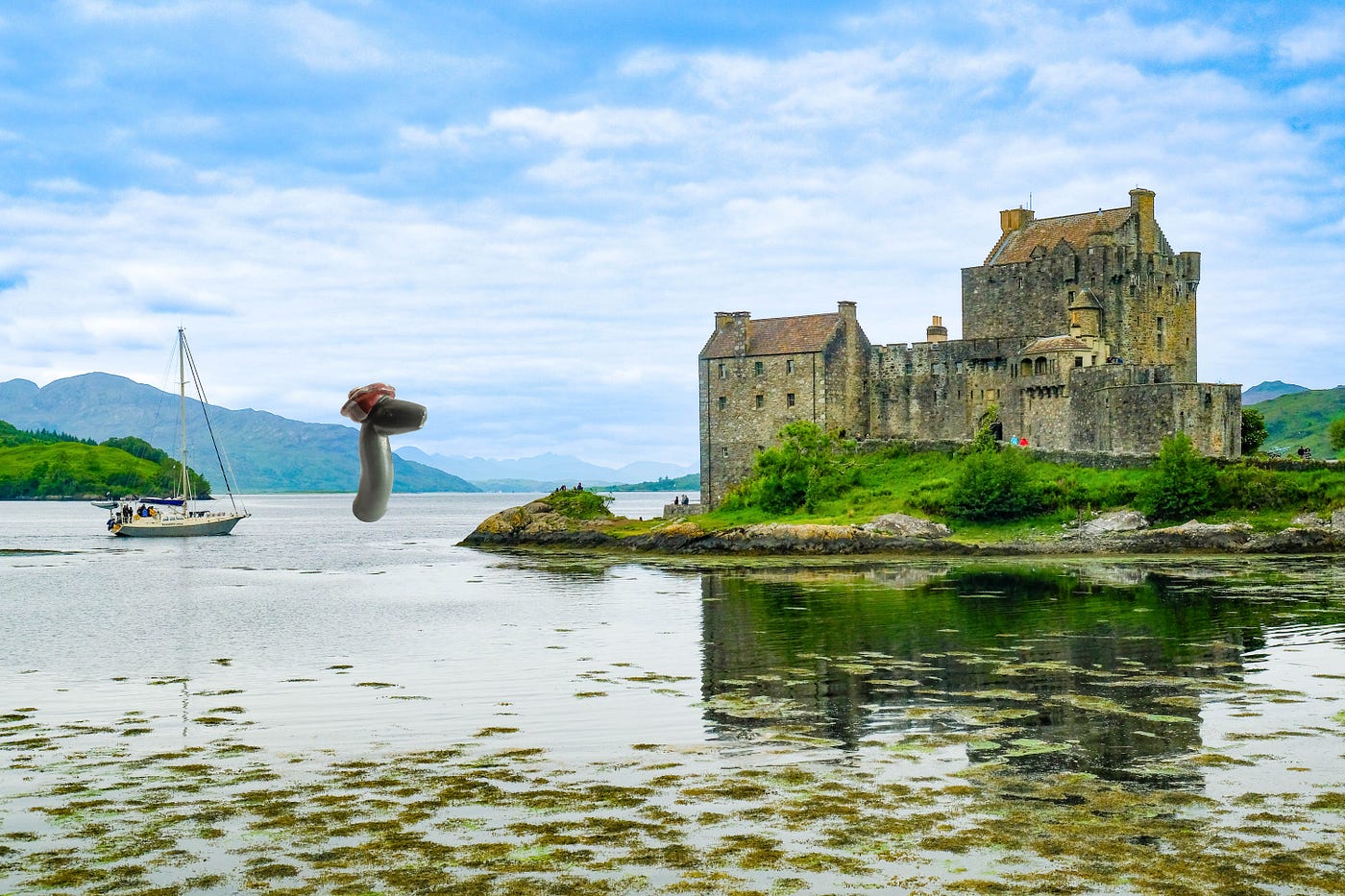
The Curious Case of the Greenback Cutthroat Trout
The greenback cutthroat trout is native to the South Platte River watershed in northern Colorado and Wyoming. Despite being thought to be…
The Curious Case of the Greenback Cutthroat Trout
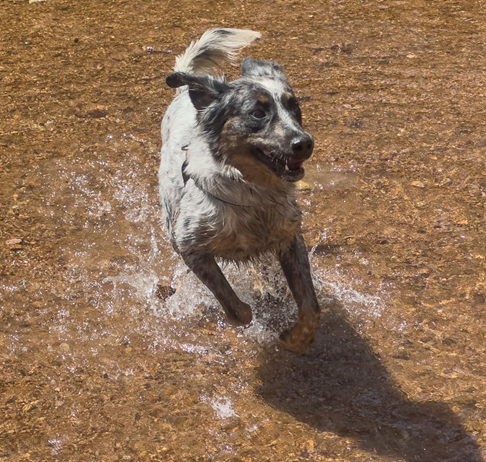
This dog is not a greenback cutthroat trout, but is in Bear Creek just downstream from where they live.
The greenback cutthroat trout is native to the South Platte River watershed in northern Colorado and Wyoming. Despite being thought to be extinct, it became the official state fish of Colorado in 1994. However, in 2012 a breeding population of the fish was discovered in Bear Creek (part of the Arkansas River watershed) in Colorado Springs. It turns out that this trout species was introduced to the area as part of a fishing enterprise in the late 19th century. Although not native to this area, it has been determined to be the only genetically pure population in existence.
In order to protect the greenback cutthroat trout the National Forest Service has introduced a number of restrictions and regulations about use of the surrounding area. This has been controversial as it limits hiking, mountain biking, etc in the forest, close to downtown Colorado Springs and popular recreational areas.
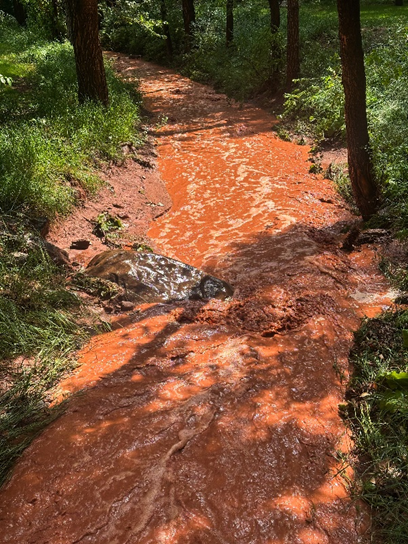
The main concern for the survival of these fish is silt derived from the regions Pike’s Peak granite accumulating in the creek — hiking and biking loosens soil and increases accumulation of sediment in the stream. Anyone who has been to the area will know that pretty much all soil and rock in and around Colorado Springs was Pike’s Peak granite at some point. Local streams run orange when it rains (Figure 1)! Essentially, we are trying to protect the fish from the environment in which it lives.
Figure 1. A creek in Manitou Springs after a summer storm.
At the same time encounters with bears and mountain lions — who also call the forest home — are increasing. A cougar was even spotted clubbing in Old Colorado City last week! We can’t put our trash out the night before pickup, or the bears will spread it liberally around the neighbourhood.
Protecting all of our resident species is not necessarily a mutually exclusive exercise. Indeed, protecting one invasive species likely benefits most of the endemic species as well. However, according to a report from the EPA, 70% of extinctions of native aquatic species in the US this century were, at least in part, caused by invasive species; 42% of currently endangered species are significantly impacted by invasive ones. While the loss of greenback cutthroat trout in its natural habitat may have been caused by invasive species, it is unclear what impact its presence in Bear Creek has had on native flora and fauna.
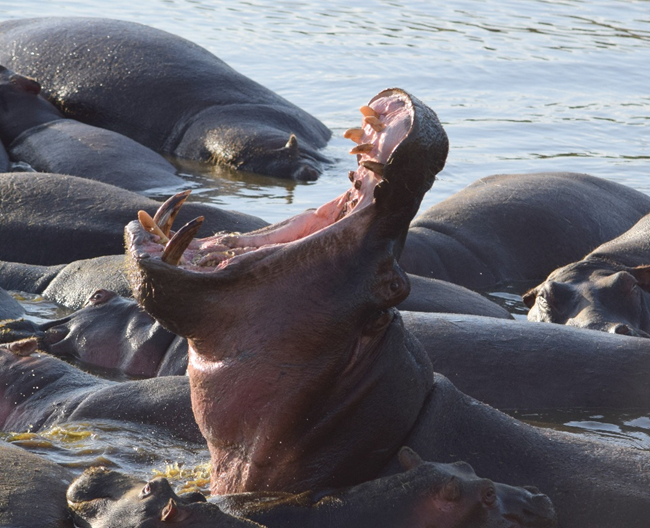
In some cases, invasive species can actually have a beneficial effect on the environment. For example, Pablo Escobar’s cocaine hippos are thought to be having a beneficial effect on their surrounding ecosystem in Colombia (Figure 2). However, Colombia just announced an operation to cull some of the hippos as they have been too successful. It is believed that further expansion of the population will start to have a detrimental effect on the environment over the next 10 years.
Figure 2. Not one of Pablo Escobar’s hippos (this one is from Tanzania)
The Real Threat
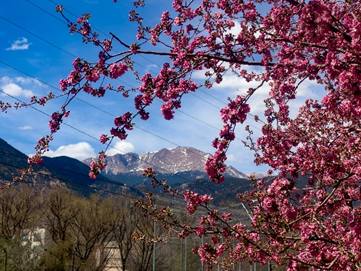
The real threat to the greenback cutthroat trout, as well as bears, mountain lions, and other species is the impending drought. Colorado has record low snow pack as of April 2026 (**Figure 3). Pike’s Peak, from where the water feeding Bear Creek comes is already almost devoid of snow — almost 2 months earlier than usual (and it has been that way for a while already; Figure 4**). Local municipalities have already instituted water conservation measures. With a warmer than usual summer, driven by a strong El Nino weather pattern, Bear Creek is at real risk of running dry! And of course there is a significant risk of wild fires too. It is these weather shocks that drive the most significant impacts of climate change on the ecological level.
Figure 3. Snow water equivalents in the Arkansas River watershed (USDA).
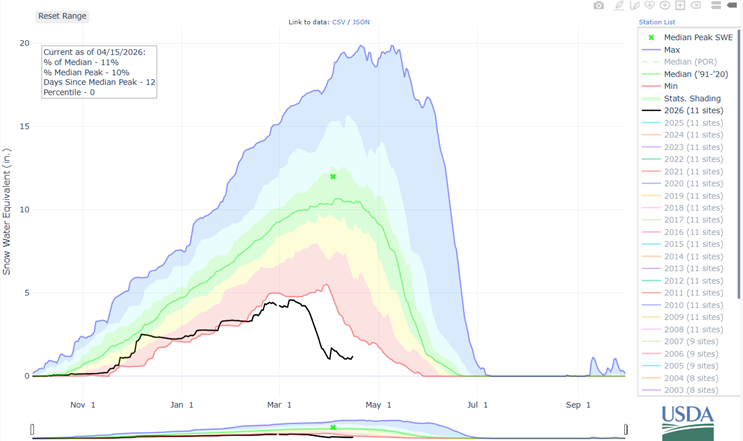
Figure 4. Pikes Peak snow pack by year.
April 2, 2025
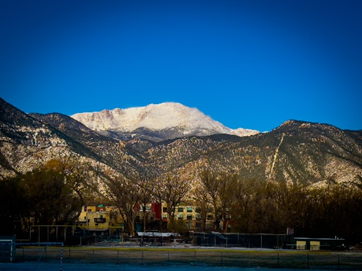
March 29, 2026
The threat of climate change extends far beyond Bear Creek. The vast Sahara Desert grew 8% from 1950–2015, while the Arctic tundra shrank 16% over the same period (Liu, 2020). The story repeats itself the world over, from the Great Barrier Reef to the Amazon Rain Forest.
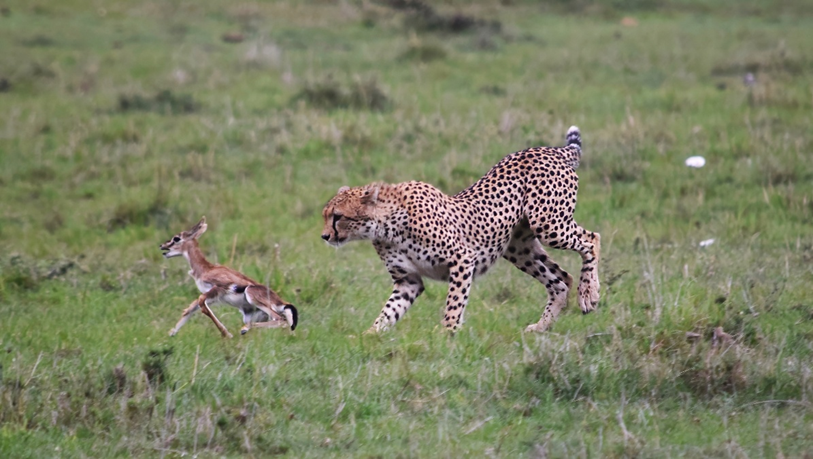
The speed of climate change is so fast that in some places even the world’s fastest animal can’t outrun it. In Namibia, climate change is causing the ecosystem to switch from a grassy savannah to a more drought and heat tolerant bushy environment. This in turn is having a direct impact on endangered cheetah populations that rely on open plains for hunting (Figure 5). Increased temperatures are also forcing cheetahs to hunt more at night when they are more likely to have interactions with other large predators.
Figure 5. Cheetah hunting on grassy plains of Kenya
In the Arctic, at least, polar bears are evolving in an attempt to stave off extinction driven by climate change. The loss of Arctic-sea ice, especially in the summer, has robbed the bears of the ice floes from which they hunt seals, resulting in food scarcity. Analysis of polar bear DNA shows that they have rewired the genetics of their digestive system to metabolize plants and less fatty foods in order to survive (Godden, 2025). This could be a problem for slow moving skinny humans who thought they weren’t tasty enough to be polar bear breakfast. Despite polar bears’ attempts to adapt, they are still expected to become extinct in the wild by the end of this century.
Conclusions
In a world where climate change is impacting the habitats of many of the planet’s animal species, to what lengths should we go to protect invasive species? Would raising greenback cutthroat trout in hatcheries with a view to reintroducing them to their native habitat be a more rational approach? Indeed, this is happening, so the dangers the fish face in Bear Creek may not be extinction events.
While the Bear Creek area of Pike National Forest is not currently under threat of being sold off by the government, such plans will likely reduce habitat for many other species, further pushing them into populated areas, and putting them at risk.
My bigger point here is that we cannot focus solely on the plight of one fish species or one tract of forest, but that we need to take a holistic approach that helps us to not only preserve individual species, but entire ecosystems and the climate of our planet in general.
References:
메타데이터
- post_id
- a11dc05c19e5
- slug
- the-curious-case-of-the-greenback-cutthroat-trout-a11dc05c19e5
- url
- https://medium.com/watts-the-science/the-curious-case-of-the-greenback-cutthroat-trout-a11dc05c19e5
- canonical_url
- https://medium.com/watts-the-science/the-curious-case-of-the-greenback-cutthroat-trout-a11dc05c19e5
- author_url
- https://medium.com/@james.street.phd
- status
- ok
- fetched_at
- 2026-06-14 11:28:49