Your Builder’s Pushback on an Independent Inspector May Tell You More Than You Think
“Bring your own inspector and we’ll charge extra. It could delay the build.”
Your Builder’s Pushback on an Independent Inspector May Tell You More Than You Think
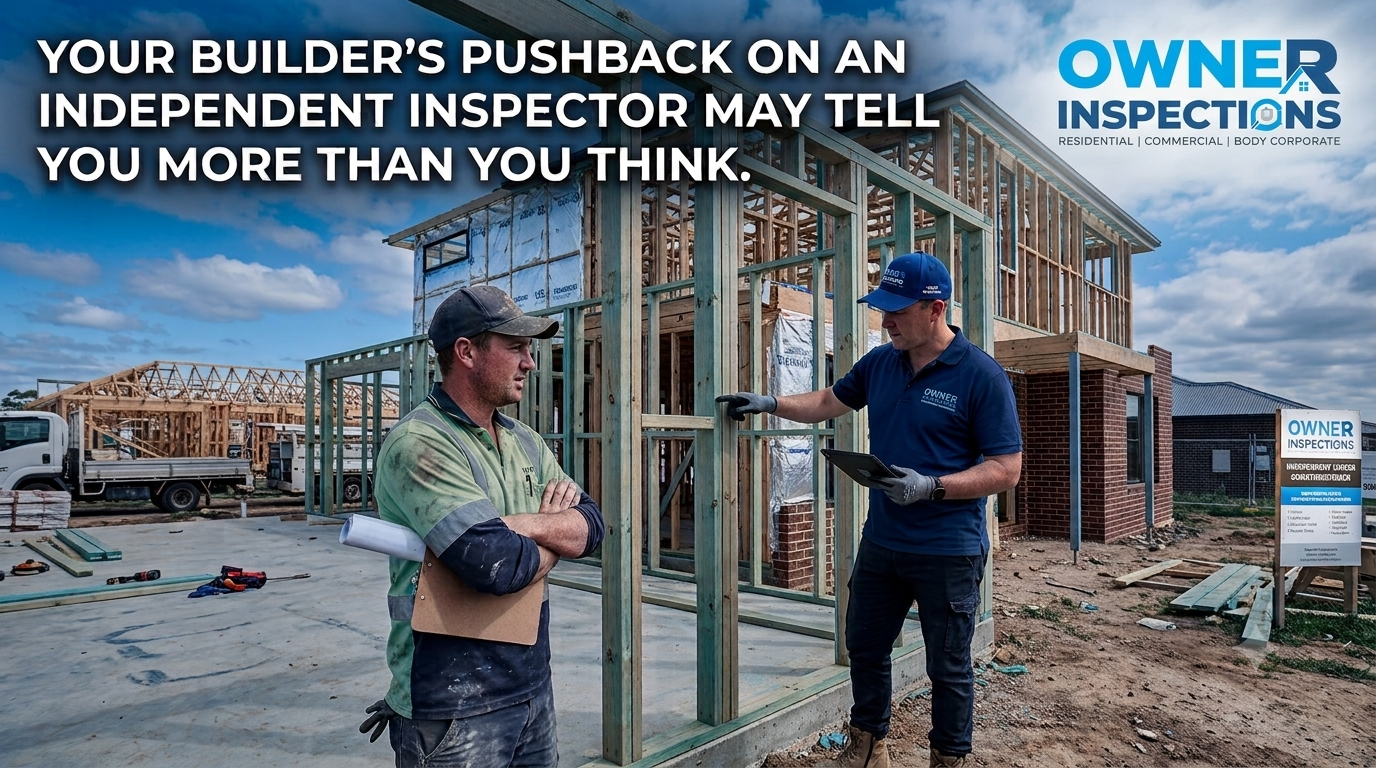
“Bring your own inspector and we’ll charge extra. It could delay the build.”
That sentence can stop a homeowner cold.
You’re already watching the budget. You’re already thinking about handover dates. So the idea that one independent inspection could create more cost and more waiting can make you back off.
But here’s the point worth asking: what exactly is the fee for, and what exactly would be delayed?
A simple request for detail can change the conversation.
The warning sounds simple. The reality is not.
A builder runs an active worksite. That means they can have real safety and scheduling concerns.
An inspector may need a booked time window, site induction, PPE, supervision, or proof of insurance. Those controls can be reasonable because the builder still has to manage the site while trades are working.
However, a safety rule is different from a blanket refusal.
It is also different from saying you must use the builder’s preferred inspector.
In Victoria, homeowners and their agents have a legal right to reasonable access during construction, even though what counts as reasonable depends on the situation. Other states can rely more heavily on the contract and local dispute process, so you should check the rules that apply to your build.
That is why the fastest response is rarely an argument on site.
Often, it is a calm request for the rule in writing.
A fee can be real without being automatically fair
Imagine the builder needs a supervisor to stop other work, escort your inspector, complete induction paperwork, and reopen a locked area.
There may be a genuine cost.
Now imagine the same flat inspection fee appears every time, no matter how long the visit takes, whether anyone escorts the inspector, or whether trades are affected.
That deserves a closer look.
A practical test is simple:
Can the builder connect the charge to a real process, a real cost, and a contract term?
If the answer is vague, ask for an itemised breakdown before agreeing to anything.
For a fuller explanation of the difference between reasonable controls and warning signs, this guide to independent inspections, builder charges and delay claims walks through the issue in more detail.
Delay should come with an explanation
The word delay carries weight because owners know every extra week can affect rent, finance, storage, moving plans, and stress.
Still, saying an inspection “may delay the build” is not the same as showing how it delayed the work.
Start with the affected trade.
Then ask which activity had to stop.
Follow with how the extra days were calculated.
For example, the QBCC New Home Construction Contract uses a written extension-of-time process with stated particulars and timeframes. Your own contract may work differently, which is exactly why the clause matters.
A 45-minute visit in a builder-approved quiet window is a very different situation from an inspector blocking a work zone during active trade hours or demanding repeated unplanned access.
Context matters.
Use this 6-step check before you book
- Read the site-access clause. Look for rules on appointments, third-party visitors, notice periods, supervision, and safety.
- Ask for a builder-approved window. Try to inspect when the stage is ready but before important work is covered.
- Confirm entry requirements early. Get induction, PPE, insurance, sign-in, and supervision requirements before the day.
- Keep the visit in observe-and-report mode. Your inspector should document visible issues and report to you, rather than direct trades or argue on site.
- Challenge charges with three checks. Which clause applies? What does the fee cover? How was any delay calculated?
- Keep one clean paper trail. Save emails, approvals, access conditions, fee explanations, inspection reports, photos, and responses.
An independent construction stage inspection is one option for owners who want a separate record of visible defects and workmanship concerns at key points in the build. It does not replace the certifier’s role, and the inspector still needs to follow lawful site rules.
At Owner Inspections, this owner-focused support is built around clear reporting, with a standard turnaround that is usually 24 hours where practical.
The bigger point is control through clarity
You do not need to treat every fee as a scam.
Nor do you need to accept every delay warning at face value.
A reasonable builder should be able to explain the access process, the cost, and the claimed impact on the program.
So keep your approach calm.
Request specifics.
Put them in writing.
Then make your decision with evidence in front of you, rather than pressure in the moment.
This is general information. Contract terms and state rules vary, so get legal advice for a dispute or contract interpretation.
**Contact us with your build stage and state, and we’ll help you work out the next inspection step.**
BuildingInspection #NewHomeBuild #ConstructionDefects #PropertyOwners #Australia
메타데이터
- post_id
- a1606749fadf
- slug
- your-builders-pushback-on-an-independent-inspector-may-tell-you-more-than-you-think-a1606749fadf
- url
- https://medium.com/@ownerinspections/your-builders-pushback-on-an-independent-inspector-may-tell-you-more-than-you-think-a1606749fadf
- canonical_url
- https://medium.com/@ownerinspections/your-builders-pushback-on-an-independent-inspector-may-tell-you-more-than-you-think-a1606749fadf
- author_url
- https://medium.com/@ownerinspections
- status
- ok
- fetched_at
- 2026-07-08 22:18:54


