Showing Ads in Your Product is a Choice (That You Made)
Over the years, I have come across many startups whose founders believe that they have no choice but to show advertisements in their…
Showing Ads in Your Product is a Choice (That You Made)
Over the years, I have come across many startups whose founders believe that they have no choice but to show advertisements in their products, especially if they come with a free-usage tier. And I have never bought their arguments for monetization for cash-flow, the insistence of investors, or the they-have-to-pay-something-to-use point.
Let me be clear: my problem is not with showing ads. My problem is with founders who show ads while claiming they had no choice.
The Real Choice You Made
The trap most founders fall into isn’t the ads themselves. It’s the free tier.
Building a free tier that serves millions of users costs real money. Server costs, support, infrastructure. If those free users never convert to paying customers, you’ve built a business that bleeds money by design. At that point, showing ads isn’t a solution to a problem; it’s a patch on a wound you created.
But the thing is: building a free tier was itself a choice. You chose to optimize for users instead of customers. You chose to assume you’d convert them later. You chose to subsidize millions of people in the hope that enough would pay.
These are legitimate choices. Slack did exactly this. Figma did too. But they succeeded because the free tier genuinely demonstrated value in a way that made paid conversion make sense. And crucially, they were willing to lose money for years betting on that model.
Most founders aren’t willing to (or can’t) do that. Instead, they build a free tier, lose money faster than expected, and then panic. Ads become the lifeline that keeps the lights on without forcing the hard conversation: should we have built a free tier at all?

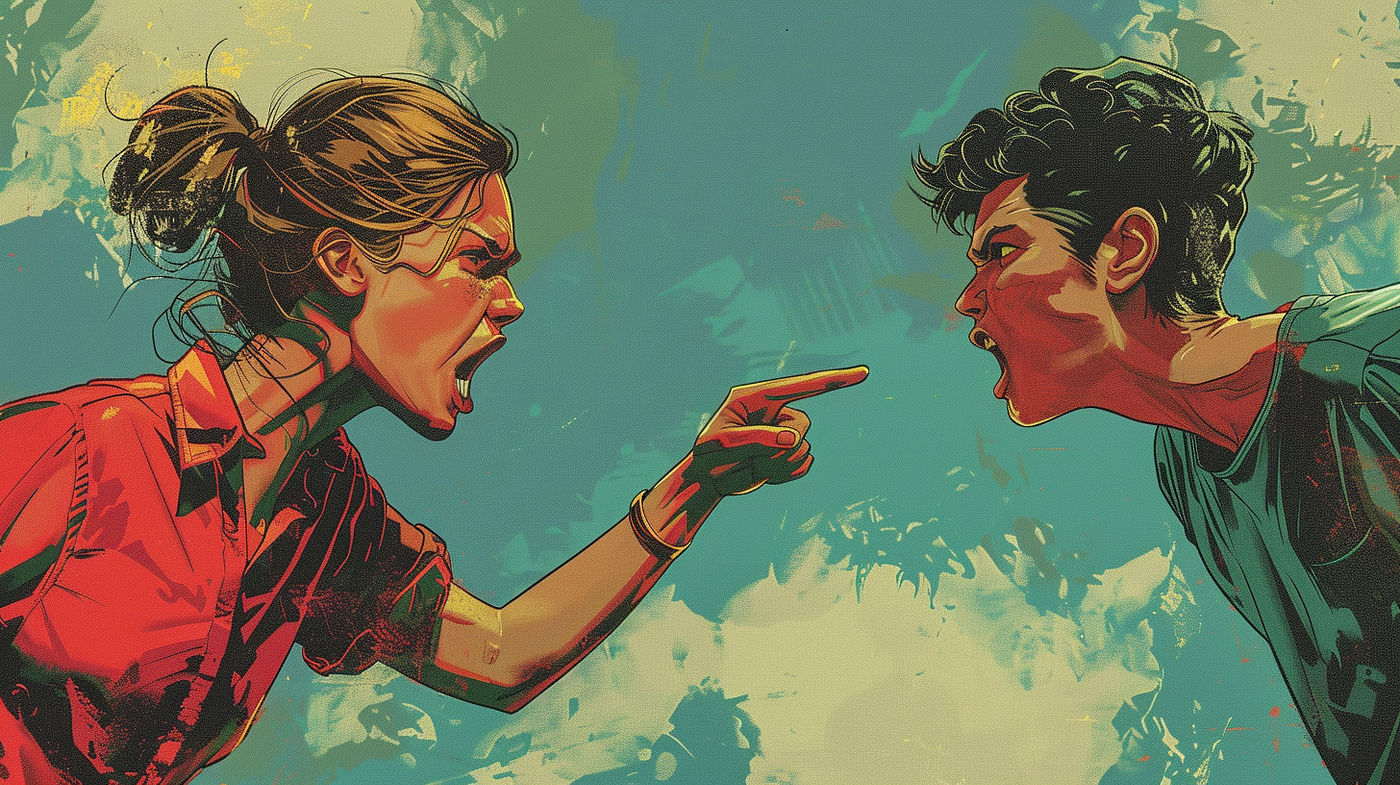
Made with Midjourney
When Ads Are Actually Necessary
Let’s be honest about the constraints you might actually face.
If you’ve already built a free tier with millions of users, you can’t just flip a switch and charge them. The options then are:
- Shut down the product
- Show ads
- Go bankrupt while hoping for acquisition
- Charge aggressively and lose 95% of users
In that situation, showing ads isn’t lazy. It’s pragmatic. You made a bet that didn’t work, and ads are how you stay alive. It was a poor choice to begin with and so you play the cards you dealt yourself.
Similarly, some products genuinely require critical mass to work. Slack is worthless with two users. Twitter needs scale. A free tier isn’t a shortcut; it’s the only way to bootstrap the network effect. In those cases, you’re not being uncreative; you’re solving a real constraint.
And some ads are genuinely innocuous. A developer tool showing non-tracking contextual ads is not the same as a social network that profiles users to sell targeted manipulation to advertisers. The difference matters morally.
The Choices that Reveal the Laziness
But some founders use ads as an escape hatch from thinking hard about what they’ve built.
Choice 1: You never figured out if people would pay in the first place.
You built something, gave it away for free, and never asked: would paying customers exist for this? There’s a difference between “people won’t pay because we have a free competitor” and “people won’t pay because the product isn’t valuable enough.”
If it’s the first, a paid tier might never work, and ads might be the only answer. But if it’s the second, ads won’t fix it either. They’ll just delay admitting the product isn’t good enough.
Test this. Find fifty people who’d benefit from your product. Ask them directly: if we charge ₹200/month, would you subscribe? Don’t ask if they’d use the free version. Ask if they’d pay. Most founders never do this.
Choice 2: You optimized for big numbers instead of business sustainability.
Growth metrics (DAU, signups, users) feel like success. Profitability doesn’t look as impressive in a pitch deck. So you chased users. You built a free tier so massive that profitability became nearly impossible without either charging a lot or showing a lot of ads.
This is the choice that bothers me. Not because ads are immoral, but because you’re optimizing for the wrong thing. You’re building for acquisition, not for a business. If that’s your goal, fine. But say that. Don’t pretend you’re building a user-first product while your entire business model depends on extracting value from people who gave you nothing in return.
Choice 3: You want investors’ money more than you want a sustainable business.
A small, profitable business with a hundred paying customers doesn’t look impressive. A massive free product with a billion impressions looks like the next unicorn. So you chase scale. Investors like scale. Scale lets you raise more money. More money lets you hire faster, move faster, look more successful faster.
But it also commits you to a growth trajectory that might require selling ads (or user data, which is the same thing) just to slow the bleeding. You can’t get off this treadmill without admitting the bet didn’t work.
What Actually Requires Honesty
You could grow slowly. You could build for customers instead of users. You could turn people away who won’t pay. You could shut down features that don’t generate revenue. You could charge a real price and keep user count small.
These are harder. They’re lonelier. They look worse in investor meetings. But they’re available to you.
So here’s what I actually want: stop saying you don’t have a choice. You do. The choice might be hard. It might mean your product doesn’t survive. It might mean admitting that you overbuilt and optimized wrong. But it’s a choice.
If you choose ads, I don’t think you’re immoral. I don’t think you’re a bad person. I think you made a bet on growth, it didn’t pay off the way you hoped, and you’re doing what you can to keep the lights on.
But if you say you had no choice, I think you’re lying. To me or to yourself. And that’s what bothers me.
Choose to show ads. Build for the ad model if that’s what works. But have the spine to say: I chose this. I bet on user acquisition over sustained revenues and it requires ads to work. And I’m okay with that.
Don’t tell me your hands were tied. They weren’t until you tied them.
Authors like me rely on the kindness of strangers like you. If you enjoyed this article or learned something new, a few claps and a quick comment go a long way in keeping my spirit moving.
If you’re interested in how ancient strategy can help founders survive and thrive, you might enjoy my books, **A Startup Founder’s Guide to the Art of War and [Design a Better Business](https://www.amazon.in/dp/B0FTS4C5VZ)**. They are full of candid stories, field-tested advice, and practical lessons for anyone building something from scratch.
PS: Check your local online bookstore to save time and money.
You’ll find more of my writing here too — feel free to explore when you’re ready.
Thanks again for reading. See you in the next one. 🤗❤️
메타데이터
- post_id
- a1bdb4a3c54a
- slug
- showing-ads-in-your-product-is-a-choice-that-you-made-a1bdb4a3c54a
- url
- https://medium.com/thebeatenroad/showing-ads-in-your-product-is-a-choice-that-you-made-a1bdb4a3c54a
- canonical_url
- https://medium.com/thebeatenroad/showing-ads-in-your-product-is-a-choice-that-you-made-a1bdb4a3c54a
- author_url
- https://medium.com/@raviwarrier
- status
- ok
- fetched_at
- 2026-07-08 18:29:56